
Hip Thrust
Full Tutorial by Shelley Darlington
Quick Reference
Equipment Needed
About This Exercise
A compound lower body exercise that targets the glutes by driving the hips upward from a seated position with the upper back supported on a bench.
How to Perform
- 1
Setup
Sit on the floor with your upper back resting against the edge of a sturdy bench. Your shoulder blades should be near the top of the bench. Bend your knees and place your feet flat on the floor, hip-width apart.
- 2
Brace Your Core
Engage your core and tuck your chin slightly toward your chest. Keep your gaze forward rather than looking up at the ceiling. Place your arms on the bench or across your chest for stability.
- 3
Drive Hips Up
Push through your heels and squeeze your glutes to drive your hips toward the ceiling. Lift until your torso is parallel to the floor and your shins are roughly vertical. Hold briefly at the top, squeezing your glutes hard.
- 4
Lower with Control
Slowly lower your hips back toward the floor with control, maintaining tension in your glutes throughout the descent. Do not let your hips drop or bounce at the bottom. Repeat for the prescribed number of reps.
Form Tips
- •Drive through your heels, not your toes
- •Squeeze your glutes hard at the top — avoid overextending by arching your lower back
- •Keep your chin tucked and look forward throughout the movement
- •Your shins should be roughly vertical at the top of the movement
Common Mistakes to Avoid
- •Hyperextending the lower back at the top instead of achieving full hip extension through the glutes
- •Pushing through the toes instead of the heels, shifting work to the quads
- •Placing the bench too high or too low on the back, causing discomfort or instability
- •Letting the knees cave inward during the drive — keep them in line with your toes
Muscles Worked
Primary
Secondary
Hip Thrust Guide: Setup, Form and Programming
Why the hip thrust works
The hip thrust trains the glutes through hip extension with your upper back supported on a bench. The hardest point of the lift is the top, where your hips are fully extended and the glutes are working at their shortest length. Squats and lunges are hardest at the bottom, so the hip thrust fills a gap those lifts leave.
Because the bench takes your upper body out of the equation, the weight you can move is set by your glutes, not by your grip or your lower back. That makes it one of the most direct ways to load them.
How to set up
- Use a bench or sturdy couch edge around knee height. Brace it against a wall so it cannot slide.
- Sit on the floor with your back to the bench and place the bottom of your shoulder blades on its edge.
- Set your feet about hip width apart. At the top of the rep your shins should be vertical, with knees stacked over ankles.
- Rest the weight in the crease of your hips. Use a pad or folded mat under a barbell.
- Tuck your chin and keep your eyes forward. Your head and ribs move together as you pivot on the bench.
Where you should feel it
You should feel hip thrusts in your glutes. If you feel them somewhere else, the fix is usually in your setup.
- Mostly hamstrings: your feet are too far away. Bring them closer.
- Mostly quads: your feet are too close. Move them out until your shins are vertical at the top.
- Lower back: you are arching to finish the rep. Keep your ribs down, tuck your pelvis slightly, and stop when your hips are level with your knees and shoulders.
Sets, reps and how often
If you are new to the lift, start with 3 sets of 10 to 15 reps using bodyweight or one dumbbell, twice a week. Pause for a second at the top of every rep.
Add weight once you can finish every set with that pause and without your lower back taking over. As the load goes up, 3 to 4 sets of 8 to 12 reps works well for most women.
Which version to start with
Work up in this order. Each step uses the same movement with more load or less stability.
Common questions
- Is a hip thrust the same as a glute bridge?
- No. A glute bridge is done with your back on the floor, so the range of motion is shorter and it is harder to load. A hip thrust has your upper back on a bench, which gives a longer range and room for more weight. Start with the bridge and move to the thrust.
- Can I do hip thrusts at home without a bench?
- Yes. A couch, a bed frame or a sturdy chair pushed against a wall works. Hold a dumbbell or a loaded backpack across your hips for weight.
- Why do I feel hip thrusts in my lower back?
- Usually because you are lifting past the point where your hips are level and finishing the rep by arching. Keep your ribs down, tuck your chin, and squeeze your glutes to finish instead of pushing your stomach up.
- How heavy should I go?
- Heavy enough that the last two reps of each set are hard while you can still hold the top for a second. If you cannot hold the top, the weight is too heavy.
Guides That Use the Hip Thrust
- Hip Thrust Benefits: Why Women Need This MoveHip thrust benefits include stronger glutes, better athletic performance, reduced back pain, and improved posture. See why this exercise is essential for...
- Glute Bridge vs Hip Thrust: Which Builds Better ResultsGlute bridge vs hip thrust: which exercise builds stronger glutes faster? Compare loading capacity, form, and results to choose the right movement for your...
- Best Upper Glute Exercises: Target & Tone Your GlutesDiscover the 10 best upper glute exercises to build that coveted shelf. Complete guide with form tips, pros & cons, and training programs for all fitness levels.
- Best lower glute exercises: Complete GuideDiscover the best lower glute exercises to build that coveted shelf. Step-ups, Bulgarian split squats, and deficit lunges target lower fibers effectively.
Related Exercises
View all exercises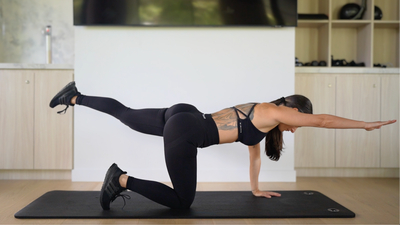
Bird Dog
Core, Glutes
A core stability exercise that strengthens the abs, lower back, and glutes by extending opposite arm and leg from a tabletop position.
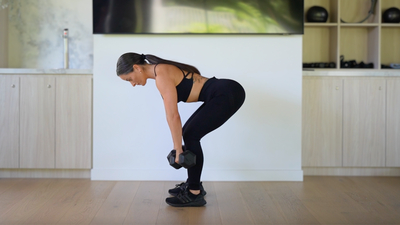
Dumbbell Romanian Deadlift
Glutes, Hamstrings
A hip-hinge exercise targeting the hamstrings and glutes using dumbbells.
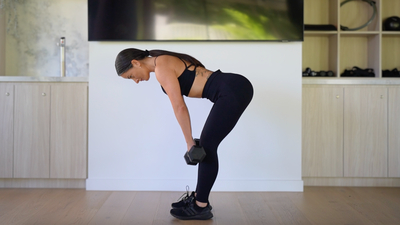
Dumbbell Stiff Leg Deadlift
Glutes, Hamstrings, Lower Back
A dumbbell variation of the stiff leg deadlift that targets the hamstrings and glutes with minimal knee bend. Holding dumbbells allows for a natural hand position and greater range of motion compared to a barbell.
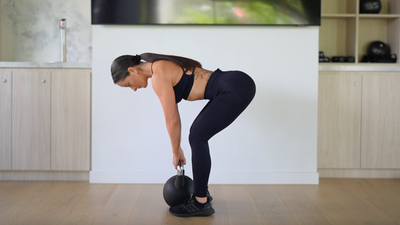
Kettlebell Romanian Deadlift
Glutes, Hamstrings
A hip-hinge exercise using a kettlebell that targets the hamstrings, glutes, and lower back while improving posterior chain strength and flexibility.
Stiff Leg Deadlift
Glutes, Hamstrings, Lower Back
A hip-hinge movement that targets the hamstrings and glutes by lowering the weight with minimal knee bend. Unlike the Romanian deadlift, the legs remain almost fully straight throughout, placing greater emphasis on hamstring flexibility and strength.
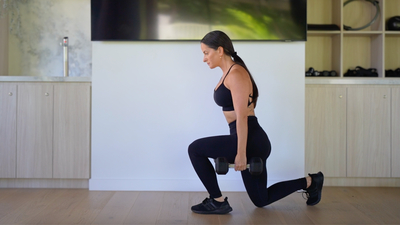
Walking Lunges
Glutes, Hamstrings, Quadriceps
A dynamic lower body exercise where you step forward into alternating lunges while moving across the floor. Targets the quads, glutes and hamstrings while also challenging balance and coordination.
Try Strong Curves Free for 7 Days
Home workouts you can do right here, gym programs in the app, hundreds of recipes, food scanning and a community with Shelley in it.
Start 7 days freeCancel anytime.