Zone 2 Cardio for Women: Why It Works
Zone 2 cardio is steady-state cardiovascular exercise performed at 60-70% of your maximum heart rate, where you can maintain a conversation but feel slightly breathless. This moderate-intensity training optimizes fat burning, builds aerobic capacity, and improves metabolic health without the fatigue of high-intensity workouts, making it sustainable for long-term fitness.
If you've been pushing through intense HIIT sessions wondering why your energy levels are tanking and progress has stalled, you're not alone. Many women assume harder always equals better when it comes to cardio. But what if the secret to better fat loss, improved endurance, and sustainable fitness wasn't about going harder—but smarter?
Zone 2 cardio has emerged as a game-changing approach for women who want results without burnout. This moderate-intensity training method works with your body's natural energy systems rather than against them. Unlike the all-or-nothing mentality of high-intensity training, zone 2 cardio builds a powerful aerobic foundation that enhances every aspect of your fitness—from strength training performance to daily energy levels.
In this comprehensive guide, you'll discover exactly what zone 2 cardio is, why it's particularly effective for women's bodies, how to calculate your personal heart rate zones, and which exercises deliver the best results. Whether you're new to structured cardio or looking to optimize your current routine, understanding zone 2 training will transform how you approach cardiovascular fitness.
Key Takeaways
- Zone 2 cardio trains your body to burn fat efficiently while building aerobic capacity without excessive fatigue
- Calculate your zone 2 heart rate at 60-70% of maximum heart rate (220 minus your age)
- Effective zone 2 exercises include brisk walking, cycling, swimming, and rowing at conversational pace
- Women benefit from zone 2 training through improved hormonal balance, sustainable fat loss, and enhanced recovery
- Aim for 150-180 minutes weekly of zone 2 cardio spread across 3-5 sessions for optimal results
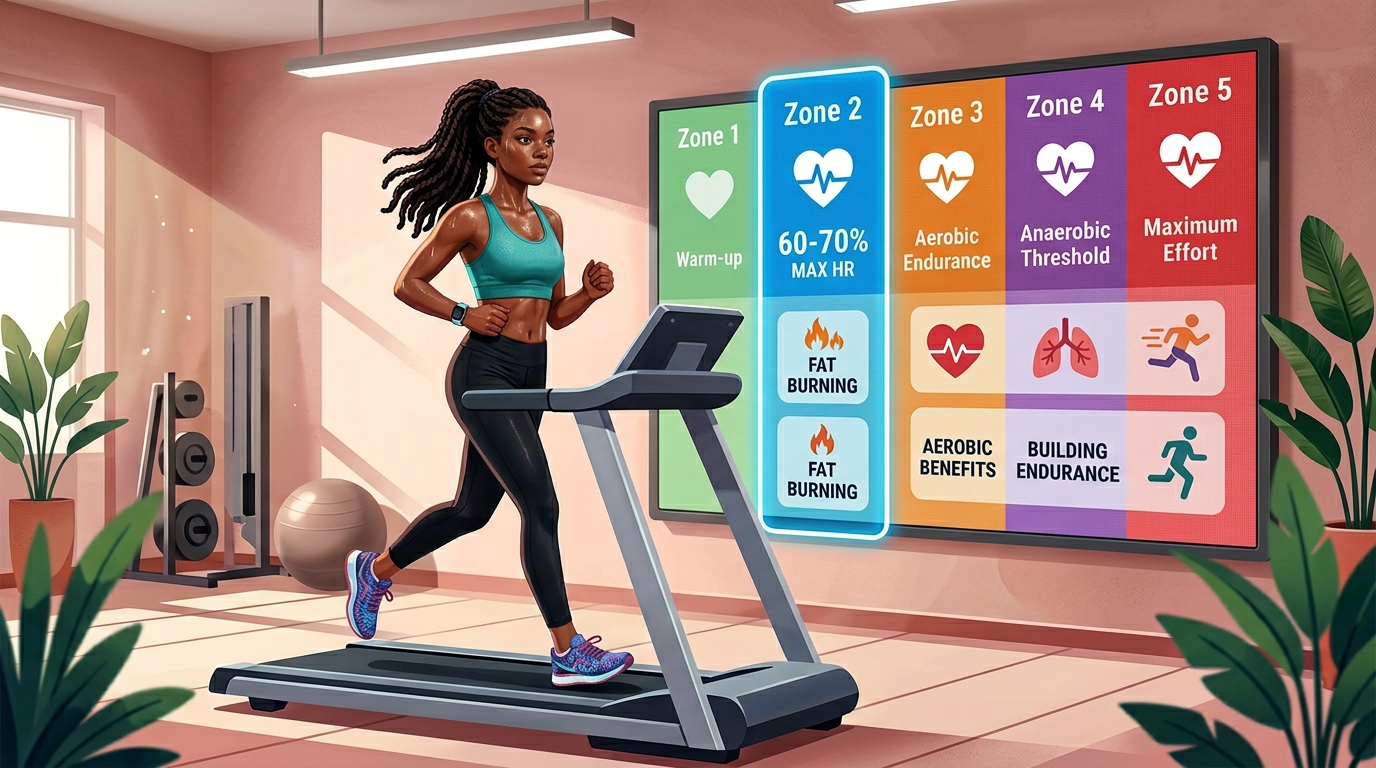
Infographic showing a woman exercising with heart rate zones displayed on a colorful chart, highlighting zone 2 at 60-70% maximum heart rate with fat burning and aerobic benefits labeled
What Is Zone 2 Cardio and Why It Matters
Zone 2 cardio represents the sweet spot of cardiovascular training where your body primarily uses fat as fuel while building mitochondrial density and aerobic capacity. This intensity level sits comfortably in the middle of the five heart rate zones, offering a perfect balance between effort and sustainability.
The concept comes from exercise physiology and divides cardiovascular effort into five distinct zones based on percentage of maximum heart rate. Zone 1 is very light activity like casual walking. Zone 2 is where structured aerobic training begins. Zones 3-5 progress into increasingly intense efforts that become unsustainable for extended periods.
The Science Behind Heart Rate Zones
Your heart rate during exercise reveals which energy systems your body is using. At zone 2 intensity, your cardiovascular system works hard enough to trigger adaptations but not so hard that you accumulate excessive fatigue or stress hormones. This creates an environment where your body becomes exceptionally efficient at using oxygen and burning fat.
During zone 2 training, your muscles rely primarily on oxidative metabolism—the process of breaking down fat and carbohydrates with oxygen. This differs dramatically from high-intensity zones where your body shifts to anaerobic metabolism, burning primarily glucose without oxygen and producing lactate as a byproduct.
Why Women Benefit Uniquely from Zone 2 Training
Women's bodies respond particularly well to zone 2 cardio for several physiological reasons. Female hormones influence how your body stores and burns fat, and zone 2 training works synergistically with these natural patterns rather than fighting against them.
Research indicates that women typically have a higher proportion of Type I muscle fibers compared to men—these slow-twitch fibers excel at endurance activities and fat oxidation. Zone 2 training specifically targets and develops these fibers, playing to your natural strengths.
Additionally, excessive high-intensity training can disrupt hormonal balance in women, particularly affecting cortisol, thyroid function, and reproductive hormones. Zone 2 cardio provides cardiovascular benefits without the hormonal stress that can lead to irregular cycles, fatigue, or metabolic slowdown.
How to Calculate Your Zone 2 Heart Rate
Finding your personal zone 2 heart rate range ensures you're training at the right intensity for optimal benefits. While general formulas provide a starting point, understanding your body's signals helps you fine-tune your approach.
The Basic Formula Method
The simplest way to calculate zone 2 is using 60-70% of your maximum heart rate, where maximum heart rate equals 220 minus your age. For example, a 35-year-old woman would have an estimated maximum heart rate of 185 beats per minute, making her zone 2 range approximately 111-130 bpm.
Here's the step-by-step calculation:
- Subtract your age from 220 to estimate maximum heart rate
- Multiply that number by 0.60 to find your zone 2 lower limit
- Multiply your maximum heart rate by 0.70 to find your zone 2 upper limit
- Your zone 2 range falls between these two numbers
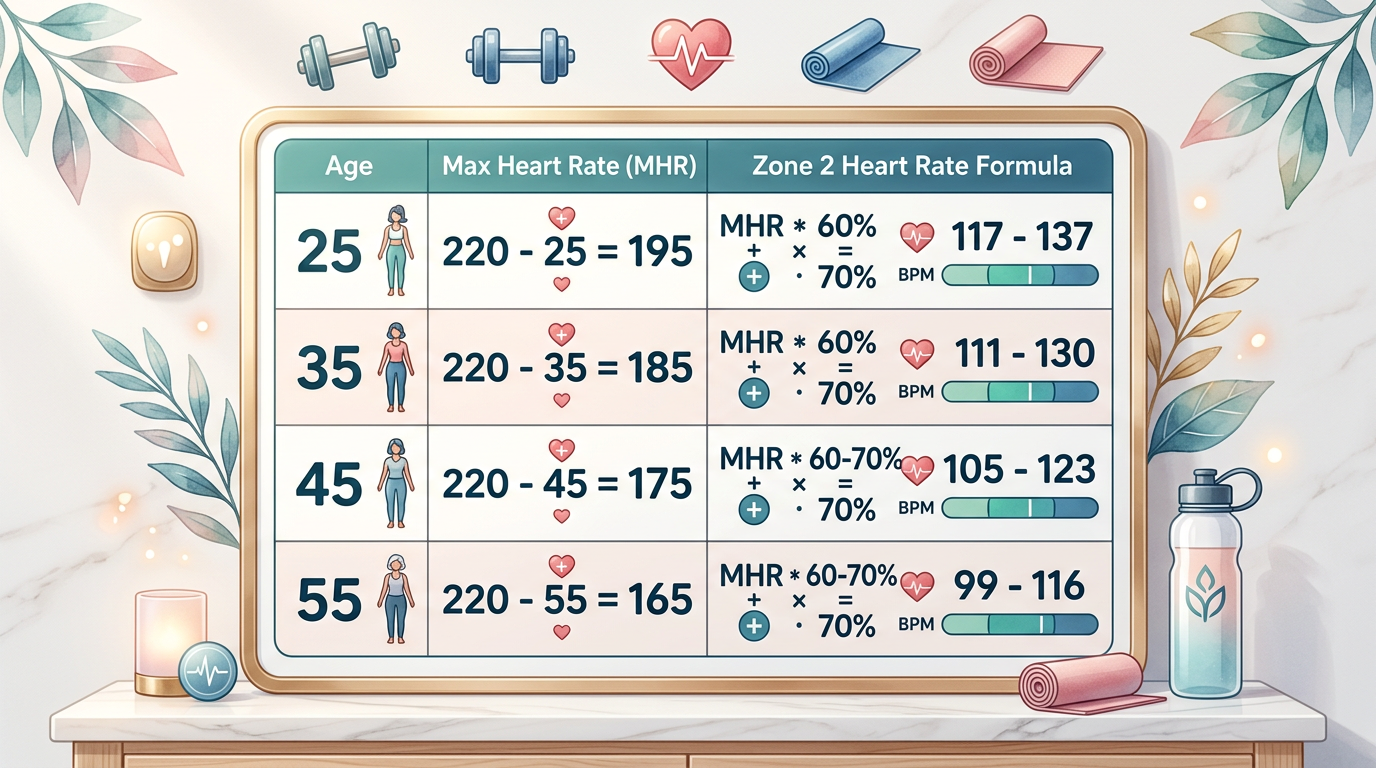
Simple calculator graphic showing zone 2 heart rate calculation for different ages (25, 35, 45, 55) with formulas and results displayed in an easy-to-read table format
The Talk Test: A Simple Alternative
You don't need a heart rate monitor to train in zone 2. The talk test provides an accessible way to gauge intensity. At proper zone 2 intensity, you should be able to speak in full sentences but feel slightly breathless—comfortable enough to maintain a conversation but not so easy that you could sing.
If you're gasping for air between words, you've pushed into zone 3 or higher. If you can chat effortlessly without any change in breathing, you're likely in zone 1. Zone 2 sits right in that conversational sweet spot where talking requires a bit more effort than normal but remains entirely possible.
Using Technology to Track Your Zones
Heart rate monitors, fitness watches, and chest straps provide real-time feedback during workouts. Most devices allow you to set custom heart rate zones and will alert you when you drift above or below your target range.
When using technology, give yourself a few minutes to warm up before judging whether you're in zone 2. Heart rate naturally takes time to rise and stabilize at the beginning of exercise. Similarly, expect some fluctuation—staying within your zone 2 range most of the time is more important than hitting exact numbers every second.
Best Zone 2 Cardio Exercises for Women
The beauty of zone 2 training lies in its versatility. Nearly any cardiovascular activity can become a zone 2 workout when performed at the right intensity. The key is choosing exercises you enjoy and can sustain for extended periods.
Walking: The Most Accessible Option
Brisk walking is the most underrated zone 2 cardio exercise, requiring no equipment while delivering excellent results. For most women, walking at 3.5-4.5 mph on flat ground or incorporating moderate inclines hits zone 2 perfectly.
Walking works exceptionally well because you can easily adjust intensity by changing speed or terrain. Add hills or stairs to increase heart rate, or slow down slightly if you drift too high. The low impact nature also means you can walk frequently without joint stress or excessive recovery needs.
Consider these walking variations for zone 2 training:
- Treadmill walking at 3-5% incline and moderate speed
- Outdoor hiking on gentle to moderate trails
- Power walking with purposeful arm movement
- Walking with a weighted vest (5-10% of body weight)
Cycling for Low-Impact Cardio
Cycling—whether outdoors, on a stationary bike, or in a spin class (at your own pace, not the instructor's)—provides excellent zone 2 training. The key is resisting the temptation to push too hard. Many women instinctively pedal at intensities that push them into zone 3 or 4.
Focus on maintaining a steady, sustainable pace where your legs feel like they could continue indefinitely. Your breathing should be elevated but controlled. If you're on a bike with gears, choose resistance that allows smooth, consistent pedaling without excessive strain.
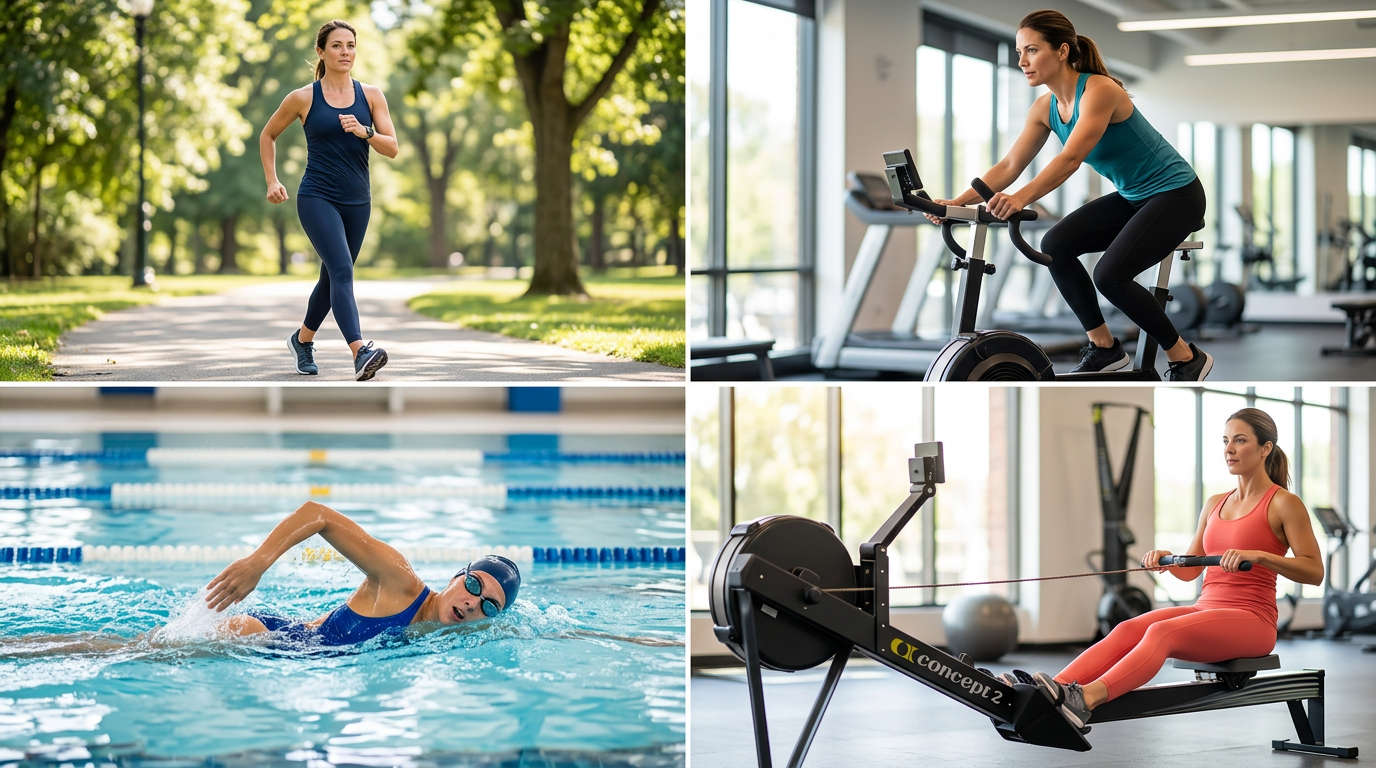
Split image showing four different zone 2 cardio activities - a woman brisk walking outdoors, cycling on a stationary bike, swimming laps in a pool, and using a rowing machine, each with proper form demonstrated
Swimming and Water-Based Activities
Swimming offers full-body cardiovascular training with zero impact on joints. The key to zone 2 swimming is choosing a pace you can maintain for 30-60 minutes without exhaustion. Many swimmers push too hard in the pool—zone 2 swimming should feel smooth and rhythmic, not like a race.
Water aerobics and aqua jogging also work well for zone 2 training, particularly for women managing joint issues or recovering from injury. The water's resistance provides cardiovascular challenge while supporting your body weight.
Rowing for Full-Body Engagement
Rowing machines deliver efficient zone 2 cardio by engaging both upper and lower body simultaneously. The smooth, rhythmic motion builds aerobic capacity while strengthening your back, core, legs, and arms.
Maintain a steady stroke rate of 18-24 strokes per minute for zone 2 intensity. Focus on controlled, powerful pulls rather than frantic speed. Your breathing should remain steady throughout your rowing session.
Other Effective Zone 2 Activities
These additional activities work well for zone 2 cardio when performed at appropriate intensity:
- Elliptical training at moderate resistance and pace
- Cross-country skiing or using a ski erg machine
- Dancing at a sustained, moderate pace
- Light jogging for experienced runners (though many find this difficult to keep in zone 2)
- Stair climbing at a conversational pace
Zone 2 Cardio for Fat Loss: What You Need to Know
One of the most common questions about zone 2 training centers on fat loss effectiveness. The relationship between zone 2 cardio and fat burning is more nuanced than simple calories-in-calories-out thinking.
How Zone 2 Optimizes Fat Burning
Zone 2 cardio trains your body to become exceptionally efficient at using fat as fuel, which has profound implications for body composition and metabolic health. At this intensity, your body derives a higher percentage of energy from fat oxidation compared to higher-intensity exercise.
This doesn't mean zone 2 burns more total calories than high-intensity training—it typically burns fewer per minute. However, zone 2 training creates metabolic adaptations that improve fat burning around the clock, not just during exercise. Your mitochondria multiply and become more efficient, your body upregulates fat-burning enzymes, and your metabolic flexibility improves.
The Sustainability Factor
Perhaps the greatest advantage of zone 2 cardio for fat loss is sustainability. You can perform zone 2 training frequently without crushing fatigue, excessive hunger, or hormonal disruption. This consistency matters more than any single intense workout.
Many women find that excessive high-intensity training triggers increased appetite and stress hormone production that can actually hinder fat loss. Zone 2 cardio provides a calorie deficit without these counterproductive effects, making it easier to maintain the consistency required for lasting results.
Combining Zone 2 with Strength Training
Zone 2 cardio works synergistically with strength training for optimal body composition. The aerobic adaptations from zone 2 training improve your recovery between strength sessions, enhance nutrient delivery to muscles, and support the energy demands of building lean tissue.
Consider this balanced weekly structure:
- 3-4 strength training sessions focusing on progressive overload
- 3-5 zone 2 cardio sessions of 30-60 minutes
- 1-2 rest or active recovery days
- Optional: 1 higher-intensity cardio session if desired and recovered
How Much Zone 2 Cardio Should You Do?
Finding the right volume of zone 2 training balances benefits with recovery needs and your other fitness goals. More isn't always better—the goal is optimization, not maximization.
Weekly Volume Recommendations
Most women benefit from 150-180 minutes of zone 2 cardio per week, distributed across 3-5 sessions. This aligns with general cardiovascular health recommendations while providing enough stimulus for meaningful adaptations.
Beginners should start with 20-30 minute sessions three times weekly, gradually building duration before adding frequency. More advanced exercisers might extend individual sessions to 45-75 minutes or add an extra weekly session.
Session Duration and Frequency
Individual zone 2 sessions should last at least 30 minutes to trigger desired adaptations, though 45-60 minutes provides optimal benefits. Sessions longer than 90 minutes offer diminishing returns for most women unless training for endurance events.
Frequency matters as much as duration. Three 50-minute sessions deliver better results than one 150-minute marathon session because consistent exposure to zone 2 intensity drives adaptation more effectively than occasional long efforts.
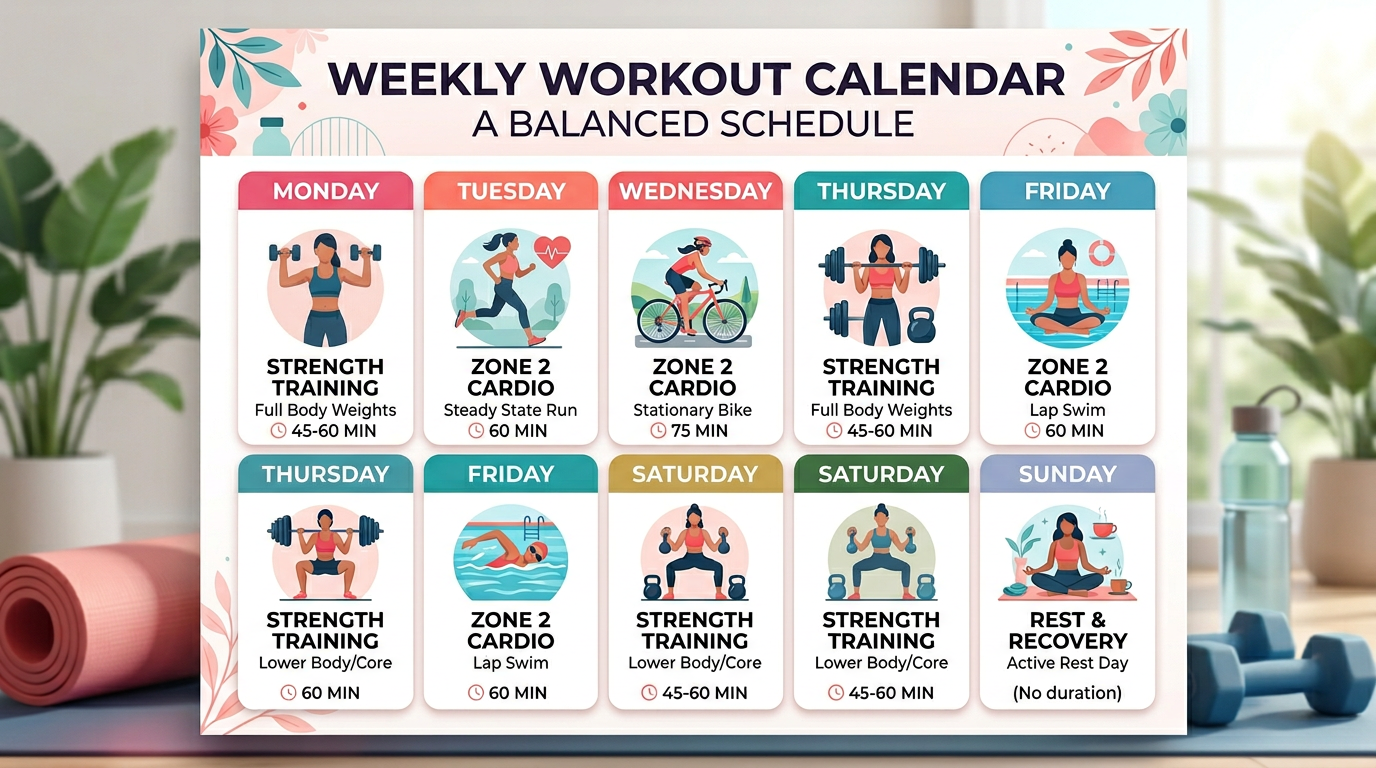
Weekly workout calendar showing a balanced schedule with zone 2 cardio sessions (3-5 times), strength training days (3-4 times), and rest days clearly marked with icons and duration recommendations
Adjusting Based on Other Training
Your zone 2 cardio volume should complement rather than compromise your strength training. If you're following an intense strength program focused on progressive overload and muscle building, 120-150 minutes of zone 2 cardio weekly may be more appropriate than higher volumes.
Pay attention to recovery markers like sleep quality, resting heart rate, motivation levels, and strength performance. If these decline, you may need to reduce cardio volume or intensity to allow adequate recovery.
Common Zone 2 Cardio Mistakes to Avoid
Even with good intentions, many women make mistakes that limit zone 2 training effectiveness. Recognizing these pitfalls helps you maximize results while avoiding frustration.
Training Too Hard
The most common mistake is pushing intensity beyond zone 2, turning what should be moderate aerobic training into a harder effort that accumulates fatigue. This happens because zone 2 can feel "too easy" compared to the burn of high-intensity training.
Trust the process. Zone 2 should feel sustainable and comfortable—that's the point. If you're breathing heavily, unable to speak in sentences, or feeling muscular burn, you've drifted into zone 3 or higher. Slow down and let your heart rate drop back into range.
Inconsistent Training
Sporadic zone 2 sessions won't deliver the metabolic adaptations that make this training valuable. Consistency matters more than perfection. Three 40-minute sessions every week beats occasional 90-minute efforts separated by weeks of nothing.
Build zone 2 cardio into your schedule as non-negotiable appointments. Morning walks before work, lunchtime bike rides, or evening swims become habits that compound into significant results over months.
Neglecting Other Training Zones
While zone 2 deserves a prominent place in your training, it shouldn't completely replace other intensities. Your body benefits from occasional higher-intensity efforts that challenge different energy systems and create varied training stimuli.
A balanced approach includes primarily zone 2 cardio (about 80% of cardiovascular training), with occasional zone 3-5 efforts (about 20%) for variety and comprehensive fitness development.
Ignoring Progression
As your aerobic fitness improves, you'll need to adjust your zone 2 training to maintain appropriate intensity. What initially elevated your heart rate to zone 2 may eventually keep you in zone 1 as adaptations occur.
Progressive overload applies to cardio too. Gradually increase speed, add incline, extend duration, or reduce rest periods to ensure continued adaptation. Monitor your heart rate and perceived exertion to gauge whether adjustments are needed.
Tracking Progress and Results
Measuring zone 2 cardio progress helps maintain motivation and guides programming adjustments. Unlike strength training where you track weight lifted, cardio progress manifests differently.
Key Performance Indicators
The most reliable indicator of improved aerobic fitness is being able to maintain higher speeds or power outputs while staying in zone 2. For example, if you initially walked at 3.5 mph to maintain zone 2 heart rate, but after eight weeks can walk at 4.0 mph at the same heart rate, you've made significant progress.
Track these metrics to monitor zone 2 improvements:
- Speed or pace at zone 2 heart rate
- Resting heart rate (should gradually decrease)
- Heart rate recovery (how quickly heart rate drops after exercise)
- Perceived exertion at given heart rates
- Duration you can sustain zone 2 before fatigue
Beyond the Numbers
Zone 2 training delivers benefits that extend beyond measurable metrics. Many women report improved daily energy, better sleep quality, enhanced mood stability, and greater resilience to stress. These subjective improvements matter as much as objective data.
Pay attention to how you feel during daily activities. Do stairs feel easier? Can you keep up with your kids without getting winded? Does your afternoon energy slump improve? These real-world indicators reflect meaningful fitness gains.
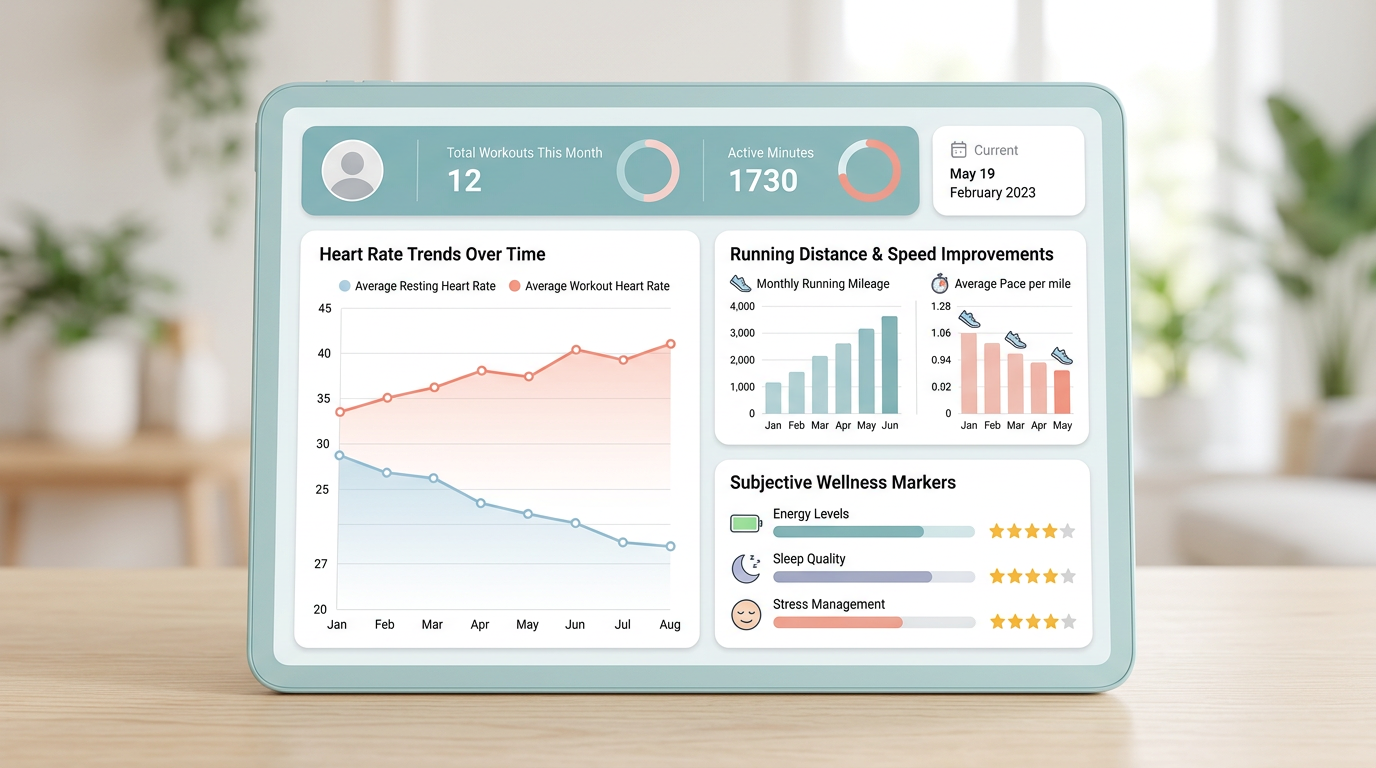
Progress tracking dashboard showing multiple metrics including heart rate trends over time, distance/speed improvements, resting heart rate decrease, and subjective wellness markers on a clean, modern interface
Integrating Zone 2 Cardio into Your Fitness Routine
Successfully incorporating zone 2 training requires thoughtful planning that respects your schedule, energy levels, and other fitness goals. Strategic integration ensures consistency without overwhelming your life.
Timing Your Zone 2 Sessions
Zone 2 cardio offers flexibility in timing since it doesn't create the same fatigue as high-intensity training. Many women prefer morning zone 2 sessions for the energizing effect and to ensure completion before daily demands interfere.
You can perform zone 2 cardio on the same day as strength training—either as a warm-up, cool-down, or separate session. If training twice daily, consider strength training when you're freshest and zone 2 cardio later when energy dips slightly.
Creating a Balanced Weekly Schedule
A well-designed week balances zone 2 cardio with strength training, higher-intensity work if desired, and adequate recovery. Here's a sample framework adaptable to your needs:
- Monday: Lower body strength training + 20-minute zone 2 cardio cool-down
- Tuesday: 45-minute zone 2 cardio session
- Wednesday: Upper body strength training
- Thursday: 45-minute zone 2 cardio session
- Friday: Full body strength training + 20-minute zone 2 cardio
- Saturday: 60-minute zone 2 cardio session
- Sunday: Active recovery or rest
This structure provides 170 minutes of zone 2 cardio across five sessions while maintaining three strength training days and one complete rest day.
Making It Sustainable
Long-term adherence depends on enjoyment and convenience. Choose zone 2 activities you genuinely like and can access easily. If you hate swimming, don't force it. If you love walking outdoors, lean into that preference.
Consider making zone 2 cardio serve multiple purposes—walking meetings for work calls, cycling for transportation, or using cardio time to listen to audiobooks or podcasts you enjoy. When zone 2 training enhances other parts of your life, consistency becomes natural.
Frequently Asked Questions
What qualifies as zone 2 cardio?
Zone 2 cardio is exercise performed at 60-70% of your maximum heart rate, where you can maintain a conversation but feel slightly breathless. This includes activities like brisk walking, moderate cycling, swimming at steady pace, or rowing when performed at this specific intensity level.
How do I find my zone 2 heart rate?
Calculate your zone 2 heart rate by subtracting your age from 220, then multiplying by 0.60 and 0.70 to find your range. A 30-year-old would have a maximum heart rate of 190, making zone 2 approximately 114-133 beats per minute.
What exercises are zone 2 cardio?
Effective zone 2 cardio exercises include brisk walking, cycling at moderate pace, swimming laps steadily, rowing, using an elliptical, hiking on moderate terrain, and light jogging. The specific activity matters less than maintaining the correct heart rate intensity of 60-70% maximum.
Is zone 2 cardio best for fat loss?
Zone 2 cardio is highly effective for fat loss because it trains your body to burn fat efficiently while being sustainable enough to perform consistently. While it burns fewer calories per minute than high-intensity training, its sustainability and metabolic adaptations make it excellent for long-term fat loss.
How long should zone 2 cardio sessions last?
Zone 2 cardio sessions should last 30-60 minutes for optimal benefits. Sessions shorter than 30 minutes provide limited adaptation, while those exceeding 90 minutes offer diminishing returns for most women unless training for endurance events. Aim for 45-60 minutes when possible.
Can I do zone 2 cardio every day?
You can do zone 2 cardio daily because its moderate intensity doesn't require extensive recovery like high-intensity training. However, most women benefit from 3-5 sessions weekly totaling 150-180 minutes, allowing rest days for complete recovery and other training priorities.
Does zone 2 cardio improve running performance?
Zone 2 cardio significantly improves running performance by building aerobic base, increasing mitochondrial density, and enhancing fat oxidation. These adaptations allow you to run faster at lower heart rates and delay fatigue during longer efforts, forming the foundation of endurance training.
Conclusion
Zone 2 cardio represents a powerful yet often overlooked training method that delivers remarkable benefits for women's fitness and overall health. By training at 60-70% of your maximum heart rate, you build a robust aerobic foundation that enhances fat burning, improves metabolic health, and supports all other aspects of your fitness journey without the burnout associated with constant high-intensity training.
The beauty of zone 2 training lies in its sustainability and accessibility. Whether you prefer walking, cycling, swimming, or rowing, you can implement this approach immediately by simply monitoring your heart rate or using the talk test. Start with three 30-45 minute sessions weekly and gradually build to 150-180 minutes across 3-5 sessions for optimal results.
Remember that zone 2 cardio works best as part of a balanced fitness routine that includes strength training and adequate recovery. The metabolic adaptations you'll gain—improved fat oxidation, increased mitochondrial density, and enhanced cardiovascular efficiency—compound over time, creating a foundation for lifelong fitness and health. Track your progress through improved pace at the same heart rate, better daily energy, and enhanced recovery, celebrating the sustainable transformation that zone 2 cardio makes possible.