What to Eat Before a Workout: Complete Guide
What to eat before a workout includes easily digestible carbohydrates paired with moderate protein consumed 30-90 minutes before exercise. The best pre-workout meals include banana with nut butter, Greek yogurt with berries, oatmeal with protein powder, or a rice cake with honey for quick energy and sustained performance.
You've set your alarm, laced up your sneakers, and you're ready to crush your workout—but wait. Have you fueled your body properly? Research shows that eating the right foods before exercise can boost performance by up to 20% and help you build more muscle. Yet many women skip pre-workout nutrition entirely or make choices that leave them feeling sluggish, nauseous, or unable to push through their training.
Understanding what to eat before a workout isn't just about avoiding an empty stomach. It's about strategically timing nutrients to maximize energy, preserve muscle tissue, and enhance recovery. Whether you're lifting weights at home, doing a glute-focused strength session, or tackling high-intensity interval training, your pre-workout nutrition sets the foundation for success.
Created by certified trainer Shelley Darlington with 15+ years experience, this comprehensive guide breaks down exactly what, when, and how much to eat before your workout. You'll discover science-backed strategies that work specifically for women focused on building strength and transforming their bodies. Trusted by over 50,000 women worldwide, these practical nutrition principles will help you fuel your workouts effectively and see better results from your training efforts.
Key Takeaways
- Consume a combination of carbohydrates and protein 30-90 minutes before exercise for optimal energy and performance
- Timing matters: eat larger meals 2-3 hours before training, smaller snacks 30-60 minutes before
- Choose easily digestible foods to avoid gastrointestinal discomfort during your workout
- Individual tolerance varies—experiment to find what works best for your body and workout intensity
- Fasted training can work for some women, but pre-workout nutrition typically enhances strength performance and muscle building
Why Pre-Workout Nutrition Matters for Women
Pre-workout nutrition serves three critical functions that directly impact your training quality and results. First, it provides immediate energy to fuel muscle contractions during exercise. Second, it preserves lean muscle tissue by preventing your body from breaking down muscle for fuel. Third, it primes your metabolism for optimal recovery once your workout ends.
Women over 35 focused on strength training and body recomposition have unique nutritional needs that make pre-workout fueling especially important. As estrogen levels fluctuate with age, maintaining muscle mass becomes more challenging. Proper pre-workout nutrition helps maximize muscle protein synthesis and supports the hormonal environment needed for building strength.
The Science Behind Pre-Workout Fueling
When you eat before exercise, your body converts carbohydrates into glucose, which gets stored in muscles as glycogen. During your workout, your muscles tap into these glycogen stores for quick energy. Without adequate glycogen, your performance suffers, and your body may turn to breaking down muscle tissue for fuel—the opposite of what you want when building strength.
Protein consumed before training provides amino acids that circulate in your bloodstream during exercise. These amino acids become immediately available for muscle repair and growth, jumpstarting the recovery process before you've even finished your last rep.
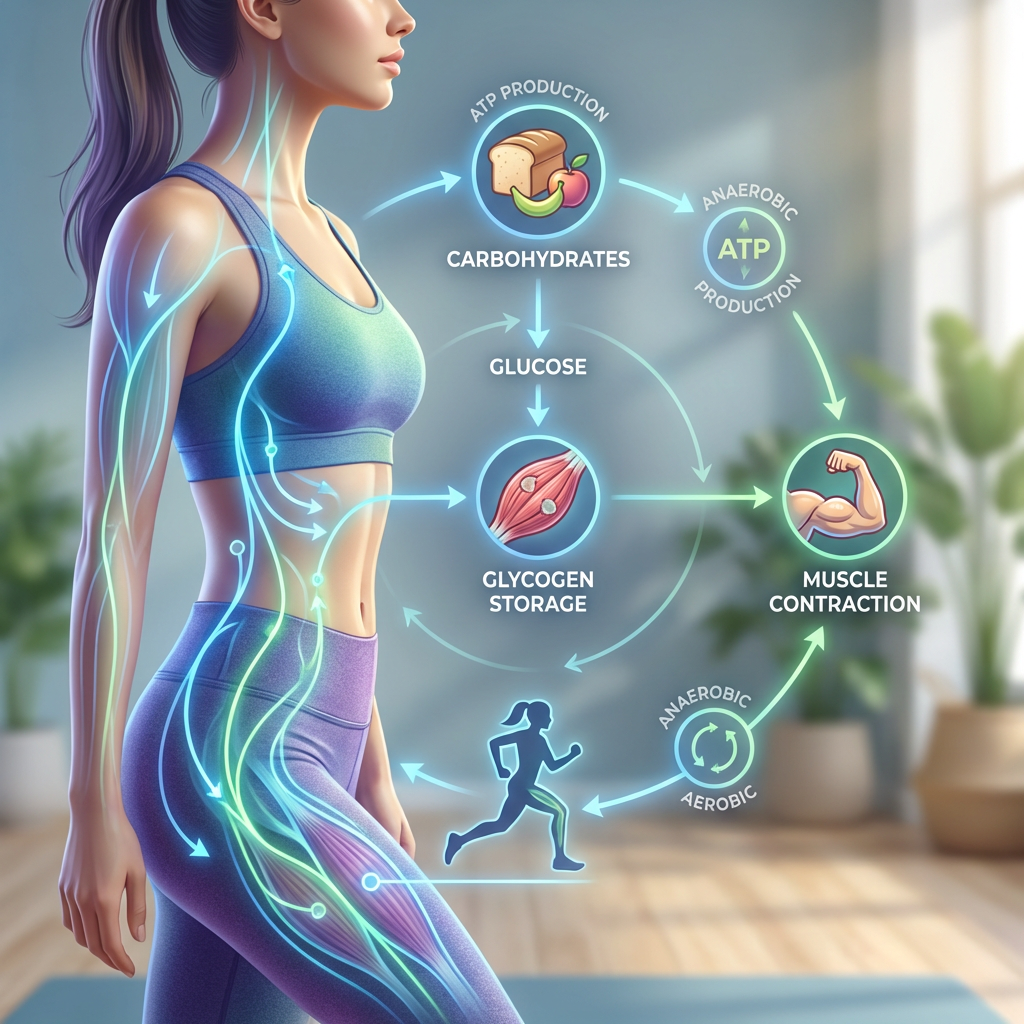
Infographic showing how carbohydrates convert to glycogen and fuel muscle contractions during exercise, with a diagram of energy pathways in the female body
Performance Benefits You'll Experience
Proper pre-workout nutrition delivers measurable improvements in your training sessions:
- Increased strength output: Studies show properly fueled athletes can lift 10-20% more weight or complete additional reps
- Enhanced endurance: Adequate glycogen stores delay fatigue, allowing you to maintain intensity throughout your workout
- Improved focus and motivation: Stable blood sugar levels support mental clarity and reduce the likelihood of cutting your workout short
- Better muscle preservation: Pre-workout protein prevents muscle breakdown during training
- Reduced perceived exertion: Your workout feels easier when your body has the fuel it needs
- Faster recovery: Starting the recovery process before you finish training accelerates results
The Best Foods to Eat Before a Workout
The ideal pre-workout meal or snack combines easily digestible carbohydrates with a moderate amount of protein, while keeping fat and fiber relatively low. Carbohydrates provide the quick energy your muscles need, while protein supplies amino acids for muscle support and recovery. Fat and fiber slow digestion, which can cause discomfort during exercise if consumed too close to your workout.
Top Pre-Workout Carbohydrate Sources
Choose carbohydrates that digest quickly and provide sustained energy without causing blood sugar crashes:
- Bananas: Rich in easily digestible carbs and potassium to prevent muscle cramps
- White rice or rice cakes: Low-fiber option that provides quick energy without digestive distress
- Oatmeal: Provides steady energy release for longer workouts when eaten 60-90 minutes before
- Toast or bagels: Simple carbohydrates that digest quickly and fuel high-intensity training
- Dried fruit or dates: Concentrated carbohydrate source perfect for 30-minute pre-workout snacks
- Honey or maple syrup: Simple sugars that provide immediate energy for intense sessions
- Low-fiber cereal: Quick-digesting option when paired with low-fat milk or yogurt
Ideal Pre-Workout Protein Options
Select protein sources that are easy to digest and won't sit heavily in your stomach:
- Greek yogurt: High in protein, low in fat, and easily digestible
- Protein powder: Rapidly absorbed and convenient for timing flexibility
- Egg whites: Pure protein with minimal fat when you have 60+ minutes before training
- Turkey or chicken breast: Lean protein for meals eaten 2-3 hours pre-workout
- Cottage cheese (low-fat): Provides both fast and slow-digesting proteins
- Protein bars: Convenient option when choosing brands with simple ingredients
Complete Pre-Workout Meal Ideas
Based on feedback from thousands of Strong Curves app users, these combinations consistently deliver excellent energy and performance without digestive issues:
- Banana with 1-2 tablespoons almond or peanut butter (30-45 minutes before)
- Greek yogurt with berries and a drizzle of honey (45-60 minutes before)
- Oatmeal made with protein powder and sliced banana (60-90 minutes before)
- Rice cake with honey and a protein shake (30-45 minutes before)
- Toast with mashed avocado and scrambled egg whites (60-90 minutes before)
- Smoothie with banana, protein powder, and low-fat milk (45-60 minutes before)
- Apple slices with a small serving of cottage cheese (45-60 minutes before)
- White rice with grilled chicken breast (2-3 hours before)
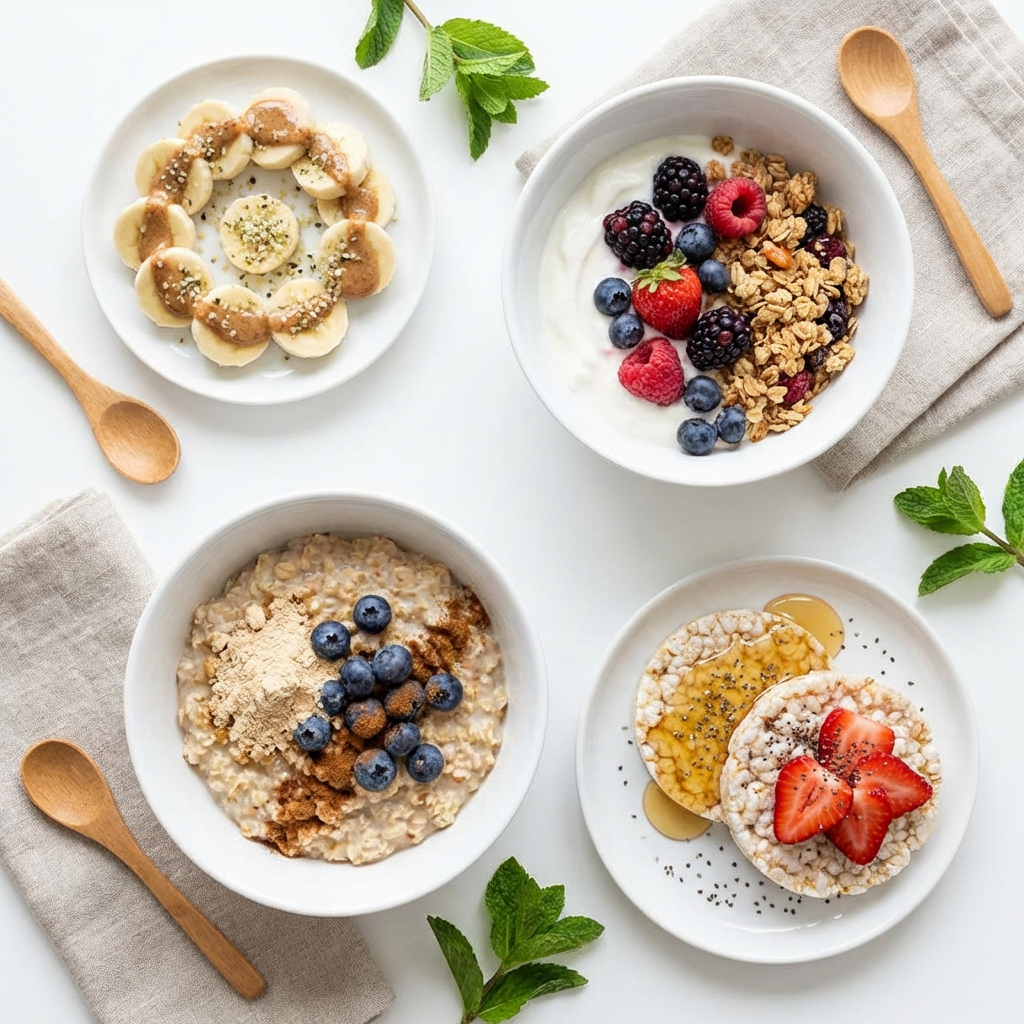
Flat lay photo of pre-workout meal options including banana with nut butter, Greek yogurt with berries, oatmeal with protein powder, and rice cakes with honey arranged on a clean white surface
Pre-Workout Nutrition Timing: When to Eat for Maximum Performance
Timing your pre-workout meal or snack correctly is just as important as choosing the right foods. Eat too early, and you'll feel depleted during your workout. Eat too close to training, and you'll experience digestive discomfort or sluggishness. The optimal timing depends on the size of your meal and how quickly your body digests food.
The 30-60-90 Minute Rule
Use this framework to determine when to eat based on your meal size:
- 30 minutes before: Small snack with 15-25g carbs and minimal protein (banana, rice cake with honey, handful of dried fruit)
- 60 minutes before: Medium snack with 25-40g carbs and 10-15g protein (Greek yogurt with fruit, protein shake with banana)
- 90 minutes before: Larger snack or small meal with 40-60g carbs and 15-25g protein (oatmeal with protein powder, toast with eggs)
- 2-3 hours before: Full meal with balanced macronutrients including healthy fats (chicken with rice and vegetables)
Adjusting Timing for Your Workout Intensity
The intensity and type of your workout influences optimal timing. High-intensity strength training and The Strong Curves glute-focused approach to functional fitness demand more readily available energy than low-intensity cardio.
For heavy lifting sessions or intense strength training, aim to eat 45-90 minutes before your workout. This provides enough time for digestion while ensuring glycogen stores are fully stocked. For moderate-intensity workouts or shorter sessions, a small snack 30 minutes before often suffices.
Morning exercisers who train immediately after waking should prioritize quick-digesting carbohydrates consumed 20-30 minutes before. Your body has been fasting overnight, so even a small amount of fuel makes a significant difference in performance.
Individual Tolerance and Experimentation
Every woman's digestive system responds differently to pre-workout nutrition. Some can eat a full meal 60 minutes before training without issues, while others need 2-3 hours to avoid discomfort. Pay attention to how different foods and timing windows affect your energy levels and stomach comfort.
Keep a simple training journal noting what you ate, when you ate it, and how you felt during your workout. After 2-3 weeks, patterns will emerge showing your optimal pre-workout nutrition strategy. Learn more about tracking your fitness progress effectively to optimize all aspects of your training.
Foods to Avoid Before Working Out
Certain foods can sabotage your workout performance, causing digestive distress, energy crashes, or sluggishness. Avoiding these problematic foods in the 1-3 hours before training helps ensure you feel strong, energized, and comfortable throughout your session.
High-Fat Foods
Fat slows digestion significantly, which can leave you feeling heavy and uncomfortable during exercise. Foods to limit or avoid before training include:
- Fried foods (french fries, fried chicken, donuts)
- Heavy cream-based sauces or dishes
- Full-fat cheese in large quantities
- Fatty cuts of meat (ribeye steak, pork belly, bacon)
- Large servings of nuts or nut butter
- Avocado in large amounts (small portions are typically fine)
High-Fiber Foods
While fiber is essential for overall health, consuming high-fiber foods immediately before exercise can cause bloating, gas, and urgent bathroom trips. Save these for post-workout meals:
- Beans and legumes
- Cruciferous vegetables (broccoli, cauliflower, Brussels sprouts)
- Large salads with raw vegetables
- Bran cereals or high-fiber bread
- Chia seeds or flaxseeds in large amounts
Foods That Cause Digestive Distress
These items commonly trigger stomach upset, heartburn, or discomfort during physical activity:
- Spicy foods: Can cause heartburn and acid reflux during exercise
- Carbonated beverages: Create bloating and gas that worsens with movement
- High-sugar foods: Candy and sugary snacks cause rapid blood sugar spikes followed by crashes
- Dairy (for sensitive individuals): Can cause bloating or digestive issues in lactose-intolerant women
- Artificial sweeteners: May cause gastrointestinal distress in some people
- Large portions of any food: Overeating before training diverts blood flow to digestion instead of muscles
Alcohol and Caffeine Considerations
Alcohol before exercise impairs coordination, dehydrates your body, and reduces performance. Avoid it entirely before training. Caffeine can enhance performance for some women, but excessive amounts may cause jitters, anxiety, or stomach upset. If you enjoy pre-workout caffeine, limit intake to 100-200mg (about one cup of coffee) consumed 30-60 minutes before training.
Should You Workout on an Empty Stomach?
Fasted training—exercising without eating beforehand—has gained popularity, but it's not ideal for everyone. Whether fasted workouts work for you depends on your training goals, workout intensity, and individual physiology.
When Fasted Training Might Work
Some women successfully train fasted, particularly in these scenarios:
- Low to moderate intensity cardio sessions (walking, light jogging, cycling)
- Short workouts under 45 minutes
- Early morning training when eating beforehand causes digestive discomfort
- Fat loss phases when combined with proper post-workout nutrition
- After adequate adaptation period (your body needs time to adjust)
If you choose fasted training, ensure you're well-hydrated and consume a protein-rich meal within 60 minutes after your workout to support recovery.
When Pre-Workout Fuel Is Essential
For women focused on building strength and muscle, pre-workout nutrition typically outperforms fasted training. You should definitely eat before your workout if:
- You're doing high-intensity strength training or heavy lifting
- Your workout exceeds 60 minutes
- You're training for performance goals (increasing strength, building muscle)
- You feel dizzy, weak, or unfocused during fasted workouts
- You're in a muscle-building phase requiring adequate calorie intake
Research consistently shows that consuming carbohydrates and protein before resistance training improves performance, increases training volume, and enhances muscle protein synthesis compared to fasted training. For women over 35 working on body recomposition, these factors are crucial for achieving your goals.
The Middle Ground: Light Pre-Workout Snacks
If you dislike training on a full stomach but notice performance declines when completely fasted, try a small, easily digestible snack 20-30 minutes before training. A banana, few dates, or small protein shake provides enough fuel to enhance performance without causing digestive issues. Discover more about optimizing your nutrition for muscle building to complement your pre-workout strategy.
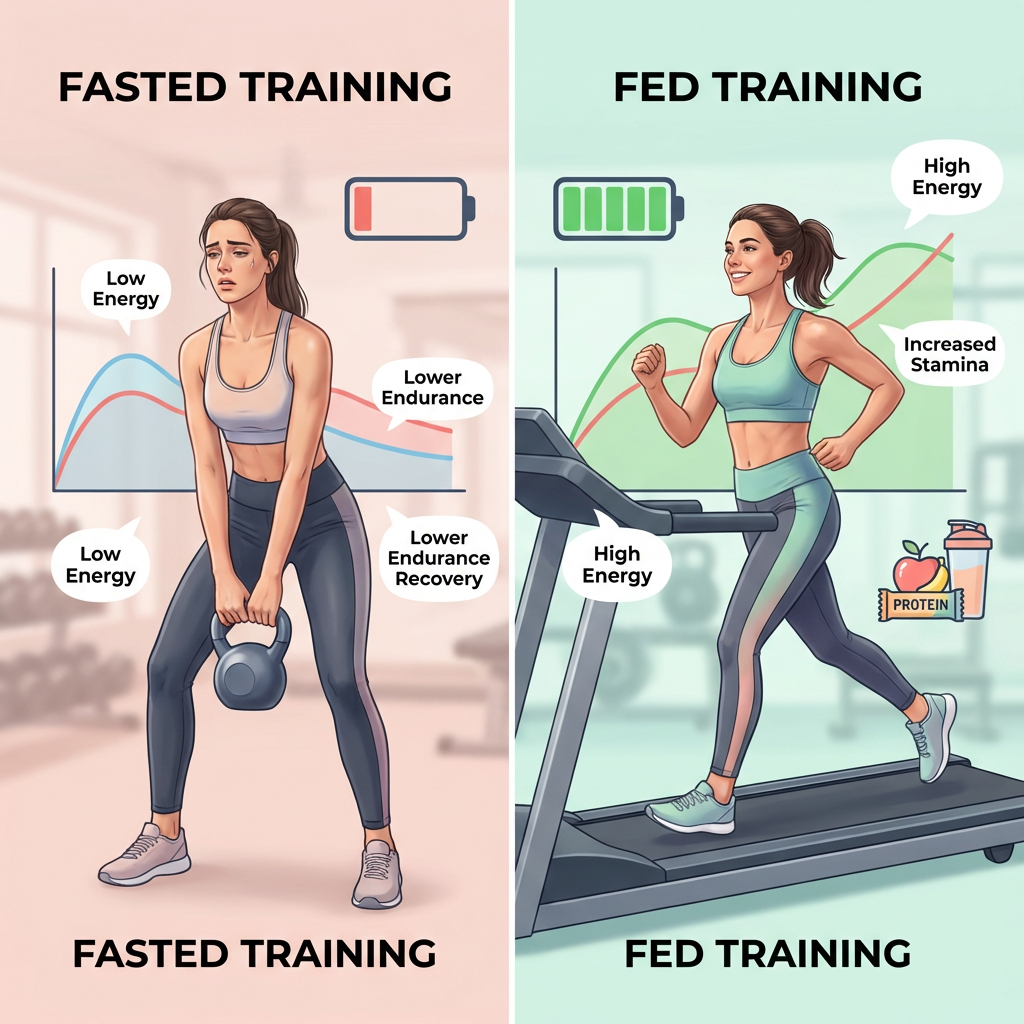
Comparison image showing a woman training fasted versus after eating a pre-workout snack, with energy level indicators and performance metrics displayed
Pre-Workout Nutrition for Different Training Goals
Your pre-workout nutrition strategy should align with your specific fitness objectives. What you eat before a muscle-building session differs from what fuels optimal fat loss or endurance training.
For Building Muscle and Strength
When your goal is gaining strength and building lean muscle, prioritize adequate carbohydrates and protein before training:
- Carbohydrates: 30-60g to fully stock glycogen stores for high-intensity lifting
- Protein: 15-25g to provide amino acids for muscle support
- Timing: 60-90 minutes before training for optimal digestion
- Example: Oatmeal with protein powder and banana, or Greek yogurt with granola and berries
This approach ensures you have maximum energy to lift heavy weights and complete challenging sets, which drives muscle growth and strength gains.
For Fat Loss and Body Recomposition
When focusing on fat loss while preserving muscle, slightly reduce carbohydrates while maintaining protein:
- Carbohydrates: 20-40g for energy without excess calories
- Protein: 15-25g to preserve lean muscle tissue
- Timing: 45-60 minutes before training
- Example: Protein shake with half a banana, or rice cake with nut butter
This strategy provides enough fuel for intense training while supporting your calorie deficit and muscle preservation goals.
For Endurance and Cardio Sessions
Longer cardio sessions require more emphasis on carbohydrates for sustained energy:
- Carbohydrates: 40-80g depending on session length
- Protein: 10-15g (less critical for cardio than strength training)
- Timing: 60-120 minutes before longer sessions
- Example: Toast with honey and a small protein shake, or banana with yogurt
Hydration: The Often-Forgotten Pre-Workout Essential
Proper hydration is just as important as food intake for workout performance. Even mild dehydration of 2% body weight loss can reduce strength by 10% and significantly impair endurance. Yet many women start their workouts already dehydrated.
Pre-Workout Hydration Guidelines
Follow these evidence-based hydration recommendations:
- Throughout the day: Drink 8-10 glasses of water spread across waking hours
- 2-3 hours before training: Consume 16-20 ounces (2-2.5 cups) of water
- 20-30 minutes before: Drink another 8-10 ounces (1-1.5 cups)
- Monitor urine color: Aim for pale yellow; dark yellow indicates dehydration
- Account for climate: Increase intake in hot weather or heated training environments
What About Pre-Workout Supplements?
Pre-workout supplements can enhance performance, but they're not necessary for most women. If you choose to use them, look for products containing:
- Caffeine (100-200mg): Improves focus, energy, and power output
- Creatine (3-5g): Enhances strength and muscle building over time
- Beta-alanine: Reduces muscle fatigue during high-rep sets
- Citrulline malate: Improves blood flow and reduces muscle soreness
Avoid products with proprietary blends, excessive stimulants, or artificial ingredients. For most women, a simple cup of coffee and a balanced pre-workout snack delivers excellent results without the expense or potential side effects of supplements. Explore more about supplements that actually work for women to make informed choices.
Common Pre-Workout Nutrition Mistakes to Avoid
Even with good intentions, many women make nutrition errors that undermine their training performance. Recognizing and correcting these common mistakes can immediately improve your workout quality and results.
Mistake #1: Eating Too Much or Too Close to Training
Consuming a large meal 30 minutes before your workout diverts blood flow to digestion instead of your working muscles. This causes sluggishness, nausea, and reduced performance. Solution: Follow the 30-60-90 timing rule based on meal size, and stop eating when comfortably satisfied rather than overly full.
Mistake #2: Skipping Pre-Workout Nutrition Entirely
Many women skip pre-workout food thinking it will enhance fat loss. In reality, inadequate fuel reduces training intensity, decreases the calories burned during exercise, and can lead to muscle loss. Solution: Even a small snack provides significant performance benefits without derailing fat loss goals.
Mistake #3: Relying on Sugar for Quick Energy
Candy, soda, or pure sugar provides a rapid spike in blood glucose followed by a crash mid-workout. Solution: Pair simple carbohydrates with protein or choose complex carbs that provide steady energy release.
Mistake #4: Ignoring Individual Tolerance
Following generic advice without considering your personal digestive system and preferences leads to discomfort and inconsistency. Solution: Experiment systematically with different foods and timing to discover your optimal strategy.
Mistake #5: Forgetting About Hydration
Focusing solely on food while neglecting fluid intake compromises performance just as much as poor food choices. Solution: Establish a consistent hydration routine starting hours before your workout.
Frequently Asked Questions
What should I eat 30 minutes before a workout?
Eat easily digestible carbohydrates like a banana, rice cake with honey, or a few dates. These provide quick energy without causing digestive discomfort. Keep portions small (15-25g carbs) and avoid protein, fat, or fiber this close to training.
What is the 3-3-3 rule gym?
The 3-3-3 rule suggests eating 3 hours before intense training, consuming 3 macronutrients (carbs, protein, fat), and drinking 3 cups of water. This framework ensures adequate digestion time, balanced nutrition, and proper hydration for optimal workout performance.
What food to avoid before a workout?
Avoid high-fat foods, high-fiber vegetables, beans, fried foods, spicy dishes, and carbonated drinks before training. These slow digestion and cause bloating, gas, or stomach discomfort during exercise. Also skip large meals within 60 minutes of your workout.
Is it OK to workout on an empty stomach?
Fasted workouts are acceptable for low-intensity cardio or short sessions under 45 minutes. However, eating before strength training improves performance, increases training volume, and enhances muscle building. Pre-workout nutrition is especially important for women focused on building strength and muscle.
How much protein should I eat before a workout?
Consume 15-25g of easily digestible protein before strength training. This provides amino acids for muscle support without slowing digestion. Good options include Greek yogurt, protein powder, or egg whites consumed 60-90 minutes before your workout.
Can I drink coffee before working out?
Yes, coffee consumed 30-60 minutes before training can enhance performance, focus, and energy. Limit intake to 100-200mg caffeine (one cup) to avoid jitters or stomach upset. Ensure you're also properly hydrated with water alongside your coffee.
What if I workout early in the morning?
Early morning exercisers should eat a small, quick-digesting snack 20-30 minutes before training. A banana, rice cake with honey, or protein shake provides essential fuel after overnight fasting without requiring extensive digestion time or causing stomach discomfort.
Conclusion: Fuel Your Success
Understanding what to eat before a workout empowers you to maximize every training session. The right pre-workout nutrition enhances your strength, preserves muscle tissue, and accelerates your progress toward your fitness goals. Remember these essential principles:
- Combine carbohydrates and protein in ratios appropriate for your training intensity and goals
- Time your meals strategically using the 30-60-90 minute framework based on portion size
- Choose easily digestible foods that provide energy without causing stomach discomfort
- Avoid high-fat, high-fiber, and problematic foods in the hours before training
- Stay properly hydrated starting hours before your workout
- Experiment to find your optimal strategy since individual tolerance varies
Your pre-workout nutrition strategy is a powerful tool for achieving the strong, capable body you're working toward. By implementing these evidence-based principles, you'll feel more energized during workouts, lift heavier weights, and see faster results from your training efforts.
Ready to take your fitness to the next level? The Strong Curves app provides personalized workout plans, nutrition guidance, and a supportive community of women committed to building strength and confidence. Download the app today and access effective glute-focused training programs designed specifically for women who want real results. Your strongest self is waiting—fuel it properly and watch your transformation unfold.