A weekly workout plan is a structured schedule that organizes strength training, cardio, and recovery across seven days. The most effective plans include 3-4 strength sessions, 2-3 cardio workouts, and active recovery days, using progressive overload to build muscle and improve fitness sustainably.
Are you tired of wandering through your workouts without a clear plan? Without structure, it's easy to miss muscle groups, overtrain, or lose motivation entirely. A well-designed weekly workout plan eliminates guesswork and transforms your fitness journey from random exercise into purposeful progress.
Creating a weekly workout plan isn't about perfection—it's about consistency and smart programming that fits your life. Whether you're new to strength training or returning after a break, having a roadmap helps you build strength, tone your body, and develop confidence in the gym or at home.
This guide will walk you through building an effective weekly workout plan that targets all major muscle groups, balances intensity with recovery, and adapts to your schedule. You'll learn how to structure your training week, which exercises deliver the best results, and how to progress safely without burnout.
Key Takeaways
- An effective weekly workout plan includes 3-4 strength training days, 2-3 cardio sessions, and at least one full rest day for optimal recovery
- Progressive overload—gradually increasing weight, reps, or intensity—is essential for building strength and toning muscles over time
- Balancing push, pull, and leg movements throughout the week prevents muscle imbalances and reduces injury risk
- Rest days are not optional—they allow muscles to repair, grow stronger, and prevent overtraining syndrome
- Consistency beats intensity: following a moderate plan for months delivers better results than sporadic intense workouts
Understanding the Foundation of a Weekly Workout Plan
Before diving into specific exercises, you need to understand what makes a weekly workout plan effective. The best weekly workout plan balances training frequency, exercise selection, intensity, and recovery to create sustainable progress without burnout.
What Makes an Effective Training Schedule
An effective schedule distributes work across the week so each muscle group receives adequate stimulus and recovery time. Most women thrive on 4-5 training days per week, with 2-3 rest or active recovery days.
Your plan should include three core components: resistance training for strength and muscle tone, cardiovascular exercise for heart health and endurance, and mobility work for injury prevention and movement quality.

Infographic showing the three pillars of an effective weekly workout plan: strength training, cardiovascular exercise, and recovery days with icons for each component
The Role of Progressive Overload
Progressive overload is the principle of gradually increasing training demands over time. This might mean adding weight to your squats, performing more reps, or reducing rest periods between sets.
Without progressive overload, your body adapts to the current stimulus and stops making improvements. Track your workouts in a journal or app to ensure you're progressing every 1-2 weeks.
Why Rest Days Matter
Rest days aren't lazy days—they're when your muscles repair and grow stronger. During resistance training, you create microscopic tears in muscle fibers. Recovery allows these fibers to rebuild thicker and stronger.
Schedule at least one complete rest day per week. On other days, consider active recovery like walking, gentle yoga, or stretching to promote blood flow without taxing your muscles.
The Best 7 Day Workout Plan Structure
The best 7 day workout plan strategically distributes training across the week to maximize results while preventing overtraining. Here's how to structure your week for optimal strength and toning.
Upper/Lower Split Approach
This approach alternates between upper body and lower body training days. It's ideal for beginners to intermediate lifters because it allows adequate recovery between sessions targeting the same muscle groups.
A typical upper/lower split looks like this:
- Monday: Upper Body (chest, back, shoulders, arms)
- Tuesday: Lower Body (glutes, quads, hamstrings, calves)
- Wednesday: Active Recovery or Cardio
- Thursday: Upper Body
- Friday: Lower Body
- Saturday: Full Body or Cardio
- Sunday: Complete Rest
Push/Pull/Legs Framework
This framework divides exercises by movement pattern. Push days include chest, shoulders, and triceps. Pull days target back and biceps. Leg days focus on lower body.
The push/pull/legs split allows you to train each muscle group twice per week when repeated, promoting faster strength gains. This structure works well for intermediate to advanced lifters.
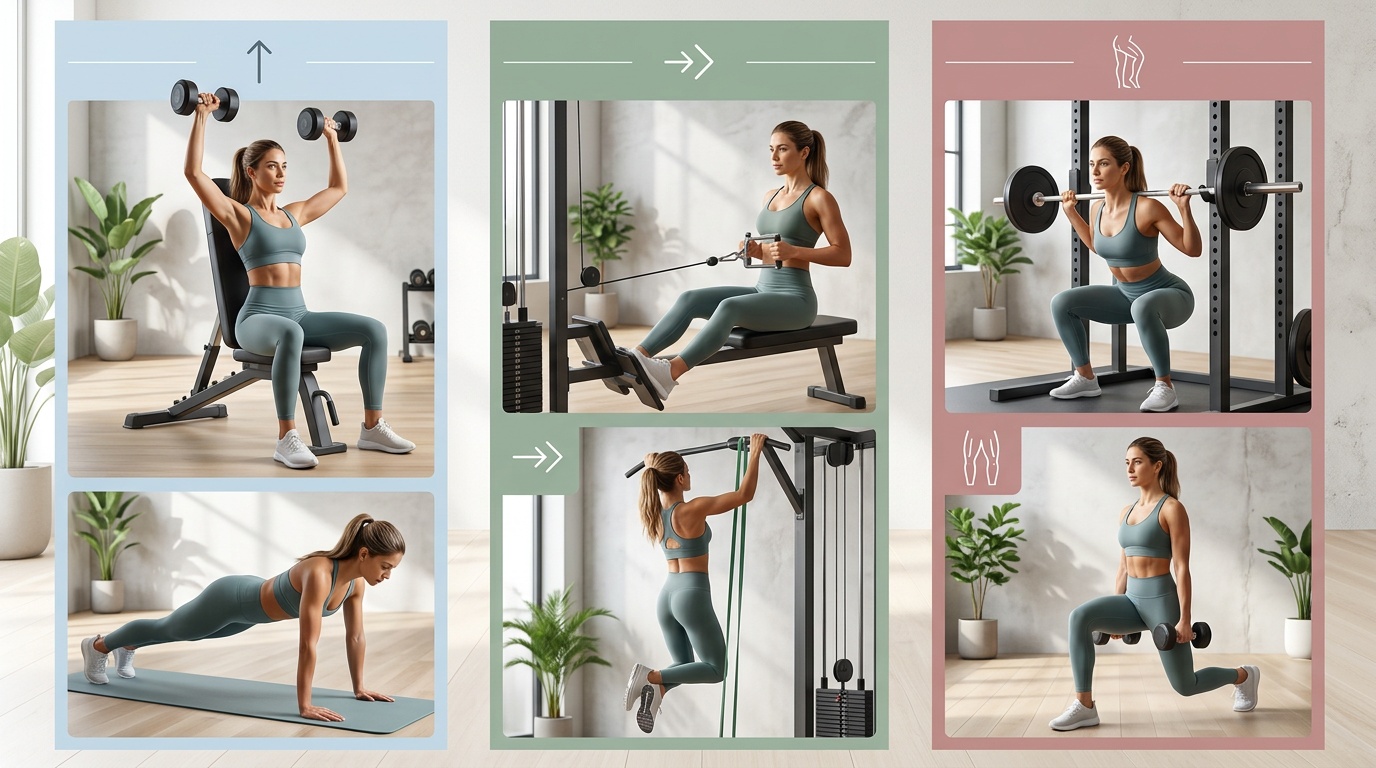
Visual diagram showing push/pull/legs workout split with example exercises for each category: push exercises like push-ups and shoulder press, pull exercises like rows and pull-ups, and leg exercises like squats and lunges
Full Body Training Schedule
Full body workouts train all major muscle groups in each session. This approach works exceptionally well for beginners or women with limited training time.
Perform full body workouts 3 times per week on non-consecutive days (Monday, Wednesday, Friday). This provides 48 hours of recovery between sessions while maintaining training frequency.
Essential Exercises for Your Weekly Workout Plan
Building an effective weekly workout plan requires selecting compound movements that deliver maximum results. These exercises should form the foundation of your training program.
Compound Movements for Maximum Efficiency
Compound exercises work multiple muscle groups simultaneously, making them incredibly time-efficient. Prioritizing compound movements in your weekly workout plan builds functional strength and burns more calories than isolation exercises.
Essential compound exercises include:
- Squats: Target glutes, quads, hamstrings, and core while improving lower body power
- Deadlifts: Engage the entire posterior chain including glutes, hamstrings, back, and core
- Hip Thrusts: Isolate and maximize glute activation for strength and shape
- Push-ups: Build chest, shoulders, triceps, and core stability
- Rows: Strengthen back muscles, improve posture, and balance pushing movements
- Overhead Press: Develop shoulder strength and stability
- Lunges: Improve single-leg strength, balance, and glute activation
Isolation Work for Targeted Toning
After compound movements, isolation exercises help target specific muscles for balanced development. These include bicep curls, tricep extensions, lateral raises, and glute kickbacks.
Perform isolation work at the end of your workout when major muscle groups are already fatigued. This approach maximizes efficiency while still allowing targeted muscle development.
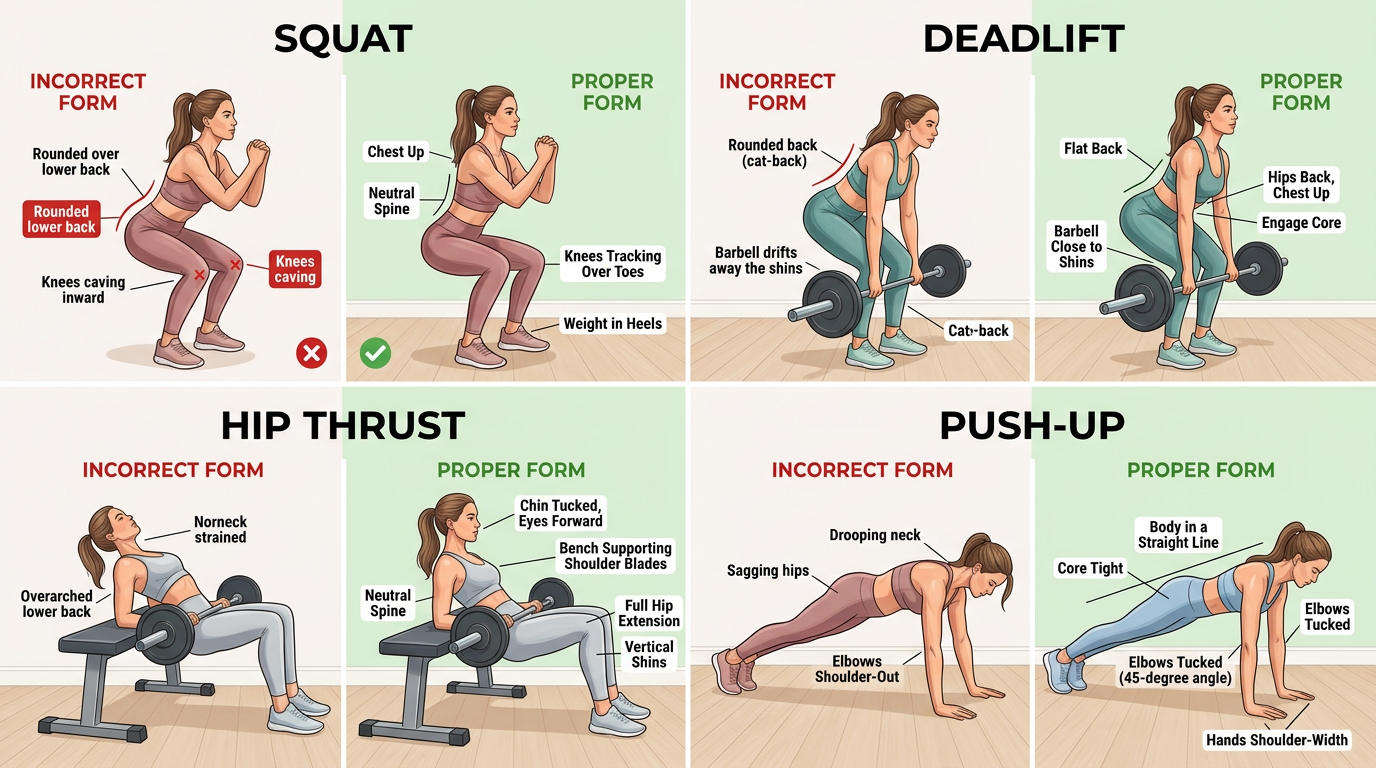
Side-by-side comparison images showing proper form for key compound exercises including squats, deadlifts, hip thrusts, and push-ups with form cues labeled
Core Training Integration
Your core stabilizes every movement, from squats to daily activities. Integrate core work 3-4 times per week through exercises like planks, dead bugs, bird dogs, and pallof presses.
Rather than dedicating entire sessions to abs, add 10-15 minutes of core work at the end of strength training sessions. This approach saves time while ensuring consistent core development.
Cardio Integration in Your Weekly Workout Plan
Cardiovascular exercise supports heart health, endurance, and recovery. The key is integrating cardio strategically so it complements rather than interferes with strength training.
LISS vs HIIT: Choosing the Right Approach
Low-Intensity Steady State (LISS) cardio includes activities like walking, cycling, or swimming at a conversational pace for 30-60 minutes. It promotes recovery, burns calories, and doesn't significantly impact strength training performance.
High-Intensity Interval Training (HIIT) alternates short bursts of maximum effort with rest periods. While time-efficient and effective for conditioning, HIIT is demanding and should be limited to 1-2 sessions per week to avoid overtraining.
Optimal Cardio Frequency and Timing
Include 2-3 cardio sessions per week, scheduling LISS on rest days or after strength training, and HIIT on separate days from heavy lower body work. This timing prevents cardio from compromising strength performance.
If you must combine cardio and strength training, perform strength work first when energy levels are highest. This ensures you can lift with proper form and adequate intensity.
Heart Health Considerations
Regular cardiovascular exercise strengthens your heart, improves circulation, and reduces cardiovascular disease risk. For heart health specifically, moderate-intensity activities like brisk walking, swimming, or cycling are highly effective.
Aim for 150 minutes of moderate-intensity cardio per week, which can be broken into 30-minute sessions five days per week. This meets standard guidelines for cardiovascular health maintenance.
Sample Weekly Workout Plans for Different Goals
Your weekly workout plan should align with your specific goals. Here are three proven templates for different objectives.
Strength Building Focus
For maximum strength gains, prioritize heavy compound lifts with lower rep ranges (3-6 reps) and longer rest periods (2-3 minutes).
Monday: Lower Body Strength (Squats, Romanian Deadlifts, Hip Thrusts)
Tuesday: Upper Body Strength (Bench Press, Rows, Overhead Press)
Wednesday: Active Recovery
Thursday: Lower Body Strength (Deadlifts, Bulgarian Split Squats, Leg Press)
Friday: Upper Body Strength (Pull-ups, Dips, Barbell Rows)
Saturday: LISS Cardio
Sunday: Complete Rest
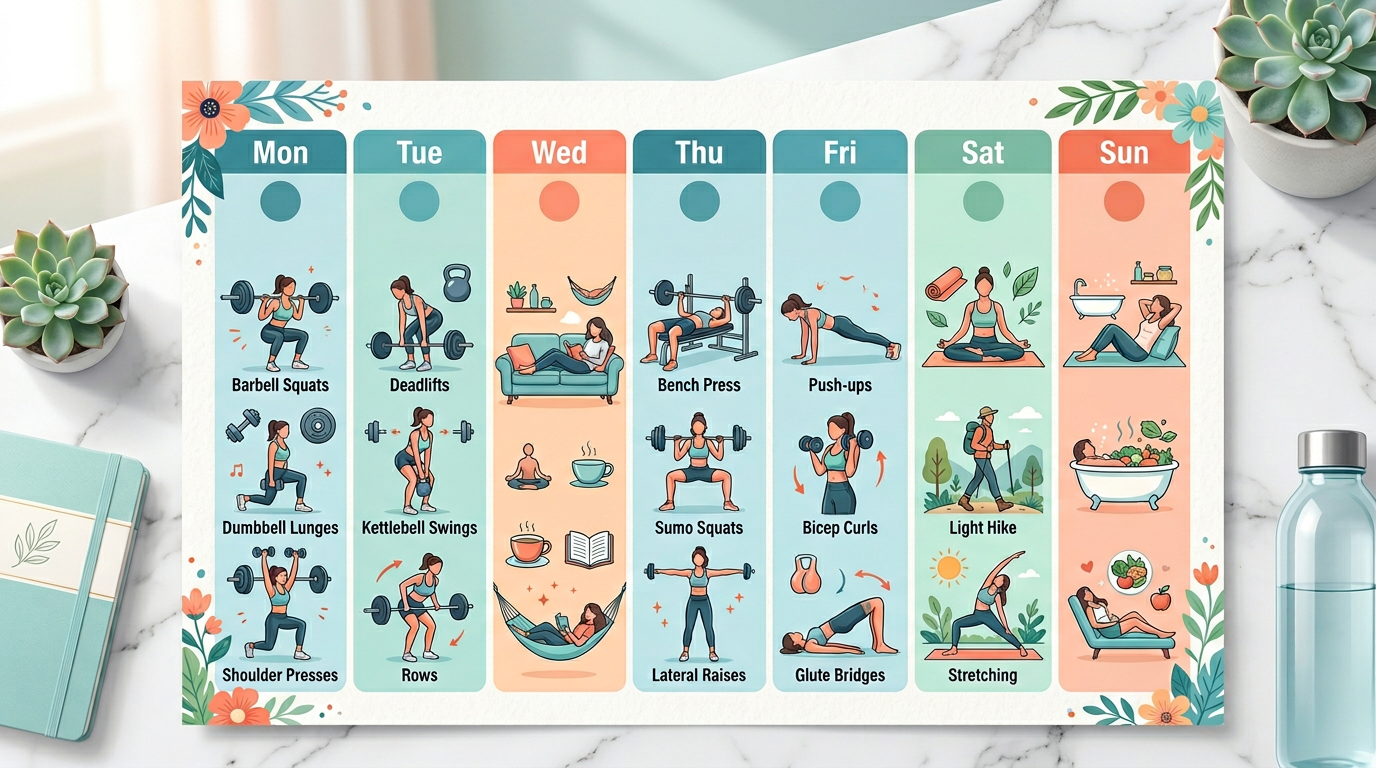
Weekly calendar layout showing a strength-focused workout plan with exercise icons for each day, including rest days and active recovery highlighted in different colors
Muscle Toning and Definition
For toning and definition, use moderate weights with higher rep ranges (8-15 reps) and shorter rest periods (45-90 seconds). This approach builds muscle while creating metabolic stress for definition.
Monday: Full Body Circuit
Tuesday: HIIT Cardio
Wednesday: Upper Body Hypertrophy
Thursday: Active Recovery (Yoga or Walking)
Friday: Lower Body Hypertrophy
Saturday: Full Body Circuit
Sunday: Complete Rest
Balanced Fitness and Health
For overall fitness and health maintenance, combine moderate strength training with regular cardio and flexibility work.
Monday: Full Body Strength
Tuesday: Moderate Cardio (30 minutes)
Wednesday: Upper Body + Core
Thursday: Active Recovery (Walking, Stretching)
Friday: Lower Body + Glutes
Saturday: Cardio + Mobility Work
Sunday: Complete Rest
The 3-3-3 Rule and Other Training Principles
Understanding key training principles helps you make informed decisions about your weekly workout plan. These frameworks provide structure and prevent common programming mistakes.
What is the 3-3-3 Rule at the Gym
The 3-3-3 rule at the gym refers to performing 3 sets of 3 exercises for 3 muscle groups in each workout session. This principle ensures balanced training volume without excessive workout duration.
This rule helps beginners structure workouts efficiently by limiting exercise selection while ensuring adequate volume for muscle stimulation. For example, you might do 3 sets each of squats, lunges, and leg press to target quads, glutes, and hamstrings.
Progressive Overload Strategies
Progressive overload can be achieved through multiple methods beyond just adding weight. Increase reps, add sets, reduce rest periods, improve range of motion, or increase training frequency.
Track at least one variable each week. If you performed 3 sets of 10 squats at 80 pounds this week, aim for 3 sets of 11 reps or 3 sets of 10 at 85 pounds next week.
Deload Weeks for Long-Term Progress
Every 4-6 weeks, schedule a deload week where you reduce training volume or intensity by 40-50%. This strategic reduction allows your body to fully recover and adapt to previous training stress.
Deload weeks prevent overtraining, reduce injury risk, and often lead to strength gains when you return to normal training. Don't skip them—they're essential for sustainable progress.
Common Mistakes to Avoid in Your Weekly Workout Plan
Even well-intentioned workout plans can fail if you fall into common programming traps. Avoiding these mistakes accelerates your progress and prevents frustration.
Overtraining and Inadequate Recovery
More is not always better. Training the same muscle groups on consecutive days or never taking rest days leads to overtraining syndrome, characterized by fatigue, decreased performance, and increased injury risk.
Each muscle group needs 48 hours of recovery between intense training sessions. If you trained legs heavily on Monday, wait until Wednesday or Thursday before another intense lower body workout.
Neglecting Progressive Overload
Performing the same weights, reps, and exercises for months yields diminishing returns. Your body adapts to consistent stimuli, requiring increased demands to continue improving.
Review your training log every 1-2 weeks and identify where you can add weight, reps, or intensity. Small increments—even 2.5 pounds—create significant progress over months.
Imbalanced Training Splits
Training favorite muscle groups while neglecting others creates imbalances that affect performance and increase injury risk. If you train glutes four times per week but never work your back, you'll develop poor posture and movement patterns.
Ensure your weekly workout plan includes balanced volume across all major muscle groups. For every pushing exercise, include a pulling exercise. For every quad-dominant movement, include a hip-dominant movement.
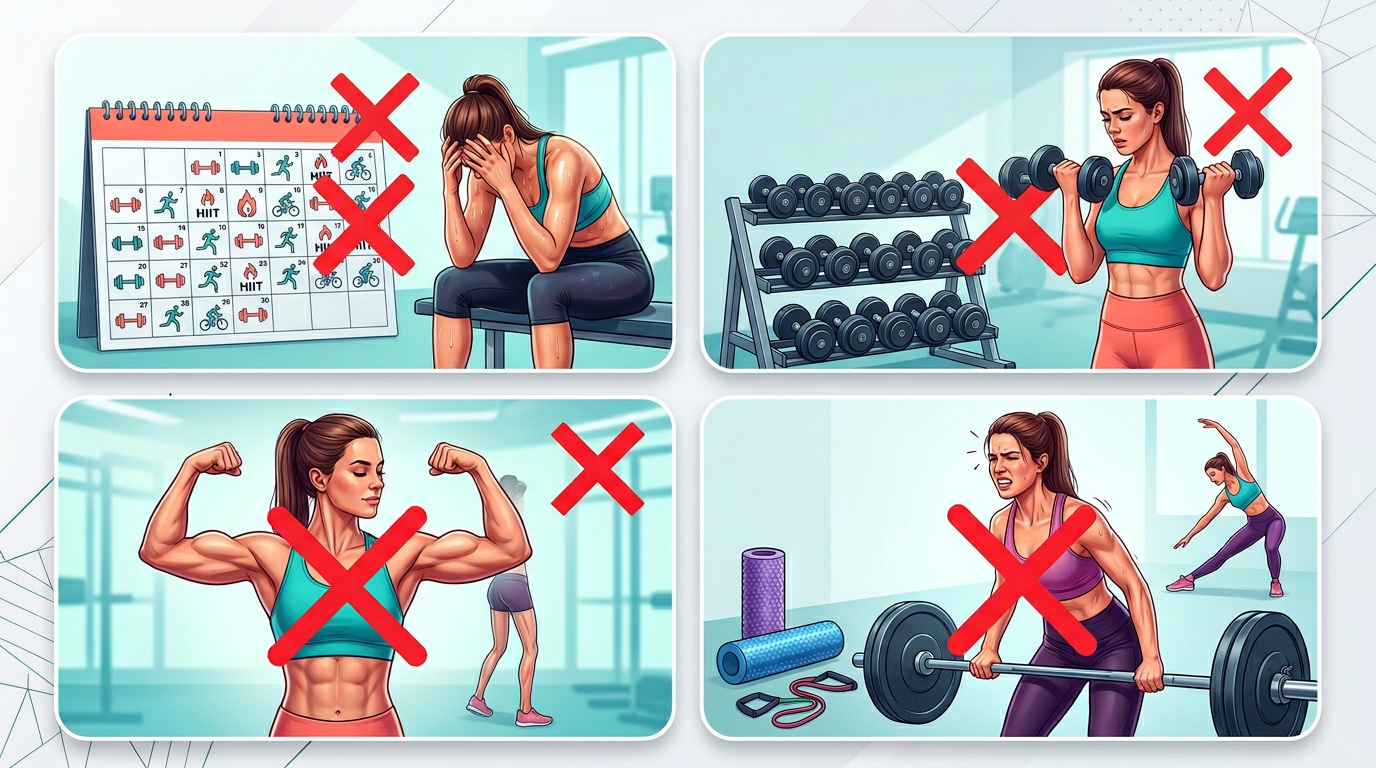
Visual checklist showing common workout plan mistakes with red X marks: overtraining calendar, same weights every week, imbalanced muscle group training, and skipping warm-ups
Skipping Warm-Ups and Cool-Downs
Jumping straight into heavy lifting without warming up increases injury risk and decreases performance. A proper warm-up increases blood flow, improves range of motion, and prepares your nervous system for training.
Spend 5-10 minutes on dynamic stretching and movement preparation before workouts. After training, dedicate 5 minutes to static stretching and cool-down activities to promote recovery.
Adapting Your Plan to Your Lifestyle
The perfect weekly workout plan is the one you can actually follow consistently. Adapt your training schedule to fit your life rather than forcing your life around an unrealistic program.
Time-Efficient Workout Strategies
Limited time doesn't mean limited results. Full body workouts lasting 45 minutes three times per week can deliver excellent results when exercises are chosen strategically and intensity is maintained.
Use supersets (pairing two exercises back-to-back) to reduce workout duration without sacrificing volume. For example, alternate between squats and rows with minimal rest between exercises.
Training at Home vs Gym
Both environments can deliver results when your weekly workout plan is designed appropriately. Gym access provides more equipment variety, while home training offers convenience and time savings.
Home training requires minimal equipment—dumbbells, resistance bands, and a bench or stable chair enable hundreds of effective exercises. Bodyweight movements like push-ups, squats, and lunges form a solid foundation.
Adjusting for Energy Levels and Life Stress
Some weeks will be harder than others. When stress is high or energy is low, reduce training volume or intensity rather than skipping workouts entirely. A lighter workout maintains consistency and often improves mood.
Listen to your body. If you're excessively sore, fatigued, or experiencing joint pain, take an extra rest day. Missing one workout to prevent injury beats missing weeks due to overtraining.
Tracking Progress and Making Adjustments
Consistent tracking transforms your weekly workout plan from guesswork into a data-driven system that reveals what works and what needs adjustment.
Metrics Worth Monitoring
Track workout performance including weights lifted, reps completed, and sets performed. Also monitor subjective measures like energy levels, sleep quality, and how your clothes fit.
Progress photos taken every 4 weeks under consistent lighting reveal changes that daily mirror checks miss. Body measurements (waist, hips, thighs, arms) provide objective data beyond scale weight.
When to Modify Your Plan
If you're not seeing progress after 4-6 weeks of consistent training, adjust one variable. Increase training frequency, add volume, or modify exercise selection. Change only one element at a time to identify what drives results.
Plateaus are normal and often indicate you need a new stimulus rather than more of the same. If linear progression stalls, consider periodization strategies or different training splits.
Celebrating Small Wins
Progress isn't always linear or dramatic. Celebrate non-scale victories like lifting heavier weights, completing more reps, improved energy levels, or better sleep quality.
These small wins accumulate into significant transformations over months and years. Recognize and appreciate each milestone—they indicate your weekly workout plan is working.
Frequently Asked Questions
What is the best 7 day workout plan?
The best 7 day workout plan includes 3-4 strength training days targeting all major muscle groups, 2-3 cardio sessions, and at least one complete rest day. Structure it as upper/lower splits or full body workouts depending on your experience level and schedule.
What is the 3 3 3 rule at the gym?
The 3 3 3 rule at the gym means performing 3 sets of 3 exercises for 3 different muscle groups in each workout. This framework helps beginners structure balanced training sessions without excessive duration or volume.
How many rest days should I include in my weekly workout plan?
Include at least one complete rest day per week, with 2-3 rest or active recovery days ideal for most women. Rest days allow muscles to repair and grow stronger, preventing overtraining and reducing injury risk while supporting long-term progress.
Can I build muscle with a 3 day per week workout plan?
Yes, you can build muscle training 3 days per week with full body workouts that include compound movements and progressive overload. Focus on squats, deadlifts, presses, and rows with adequate intensity and recovery between sessions for effective muscle growth.
What is the best exercise for heart disease prevention?
Moderate-intensity aerobic exercise like brisk walking, swimming, or cycling is most effective for heart disease prevention. Aim for 150 minutes weekly of activities that elevate your heart rate to 50-70% of maximum while allowing conversation during exercise.
Should I do cardio and strength training on the same day?
You can combine cardio and strength training on the same day by performing strength work first when energy is highest. Alternatively, separate them by several hours or schedule LISS cardio on rest days to optimize recovery and performance for both modalities.
How long should each workout last in my weekly plan?
Effective workouts typically last 45-60 minutes including warm-up and cool-down. Shorter 30-minute sessions can work for time-efficient full body training, while longer 75-minute sessions may be needed for advanced training splits with higher volume.
Conclusion
Creating an effective weekly workout plan transforms random exercise into purposeful progress toward your strength and fitness goals. By balancing strength training, cardiovascular work, and adequate recovery, you build a sustainable routine that delivers long-term results.
The key to success isn't finding the perfect weekly workout plan—it's consistently following a good plan and progressively challenging yourself over time. Start with a structure that fits your schedule, track your progress, and adjust based on results and how your body responds.
Remember that rest days are as important as training days, progressive overload drives continuous improvement, and small consistent efforts compound into remarkable transformations. Your weekly workout plan is a tool for building not just a stronger body, but also confidence and resilience that extends beyond the gym.