Squat variations are modifications of the traditional squat that target different muscle groups and movement patterns. The most effective include goblet squats, sumo squats, Bulgarian split squats, and jump squats, each offering unique benefits for building lower body strength without adding bulk while improving mobility and functional fitness.
If you've ever felt intimidated by the idea that squats will make you bulky, you're not alone. Many women avoid this powerful exercise due to misconceptions about strength training. The truth is, squat variations are one of the most effective tools for building lean, functional strength while sculpting your lower body.
Squats don't create bulk—they create strength, power, and confidence. Your genetics, nutrition, and training approach determine your physique, not the exercise itself. By incorporating diverse squat variations into your routine, you'll challenge your muscles in new ways, prevent plateaus, and build the strong, capable body you deserve.
This comprehensive guide will walk you through the best squat variations for women, explaining proper form, benefits, and how to program them for maximum results. Whether you're a beginner or an experienced lifter, you'll discover new ways to make squats work for your goals.
Key Takeaways
- Squats build strength and definition without creating bulk when programmed correctly
- Different squat variations target specific muscle groups and movement patterns for balanced development
- Proper form and progressive overload are essential for results and injury prevention
- Bodyweight variations are perfect for beginners before adding external resistance
- Incorporating 3-5 different squat variations weekly prevents plateaus and maintains engagement
Understanding Why Squat Variations Matter for Women
The traditional back squat is excellent, but relying on just one movement pattern limits your potential. Squat variations allow you to target different muscle fibers, improve mobility in various planes of motion, and address individual weaknesses.
The Science Behind Strength Without Bulk
Building bulky muscles requires a caloric surplus, specific hormonal profiles, and years of dedicated hypertrophy training. Women naturally have lower testosterone levels, making significant muscle mass gain challenging without intentional effort.
When you perform squat variations with moderate weight and proper programming, you're building lean muscle tissue that increases metabolism, improves bone density, and creates definition. This is strength training, not bodybuilding.
Benefits Beyond Aesthetics
Squat variations offer functional benefits that extend into daily life. They improve your ability to pick up objects, climb stairs, maintain balance, and prevent injury. Strong glutes and legs protect your knees and lower back from strain.
Additionally, squats engage your core throughout the movement, building stability and posture. This full-body engagement makes squats one of the most efficient exercises for overall fitness.
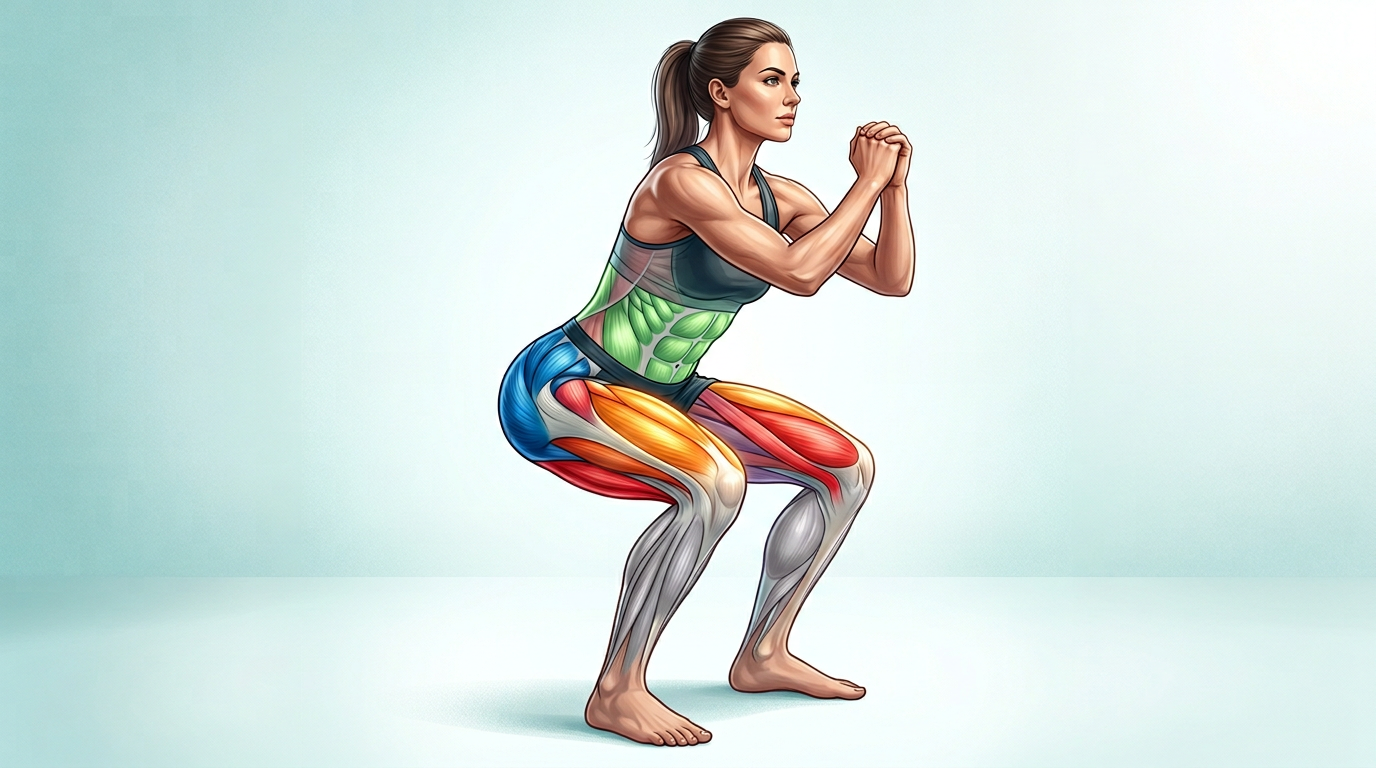
Anatomical diagram showing the primary muscles activated during squat variations including quadriceps, glutes, hamstrings, and core muscles with different colors highlighting each muscle group
Bodyweight Squat Variations for Beginners
Starting with bodyweight squat variations builds a solid foundation before adding resistance. These movements teach proper mechanics while building strength and confidence.
Basic Air Squat
The air squat is your foundation. Stand with feet hip to shoulder-width apart, toes slightly turned out. Initiate the movement by pushing your hips back, then bending your knees to lower down while keeping your chest proud and weight in your heels.
Lower until your thighs are parallel to the ground or slightly below, then drive through your heels to stand. Keep your knees tracking over your toes throughout the movement. This basic pattern applies to nearly all squat variations.
Wall Squat
Wall squats are excellent for building endurance and teaching proper positioning. Stand with your back against a wall, feet about two feet away from it. Slide down until your thighs are parallel to the ground, forming a 90-degree angle at your knees.
Hold this position for 20-60 seconds, focusing on pressing your lower back into the wall and keeping your core engaged. This isometric hold builds muscular endurance without movement.
Squat to Box
Using a box, bench, or chair removes the fear of falling and helps you learn proper depth. Stand in front of the box and perform a squat, lightly tapping your glutes to the surface before standing back up.
This variation teaches you to sit back into your hips and provides a consistent depth target. As you improve, use progressively lower boxes to increase range of motion.
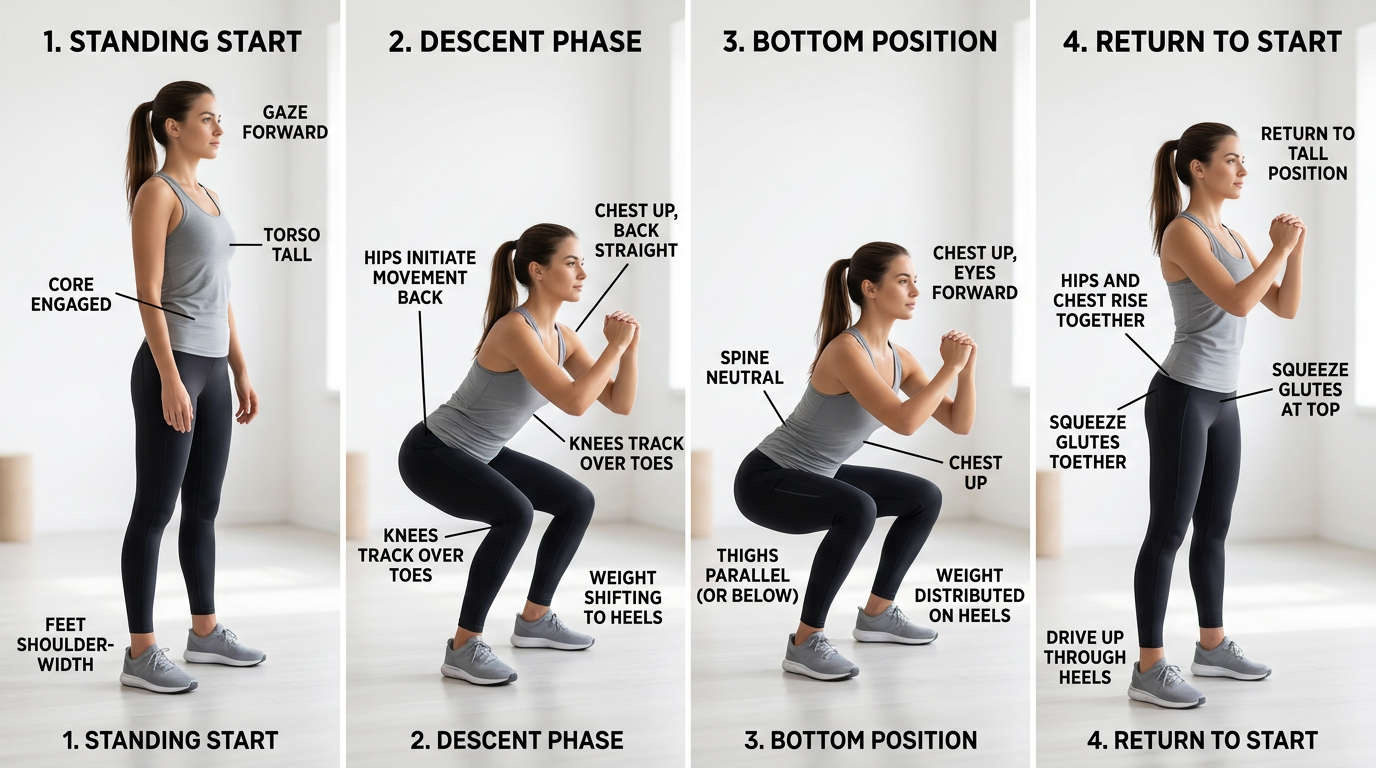
Step-by-step photo sequence showing proper form for bodyweight air squat from standing position through descent to bottom position and return, with form cues labeled
Weighted Squat Variations to Build Strength
Once you've mastered bodyweight movements, adding resistance accelerates strength gains and muscle development. These weighted squat variations offer different loading patterns and challenges.
Goblet Squat
The goblet squat is the best squat variation for learning proper form with weight. Hold a dumbbell or kettlebell at chest height, elbows pointing down. The front-loaded weight naturally keeps your torso upright and encourages proper depth.
This variation is incredibly effective for glute and quad development while being easier on your back than barbell squats. Start with 10-20 pounds and focus on perfect form before increasing weight.
Dumbbell Front Squat
Hold dumbbells at shoulder height, resting them on your shoulders with elbows pointing forward. This creates similar mechanics to a barbell front squat but with more accessible equipment.
Front-loaded squats emphasize your quadriceps and require significant core engagement to maintain an upright torso. They're excellent for building strength while protecting your lower back.
Barbell Back Squat
The classic barbell back squat allows you to lift the heaviest loads, making it ideal for building maximum strength. The bar rests across your upper back (high bar) or rear shoulders (low bar).
Focus on progressive overload by gradually increasing weight over weeks and months. Proper form is non-negotiable—never sacrifice technique for heavier weight. Consider working with a trainer to perfect your setup and execution.
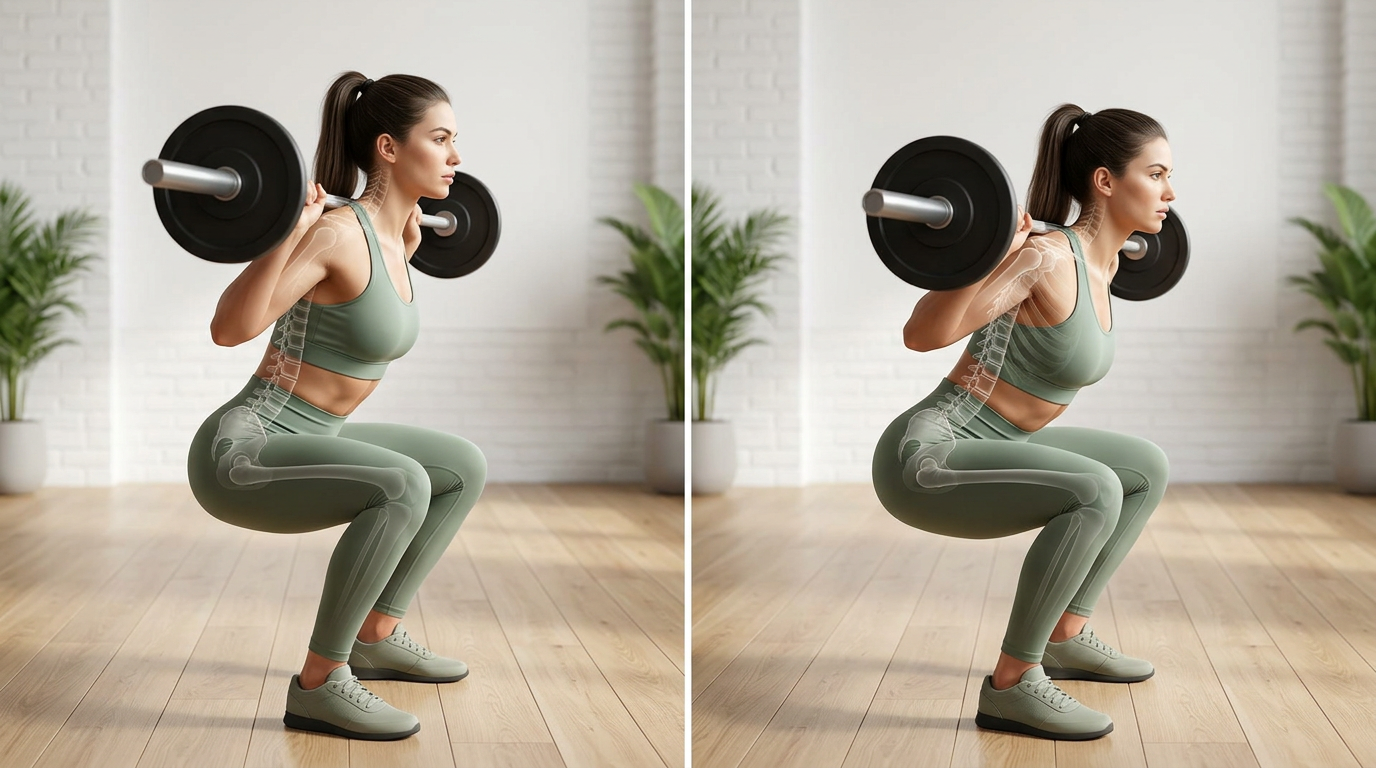
Side-by-side comparison images showing proper barbell placement for high bar versus low bar back squat positions with skeletal overlay showing spine angle differences
Squat Variations for Glute Development
While all squats activate your glutes, certain variations maximize glute engagement. These movements are essential for building strong, shapely glutes.
Sumo Squat
Take a wide stance with toes pointed out at 45 degrees. This positioning shifts emphasis to your inner thighs and glutes. Lower down by sitting back and spreading your knees outward.
Sumo squats can be performed with dumbbells, kettlebells, or a barbell. The wider stance also reduces stress on your knees, making this variation comfortable for many women.
Bulgarian Split Squat
This single-leg variation is a glute-building powerhouse. Place your rear foot on a bench or box behind you, then lower down into a split squat position. The Bulgarian split squat creates significant glute activation while improving balance and addressing strength imbalances between legs.
Keep your front shin vertical and weight in your front heel. Lower until your front thigh is parallel to the ground. You'll feel intense glute engagement in your working leg.
Curtsy Lunge
While technically a lunge, the curtsy movement pattern deserves mention for glute development. Step one leg behind and across your body, lowering into a curtsy position.
This movement targets your gluteus medius, the upper glute muscle responsible for hip stability and that coveted upper glute definition. Perform with bodyweight or hold dumbbells for added resistance.
Explosive Squat Variations for Power
Adding explosive elements to squat variations builds power, athleticism, and calorie burn. These movements elevate your heart rate while developing fast-twitch muscle fibers.
Jump Squat
Perform a standard squat, but explode upward at the top, jumping off the ground. Land softly with bent knees and immediately descend into your next rep.
Jump squats combine strength training with cardiovascular conditioning. They're excellent for building explosive power and burning calories. Start with bodyweight before considering adding a light weight vest.
Squat to Press
Hold dumbbells at shoulder height and perform a squat. As you drive up from the bottom position, press the weights overhead. This full-body movement combines lower body strength with shoulder development.
The squat to press is perfect for conditioning workouts and building functional strength. It teaches you to transfer power from your legs through your core to your upper body.
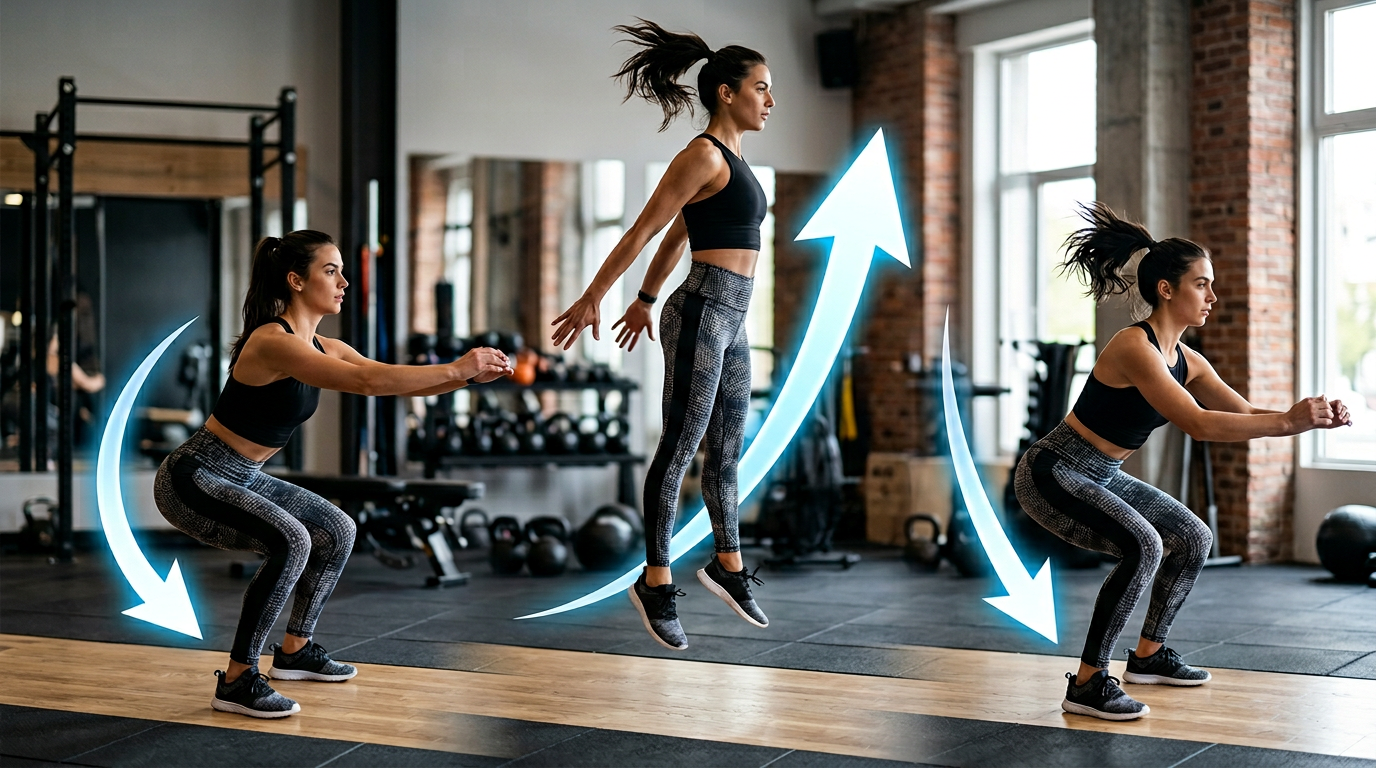
Dynamic action photo showing the three phases of a jump squat: descent, explosive takeoff, and soft landing, with arrows indicating movement direction
Single-Leg Squat Variations for Balance
Single-leg squat variations challenge your balance while addressing strength imbalances. These movements build functional strength and improve stability.
Pistol Squat
The pistol squat is an advanced bodyweight movement. Stand on one leg with the other extended forward. Lower down into a full squat while keeping your extended leg off the ground.
This variation requires significant strength, mobility, and balance. Most women need to work up to full pistol squats by using assistance like a TRX strap or holding onto a stable surface.
Step-Up Variations
While not technically a squat, step-ups create similar muscle activation patterns. Step onto a box or bench with one leg, driving through your heel to lift your body up.
Step-ups are more accessible than pistol squats while still providing unilateral training benefits. They're excellent for building glute strength and improving balance without the technical demands of pistol squats.
How to Program Squat Variations Into Your Routine
Strategic programming ensures you're building strength without overtraining. Include 2-3 different squat variations per workout, performing 3-4 sets of 8-12 repetitions for hypertrophy or 4-5 sets of 4-6 repetitions for strength.
Weekly Training Structure
A balanced weekly program might include:
- Day 1: Barbell back squat (strength focus) + Bulgarian split squats (hypertrophy)
- Day 2: Rest or upper body focus
- Day 3: Goblet squats (moderate weight) + jump squats (power)
- Day 4: Rest or active recovery
- Day 5: Sumo squats + step-ups (unilateral work)
This structure provides variety while allowing adequate recovery between sessions. Adjust frequency based on your experience level and recovery capacity.
Progressive Overload Principles
Progressive overload means gradually increasing the demands on your muscles over time. This can mean adding weight, increasing repetitions, improving range of motion, or reducing rest periods.
Track your workouts in a journal or app. Aim to improve one variable every 1-2 weeks. This consistent progression is what builds strength and changes your body composition.
Avoiding Common Mistakes
Many women make these programming errors:
- Too much variety: Constantly changing exercises prevents progressive overload
- Insufficient intensity: Using weights that feel comfortable won't drive adaptation
- Neglecting recovery: Muscles grow during rest, not during workouts
- Poor form for heavier weight: Sacrificing technique increases injury risk
- Inconsistent training: Sporadic workouts prevent meaningful progress
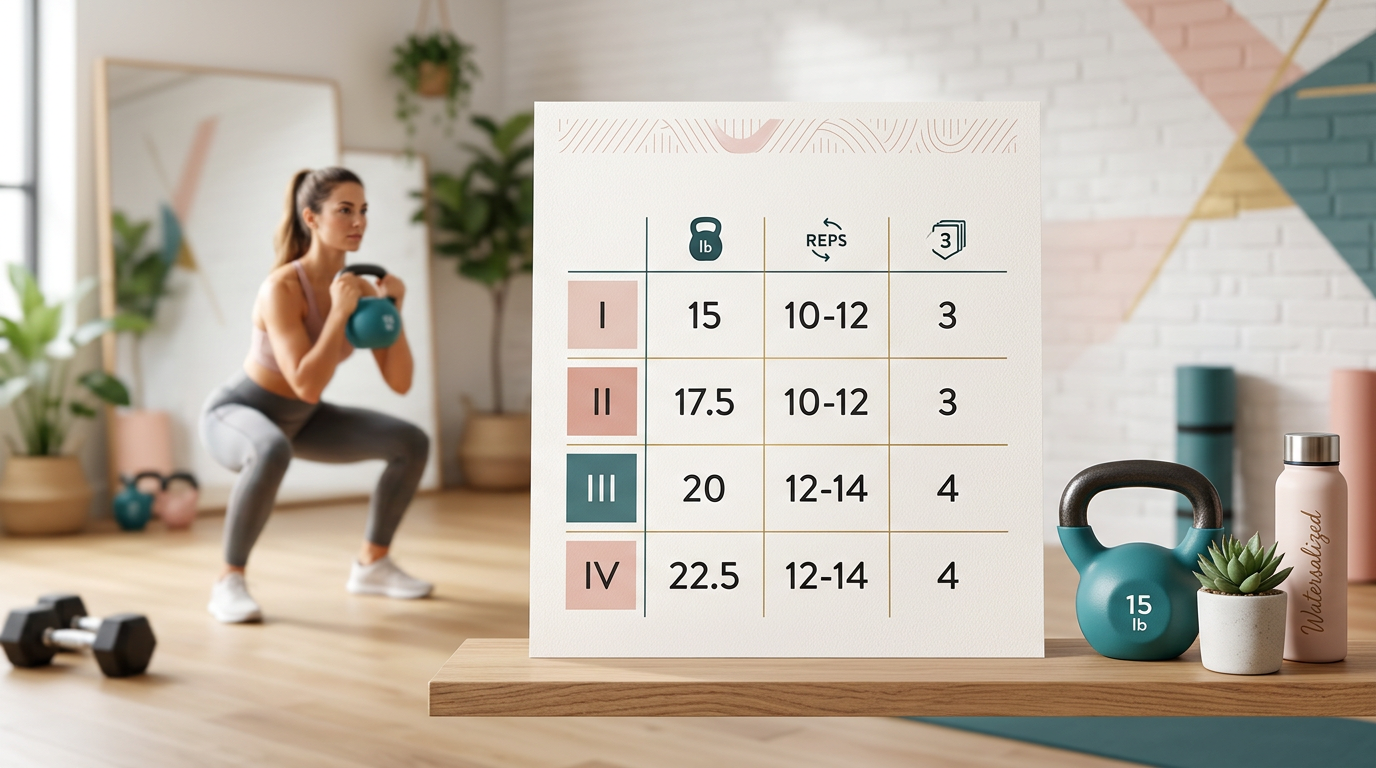
Sample 4-week progressive overload training chart showing gradual increases in weight and reps for goblet squats, displayed as a simple table or graph
Proper Form and Safety Considerations
Proper form protects you from injury while maximizing results. Every squat variation shares fundamental form principles.
Universal Form Cues
Apply these cues to all squat variations:
- Neutral spine: Maintain natural spinal curves throughout the movement
- Engaged core: Brace your abs as if preparing for a punch
- Knees tracking toes: Your knees should move in the same direction as your toes
- Weight in heels: You should be able to wiggle your toes at the bottom
- Controlled tempo: Lower for 2-3 seconds, pause briefly, then drive up powerfully
- Full range of motion: Descend until thighs are at least parallel to the ground
Mobility Requirements
Limited ankle or hip mobility can compromise squat form. If you struggle to achieve proper depth with good form, incorporate mobility work into your warm-up.
Hip flexor stretches, ankle mobility drills, and thoracic spine extensions improve your squat mechanics. Spending 5-10 minutes on mobility before squatting pays significant dividends.
When to Seek Professional Guidance
Consider working with a qualified trainer if you experience pain during squats, struggle with form despite practice, or want to learn advanced variations safely. Investment in proper coaching prevents injury and accelerates progress.
Nutrition Considerations for Strength Building
Your training is only one piece of the puzzle. Adequate protein intake and overall nutrition support muscle recovery and strength gains without unwanted bulk.
Protein Requirements
Women building strength should consume approximately 0.7-1 gram of protein per pound of body weight daily. This supports muscle repair and growth while maintaining satiety.
Distribute protein across 3-4 meals for optimal muscle protein synthesis. Quality sources include lean meats, fish, eggs, Greek yogurt, legumes, and protein supplements.
Caloric Considerations
Building strength doesn't require a massive caloric surplus. Eating at maintenance or a slight surplus (100-200 calories above maintenance) supports strength gains while minimizing fat gain.
If your goal is fat loss alongside strength building, a modest deficit (200-300 calories below maintenance) allows you to lose fat while maintaining or even building strength, especially if you're new to training.
Frequently Asked Questions
What is the best variation of squats?
The goblet squat is the best variation for most women because it teaches proper form, keeps your torso upright, and effectively targets glutes and quads. It's accessible with minimal equipment and allows progressive overload while being easier on your back than barbell variations.
Are squats good for bone density?
Yes, squats are excellent for bone density because they create mechanical stress on your bones, stimulating bone-building cells. Weight-bearing exercises like squats help prevent osteoporosis and maintain bone strength, especially important for women as they age and estrogen levels decline.
How many squat variations should I include in my workout?
Include 2-3 squat variations per workout for optimal results without overtraining. Focus on one primary compound variation like barbell or goblet squats, then add one unilateral variation like Bulgarian split squats. This provides sufficient stimulus while allowing proper recovery.
Can squatting help sciatica?
Squatting can help sciatica by strengthening glutes and core muscles that support your spine, but only when performed with proper form and appropriate depth. Avoid deep squats during acute flare-ups and consult a healthcare provider before resuming training if you experience radiating leg pain.
Are squats bad for hip impingement?
Squats can aggravate hip impingement if you descend too deep or use improper form. Limit depth to where you feel discomfort, try wider stances like sumo squats, and focus on hip mobility work. Consult a physical therapist for personalized modifications.
Will squat variations make my thighs bigger?
Squat variations build lean muscle that creates definition rather than bulk when programmed correctly. Significant size gain requires caloric surplus and specific hypertrophy protocols. Most women experience improved shape and tone without substantial size increases when training for strength.
How often should I perform squat variations each week?
Perform squat variations 2-3 times weekly with at least one rest day between sessions. This frequency allows adequate recovery while providing sufficient training stimulus for strength gains. Beginners may start with twice weekly and progress to three sessions as adaptation occurs.
Conclusion
Squat variations are essential tools for building functional strength, improving mobility, and sculpting your lower body without creating unwanted bulk. By incorporating diverse movement patterns—from goblet squats to Bulgarian split squats to jump squats—you'll challenge your muscles in multiple ways while preventing plateaus.
Remember that proper form, progressive overload, and adequate recovery are the foundations of success. Start with bodyweight variations to master mechanics, then gradually add resistance as your strength improves. With consistent training and smart programming, you'll build the strong, capable physique you've been working toward. The Strong Curves app provides structured workout programs featuring these squat variations designed specifically for women's fitness goals.