Best Side Glute Exercises for Women [Home Workout]
Side glute exercises target the gluteus medius and minimus muscles on the outer hips, creating rounded, lifted glutes while improving stability. The most effective include side-lying leg lifts, clamshells, fire hydrants, and lateral band walks, performed 2-3 times weekly for balanced lower body strength and injury prevention.
Have you noticed that despite doing countless squats and lunges, your glutes still lack that rounded, lifted shape from every angle? You're not alone. Many women focus exclusively on exercises that target the gluteus maximus while completely neglecting the side glutes—the gluteus medius and minimus. These smaller but mighty muscles are responsible for that coveted curve on the outer hips and play a crucial role in hip stability, posture, and injury prevention.
The truth is, developing well-rounded glutes requires targeting all three gluteal muscles from multiple angles. While traditional exercises like squats work the largest glute muscle, side glute exercises specifically activate the muscles responsible for hip abduction and external rotation. This comprehensive guide will walk you through the best side glute exercises you can do at home, with no equipment necessary (though resistance bands can enhance results). Whether you're a beginner or experienced fitness enthusiast, these exercises will help you build stronger, more sculpted glutes while improving your overall functional strength.
Key Takeaways
- Side glutes (gluteus medius and minimus) create rounded hip curves and prevent knee and hip injuries
- These 10 home exercises require minimal or no equipment and can be done anywhere
- Training side glutes 2-3 times weekly with progressive overload yields visible results in 6-8 weeks
- Proper form and controlled movements matter more than repetitions or speed
- Combining side glute work with compound exercises creates balanced, functional lower body strength
Understanding Your Side Glutes: Why They Matter
Before diving into the best side glute exercises, let's understand what we're actually working. Your glutes consist of three distinct muscles: the gluteus maximus (the largest), gluteus medius, and gluteus minimus. The latter two are your "side glutes," located on the outer portion of your hips.
The Anatomy of Side Glutes
The gluteus medius and minimus work together to perform hip abduction (moving your leg away from your body's midline) and hip stabilization. These muscles are essential for maintaining proper alignment during single-leg movements like walking, running, and climbing stairs. When your side glutes are weak, other muscles compensate, leading to poor movement patterns and potential injuries.
Benefits Beyond Aesthetics
While achieving that rounded, lifted look is a common goal, side glute development offers numerous functional benefits:
- Prevents knee valgus (knees caving inward) during squats and lunges
- Reduces lower back pain by improving pelvic stability
- Enhances athletic performance in running, jumping, and lateral movements
- Decreases risk of IT band syndrome and hip pain
- Improves posture and gait mechanics
- Supports knee joint health by maintaining proper leg alignment
How to Work the Side of Your Glutes Effectively
To effectively target your side glutes, focus on exercises involving hip abduction and external rotation. The key is performing controlled movements with a mind-muscle connection rather than rushing through repetitions. Progressive overload—gradually increasing difficulty through added resistance, repetitions, or time under tension—is essential for continued growth and strength gains.
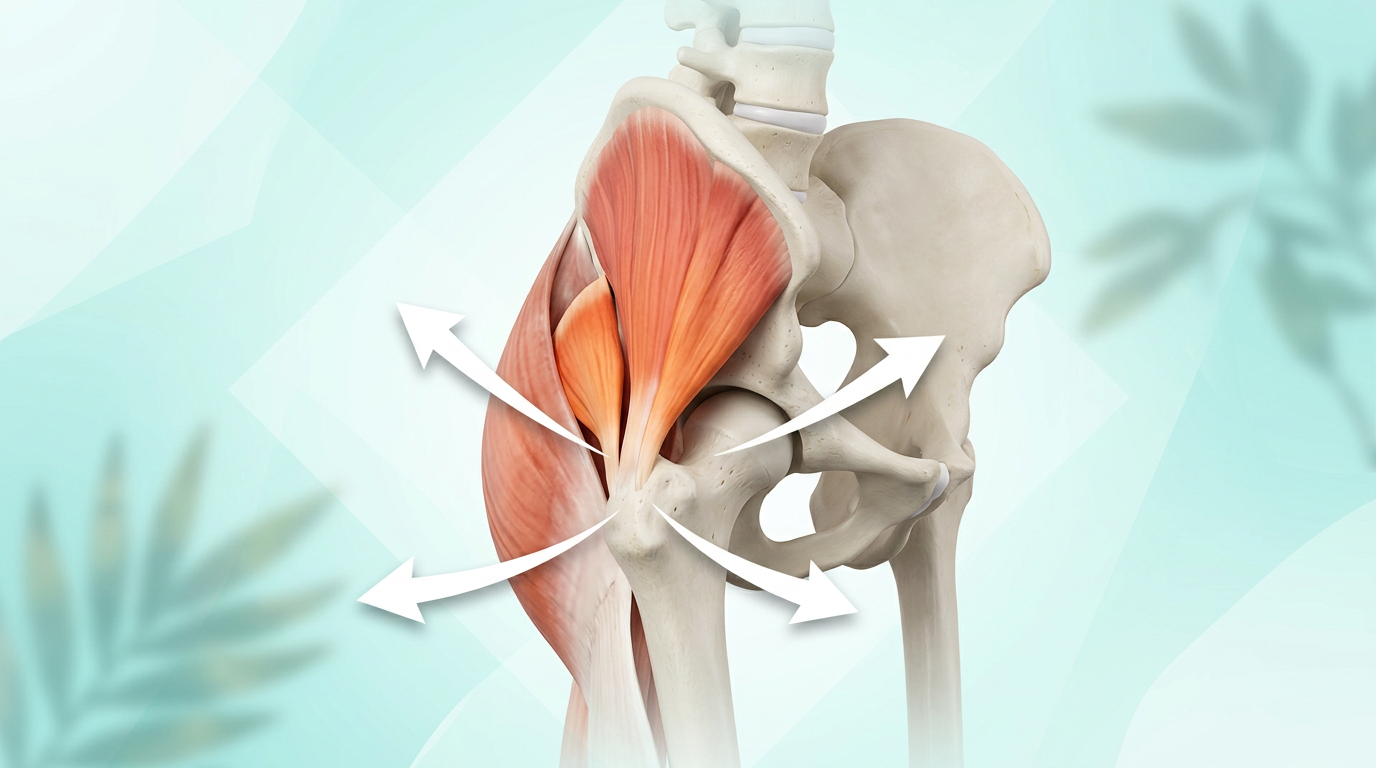
Anatomical illustration showing the gluteus medius and gluteus minimus muscles highlighted on the outer hip area, with arrows indicating hip abduction movement
Comparison Table: Top Side Glute Exercises at a Glance
Exercise
Difficulty Level
Equipment Needed
Primary Focus
Best For
Side-Lying Leg Lifts
Beginner
None
Gluteus medius
Building foundation
Clamshells
Beginner
Optional band
External rotation
Activation work
Fire Hydrants
Beginner-Intermediate
None
Hip abduction
Overall side glute development
Lateral Band Walks
Intermediate
Resistance band
Functional strength
Athletic performance
Single-Leg Glute Bridge
Intermediate
None
Stability
Unilateral strength
Side Plank with Leg Lift
Intermediate-Advanced
None
Core + glutes
Full-body integration
Curtsy Lunges
Intermediate
Optional weights
Gluteus medius
Functional movement
Standing Hip Abduction
Beginner-Intermediate
Optional band
Balance + abduction
Convenience
Side-Lying Clamshell Pulses
Intermediate
Optional band
Muscle endurance
Burnout sets
Banded Squat Walks
Advanced
Resistance band
Dynamic strength
Advanced training
1. Side-Lying Leg Lifts
Side-lying leg lifts are the foundational side glute exercise that isolates the gluteus medius with minimal equipment. This exercise teaches proper hip abduction mechanics and helps establish a strong mind-muscle connection with your side glutes.
How to perform: Lie on your right side with your body in a straight line, head resting on your extended arm. Stack your hips and shoulders directly on top of each other. Keeping your top leg straight and foot flexed, lift your leg toward the ceiling until you feel strong contraction in your outer hip. Lower with control and repeat for 15-20 reps before switching sides.
The key to maximizing effectiveness is maintaining proper alignment throughout the movement. Avoid rolling your hips backward or letting your torso lean forward. Keep your core engaged and focus on lifting from the hip, not swinging your leg. Start with bodyweight and progress by adding ankle weights or a resistance band around your thighs.
Pros
- Perfect for beginners with no learning curve
- Requires zero equipment to start
- Excellent for establishing mind-muscle connection
- Can be done anywhere, including in bed
Cons
- Easy to use momentum instead of muscle control
- Can cause hip discomfort if lying on hard surfaces
- Limited resistance without added equipment
2. Clamshells
Clamshells are a rehabilitation favorite that specifically target the gluteus medius while emphasizing external rotation. This exercise is particularly effective for correcting muscle imbalances and activating dormant glute muscles.
How to perform: Lie on your side with your hips and knees bent at 45 degrees, feet together. Keep your feet touching as you lift your top knee toward the ceiling, opening your legs like a clamshell. Pause at the top, squeeze your glutes, then lower with control. Complete 15-20 reps per side.
For added resistance, place a mini resistance band just above your knees. Focus on initiating the movement from your glutes rather than your hip flexors. The tempo matters more than the range of motion—controlled movements create better muscle activation than large, uncontrolled swings. If you feel this exercise in your hip flexors instead of glutes, reduce your range of motion and focus on the squeeze at the top.
Pros
- Excellent activation exercise before workouts
- Low impact and joint-friendly
- Easy to add progressive resistance with bands
- Addresses common hip weakness patterns
Cons
- Requires precise form to target correct muscles
- Can feel awkward for beginners
- Limited muscle building without resistance
3. Fire Hydrants
Fire hydrants combine hip abduction with external rotation, making them one of the most comprehensive side glute exercises. This movement pattern mimics functional activities and builds strength through a full range of motion.
How to perform: Start on all fours with hands under shoulders and knees under hips. Keeping your knee bent at 90 degrees, lift your right leg out to the side until your thigh is parallel to the floor. Your knee should point toward the side wall. Hold briefly, then lower with control. Complete 12-15 reps per side.
Maintain a neutral spine throughout the movement—avoid rotating your torso or hiking your hip. Think about leading the movement with your knee rather than your foot, and imagine pressing your knee into an invisible wall. For progression, add a resistance band around your thighs or perform pulses at the top of the movement. You can also straighten your leg at the top for an added challenge.
Pros
- Targets multiple glute functions simultaneously
- Builds functional hip mobility and strength
- Easy to modify for different fitness levels
- Engages core muscles for stability
Cons
- Can strain wrists during extended sets
- Requires good shoulder stability
- Easy to compensate with improper form
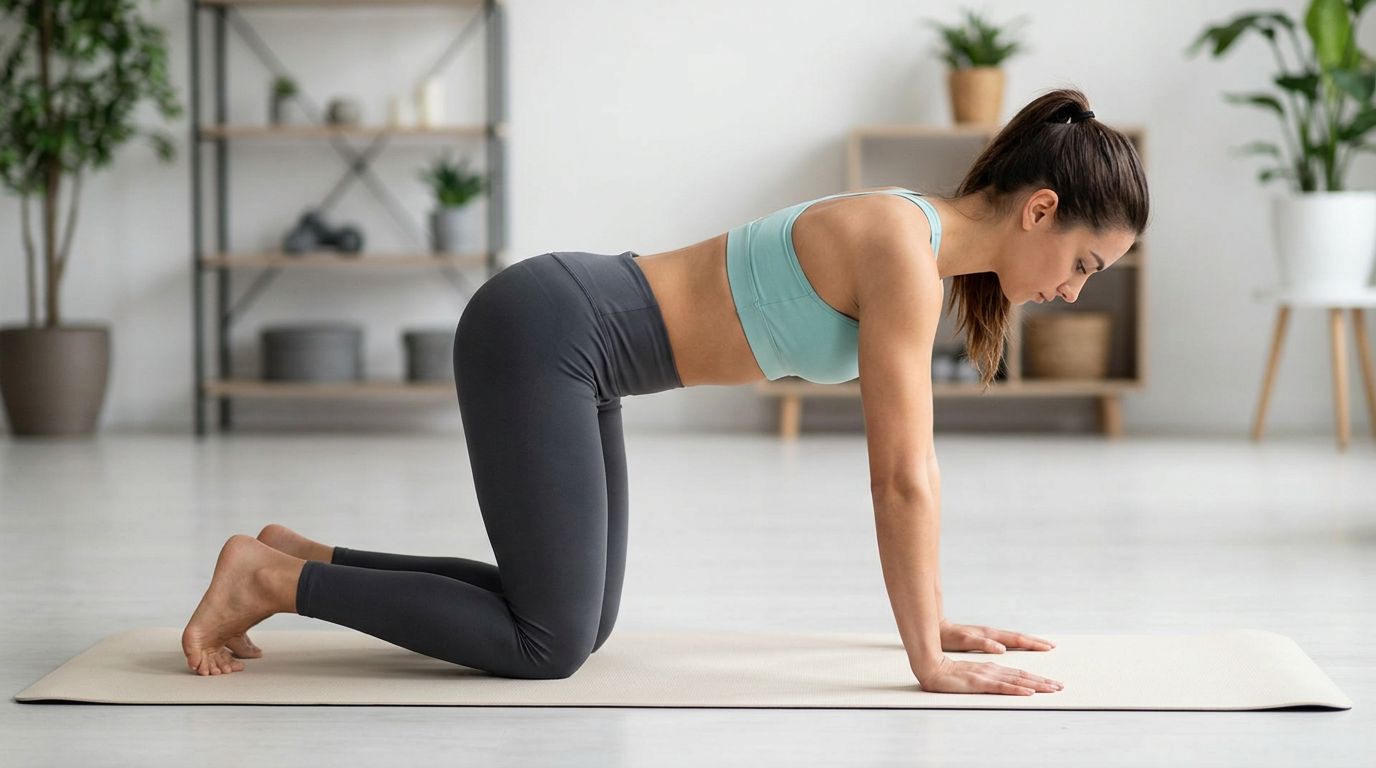
Step-by-step demonstration showing proper form for fire hydrants exercise, with three images showing starting position, leg lifted to side, and common mistakes to avoid
4. Lateral Band Walks
Lateral band walks are a dynamic exercise that challenges your side glutes while moving, making them excellent for building functional strength and endurance. This exercise is commonly used by athletes to improve lateral movement and hip stability.
How to perform: Place a resistance band around your legs (either above knees or around ankles for more difficulty). Stand with feet hip-width apart and knees slightly bent in a quarter-squat position. Step sideways with your right foot, then follow with your left foot, maintaining tension in the band. Take 10-15 steps in one direction, then reverse.
The key is maintaining constant tension in the band and keeping your hips level throughout the movement. Don't let your knees cave inward or your feet come too close together. Keep your chest up and core engaged. The burn you feel in your outer hips indicates effective glute medius activation. Start with a lighter resistance band and progress to heavier bands as you build strength.
Pros
- Builds functional strength for sports and daily activities
- Improves hip stability during movement
- Creates significant muscle burn and activation
- Easily adjustable difficulty with different band strengths
Cons
- Requires resistance band
- Needs adequate space to perform
- Can be challenging to maintain proper form when fatigued
5. Single-Leg Glute Bridge
While traditional glute bridges primarily target the gluteus maximus, the single-leg variation heavily engages the side glutes for stabilization. This unilateral exercise reveals and corrects strength imbalances between sides.
How to perform: Lie on your back with knees bent and feet flat on the floor. Extend your right leg straight out. Press through your left heel to lift your hips toward the ceiling, keeping your extended leg in line with your planted thigh. Squeeze your glutes at the top, then lower with control. Complete 10-15 reps per side.
Focus on keeping your hips level throughout the movement—don't let the side with the extended leg drop. Your side glutes work overtime to prevent hip rotation and maintain stability. If this is too challenging initially, keep the non-working foot hovering just above the ground rather than fully extended. Progress by adding a pause at the top or placing your foot on an elevated surface.
Pros
- Targets multiple glute muscles simultaneously
- Reveals and corrects strength imbalances
- Requires no equipment
- Improves pelvic stability and control
Cons
- Challenging for beginners
- Can cause cramping in hamstrings if form is off
- Requires good core strength
6. Side Plank with Leg Lift
This advanced exercise combines core stability with side glute activation, creating a compound movement that builds total-body strength. It's particularly effective for women who want to maximize workout efficiency.
How to perform: Start in a side plank position on your forearm with feet stacked and body in a straight line. Once stable, lift your top leg toward the ceiling while maintaining your plank position. Lower with control and repeat for 8-12 reps before switching sides.
Maintaining proper alignment is crucial—your body should form a straight line from head to feet without sagging or piking at the hips. If the full version is too challenging, modify by dropping your bottom knee to the ground or performing the side plank without the leg lift until you build sufficient strength. This exercise not only sculpts your side glutes but also strengthens your obliques and improves shoulder stability.
Pros
- Works multiple muscle groups simultaneously
- Builds functional core and hip strength
- Improves balance and coordination
- Time-efficient compound movement
Cons
- Too advanced for many beginners
- Can strain shoulder if form breaks down
- Difficult to perform high repetitions
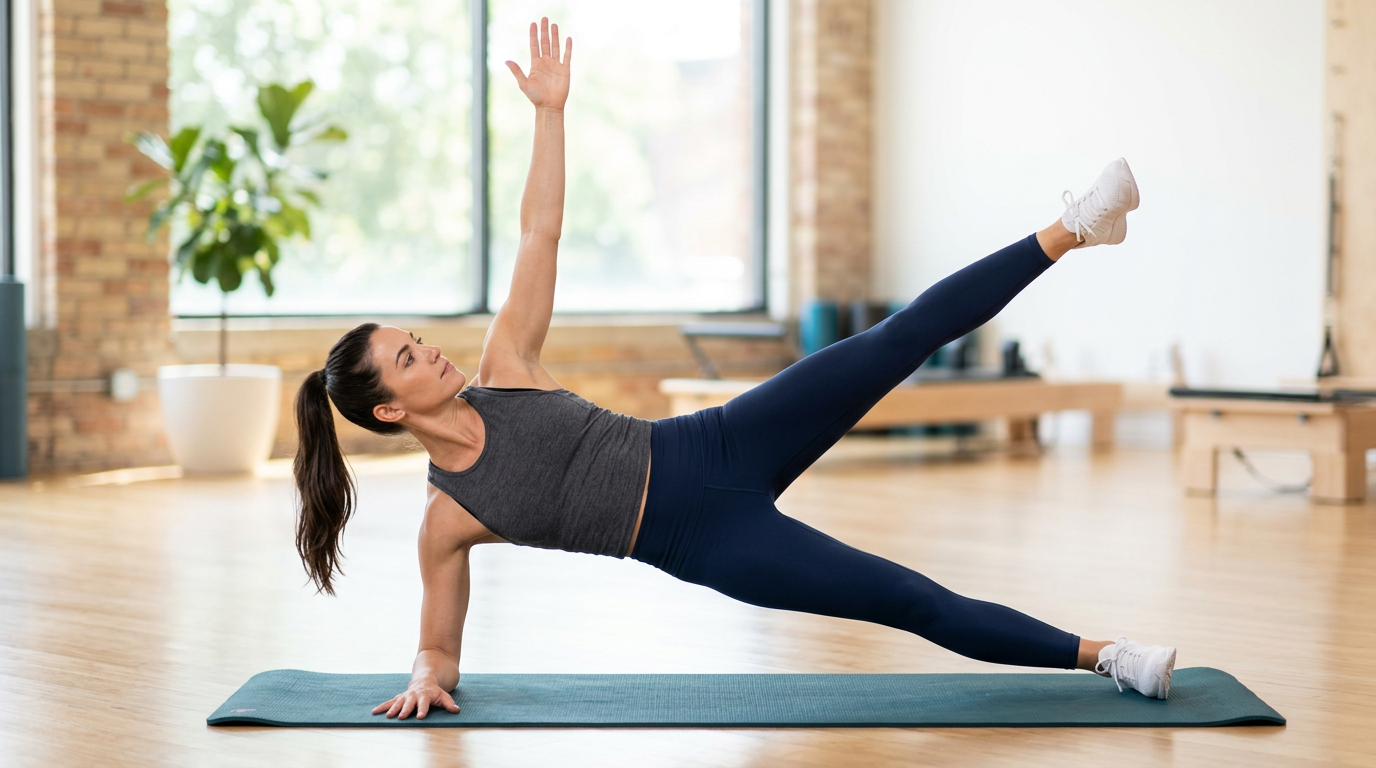
Woman demonstrating side plank with leg lift exercise on yoga mat, showing proper body alignment and leg position at the top of the movement
7. Curtsy Lunges
Curtsy lunges are a functional movement pattern that targets the side glutes through a diagonal plane of motion. This exercise mimics real-world movements and builds strength through a full range of motion.
How to perform: Stand with feet hip-width apart. Step your right foot diagonally behind and across your body, as if performing a curtsy. Lower your hips until your front thigh is parallel to the floor. Press through your front heel to return to standing. Complete 10-15 reps per side.
Keep your chest upright and your front knee tracking over your toes—don't let it cave inward. The crossing motion creates a unique angle that emphasizes the gluteus medius of your front leg. You should feel this exercise in the outer hip of your standing leg. Start with bodyweight to master the movement pattern, then progress by holding dumbbells or a kettlebell at your chest.
Pros
- Functional movement pattern for daily activities
- Targets glutes from a unique angle
- Easy to add weight for progression
- Improves balance and coordination
Cons
- Requires good balance and coordination
- Can be hard on knees if form is poor
- May feel awkward initially
8. Standing Hip Abduction
Standing hip abduction is a convenient side glute exercise you can perform anywhere, making it perfect for busy women who want to sneak in glute work throughout the day. This exercise builds balance while targeting the gluteus medius.
How to perform: Stand tall with feet together, hands on hips or holding a wall for balance. Keeping your leg straight, lift your right leg out to the side as high as comfortable without tilting your torso. Lower with control and repeat for 15-20 reps per side.
Focus on lifting from your hip rather than leaning your torso to the opposite side—your upper body should remain upright and stable. Point your toes forward or slightly downward to maximize glute activation and minimize hip flexor involvement. For added resistance, use a resistance band around your ankles or attach an ankle weight. This exercise can be performed while brushing your teeth, cooking, or waiting in line.
Pros
- Can be done anywhere without getting on the floor
- Improves single-leg balance
- Easy to incorporate throughout the day
- Simple to modify with bands or weights
Cons
- Requires balance and coordination
- Limited resistance without equipment
- Easy to use momentum instead of control
9. Side-Lying Clamshell Pulses
This variation of the traditional clamshell adds continuous tension through pulsing movements, creating significant muscle fatigue and endurance. It's an excellent burnout exercise to finish your side glute workout.
How to perform: Set up in the same position as regular clamshells. Open your top knee to about 75% of your full range, then perform small pulsing movements in that top range for 20-30 reps. The pulses should be small and controlled, maintaining constant tension in your glutes.
These pulses create metabolic stress that promotes muscle growth and endurance. Keep the movement small—only 2-3 inches of motion—and focus on the squeeze rather than the range. Your glutes should be burning by the end of the set. Use a resistance band for added difficulty, and don't be surprised if you can only complete 15-20 pulses initially. This exercise is deceptively challenging.
Pros
- Creates significant muscle burn and fatigue
- Excellent for muscle endurance
- Perfect finisher exercise
- Helps break through strength plateaus
Cons
- Can cause cramping if not properly warmed up
- Very challenging to maintain form when fatigued
- Not ideal as a standalone exercise
10. Banded Squat Walks
Banded squat walks combine the benefits of squats with lateral movement, creating a dynamic exercise that builds strength, endurance, and functional fitness. This advanced movement challenges your side glutes throughout the entire range of motion.
How to perform: Place a resistance band around your thighs just above your knees. Lower into a quarter-squat position with feet hip-width apart. Maintaining this squat depth, step sideways for 10-15 steps, then reverse direction. Keep tension in the band throughout the movement.
The constant squat position creates continuous tension in your glutes while the lateral steps specifically target your gluteus medius. Don't let your knees cave inward—actively push them outward against the band resistance. This exercise builds serious hip strength and endurance. Progress by using heavier bands, lowering into a deeper squat, or increasing the number of steps. Your legs will be shaking by the end.
Pros
- Builds functional strength and endurance simultaneously
- Challenges glutes through full range of motion
- Improves athletic performance
- Creates significant muscle fatigue quickly
Cons
- Very challenging for beginners
- Requires quality resistance band
- Can be hard on knees if form deteriorates
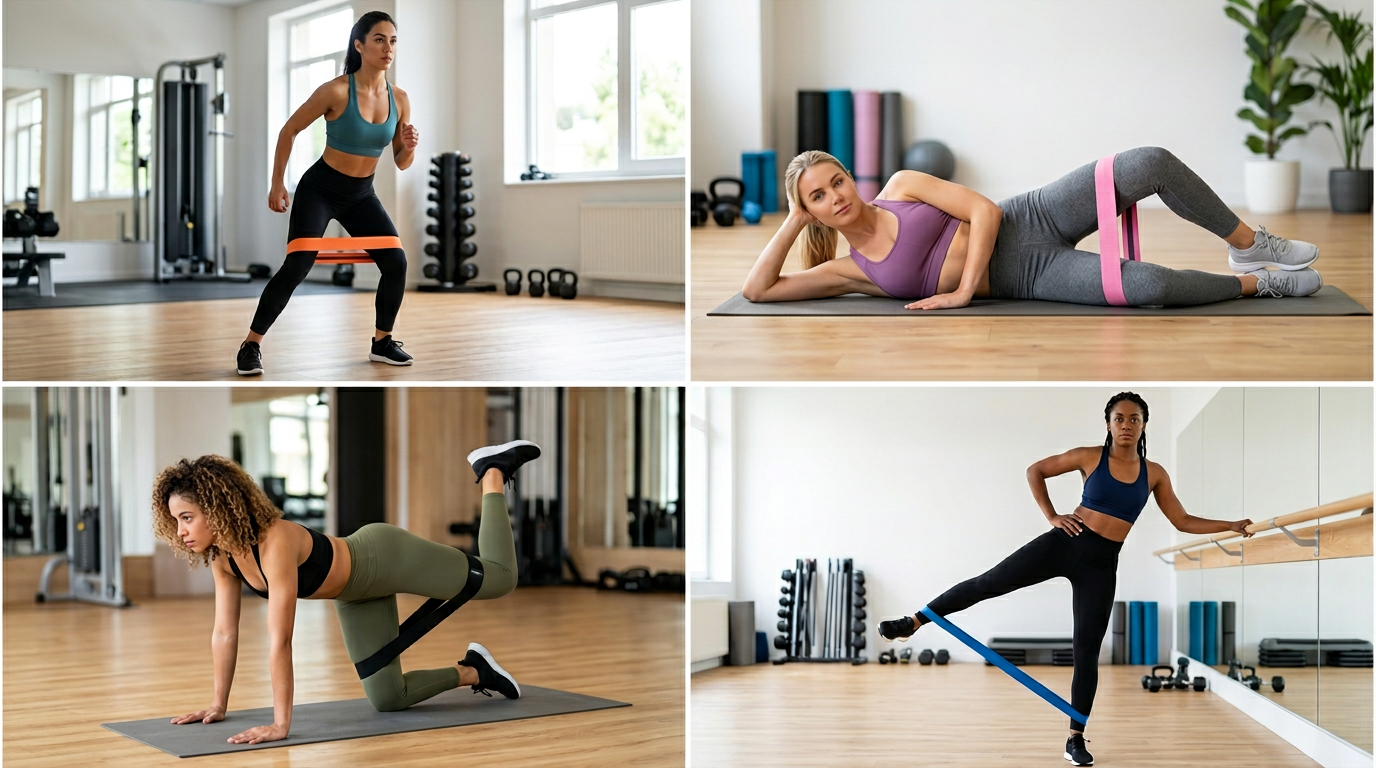
Collage showing four different side glute exercises being performed: lateral band walks, clamshells with resistance band, fire hydrants, and standing hip abduction
Creating Your Side Glute Workout Routine
Now that you know the best side glute exercises, let's discuss how to structure them into an effective workout routine. Training your side glutes 2-3 times per week with at least 48 hours of rest between sessions allows for optimal recovery and growth.
Beginner Routine (2x per week)
If you're new to targeted glute training, start with these exercises:
- Clamshells: 3 sets of 15-20 reps per side
- Side-lying leg lifts: 3 sets of 15-20 reps per side
- Fire hydrants: 3 sets of 12-15 reps per side
- Standing hip abduction: 2 sets of 15-20 reps per side
Perform this routine as a standalone workout or add it to your existing lower body training. Focus on mastering form before increasing repetitions or adding resistance.
Intermediate Routine (2-3x per week)
Once you've built foundational strength, progress to this routine:
- Lateral band walks: 3 sets of 15 steps each direction
- Fire hydrants: 3 sets of 15 reps per side
- Single-leg glute bridges: 3 sets of 12-15 reps per side
- Curtsy lunges: 3 sets of 12-15 reps per side
- Side-lying clamshell pulses: 2 sets of 20-30 reps per side
Advanced Routine (3x per week)
For experienced lifters ready for a challenge:
- Banded squat walks: 3 sets of 20 steps each direction
- Side plank with leg lift: 3 sets of 10-12 reps per side
- Weighted curtsy lunges: 4 sets of 12-15 reps per side
- Single-leg glute bridges with elevated foot: 3 sets of 12-15 reps per side
- Lateral band walks: 3 sets of 20 steps each direction
- Side-lying clamshell pulses: 2 sets of 30-40 reps per side
Progressive Overload Strategies for Side Glutes
To see continued results, you must progressively challenge your muscles over time. Here are effective strategies for progressing your side glute exercises:
Add Resistance
Start with bodyweight exercises and gradually add resistance bands, ankle weights, or dumbbells. Even small increases in resistance create significant adaptations when performed consistently. Progress from light to medium to heavy resistance bands over several weeks.
Increase Volume
Add more sets, repetitions, or exercises to your routine. If you're currently doing 3 sets of 15 reps, progress to 3 sets of 20 reps before adding weight. You can also add an extra set or include an additional exercise.
Manipulate Tempo
Slow down your repetitions to increase time under tension. Try a 3-second lowering phase, 1-second pause at the bottom, and 1-second lifting phase. This dramatically increases difficulty without adding weight.
Reduce Rest Periods
Decreasing rest time between sets from 60 seconds to 30-45 seconds increases metabolic stress and muscular endurance. This is particularly effective for muscle growth.
Common Mistakes to Avoid
Even with the best exercises, poor execution can limit your results and increase injury risk. Here are the most common mistakes women make when training side glutes:
Using Momentum Instead of Muscle
Swinging your leg or using momentum defeats the purpose of isolation exercises. Controlled movements with a strong mind-muscle connection produce better results than high repetitions with poor form. Focus on feeling your glutes work rather than completing as many reps as possible.
Neglecting the Mind-Muscle Connection
Simply going through the motions won't build your side glutes effectively. Before each set, consciously think about the muscle you're targeting. Visualize your gluteus medius contracting and squeezing with each repetition. This mental focus significantly improves muscle activation.
Training Through Pain
Muscle burn is normal and expected, but sharp or joint pain is not. If you experience pain in your hips, knees, or lower back, stop the exercise and reassess your form. Persistent pain warrants consultation with a healthcare professional.
Inconsistent Training
Sporadic workouts won't produce results. Commit to training your side glutes 2-3 times per week for at least 6-8 weeks before evaluating progress. Consistency trumps intensity when building muscle.
Why Won't My Side Glutes Grow? Troubleshooting Tips
If you've been consistently training your side glutes without seeing results, several factors might be hindering your progress:
Insufficient Progressive Overload
Your muscles adapt to the same stimulus over time. If you're doing the same exercises with the same resistance for months, your side glutes have no reason to grow. Regularly increase difficulty through added resistance, volume, or intensity to continue making progress.
Poor Exercise Selection
Not all glute exercises effectively target the side glutes. Traditional squats and deadlifts primarily work the gluteus maximus. Ensure your routine includes dedicated side glute exercises like those outlined in this guide.
Inadequate Nutrition
Muscle growth requires adequate protein and overall calories. If you're in a severe caloric deficit or not consuming enough protein, your body lacks the building blocks to develop muscle tissue. Aim for adequate protein intake and don't fear eating enough to support your training.
Overtraining or Underrecovery
Muscles grow during recovery, not during workouts. Training your glutes every day without rest prevents proper recovery. Allow 48 hours between side glute-focused sessions and prioritize sleep and stress management.
Dominant Muscles Compensating
If your hip flexors or other muscles are taking over during exercises, your side glutes won't receive adequate stimulus. Focus on activation exercises like clamshells before your main workout to "wake up" your glutes and establish proper firing patterns.
Do Glute Exercises Help With Cellulite?
Many women wonder if building stronger glutes can reduce the appearance of cellulite. While glute exercises won't eliminate cellulite entirely (it's a natural skin structure affected by genetics, hormones, and body composition), they can improve its appearance.
Strengthening and building your glute muscles creates a firmer, more toned appearance that can make cellulite less noticeable. The increased muscle mass fills out the skin more evenly, reducing the dimpled appearance. Additionally, the improved circulation from regular exercise supports skin health.
However, it's important to maintain realistic expectations. Cellulite affects women of all body types and fitness levels, and it's completely normal. Focus on building strong, functional glutes for health and performance benefits, and consider any aesthetic improvements as a bonus rather than the primary goal.
Which Side Glute Exercise Is Best For You?
The ideal side glute exercises depend on your fitness level, goals, and available equipment. Here's how to choose:
For Complete Beginners
Start with side-lying leg lifts and clamshells. These exercises teach proper muscle activation without requiring balance or coordination. Master these foundational movements before progressing to more complex exercises.
For Women with Knee Issues
Focus on side-lying exercises and standing hip abduction. These movements don't require deep knee flexion and won't aggravate sensitive joints. Strong side glutes actually support knee health by maintaining proper leg alignment during movement.
For Time-Efficient Workouts
Choose side plank with leg lift and banded squat walks. These compound movements work multiple muscle groups simultaneously, giving you more results in less time.
For Athletic Performance
Prioritize lateral band walks, banded squat walks, and curtsy lunges. These dynamic movements build functional strength that translates directly to sports and daily activities.
For Maximum Muscle Building
Combine fire hydrants, weighted curtsy lunges, and single-leg glute bridges with progressive resistance. These exercises allow for significant loading and create the mechanical tension necessary for muscle growth.
For Home Workouts Without Equipment
Focus on fire hydrants, side-lying leg lifts, and single-leg glute bridges. These bodyweight exercises effectively target side glutes without requiring any equipment.
Frequently Asked Questions
How do you work the side of your glutes?
Work your side glutes through hip abduction exercises that move your leg away from your body's midline. Effective movements include side-lying leg lifts, clamshells, fire hydrants, lateral band walks, and curtsy lunges. Perform these exercises 2-3 times weekly with progressive resistance for best results.
Do glute exercises help with cellulite?
Glute exercises can improve cellulite appearance by building muscle that creates a firmer, more toned look. Increased muscle mass fills out skin more evenly, reducing the dimpled appearance. However, cellulite is influenced by genetics and hormones, so exercises won't eliminate it completely but can make it less noticeable.
Why won't my side glutes grow?
Side glutes may not grow due to insufficient progressive overload, poor exercise selection, inadequate nutrition, or dominant muscles compensating during movements. Ensure you're regularly increasing resistance or volume, performing targeted hip abduction exercises, consuming adequate protein, and establishing proper mind-muscle connection through activation work.
Do glutes help your knees?
Strong glutes, especially the gluteus medius, significantly support knee health by maintaining proper leg alignment during movement. Weak side glutes allow knees to cave inward (valgus), increasing stress on knee joints and ligaments. Strengthening your glutes reduces knee pain and injury risk during daily activities and exercise.
How long does it take to see results from side glute exercises?
Most women notice improved muscle activation and strength within 2-3 weeks of consistent training. Visible muscle development typically appears after 6-8 weeks of progressive training 2-3 times weekly. Results depend on training consistency, progressive overload, nutrition, recovery, and individual genetics.
Can I do side glute exercises every day?
Avoid training side glutes with high intensity every day, as muscles need 48 hours to recover and grow. However, you can perform light activation exercises like clamshells or standing hip abduction daily. Schedule intense side glute workouts 2-3 times weekly with rest days between sessions for optimal results.
What equipment do I need for side glute exercises at home?
Many effective side glute exercises require no equipment, including side-lying leg lifts, fire hydrants, and single-leg glute bridges. For progression, a set of resistance bands provides significant value at minimal cost. Optional additions include ankle weights and dumbbells for weighted curtsy lunges.
Conclusion
Building strong, sculpted side glutes requires more than traditional squats and lunges. By incorporating these targeted side glute exercises into your routine 2-3 times weekly, you'll develop the gluteus medius and minimus muscles responsible for that coveted rounded hip shape while improving functional strength, stability, and injury resistance. Remember that consistency, progressive overload, and proper form matter more than doing countless repetitions with poor technique. Start with exercises matching your current fitness level, focus on the mind-muscle connection, and gradually progress by adding resistance or increasing volume. Whether you're a beginner starting with side-lying leg lifts or an advanced lifter tackling banded squat walks, these exercises will help you build stronger, more balanced glutes from every angle. Track your progress, celebrate small wins, and trust the process—your side glutes will respond to dedicated, intelligent training.