Pre-workout stretches for women: Prevent injury and boost performance
Pre workout stretches are dynamic movements performed before exercise to warm muscles, increase blood flow, and prepare your body for training. The most effective include leg swings, arm circles, walking lunges, hip openers, and torso twists, performed for 5-10 minutes to reduce injury risk and enhance performance.
You've carved out time for your workout, laced up your shoes, and you're ready to crush your training session. But before you dive into those squats or sprint intervals, there's one crucial step that can make the difference between a powerful workout and a painful injury: pre workout stretches.
Too many women skip this essential preparation phase, eager to jump straight into the main event. The result? Stiff muscles, reduced performance, and an increased risk of strains and sprains that can sideline your fitness journey for weeks. Whether you're lifting weights, running, or following a bodyweight routine, the right warm-up stretches prime your body for movement and set the foundation for success.
In this comprehensive guide, you'll discover exactly which stretches to perform before your workout, how long to hold them, and why dynamic stretching outperforms static stretching for pre-exercise preparation. We'll break down the science behind effective warm-ups and provide you with a complete routine that takes just 5-10 minutes but delivers lasting benefits for your strength, mobility, and injury prevention.
Key Takeaways
- Dynamic stretches that involve movement are superior to static holds before workouts
- A proper pre-workout stretch routine takes 5-10 minutes and increases blood flow by up to 30%
- Pre workout stretches reduce injury risk while improving range of motion and exercise performance
- Different workouts require targeted stretches for the muscle groups you'll be training
- Consistency with pre-workout stretching builds long-term mobility and movement quality
Why Pre Workout Stretches Matter for Women
Pre workout stretches prepare your body for the physical demands of exercise by gradually increasing heart rate, warming muscle tissue, and activating the neuromuscular pathways you'll use during training. This preparation phase is especially important for women who may experience greater joint laxity due to hormonal fluctuations throughout the menstrual cycle.
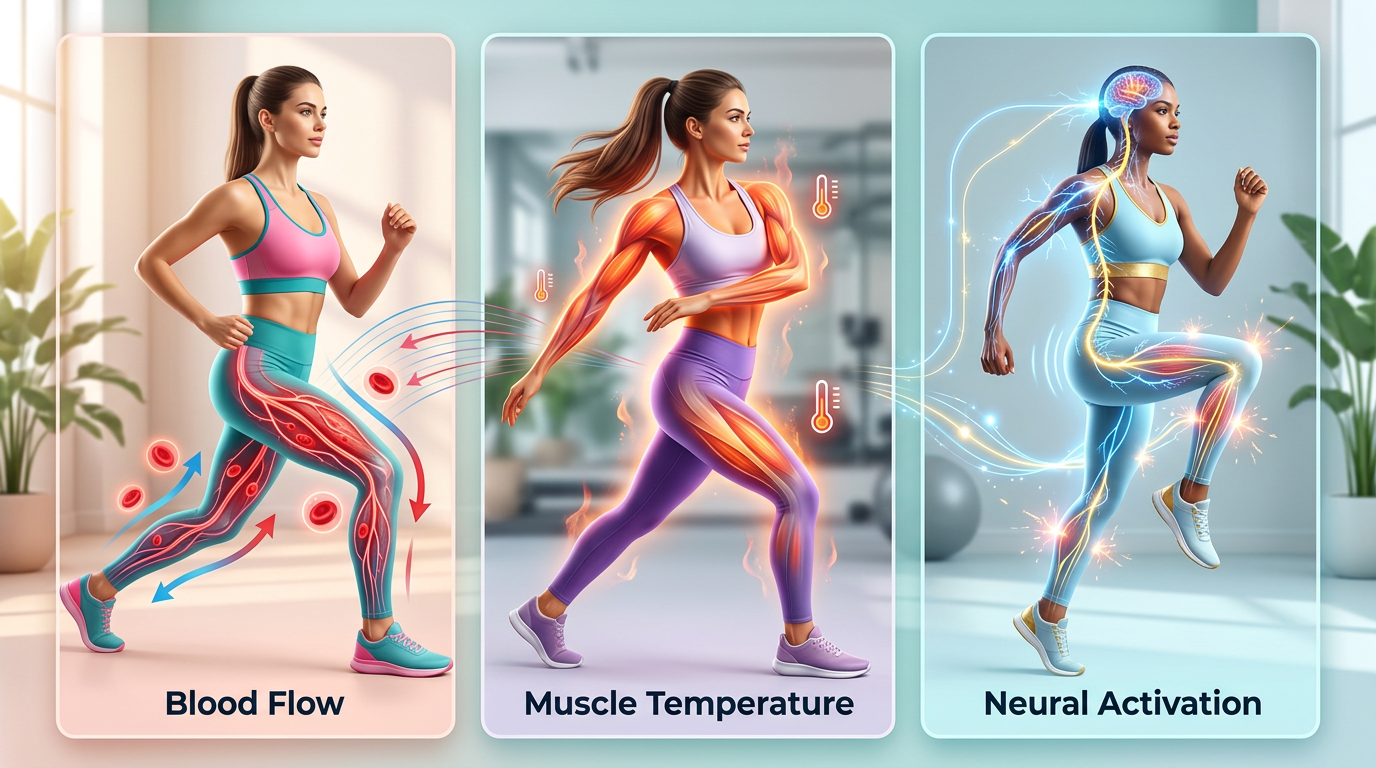
Infographic showing the physiological benefits of pre-workout stretching including increased blood flow, muscle temperature, and neural activation
The Science Behind Warm-Up Stretching
When you perform dynamic stretches before exercise, several physiological changes occur simultaneously. Your core body temperature rises, which makes muscles more pliable and responsive. Blood vessels dilate, delivering more oxygen and nutrients to working muscles. Your nervous system becomes more alert, improving reaction time and coordination.
Research consistently shows that proper warm-up routines enhance performance metrics like power output, sprint speed, and strength. More importantly, they significantly reduce the risk of muscle strains, joint injuries, and overuse problems that can derail your fitness progress.
Dynamic vs. Static Stretching: What's the Difference?
Understanding the distinction between dynamic and static stretching is crucial for optimizing your pre-workout routine. Dynamic stretches involve continuous movement through a full range of motion, while static stretches hold a position for an extended period without movement.
Before your workout, dynamic stretching is the clear winner. Static stretching can temporarily decrease muscle power and strength when performed before training. Save those long holds for your post-workout cool-down when they'll enhance flexibility without compromising performance.
Best Pre Workout Stretches for Your Lower Body
Your lower body contains the largest muscle groups in your body, and these muscles require thorough preparation before squats, lunges, running, or any leg-focused training. The following stretches target your glutes, hamstrings, quadriceps, hip flexors, and calves.
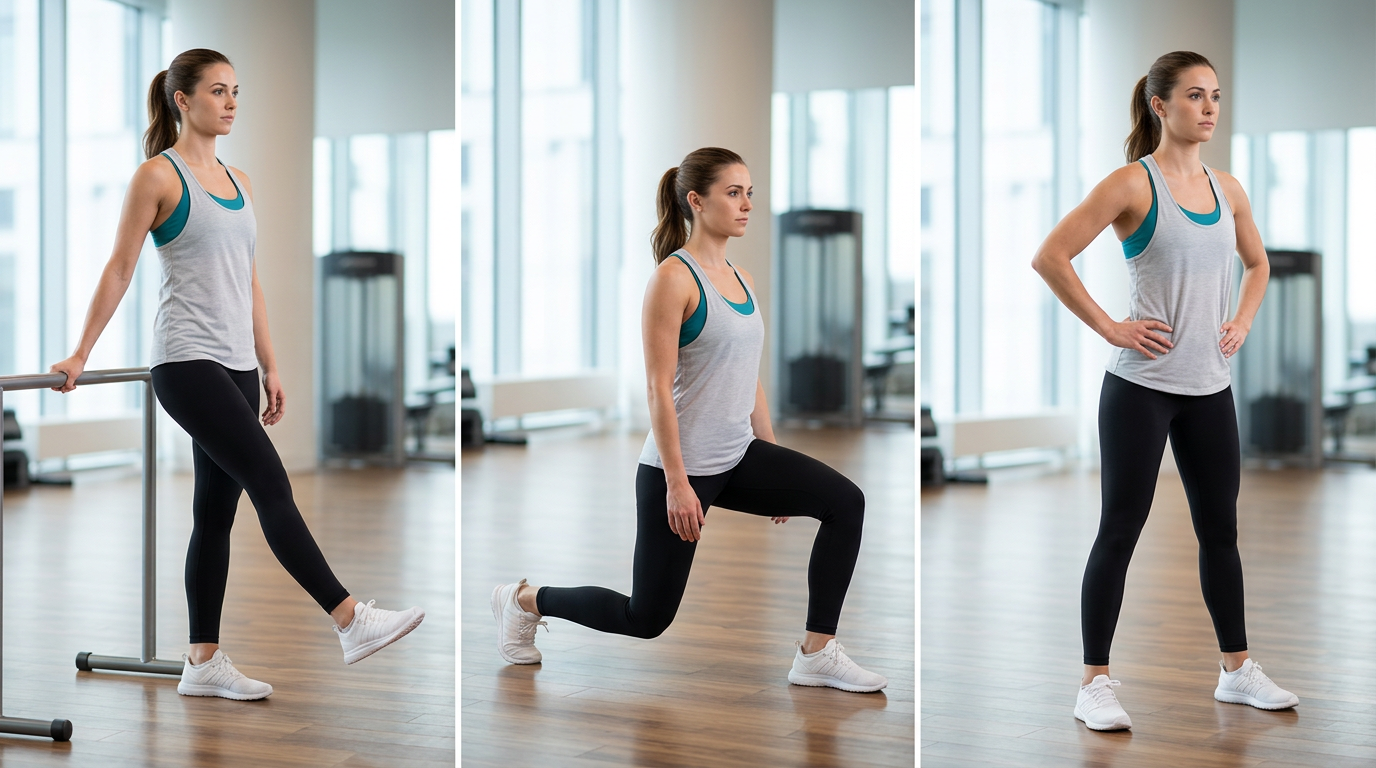
Demonstration photos showing proper form for leg swings, walking lunges, and hip circles performed by a woman in workout attire
Leg Swings (Front to Back)
Stand next to a wall or stable surface for balance. Swing one leg forward and backward in a controlled motion, gradually increasing the range of movement. Keep your torso upright and avoid leaning excessively. Perform 10-15 swings per leg to activate your hip flexors, glutes, and hamstrings.
This movement prepares your hips for exercises like squats, deadlifts, and running. It also helps identify any tightness or restrictions in your hip mobility that you may need to address.
Leg Swings (Side to Side)
Face a wall and place both hands on it for support. Swing one leg laterally across your body, then out to the side. This variation targets your hip abductors and adductors, which are essential for lateral stability during training. Complete 10-15 swings per leg with controlled momentum.
Walking Lunges with Rotation
Step forward into a lunge position, lowering your back knee toward the ground. As you sink into the lunge, rotate your torso toward your front leg. This dynamic stretch combines hip flexor lengthening with thoracic spine mobility. Perform 8-10 lunges per leg, moving forward with each repetition.
Walking lunges with rotation prepare multiple muscle groups simultaneously while improving balance and coordination. They're particularly valuable before lower body strength training or athletic activities requiring multi-directional movement.
Hip Circles
Stand on one leg and lift the opposite knee to hip height. Draw large circles with your knee, rotating from the hip joint. Complete 8-10 circles in each direction, then switch legs. This movement lubricates the hip joint and activates the stabilizing muscles around your pelvis.
Essential Upper Body Pre Workout Stretches
Whether you're pressing, pulling, or performing overhead movements, your upper body requires dedicated warm-up attention. These stretches prepare your shoulders, chest, back, and arms for the work ahead.
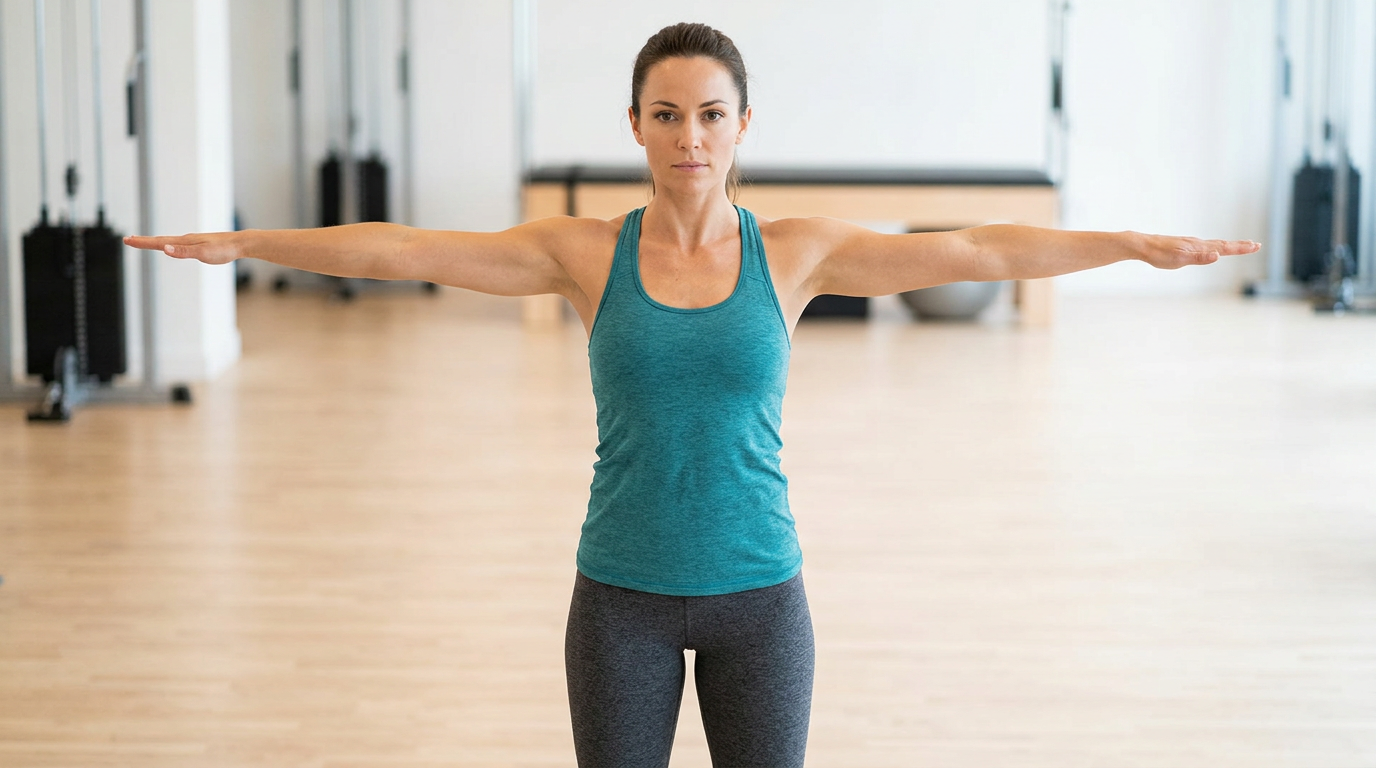
Step-by-step visual guide showing arm circles, shoulder rolls, and cat-cow stretches with proper form cues
Arm Circles
Extend both arms out to the sides at shoulder height. Make small circles, gradually increasing the diameter over 15-20 repetitions. Reverse direction and repeat. This simple movement warms up your shoulder joints and rotator cuff muscles, which are vulnerable to injury during pressing and pulling exercises.
Start with small, controlled circles and progressively increase the range as your shoulders warm up. You should feel increased warmth in your shoulder muscles without any pinching or discomfort.
Shoulder Rolls
Roll your shoulders backward in large circles for 10 repetitions, then forward for 10 more. This movement addresses the common forward shoulder posture many women develop from desk work and daily activities. It activates your upper back muscles and prepares your shoulders for optimal positioning during exercise.
Cat-Cow Stretch (Dynamic)
Start on your hands and knees in a tabletop position. Alternate between arching your back (cow) and rounding your spine (cat), moving with your breath. This dynamic spinal mobility exercise prepares your entire back for loaded movements while activating your core stabilizers. Perform 8-10 complete cycles, moving slowly and deliberately.
Thread the Needle
From tabletop position, reach one arm under your body, rotating your torso as your shoulder and temple lower toward the ground. Return to center and repeat on the other side. This movement opens up your thoracic spine and shoulders, which is essential for proper form in exercises like rows, pull-ups, and overhead presses. Complete 6-8 repetitions per side.
Core Activation Stretches Before Training
Your core provides stability for virtually every exercise you perform. Activating these muscles before your workout improves form, enhances power transfer, and protects your spine from injury.
Standing Torso Twists
Stand with feet hip-width apart and hands clasped in front of your chest. Rotate your torso from side to side, keeping your hips facing forward. Allow your arms to swing naturally with the movement. Perform 15-20 total rotations to warm up your obliques and improve rotational mobility.
Dynamic Plank to Downward Dog
Start in a high plank position with hands under shoulders. Push your hips back and up into a downward dog position, creating an inverted V-shape with your body. Return to plank and repeat for 8-10 repetitions. This flowing movement activates your entire core while stretching your hamstrings and calves.
Bird Dogs
From tabletop position, extend your right arm forward and left leg back simultaneously, creating a straight line from fingertips to toes. Hold briefly, return to center, and switch sides. Complete 8-10 repetitions per side. Bird dogs activate your deep core stabilizers and improve coordination between your upper and lower body.
Complete Pre Workout Stretches Routine for Women
Now that you understand the individual movements, let's put them together into a comprehensive routine. This best pre workout stretches sequence takes 7-10 minutes and prepares your entire body for training.
The 10-Minute Full-Body Warm-Up
Follow this sequence before any workout to optimize your performance and minimize injury risk:
- Arm Circles: 20 circles forward, 20 circles backward
- Shoulder Rolls: 10 backward, 10 forward
- Torso Twists: 20 total rotations
- Cat-Cow Stretch: 10 complete cycles
- Hip Circles: 10 per leg in each direction
- Leg Swings (Front to Back): 15 per leg
- Leg Swings (Side to Side): 15 per leg
- Walking Lunges with Rotation: 10 per leg
- Dynamic Plank to Downward Dog: 10 repetitions
- High Knees: 30 seconds of marching in place
Workout-Specific Modifications
Tailor your pre workout stretches guide to match your planned training session. For lower body days, spend extra time on hip circles, leg swings, and walking lunges. Before upper body workouts, add more shoulder and thoracic spine mobility work. If you're doing cardio, emphasize leg swings and dynamic lunges to prepare for the repetitive motion.
Listen to your body and spend additional time on areas that feel particularly tight or restricted. Some days you'll need more warm-up volume than others, especially if you're training early in the morning when your body is naturally stiffer.
Understanding the 3-3-3 Rule for Workout Preparation
You may have heard about the 3-3-3 rule for workout preparation, which provides a simple framework for structuring your warm-up. The 3-3-3 rule suggests spending 3 minutes on light cardio, 3 minutes on dynamic stretching, and 3 minutes on movement-specific activation exercises.
Breaking Down the 3-3-3 Approach
The first 3 minutes involve light cardiovascular activity like brisk walking, easy cycling, or jumping jacks. This phase elevates your heart rate and increases blood flow throughout your body. Your goal is to break a light sweat without fatigue.
The second 3 minutes focus on dynamic stretches that move through full ranges of motion. This is where you'd perform the leg swings, arm circles, and torso rotations we've discussed. These movements prepare your joints and muscles for loaded exercise.
The final 3 minutes incorporate movement-specific activation. If you're squatting, perform bodyweight squats. Before bench pressing, do push-ups or band pull-aparts. This phase rehearses the movement patterns you'll use during your workout with lighter loads.
Common Pre Workout Stretching Mistakes to Avoid
Even with good intentions, many women make errors during their warm-up that compromise their results. Avoiding these common mistakes will help you get the most from your pre workout stretches tips.
Rushing Through Your Warm-Up
The most common mistake is treating your warm-up as an inconvenient obligation rather than an integral part of your training. Rushing through movements or skipping your warm-up entirely increases injury risk and decreases workout quality. Dedicate the full 7-10 minutes to proper preparation, even when you're short on time.
If you only have 30 minutes to train, a 10-minute warm-up followed by 20 minutes of quality work is more valuable than 30 minutes of exercise with cold, unprepared muscles.
Performing Static Stretches Before Training
Holding static stretches for 30-60 seconds before your workout can temporarily reduce muscle power and strength. Save these stretches for your post-workout cool-down when they'll improve flexibility without compromising performance. Before training, keep your stretches dynamic and moving.
Ignoring Workout-Specific Preparation
A generic warm-up is better than nothing, but targeted preparation is ideal. If you're training legs, emphasize lower body mobility. Before upper body work, focus on shoulders and thoracic spine. Match your warm-up to your workout for optimal results.
Stretching Cold Muscles Too Aggressively
Start your dynamic stretches with smaller ranges of motion and gradually increase the amplitude as your muscles warm up. Forcing a large range of motion when your body is still cold can cause muscle strains. Let your body progressively open up over the course of your warm-up.
Pre Workout Stretches Results: What to Expect
When you consistently implement proper pre workout stretches, you'll notice multiple benefits that compound over time. Understanding these results helps maintain motivation for this essential practice.
Immediate Performance Benefits
Within a single workout, you'll experience improved range of motion, better exercise form, and enhanced muscle activation. Your first working set will feel smoother and more controlled compared to jumping straight into training. Many women report feeling stronger and more coordinated when they warm up properly.
Long-Term Injury Prevention
The most significant benefit of consistent pre-workout stretching is cumulative injury prevention. By preparing your muscles, tendons, and joints for the stress of exercise, you dramatically reduce the risk of strains, sprains, and overuse injuries that can derail your fitness progress.
Over months and years, this protection allows for more consistent training, which is the true key to achieving your fitness goals. Missing weeks of training due to preventable injuries is one of the biggest obstacles women face in their fitness journeys.
Enhanced Mobility and Movement Quality
Regular dynamic stretching before workouts gradually improves your overall mobility and movement patterns. Hip circles performed consistently will increase hip mobility over time. Thoracic rotations will reduce upper back stiffness. These improvements carry over into your daily life, making everyday movements easier and more comfortable.
Additional Considerations for Pre-Workout Preparation
Beyond stretching, several other factors influence how well your body responds to exercise. Consider these elements as part of your complete warm-up strategy.
Hydration Status
Proper hydration affects muscle function, joint lubrication, and exercise performance. Aim to drink water consistently throughout the day rather than chugging large amounts immediately before training. Well-hydrated muscles are more pliable and responsive during your warm-up stretches.
Timing Your Pre-Workout Nutrition
If you're training within an hour of waking up or several hours after your last meal, consider a light snack 30-45 minutes before your workout. A small amount of easily digestible carbohydrates and protein can provide energy for your warm-up and training session without causing digestive discomfort.
Environmental Temperature
Cold environments require longer warm-ups because your muscles take more time to reach optimal temperature. If you're training in a cold gym or outdoors in winter, extend your warm-up by 2-3 minutes and consider wearing layers that you can remove as your body temperature rises.
Individual Factors and Customization
Your age, training experience, injury history, and natural flexibility all influence your warm-up needs. Older women or those with previous injuries may need longer preparation times. If you're naturally flexible, focus more on muscle activation than stretching. Customize your routine based on your body's specific requirements.
Frequently Asked Questions
What is the 3-3-3 rule for workout?
The 3-3-3 rule divides your warm-up into three 3-minute segments: light cardio to elevate heart rate, dynamic stretches for joint mobility, and movement-specific activation exercises. This 9-minute framework ensures comprehensive preparation for safe, effective training.
Should you stretch pre-workout?
Yes, you should perform dynamic stretches before workouts to warm muscles, increase blood flow, and reduce injury risk. Avoid static stretching pre-workout as it can temporarily decrease power and strength. Save long holds for your post-workout cool-down.
What stretching to do before exercise?
Perform dynamic stretches like leg swings, arm circles, walking lunges, hip circles, and torso twists before exercise. These moving stretches prepare your muscles and joints for training without reducing power output like static stretches can.
How long should I stretch before a workout?
Spend 5-10 minutes on pre-workout stretching and warm-up movements. This timeframe allows adequate muscle warming and joint preparation without causing fatigue. Extend to 12-15 minutes if you're training early morning or in cold environments.
Can I skip stretching if I'm short on time?
Never skip your warm-up entirely, but you can condense it to 5 minutes focusing on the muscle groups you'll train. A shorter warm-up is better than none, as it significantly reduces injury risk and improves workout quality.
Does stretching help lower cholesterol?
Stretching alone does not directly lower cholesterol levels. However, regular exercise including proper warm-ups contributes to overall cardiovascular health and can support healthy cholesterol levels when combined with proper nutrition and aerobic activity.
What's the difference between warming up and stretching?
Warming up includes light cardio and movement to raise body temperature and heart rate, while stretching specifically targets muscle and joint flexibility. An effective pre-workout routine combines both: cardio warm-up followed by dynamic stretches.
Conclusion
Pre workout stretches are your foundation for safe, effective training that delivers lasting results. By dedicating just 5-10 minutes to dynamic stretching before each workout, you prepare your muscles and joints for the demands ahead while significantly reducing your injury risk. The movements we've covered—from leg swings and walking lunges to arm circles and torso twists—work together to increase blood flow, improve mobility, and activate the neuromuscular pathways essential for optimal performance.
Remember that consistency matters more than perfection. Start with the basic routine outlined in this guide, then customize it based on your workout focus and individual needs. Your body will reward you with better movement quality, enhanced strength gains, and the resilience to train consistently over the long term. Make pre-workout stretching a non-negotiable part of your fitness routine, just like the workout itself.