Pilates Workout at Home - Effective Routines for Women
A pilates workout at home is a low-impact exercise method that strengthens your core, improves flexibility, and builds lean muscle using controlled movements. Effective routines include mat-based exercises like the hundred, roll-ups, and leg circles that require minimal equipment while targeting deep stabilizing muscles for improved posture and functional strength.
Finding time to get to a studio can feel impossible when you're juggling work, family, and everything else life throws your way. The good news? You don't need fancy equipment or expensive memberships to experience the transformative benefits of a pilates workout at home. With just a mat and your own body weight, you can build core strength, improve flexibility, and develop the long, lean muscles that make everyday movements feel effortless.
Whether you're completely new to Pilates or looking to maintain your practice between studio sessions, home workouts offer the flexibility to train on your schedule. This comprehensive guide will walk you through everything you need to know about creating an effective pilates workout at home, from essential exercises to modifications for different fitness levels and specific health considerations.
You'll discover how to structure your routines, what equipment (if any) enhances your practice, and how Pilates can address common concerns like diastasis recti and postural issues. Let's explore how this time-tested method can help you build strength from the inside out, right in your living room.
Key Takeaways
- Pilates workouts at home require minimal equipment and can be just as effective as studio classes when performed with proper form and consistency
- A 20-minute daily practice can deliver significant results for core strength, flexibility, and posture when exercises are performed mindfully
- Pilates can be safely modified for specific conditions including diastasis recti, hypermobility disorders, and spinal issues with appropriate guidance
- Progressive overload principles apply to Pilates through increased repetitions, longer holds, and advanced movement variations
- Combining breath work with precise movements activates deep stabilizing muscles that traditional strength training often misses
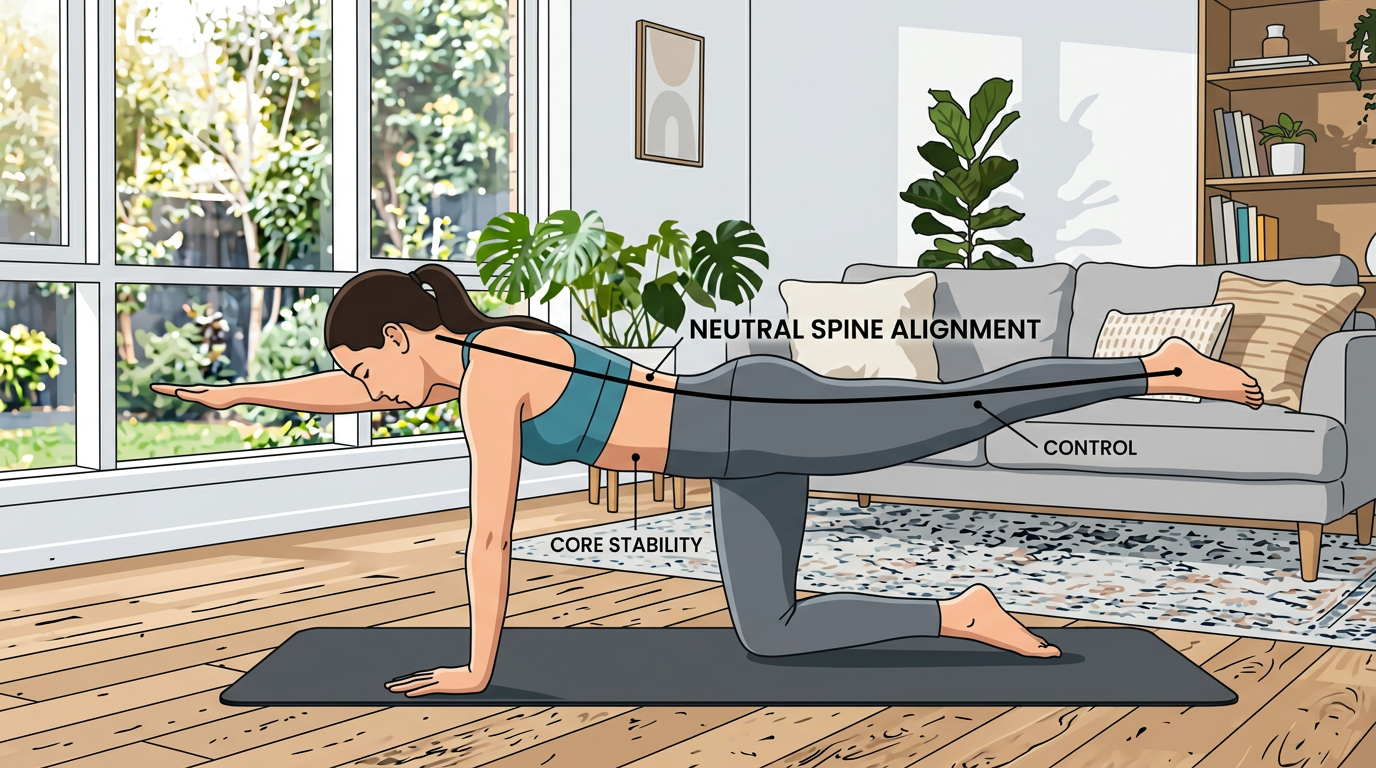
Woman performing a pilates workout at home on a mat in a bright living room, demonstrating proper form in a neutral spine position
What Makes a Pilates Workout at Home So Effective?
Pilates stands apart from other fitness methods because it targets the deep stabilizing muscles that support your spine and pelvis. These intrinsic muscles create a strong foundation that makes all your other movements more powerful and injury-resistant. Unlike exercises that isolate individual muscle groups, Pilates works your body as an integrated system, teaching muscles to work together efficiently.
The Core Principles That Drive Results
Every pilates workout at home is built on six fundamental principles that transform simple movements into powerful strength builders. Concentration requires your full mental focus on each movement, creating a mind-body connection that enhances muscle activation. Control means moving deliberately rather than using momentum, which increases time under tension for better strength gains.
Centering focuses all movements from your powerhouse—the muscles of your abdomen, lower back, hips, and glutes. Flow ensures smooth transitions between exercises, keeping your heart rate elevated while protecting your joints. Precision demands exact positioning and alignment, maximizing the effectiveness of each repetition. Breathing coordinates with movement to oxygenate muscles and engage your deepest core stabilizers.
Why Home Practice Builds Consistency
The convenience of working out at home removes common barriers that derail fitness routines. You eliminate commute time, schedule conflicts, and the intimidation some women feel in group settings. This accessibility makes it easier to establish the consistent practice that delivers real transformation.
Home workouts also allow you to move at your own pace, repeat challenging exercises without feeling self-conscious, and truly listen to your body's signals. You can pause videos, review form cues, and modify exercises based on how you feel that day—flexibility that supports sustainable long-term practice.
Essential Equipment for Your Home Pilates Practice
One of the best aspects of Pilates is that you can start with almost nothing. A quality exercise mat provides cushioning for your spine during floor work—look for one that's at least 6mm thick for adequate support. Beyond that, your body weight provides all the resistance you need for foundational exercises.
Must-Have Items for Beginners
- Exercise mat: Choose one with adequate thickness (6-8mm) and non-slip surface to protect your spine and joints
- Comfortable clothing: Form-fitting attire helps you monitor alignment and prevents fabric from getting in the way
- Water bottle: Stay hydrated throughout your practice, especially during longer sessions
- Small towel: Useful for wiping sweat and can double as a prop for certain exercises
Equipment That Enhances Your Practice
As you progress, certain tools can add variety and challenge to your pilates workout at home. A Pilates ring (magic circle) provides resistance for upper body and inner thigh work. Resistance bands offer variable tension for strengthening exercises. Small weighted balls (1-3 pounds) increase the challenge of arm movements without compromising form.
Foam rollers serve double duty for both myofascial release and balance challenges during exercises. A small inflatable ball adds instability that forces your core to work harder. None of these items are necessary to start, but they can help you continue progressing once bodyweight exercises become easy.
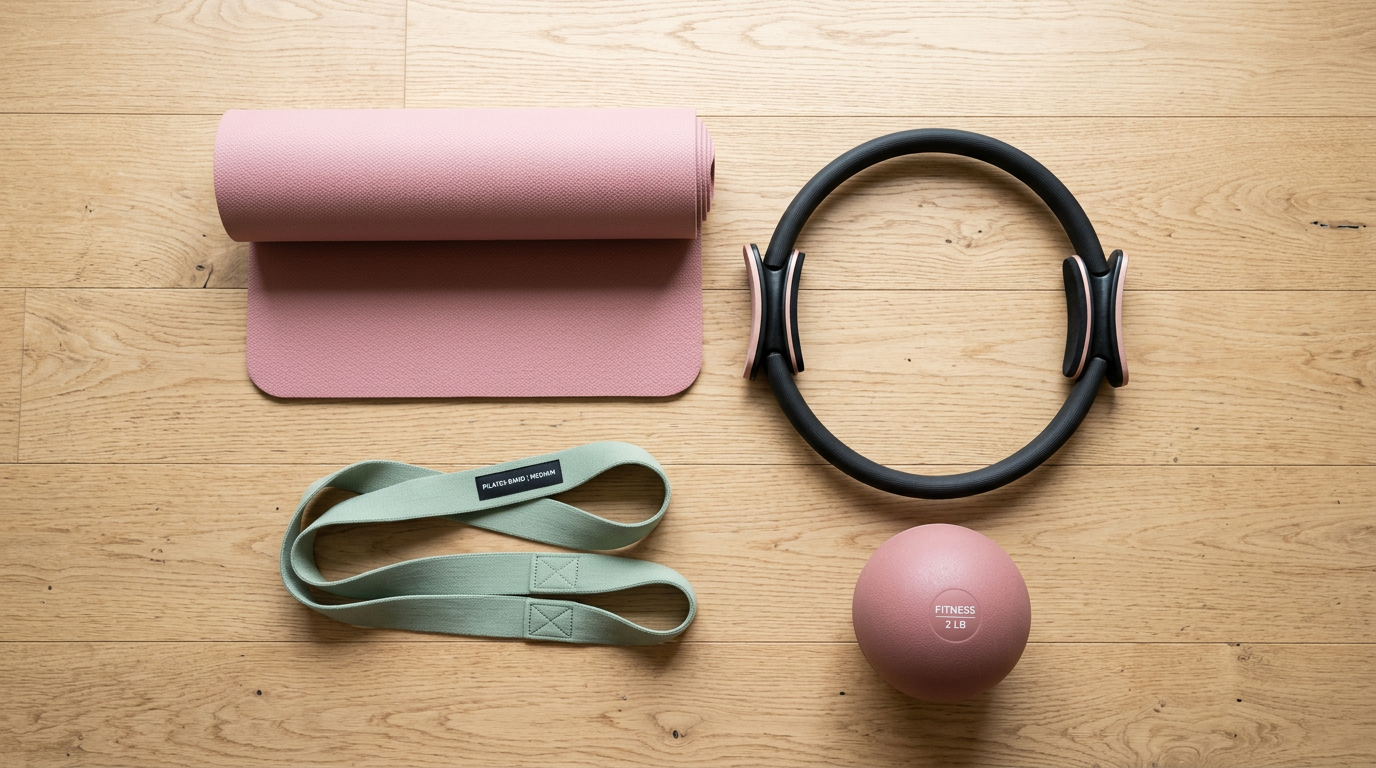
Flat lay arrangement of basic pilates equipment including exercise mat, resistance band, pilates ring, and small weighted ball on a wooden floor
Building Your Foundation: Essential Pilates Exercises for Home
These fundamental movements form the backbone of any effective pilates workout at home. Master these exercises with proper form before progressing to advanced variations, and you'll build a solid foundation of core strength and body awareness.
The Hundred: Core Endurance Builder
This classic Pilates exercise warms up your body while building core endurance. Lie on your back with knees bent in tabletop position (shins parallel to the floor). Curl your head and shoulders off the mat, extending your arms long by your sides. Pump your arms up and down in small, controlled movements while breathing in for five counts and out for five counts. The hundred challenges your deep abdominal muscles to stabilize your spine while your arms create a pumping motion that increases the demand.
For modifications, keep your feet on the floor if holding tabletop is too challenging. To advance, extend your legs to a 45-degree angle or lower for increased intensity. Focus on keeping your lower back connected to the mat throughout the movement.
Roll-Up: Spinal Articulation and Abdominal Strength
The roll-up teaches you to move your spine one vertebra at a time while building serious abdominal strength. Start lying flat with arms extended overhead and legs long on the mat. Inhale to prepare, then exhale as you peel your spine off the mat one vertebra at a time, reaching toward your toes. Inhale at the top, then exhale as you roll back down with control.
This exercise requires significant core strength and hamstring flexibility. If you can't roll up smoothly, bend your knees slightly or place your hands behind your thighs for assistance. The key is controlled movement rather than using momentum to throw yourself up.
Single Leg Circles: Hip Mobility and Stability
Leg circles improve hip mobility while challenging your core to keep your pelvis stable. Lie on your back with one leg extended toward the ceiling and the other long on the mat. Draw small circles with your raised leg, moving from your hip joint while keeping your pelvis completely still. Complete 5-8 circles in each direction before switching legs.
The real work happens in your core muscles, which must prevent your hips from rocking as your leg moves. Start with small circles and gradually increase the size as your stability improves. Keep your shoulders relaxed and your lower back connected to the mat.
Plank to Pike: Full Body Integration
This combination movement builds shoulder stability, core strength, and hamstring flexibility. Start in a plank position with hands under shoulders and body in a straight line. Exhale as you lift your hips toward the ceiling, creating an inverted V shape with your body. Inhale as you return to plank with control.
Focus on pressing your chest toward your thighs at the top of the pike position to increase the hamstring stretch. Keep your core engaged throughout to protect your lower back. Modify by performing the movement from your knees until you build sufficient strength.
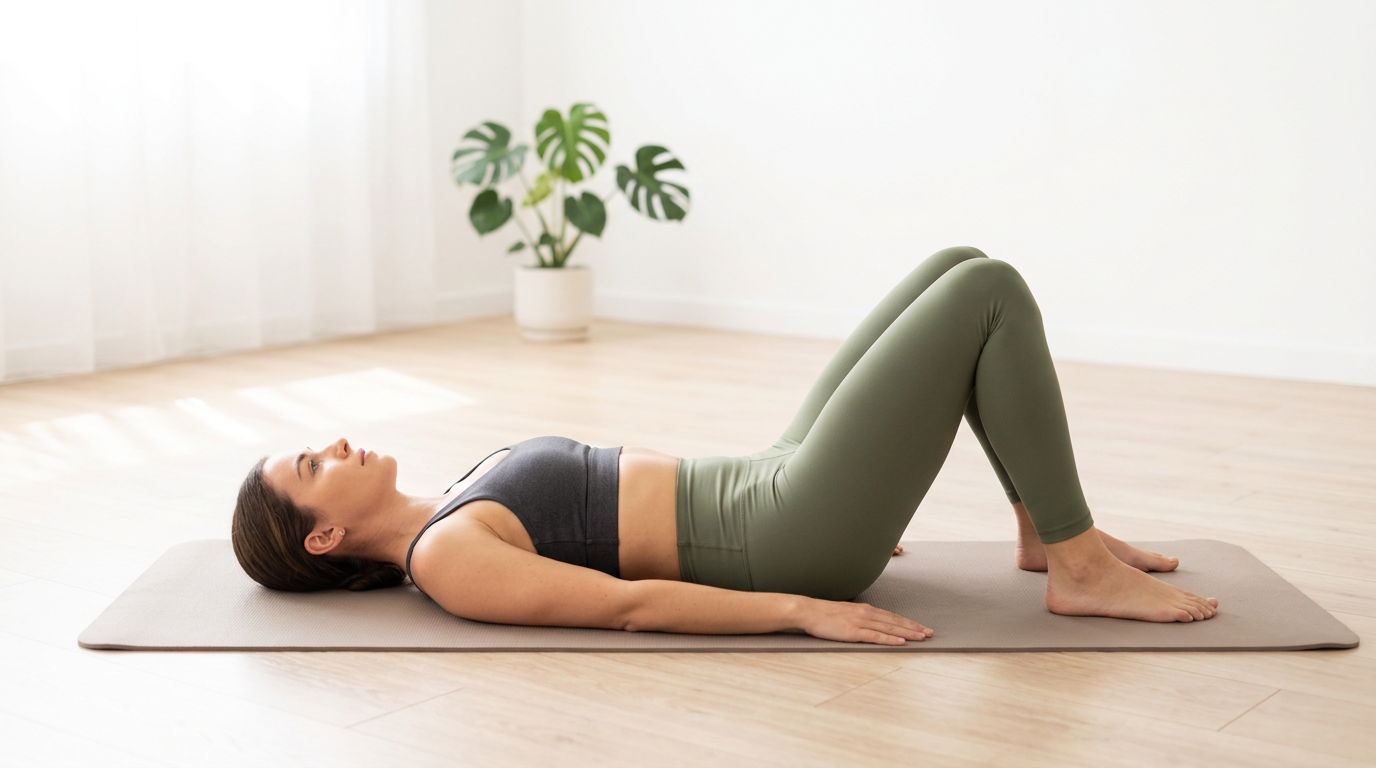
Step-by-step demonstration of proper form for the pilates hundred exercise, showing starting position, tabletop legs, and arm pumping motion
Structuring Your Pilates Workout at Home for Maximum Results
Random exercises won't deliver the results you want. A well-structured pilates workout at home follows a logical progression that warms up your body, challenges your strength and flexibility, then cools down properly.
The Ideal Workout Structure
- Warm-up (3-5 minutes): Begin with gentle spinal movements like cat-cow stretches and pelvic tilts to increase blood flow and prepare your spine for movement
- Core activation (5-7 minutes): Perform foundational exercises like the hundred and roll-ups that engage your powerhouse muscles
- Main work (15-25 minutes): Progress through exercises that target different muscle groups while maintaining core engagement throughout
- Stretching and release (5-10 minutes): End with stretches that lengthen the muscles you've worked and promote flexibility
- Final relaxation (2-3 minutes): Finish with deep breathing in a comfortable position to lower your heart rate and integrate the work
How Often Should You Practice?
Consistency matters more than duration when building strength and flexibility. Practicing 20-30 minutes four to five times per week delivers better results than sporadic hour-long sessions. This frequency allows your muscles adequate recovery time while maintaining the neuromuscular patterns that improve movement quality.
Beginners should start with three sessions per week, focusing on mastering form rather than pushing through fatigue. As your strength and endurance improve, you can increase frequency or duration. Listen to your body—Pilates should leave you feeling energized and lengthened, not exhausted or sore.
Progressive Overload in Pilates
To continue seeing results, you need to progressively challenge your body. In Pilates, this happens through several methods: increasing repetitions of each exercise, holding positions longer to increase time under tension, advancing to more challenging variations, adding small equipment for resistance, or reducing rest time between exercises.
Track your workouts to ensure you're progressing. When an exercise becomes comfortable, it's time to advance to the next level. This principle of progressive challenge keeps your muscles adapting and growing stronger.
Pilates for Specific Women's Health Concerns
Many women turn to Pilates to address specific health issues or body changes. The method's emphasis on core stability and controlled movement makes it particularly effective for several common concerns.
Diastasis Recti Recovery
Diastasis recti—the separation of abdominal muscles that commonly occurs during pregnancy—responds well to properly modified Pilates exercises. The key is avoiding movements that create outward abdominal pressure while strengthening the deep transverse abdominis muscle that draws the separated muscles back together.
Focus on exercises performed in side-lying or all-fours positions rather than supine crunching movements. Breathing exercises that engage your deepest core muscles provide the foundation. As the gap narrows, you can gradually progress to more challenging exercises. Always work with guidance from a pelvic floor physical therapist or certified Pilates instructor experienced in postpartum recovery.
Hypermobility and Ehlers-Danlos Syndrome
Women with hypermobility or Ehlers-Danlos Syndrome can benefit from Pilates when exercises are properly modified. The focus should be on building muscular support around joints rather than pushing into end-range flexibility. Avoid locking out joints or stretching to your maximum range of motion, which can cause instability and pain.
Work in a smaller range of motion with increased muscular control. Use props like resistance bands to provide external feedback about joint position. Focus on exercises that build strength in mid-range positions where your muscles can best support your joints. The controlled, precise nature of Pilates makes it ideal for developing the stability that hypermobile joints need.
Spinal Conditions and Spondylolisthesis
Pilates can help manage spinal conditions like spondylolisthesis when exercises are carefully selected. Avoid movements that involve extreme spinal extension or rotation, which can aggravate the condition. Instead, focus on neutral spine exercises that build core stability without stressing the affected vertebrae.
Exercises in all-fours position, side-lying, and modified standing positions often work well. The goal is strengthening the muscles that support your spine while avoiding positions that cause pain or instability. Work with a physical therapist or qualified instructor who can assess your specific condition and provide appropriate modifications.
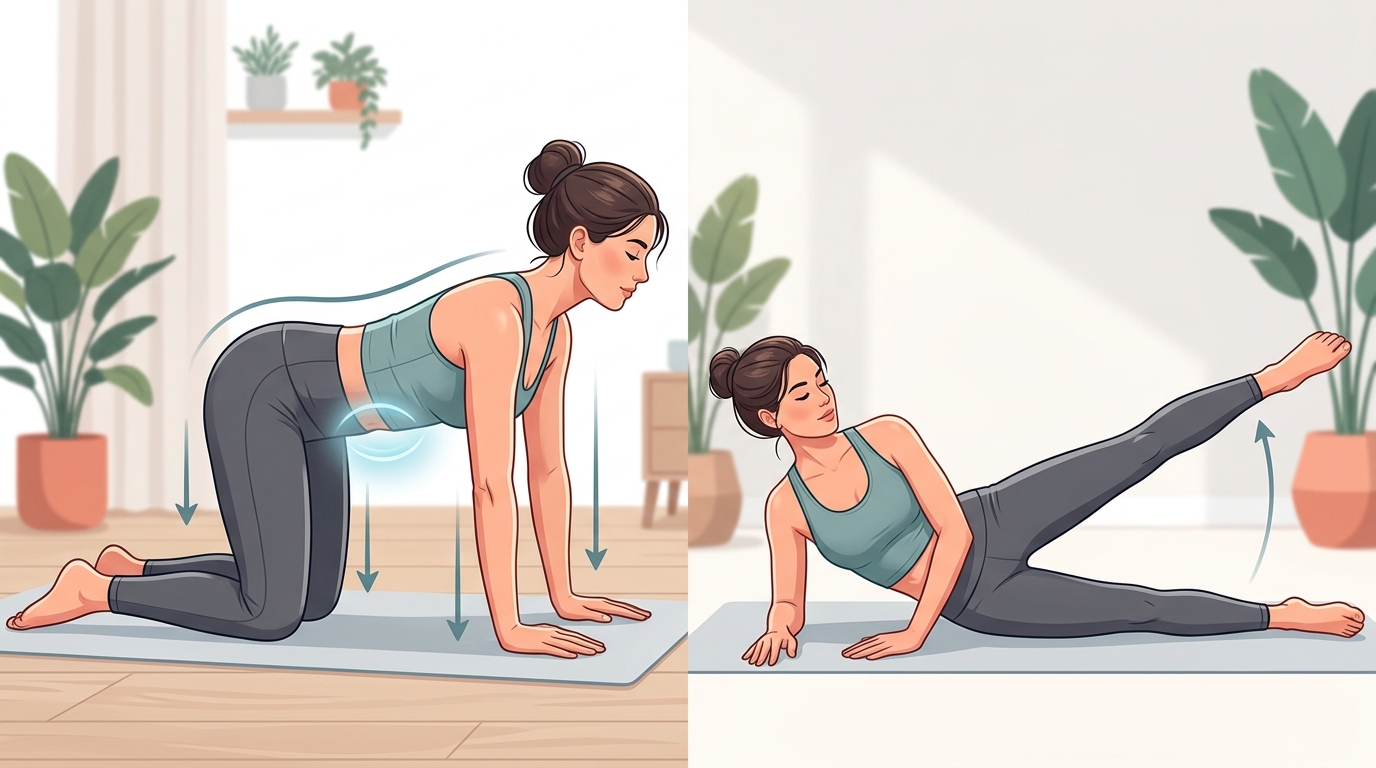
Woman demonstrating modified pilates exercises for diastasis recti, showing side-lying leg lifts and all-fours position with neutral spine
Common Mistakes to Avoid in Your Home Practice
Without an instructor watching your form, it's easy to develop habits that reduce effectiveness or risk injury. Awareness of these common pitfalls helps you maintain proper technique during your pilates workout at home.
Form Errors That Limit Results
- Holding your breath: Proper breathing is essential for core activation and maintaining steady movement rhythm
- Rushing through repetitions: Speed reduces time under tension and prevents the mind-body connection that makes Pilates effective
- Losing neutral spine: Allowing your lower back to arch excessively or flatten completely shifts work away from deep stabilizers
- Tensing shoulders and neck: Upper body tension wastes energy and can cause pain—keep shoulders down and neck long
- Skipping warm-up: Jumping straight into challenging exercises without preparation increases injury risk and reduces performance
Building Body Awareness
Developing proprioception—awareness of your body's position in space—is crucial for proper form. Use a mirror when possible to check your alignment, or record yourself performing exercises to identify form issues. Place your hand on working muscles to feel them engage, creating a stronger mind-muscle connection.
Start with fewer repetitions performed with perfect form rather than pushing through fatigue with sloppy technique. Quality always trumps quantity in Pilates. As your body awareness improves, you'll naturally perform exercises more effectively.
Combining Pilates With Other Training Methods
Pilates complements other forms of exercise beautifully, creating a well-rounded fitness program that addresses strength, flexibility, and cardiovascular health.
Pilates and Strength Training
Combining Pilates with traditional strength training creates powerful synergy. Pilates improves the core stability and movement patterns that make your lifts safer and more effective. Meanwhile, strength training builds the muscle mass and bone density that Pilates alone may not fully develop. Many women find that adding Pilates to their strength routine improves their lifting form and reduces injury risk.
Consider practicing Pilates on your rest days from heavy lifting, or use shorter Pilates sessions as active recovery. The flexibility and mobility work helps counteract the muscle tightness that can develop from strength training.
Pilates Versus Yoga
Both Pilates and yoga offer valuable benefits, but they emphasize different aspects of fitness. Pilates focuses more specifically on core strength and dynamic movement patterns, while yoga emphasizes flexibility, balance, and mindfulness. For spinal conditions like spondylolisthesis, Pilates often provides better options because it emphasizes neutral spine stability rather than the deep backbends common in many yoga styles.
You don't have to choose between them—many women benefit from incorporating both practices. Use Pilates for strength and stability work, and yoga for flexibility and stress management. Each method brings unique benefits to your overall wellness.
Adding Cardiovascular Exercise
While Pilates builds strength and flexibility, it typically doesn't elevate your heart rate enough to provide significant cardiovascular benefits. Add walking, cycling, swimming, or other cardio activities 2-3 times per week for heart health. The core strength you build through Pilates will improve your performance in these activities, creating a positive feedback loop.
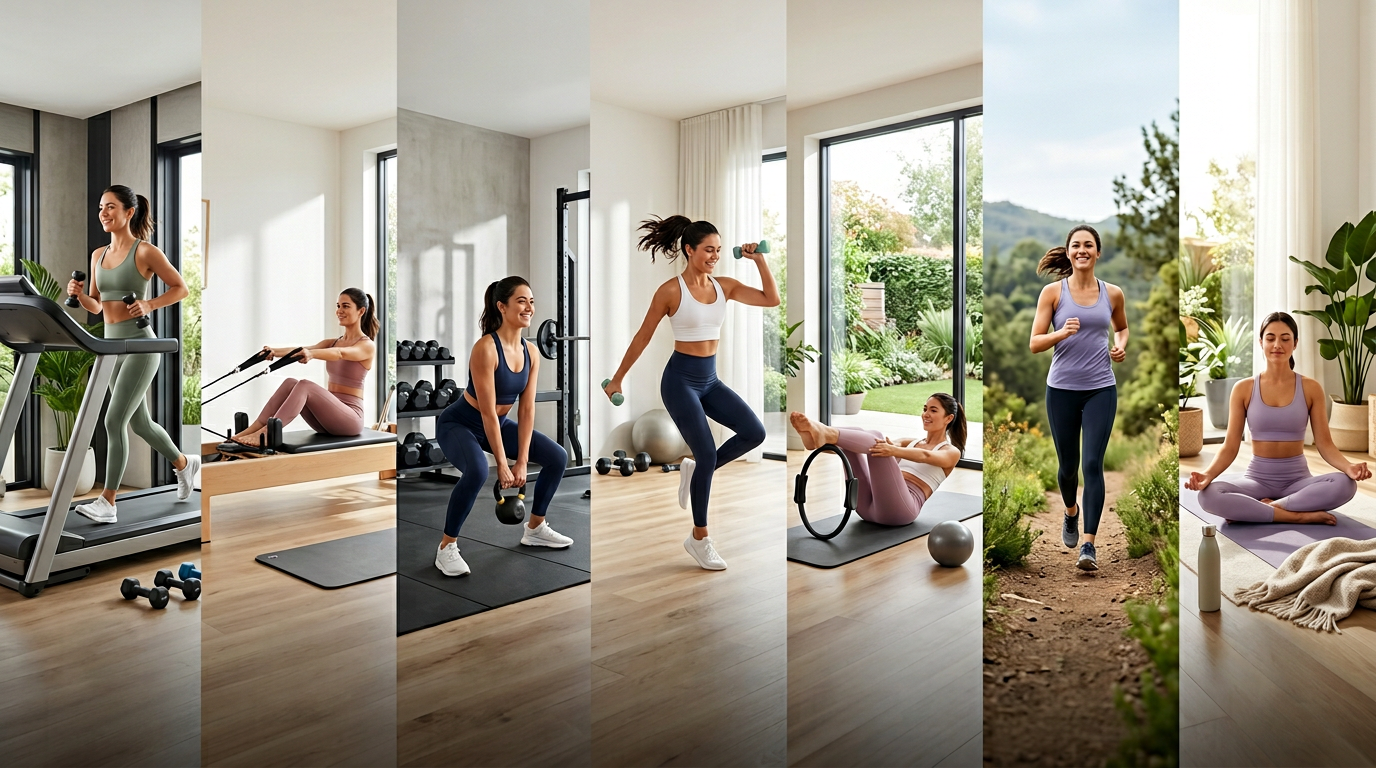
Weekly workout schedule showing balanced combination of pilates, strength training, and cardio sessions for women
Measuring Your Progress and Staying Motivated
Tracking your progress helps you stay motivated and ensures you're continuing to challenge yourself appropriately. Unlike traditional strength training where you can simply add weight to the bar, Pilates progress can be more subtle.
Signs Your Practice Is Working
- Improved posture: You naturally stand taller with shoulders back and core engaged throughout your day
- Reduced back pain: Stronger core muscles better support your spine, alleviating chronic discomfort
- Better movement quality: Everyday activities like bending, reaching, and lifting feel easier and more fluid
- Increased exercise capacity: You can perform more repetitions or hold positions longer than when you started
- Enhanced body awareness: You notice and correct poor posture or movement patterns automatically
- Visible muscle definition: Your core, arms, and legs show improved tone and definition
Setting Meaningful Goals
Rather than focusing solely on aesthetic outcomes, set performance-based goals for your pilates workout at home. Aim to hold plank position for a specific duration, complete a full roll-up with straight legs, or perform ten perfect single-leg circles without hip movement. These concrete milestones provide clear targets and celebrate the functional strength you're building.
Keep a simple workout journal noting which exercises you performed, how many repetitions, and how they felt. Review your notes monthly to see how far you've progressed. This record provides motivation during plateaus and helps you identify when it's time to advance to more challenging variations.
Overcoming Plateaus
When progress stalls, change your approach. Try different exercise variations, adjust your tempo (slower is often harder), reduce rest periods, or increase repetitions. Sometimes taking a complete rest week allows your body to recover and come back stronger. Consider following along with different instructors online to learn new cues and variations that challenge your body in fresh ways.
Frequently Asked Questions
Is 20 minutes of Pilates a day enough?
Twenty minutes of focused Pilates daily provides significant benefits for core strength, flexibility, and posture when exercises are performed with proper form and progressive challenge. This duration is sufficient for most women to complete a well-rounded routine targeting all major muscle groups. Consistency matters more than session length, making daily 20-minute practices more effective than sporadic longer workouts.
Can Pilates help with diastasis recti?
Pilates can effectively support diastasis recti recovery when exercises are properly modified to avoid outward abdominal pressure. Focus on movements that engage the deep transverse abdominis muscle, performed in side-lying or all-fours positions rather than traditional crunches. Work with a pelvic floor physical therapist or qualified instructor who can guide appropriate progressions as the abdominal separation heals.
Can people with Ehlers Danlos do Pilates?
Women with Ehlers-Danlos Syndrome can safely practice Pilates with appropriate modifications focusing on joint stability rather than flexibility. Avoid locking out joints or stretching to maximum range of motion, instead working in mid-range positions with increased muscular control. The precise, controlled nature of Pilates makes it ideal for building the muscular support that hypermobile joints need for stability.
Is yoga or Pilates better for spondylolisthesis?
Pilates typically offers better options for spondylolisthesis because it emphasizes neutral spine stability and avoids extreme spinal extension that can aggravate the condition. While yoga often includes deep backbends that stress affected vertebrae, Pilates focuses on core strengthening in safer positions. Choose exercises in all-fours, side-lying, and modified standing positions that build spinal support without causing pain.
What equipment do I need to start Pilates at home?
You only need a quality exercise mat (6-8mm thick) and comfortable form-fitting clothing to start an effective pilates workout at home. Your body weight provides sufficient resistance for foundational exercises that build core strength and flexibility. As you progress, optional equipment like resistance bands, a Pilates ring, or small weighted balls can add variety and challenge.
How long before I see results from Pilates?
Most women notice improved posture and body awareness within two to three weeks of consistent practice, while visible muscle definition and significant strength gains typically appear after six to eight weeks. Results depend on practice frequency, exercise intensity, and individual starting fitness levels. Practicing four to five times weekly with proper form and progressive challenge delivers optimal results.
Can beginners do Pilates at home without an instructor?
Beginners can safely start Pilates at home using quality video instruction that demonstrates proper form and alignment cues. Focus on mastering foundational exercises with perfect technique before progressing to advanced variations. Using a mirror to check alignment and recording yourself can help identify form issues. Consider taking a few private sessions with a certified instructor to establish proper technique.
Creating Your Sustainable Home Pilates Practice
Starting a pilates workout at home doesn't require perfection—it requires consistency and patience with yourself as you learn. Begin with the foundational exercises outlined in this guide, focusing on quality over quantity. Master proper breathing and alignment before worrying about how many repetitions you can complete.
The beauty of Pilates lies in its scalability and accessibility. Whether you have 10 minutes or an hour, whether you're recovering from pregnancy or training for a marathon, Pilates meets you where you are and helps you build the strength and body awareness that supports everything else you do. The core stability you develop transfers to every movement in your daily life, from carrying groceries to playing with your children to lifting weights at the gym.
Remember that progress isn't always linear. Some days your body will feel strong and fluid, while other days the same exercises feel challenging. This variation is normal and teaches you to listen to your body's signals rather than pushing through pain or fatigue. The mind-body connection you develop through consistent practice becomes one of Pilates' most valuable benefits.
As you continue your pilates workout at home journey, celebrate the small victories—the day you finally nail that roll-up, the moment you realize your back hasn't hurt in weeks, or the confidence you feel standing taller with engaged, strong posture. These functional improvements matter more than any aesthetic change, though the visible results will come as a natural byproduct of your consistent effort.
Start with three 20-minute sessions this week, focusing on the essential exercises that build your foundation, and trust the process as you develop strength from the inside out.