A pilates ab workout is a low-impact core training method combining controlled movements, breathwork, and muscle engagement to strengthen deep abdominal muscles. The most effective exercises include the Hundred, Roll-Up, and Teaser, performed with precise form and breathing patterns for functional core strength and improved posture.
You've done countless crunches, held planks until your body shook, and still feel like your core strength isn't where you want it to be. The problem isn't your effort—it's your approach. A pilates ab workout targets your core differently than traditional exercises, focusing on deep muscle engagement and controlled movement patterns that build genuine functional strength. Unlike high-intensity ab routines that leave you sore but not necessarily stronger, Pilates creates a mind-muscle connection that transforms how your core supports every movement you make.
This comprehensive guide will show you exactly how to structure an effective pilates ab workout, which exercises deliver real results, and how to progress safely while building the strong, stable core you've been working toward. Whether you're new to Pilates or looking to refine your practice, you'll discover science-backed techniques that work with your body, not against it.
Key Takeaways
- Pilates ab workouts strengthen deep core muscles through controlled, breath-focused movements that improve posture and functional strength
- Consistency matters more than intensity—2-3 sessions weekly with proper form outperforms daily high-rep routines
- Progressive overload in Pilates means adding complexity, range of motion, and control rather than just speed or repetitions
- Core strength from Pilates reduces lower back pain and improves performance in other activities and daily movements
- Visible ab definition requires combining core training with overall body composition changes through nutrition and full-body strength work
What Makes Pilates Ab Workouts Different From Traditional Core Training
Understanding what sets a pilates ab workout apart helps you appreciate why this method delivers such impressive results. Traditional ab exercises often isolate surface muscles through repetitive flexion movements. Pilates takes a completely different approach.
The Mind-Muscle Connection in Pilates
Pilates emphasizes intentional muscle engagement rather than momentum-driven repetitions. You'll focus on feeling each muscle work throughout the entire range of motion. This conscious control activates deeper stabilizing muscles that support your spine and pelvis.
During a pilates ab workout, you coordinate breath with movement, creating internal pressure that naturally engages your transverse abdominis—the deepest abdominal layer that acts like a natural corset. This integration builds strength that translates directly to better posture and reduced back pain.
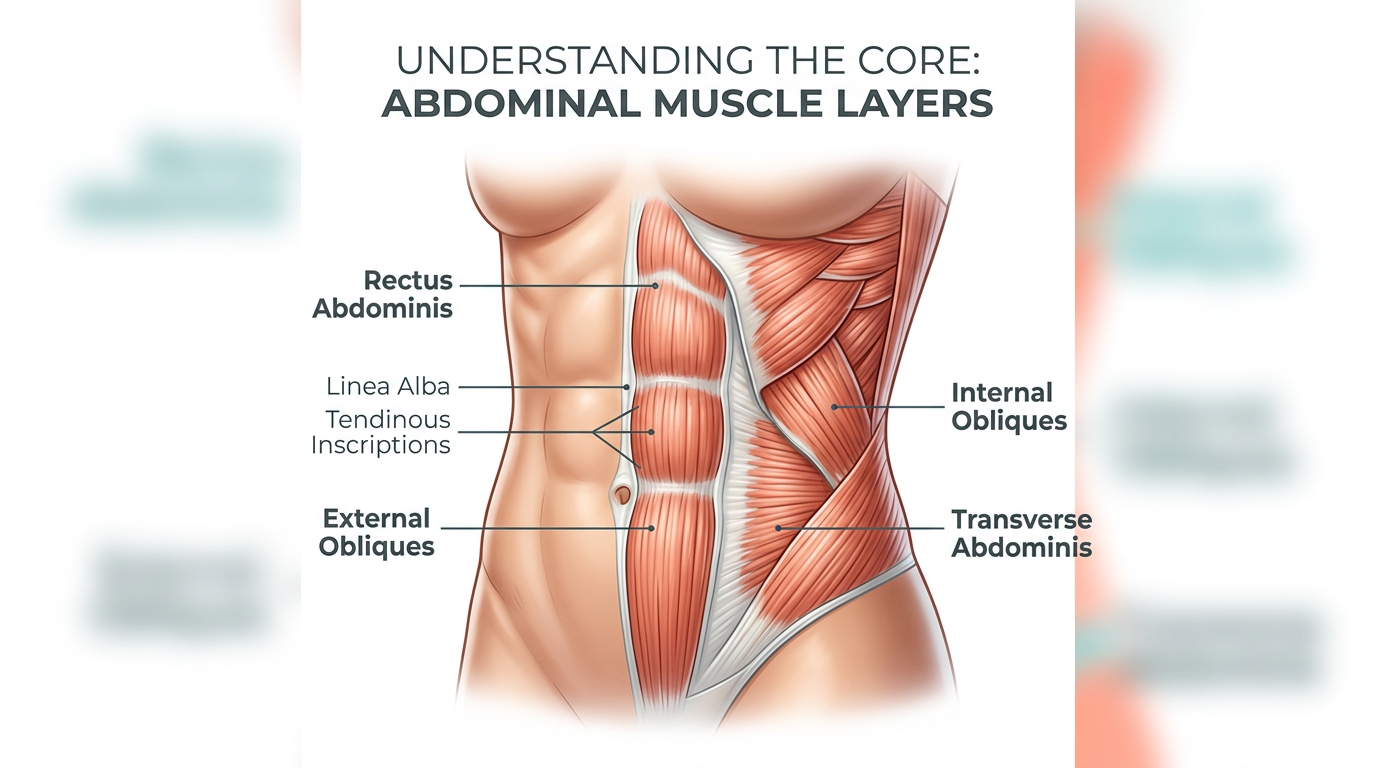
Anatomical illustration showing the layers of abdominal muscles including rectus abdominis, external obliques, internal obliques, and transverse abdominis with labels
Full-Body Integration vs. Isolation
A quality pilates ab workout rarely isolates your abs completely. Instead, exercises challenge your core while incorporating hip, shoulder, and spine movements. This functional approach mirrors real-world demands on your body.
When you perform a Roll-Up or Teaser, your abs work alongside your hip flexors, back extensors, and shoulder stabilizers. This integration builds coordinated strength rather than creating muscular imbalances that traditional isolated ab work can produce.
Eccentric Control and Time Under Tension
Pilates movements emphasize the lowering phase as much as the lifting phase. This eccentric control increases time under tension, a key factor in building muscular strength and endurance. You'll spend 3-5 seconds lowering with control rather than collapsing between repetitions.
This deliberate pacing also reduces injury risk and teaches your nervous system to maintain stability under load—a skill that protects your spine during everyday activities like lifting groceries or picking up children.
Essential Pilates Ab Exercises for Core Results
The best pilates ab workout includes exercises that target different core functions: flexion, extension, rotation, and anti-rotation. This comprehensive approach builds balanced strength throughout your entire midsection.
The Hundred: Building Endurance and Breath Control
The Hundred is a foundational pilates ab workout exercise that combines static hold with dynamic arm movement. This exercise builds muscular endurance while teaching you to maintain core engagement during movement.
To perform the Hundred:
- Lie on your back with knees bent at 90 degrees (tabletop position) or legs extended at 45 degrees for advanced
- Lift your head, neck, and shoulders off the mat, engaging your upper abs
- Extend arms alongside your body, hovering a few inches off the floor
- Pump arms up and down in small, controlled movements
- Inhale for five pumps, exhale for five pumps, continuing for 100 total pumps
Modifications include keeping feet on the floor or reducing the total count to 50 while you build endurance. Focus on keeping your lower back connected to the mat throughout the exercise.
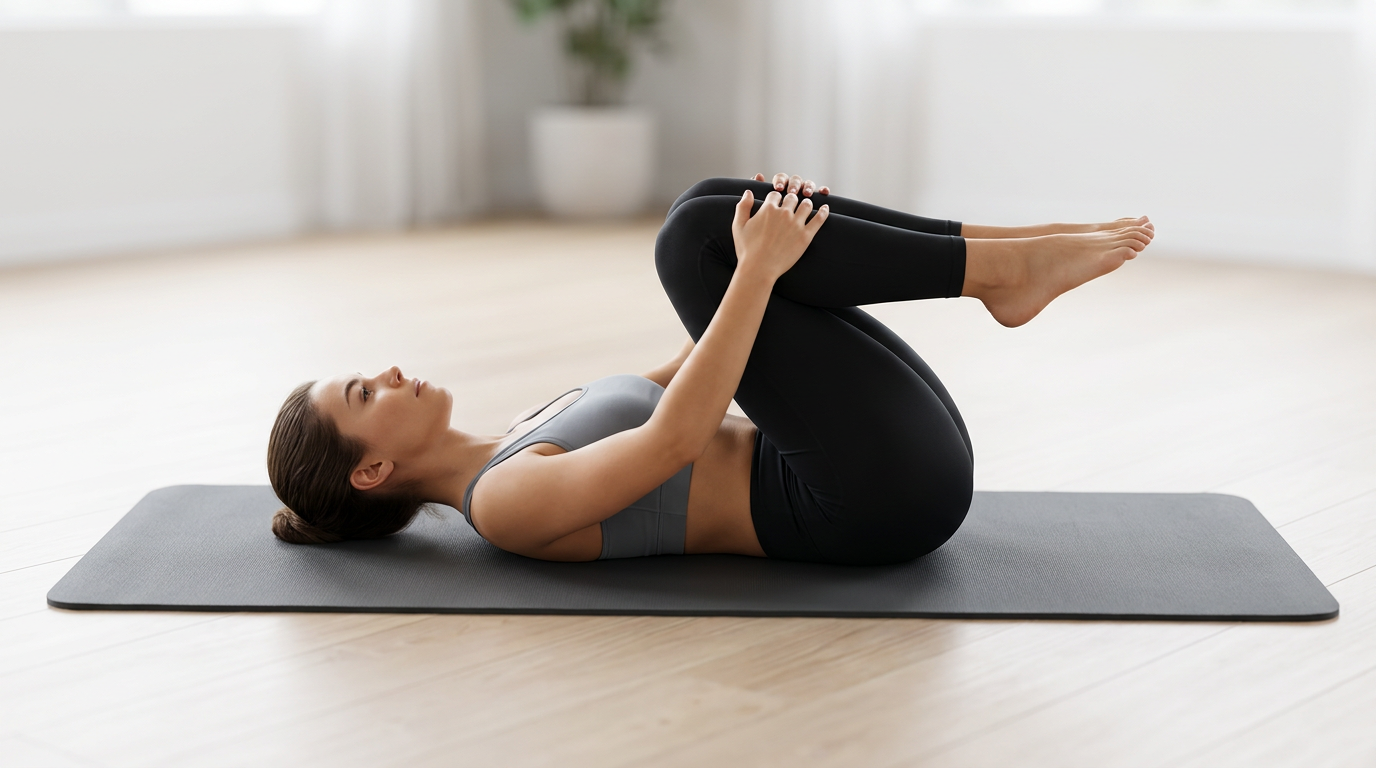
Step-by-step demonstration of The Hundred pilates exercise showing starting position, proper head and shoulder lift, and arm pumping motion with breathing cues
Roll-Up: Spinal Articulation and Deep Flexion
The Roll-Up challenges your entire abdominal wall while promoting spinal mobility. Unlike a traditional sit-up that uses momentum, this exercise requires controlled articulation through each vertebra.
Execution steps:
- Lie flat with legs extended and arms reaching overhead
- Inhale to prepare, then exhale as you lift arms toward the ceiling
- Continue rolling up one vertebra at a time, reaching toward your toes
- Pause at the top with a rounded C-curve spine
- Inhale at the top, then exhale as you slowly roll back down with control
If you can't roll up smoothly, place a resistance band under your feet and hold the ends for assistance. This modification maintains proper form while you build the necessary strength.
Single Leg Stretch: Coordination and Stability
This dynamic exercise from the classic Pilates mat series challenges your ability to maintain core stability while moving your limbs. Single Leg Stretch improves coordination between your upper and lower body while keeping your torso absolutely still.
The movement pattern:
- Start in tabletop position with head and shoulders lifted
- Extend one leg to 45 degrees while drawing the opposite knee toward your chest
- Place hands on the bent knee (outside hand on ankle, inside hand on knee)
- Switch legs in a fluid, controlled motion while maintaining upper body position
- Complete 10-16 total repetitions (5-8 per side)
Keep your shoulders stable and avoid rocking side to side. Your pelvis should remain neutral throughout the exercise, challenging your obliques and transverse abdominis to resist rotation.
Criss-Cross: Oblique Strength and Rotation
For targeted oblique work, Criss-Cross delivers exceptional results. This rotational exercise builds the lateral core strength essential for athletic movements and everyday twisting motions.
Proper form includes:
- Begin in tabletop position with hands behind your head, elbows wide
- Lift head, neck, and shoulders into a curl position
- Rotate your torso, bringing one shoulder toward the opposite knee
- Extend the other leg long at 45 degrees
- Switch sides with control, rotating through your ribcage rather than pulling on your neck
Focus on quality over speed. Each rotation should come from your core, not momentum. Pause briefly at the peak of each twist to maximize muscle engagement.
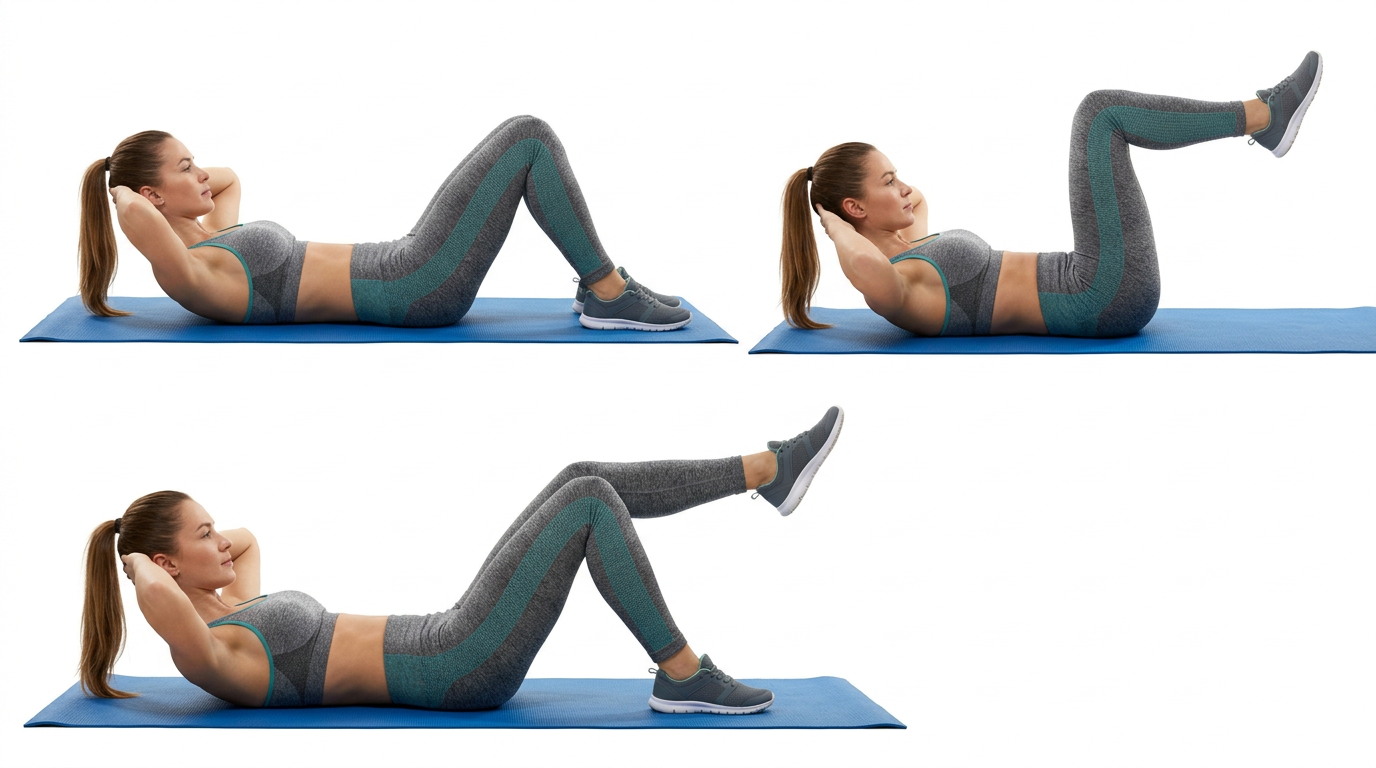
Sequence showing proper Criss-Cross form with emphasis on torso rotation, extended leg position, and hand placement behind head
Teaser: Advanced Integration and Balance
The Teaser represents one of the most challenging exercises in any pilates ab workout. It requires tremendous core strength, hip flexor control, and balance. This exercise integrates your entire anterior chain while demanding precise control.
To build toward a full Teaser:
- Start seated with knees bent, feet flat, arms extended forward
- Roll back slightly, lifting feet off the floor to balance on your sit bones
- Hold this V-position, maintaining a long spine and engaged core
- Progress by extending legs fully while keeping the V-shape
- Advanced: Start lying flat and roll up to the Teaser position in one fluid motion
This exercise should be earned through consistent practice. Use modifications until you can maintain proper form without straining your neck or compromising spinal alignment.
Structuring Your Pilates Ab Workout for Maximum Results
Having great exercises means nothing without proper programming. How you structure your pilates ab workout determines whether you see consistent progress or hit frustrating plateaus.
Optimal Frequency and Volume
Research on core training suggests 2-3 focused sessions per week provides optimal stimulus for strength gains without overtraining. Your core muscles recover relatively quickly compared to larger muscle groups, but they still need rest to adapt and grow stronger.
A balanced weekly approach might include:
- Two dedicated 20-30 minute pilates ab workout sessions
- One full-body Pilates session that incorporates core work
- Rest days or active recovery with gentle stretching
Within each session, aim for 8-12 exercises performed for 8-15 repetitions or 30-60 second holds. Quality always trumps quantity—performing five exercises with perfect form delivers better results than rushing through fifteen with poor technique.
Progressive Overload in Pilates
Progressive overload doesn't always mean adding weight. In a pilates ab workout, you create progressive challenge through several methods:
- Increased range of motion: Lowering legs closer to the floor, extending further in Roll-Ups
- Reduced stability: Moving from bent knees to straight legs, closing eyes during balance exercises
- Tempo manipulation: Slowing down the eccentric phase, adding pauses at peak contraction
- Complexity addition: Combining movements, adding arm variations, incorporating small props
- Volume increase: Adding sets or repetitions once you master current levels
Track your progress by noting which variations you use and when exercises start feeling manageable. That's your signal to increase difficulty rather than simply doing more of the same.
Warm-Up and Cool-Down Essentials
Never jump straight into intense core work. A proper warm-up prepares your spine for flexion and rotation while activating your deep stabilizers.
Effective warm-up sequence (5-7 minutes):
- Pelvic tilts lying on your back (10 repetitions)
- Knee side-to-side rocks (8 per side)
- Cat-cow stretches (8 cycles)
- Bird dogs (6 per side)
- Dead bugs (8 per side)
Cool down with gentle stretching focusing on hip flexors, lower back, and chest to counterbalance the flexion-heavy nature of most pilates ab workout exercises. Child's pose, supine twists, and hip flexor stretches work particularly well.
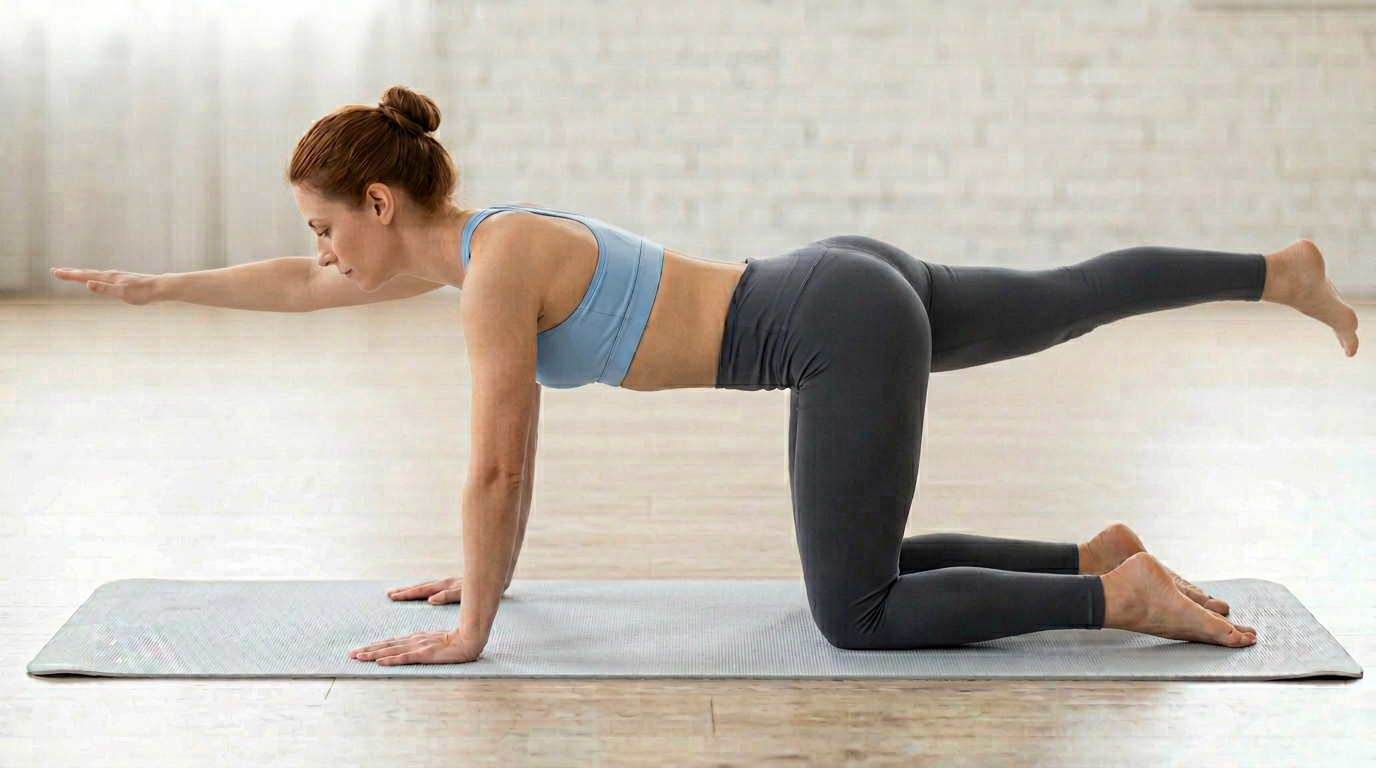
Visual guide showing a complete pilates ab workout warm-up sequence with pelvic tilts, cat-cow, and bird dog exercises
Common Mistakes That Sabotage Your Pilates Ab Workout
Even experienced practitioners make errors that limit results or increase injury risk. Recognizing these mistakes helps you refine your practice for better outcomes.
Pulling on Your Neck
The most common error in any pilates ab workout involves using your hands to pull your head forward during exercises. Your neck flexors aren't designed to lift your torso—your abdominals are.
Correct this by:
- Placing hands lightly behind your head with elbows wide
- Imagining holding a small orange between your chin and chest
- Leading with your sternum rather than your forehead
- Reducing the range of motion if you can't maintain proper alignment
If neck strain persists, support your head with one hand while keeping the other arm extended, or place your head on a small pillow until your core strength improves.
Losing Neutral Spine When Needed
While many Pilates exercises use spinal flexion, others require maintaining neutral spine. Allowing your lower back to arch excessively during leg lowering exercises shifts work away from your abs and stresses your lumbar spine.
Maintain proper alignment by pressing your lower back gently into the mat during exercises like leg lowers or the Hundred. If you can't keep this connection, your legs are extending too far—bend your knees or don't lower as deeply.
Holding Your Breath
Breath is fundamental to Pilates methodology, yet many people hold their breath during challenging moments. This creates excessive intra-abdominal pressure and prevents proper core engagement.
The general Pilates breathing pattern involves exhaling during exertion (the challenging phase) and inhaling during the easier phase. This breathing strategy naturally engages your deep core muscles and provides rhythm to your movements.
Rushing Through Repetitions
Speed undermines the precision that makes a pilates ab workout effective. Rushing through movements uses momentum rather than muscular control, reducing the exercise's effectiveness significantly.
Instead, move deliberately. Count to 3-5 seconds for each phase of movement. If an exercise feels too easy when performed slowly with perfect form, it's time to progress to a more challenging variation rather than speeding up.
Addressing Specific Goals With Your Pilates Ab Workout
Different goals require slightly different approaches within the Pilates framework. Understanding how to adjust your practice helps you achieve your specific objectives.
Can You Get Abs From Just Pilates?
Pilates builds exceptional core strength and can develop well-defined abdominal muscles. However, visible abs depend primarily on body composition—specifically, having low enough body fat for muscle definition to show through.
A consistent pilates ab workout strengthens and tones your core muscles effectively. For visible definition, you'll need to combine your Pilates practice with proper nutrition that supports fat loss and potentially additional strength training for overall muscle development. Pilates alone creates a strong, functional core, but abs visibility is largely determined by what you eat.
Building Functional Strength vs. Aesthetic Definition
If your primary goal is functional strength—improved posture, reduced back pain, better performance in other activities—a pilates ab workout provides everything you need. Focus on progressive overload through complexity and control rather than appearance-based metrics.
For aesthetic goals, combine your Pilates practice with:
- Full-body strength training 2-3 times weekly
- Adequate protein intake (approximately 0.7-1.0 grams per pound of body weight)
- A slight caloric deficit if fat loss is needed
- Patience—visible changes typically require 8-12 weeks of consistent effort
Pilates for Stress Management and Hormonal Balance
Beyond physical strength, a pilates ab workout offers significant stress management benefits. The breath-focused, mindful nature of Pilates activates your parasympathetic nervous system, countering the fight-or-flight stress response.
For women dealing with high cortisol levels, Pilates provides moderate-intensity exercise that strengthens your body without adding excessive physiological stress. Unlike high-intensity interval training that can temporarily spike cortisol, Pilates offers a gentler approach that still delivers strength benefits while supporting hormonal balance.
The controlled breathing patterns used throughout Pilates exercises also help regulate your nervous system, potentially reducing anxiety and improving sleep quality—both crucial for managing stress hormones effectively.
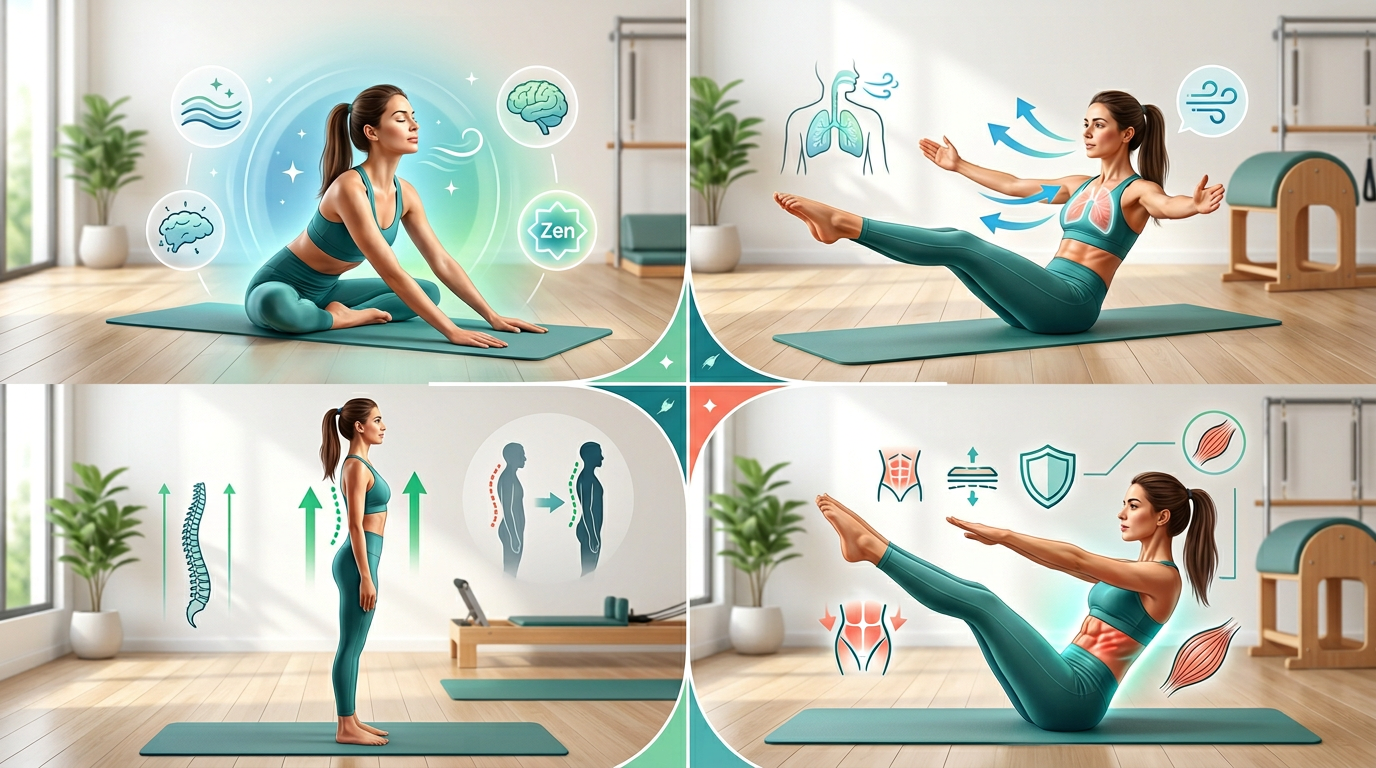
Infographic showing the mind-body benefits of pilates including stress reduction, improved breathing, better posture, and core strength
Pilates and Overall Wellness Benefits
While a pilates ab workout primarily targets core strength, the practice offers broader wellness benefits. The low-impact nature makes it accessible for most fitness levels while still providing genuine challenge.
Regular Pilates practice can support cardiovascular health through improved circulation and breathing capacity. While Pilates shouldn't replace dedicated cardiovascular exercise, the mindful movement and breath work contribute to overall wellness in ways that complement other healthy lifestyle habits.
Some practitioners find that the stress-reducing aspects of Pilates help with anxiety management. The focused, present-moment awareness required during exercises creates a meditative quality that can calm an overactive mind. While Pilates isn't a substitute for professional mental health treatment, it can be a valuable component of a comprehensive wellness approach.
Progressing From Beginner to Advanced Pilates Ab Work
Understanding your current level and how to progress safely ensures continued results without injury or frustration.
Beginner Foundations (Weeks 1-4)
If you're new to Pilates, spend your first month mastering fundamental concepts. Building proper movement patterns now prevents compensations that limit future progress.
Focus on:
- Learning to engage your transverse abdominis through breath
- Maintaining neutral spine awareness
- Performing basic exercises with bent knees and reduced range
- Coordinating breath with movement
- Building endurance for 20-minute sessions
Appropriate beginner exercises include modified Hundreds, Roll-Ups with band assistance, bent-knee variations of leg exercises, and basic planks. Aim for 2 sessions weekly with at least one rest day between.
Intermediate Development (Months 2-4)
Once basic movements feel controlled and you can maintain proper form throughout entire exercises, you're ready for intermediate progressions. This phase focuses on increasing complexity and reducing external support.
Intermediate progressions include:
- Extending legs fully during exercises previously done with bent knees
- Adding rotational elements to basic movements
- Increasing tempo variations (slower eccentric phases)
- Combining multiple movement patterns in single exercises
- Extending session length to 30 minutes
You might perform full Roll-Ups without assistance, Single Leg Stretch with extended legs, and hold Teaser prep positions. Increase frequency to 3 sessions weekly if recovery allows.
Advanced Mastery (Month 5+)
Advanced practitioners demonstrate exceptional control, can perform full expressions of classical exercises, and create their own variations. At this level, your pilates ab workout becomes highly intuitive and self-directed.
Advanced practice characteristics:
- Seamless transitions between exercises
- Full Teaser with controlled roll-up and roll-down
- Adding small props (magic circle, light weights) for variety
- Creating flows that challenge balance and coordination
- Teaching or guiding others through exercises
At this stage, listen to your body and vary your practice. Some days might focus on slow, controlled strength work, while others emphasize flow and endurance. The key is maintaining challenge without pushing into poor form.
Equipment and Props to Enhance Your Pilates Ab Workout
While mat Pilates requires minimal equipment, certain props can add variety and challenge to your practice.
Essential Props for Home Practice
A quality mat provides cushioning for your spine during floor-based exercises. Look for mats at least 6mm thick—thicker than standard yoga mats—for adequate support during rolling and spinal articulation movements.
Other useful props include:
- Resistance bands: Assist with Roll-Ups, add resistance to leg exercises
- Small ball (7-9 inches): Place between knees for inner thigh engagement, behind lower back for support
- Magic circle: Creates resistance for upper body and inner thigh work
- Foam roller: Challenges balance and adds instability for advanced variations
Start with just a mat and add props gradually as you identify specific needs in your practice. Props should enhance your workout, not become a distraction from proper form.
When to Consider Reformer Pilates
The Pilates reformer—a specialized machine with springs and pulleys—offers unique benefits but isn't necessary for an effective pilates ab workout. Mat Pilates can build just as much strength when practiced consistently with proper progression.
Consider reformer classes if you want instructor guidance, enjoy equipment-based training, or have specific limitations that benefit from the reformer's adjustable resistance. However, the principles and results remain consistent whether you practice on a mat or machine.
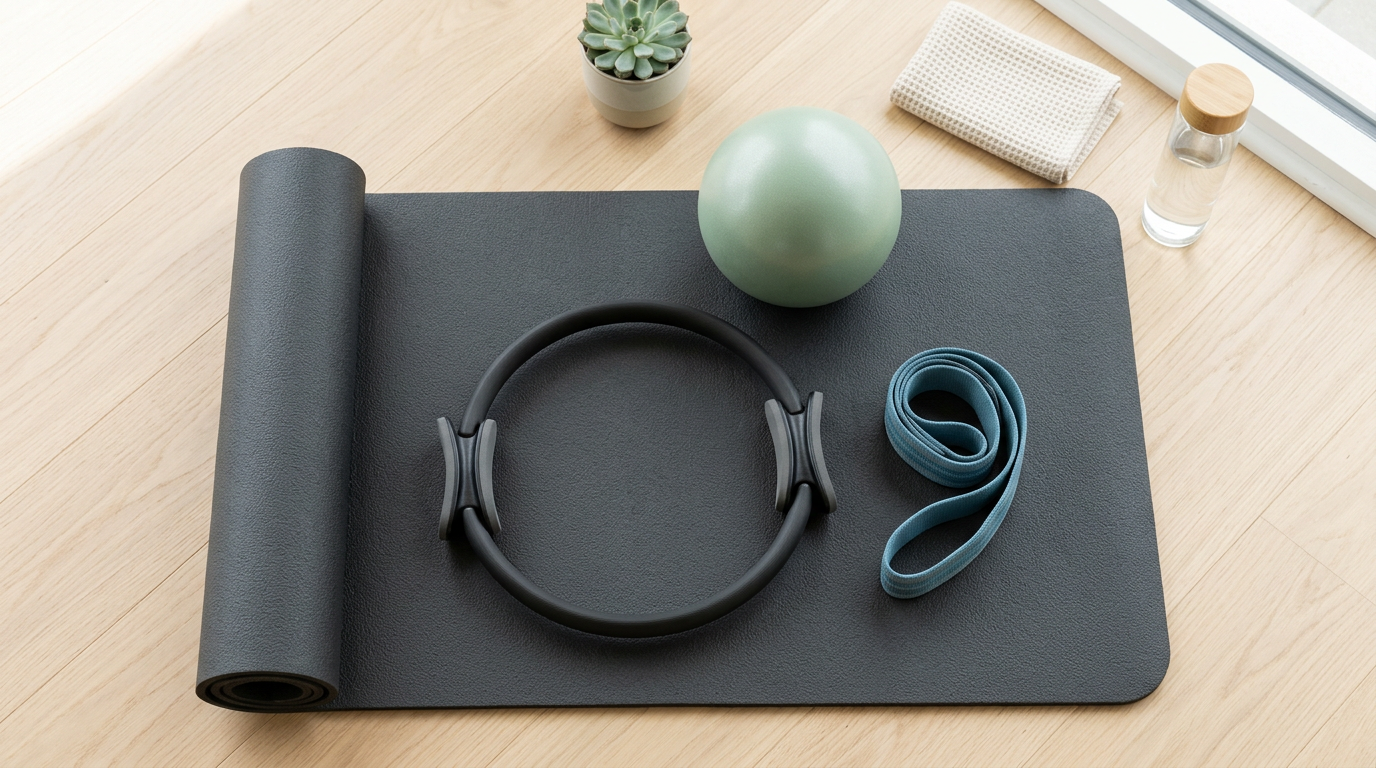
Flat lay photo showing essential pilates props including a thick exercise mat, resistance band, small pilates ball, and magic circle
Integrating Pilates Ab Work Into Your Complete Fitness Routine
A pilates ab workout complements other training modalities beautifully. Understanding how to integrate it with your existing routine maximizes overall results.
Combining Pilates With Strength Training
Pilates and traditional strength training work synergistically. Your strength training builds overall muscle and metabolic capacity, while Pilates develops the core stability and body awareness that improve your lifting form.
Effective integration strategies:
- Perform Pilates on days between heavy lifting sessions
- Use a short 10-minute pilates ab workout as a warm-up before lower body training
- Schedule dedicated Pilates sessions on active recovery days
- Include Pilates-inspired core work at the end of upper body training days
Avoid scheduling intense Pilates sessions immediately before heavy deadlifts or squats, as pre-fatiguing your core compromises stability for compound lifts.
Pilates as Active Recovery
The controlled, low-impact nature of Pilates makes it excellent for active recovery. A gentle pilates ab workout increases blood flow to tired muscles without adding significant training stress.
On recovery days, focus on breath work, spinal mobility, and controlled movements rather than pushing for maximum intensity. This approach supports recovery while maintaining movement quality and body awareness.
Balancing Different Training Modalities
A well-rounded fitness routine for women might include:
- 2-3 strength training sessions focusing on progressive overload
- 2-3 pilates ab workout or full Pilates sessions for core strength and mobility
- 2-3 cardiovascular sessions (walking, cycling, swimming) for heart health
- 1-2 complete rest days for recovery
This creates 7-11 total training sessions across a week, which sounds like a lot but includes overlap (some days might combine short Pilates with a walk). Listen to your body and adjust based on recovery, energy levels, and life demands.
Frequently Asked Questions
Can you get abs from just Pilates?
Pilates effectively strengthens and tones abdominal muscles, but visible abs depend primarily on body fat percentage. A consistent Pilates practice builds core strength and muscle definition, but you'll need proper nutrition and potentially additional strength training for visible six-pack abs. Pilates alone creates functional core strength and improved muscle tone.
How many times per week should I do a pilates ab workout?
Performing a dedicated pilates ab workout 2-3 times weekly provides optimal results without overtraining. Your core muscles need recovery time to adapt and strengthen between sessions. You can include additional full-body Pilates sessions that incorporate core work, but avoid intense ab-focused training on consecutive days.
Is Pilates good for high cortisol?
Pilates offers moderate-intensity exercise that strengthens your body without excessive physiological stress, making it suitable for managing high cortisol levels. The breath-focused, mindful practice activates your parasympathetic nervous system, countering stress responses. Unlike high-intensity training that temporarily spikes cortisol, Pilates provides strength benefits while supporting stress management.
What's the difference between Pilates and regular ab exercises?
Pilates emphasizes controlled movement, breath coordination, and deep core engagement rather than repetition-based training. While traditional ab exercises often isolate surface muscles through momentum, Pilates integrates your entire core with full-body movements, targeting deep stabilizing muscles like the transverse abdominis for functional strength.
Can Pilates help with panic attacks?
The controlled breathing patterns and mindful focus in Pilates can help regulate your nervous system and reduce anxiety symptoms. While Pilates isn't a substitute for professional mental health treatment, the practice teaches breath control and present-moment awareness that many find calming. Regular practice may complement other anxiety management strategies.
Do I need special equipment for a pilates ab workout at home?
You only need a thick exercise mat (at least 6mm) for an effective at-home pilates ab workout. Optional props like resistance bands, small balls, or a magic circle add variety but aren't essential. Mat Pilates using just your body weight provides sufficient challenge for building core strength at all levels.
Is Pilates good for lowering cholesterol?
While Pilates provides valuable strength and flexibility benefits, it doesn't typically elevate heart rate enough to significantly impact cholesterol levels directly. For cardiovascular health improvements including cholesterol management, combine Pilates with dedicated aerobic exercise like brisk walking, cycling, or swimming, along with heart-healthy nutrition habits.
Building genuine core strength through a pilates ab workout transforms more than just your midsection. The controlled movements, breath integration, and progressive challenge create functional strength that supports better posture, reduces back pain, and improves performance in every physical activity you pursue. Unlike quick-fix ab routines that promise overnight results, Pilates builds sustainable strength through consistent, mindful practice.
Start with the foundational exercises, focus on quality over quantity, and progress deliberately as your body adapts. Whether you practice twice weekly or integrate Pilates into a broader fitness routine, the principles remain the same: control, precision, breath, and progressive challenge. Your core strength journey isn't about perfection—it's about showing up consistently and honoring where your body is today while working toward where you want to be.
Begin with a simple 20-minute pilates ab workout twice this week, focusing on the Hundred, Roll-Up, and Single Leg Stretch with modifications as needed.