Pelvic Floor Exercises: Strengthen & Prevent Incontinence
Pelvic floor exercises are targeted movements that strengthen the muscles supporting the bladder, uterus, and bowel. The most effective include Kegels, bridges, and squats performed with proper engagement, progressive resistance, and consistency to prevent incontinence, support pelvic organs, and restore postpartum strength.
Did you know that many women experience some form of pelvic floor dysfunction during their lifetime, yet most never receive proper guidance on strengthening these essential muscles? Whether you're navigating postpartum recovery, managing stress incontinence during workouts, or simply want to build a stronger foundation for lifelong fitness, pelvic floor exercises are a game-changer that deserve a place in your training routine.
Your pelvic floor is the foundation of your core strength, yet it's often the most overlooked muscle group in women's fitness. These muscles work tirelessly to support your internal organs, maintain continence, and stabilize your spine during movement. When they're weak or dysfunctional, everything from jumping jacks to heavy squats can become challenging or uncomfortable.
This comprehensive guide will walk you through everything you need to know about pelvic floor training. You'll discover how to identify these muscles, perform the most effective exercises with proper form, integrate them into your existing workout routine, and track your progress over time. Let's build the strong, functional foundation your body deserves.
Key Takeaways
- Pelvic floor exercises prevent and treat incontinence while supporting core strength and pelvic organ function
- Proper technique involves both strengthening and relaxing these muscles, not just squeezing them constantly
- Consistency matters more than intensity—daily practice for 8-12 weeks produces measurable results
- These exercises complement strength training and can be performed anywhere without equipment
- Postpartum women, athletes, and anyone experiencing symptoms benefit from targeted pelvic floor work
Understanding Your Pelvic Floor: The Foundation of Core Strength
Your pelvic floor is a hammock-like group of muscles stretching from your pubic bone to your tailbone. These muscles form the base of your core, working in coordination with your deep abdominals, diaphragm, and back muscles to stabilize your spine and pelvis during every movement you make.
What the Pelvic Floor Does
These muscles perform three critical functions that impact your daily life and fitness performance. First, they provide structural support for your bladder, uterus, and bowel, preventing organ prolapse. Second, they maintain urinary and fecal continence by controlling the sphincters. Third, they stabilize your pelvis and spine during movement, from walking to deadlifting.
When you jump, laugh, cough, or lift heavy weights, your pelvic floor contracts reflexively to manage the increase in intra-abdominal pressure. This automatic response protects against leakage and maintains organ position. However, pregnancy, childbirth, chronic straining, high-impact exercise, and aging can all compromise this function.
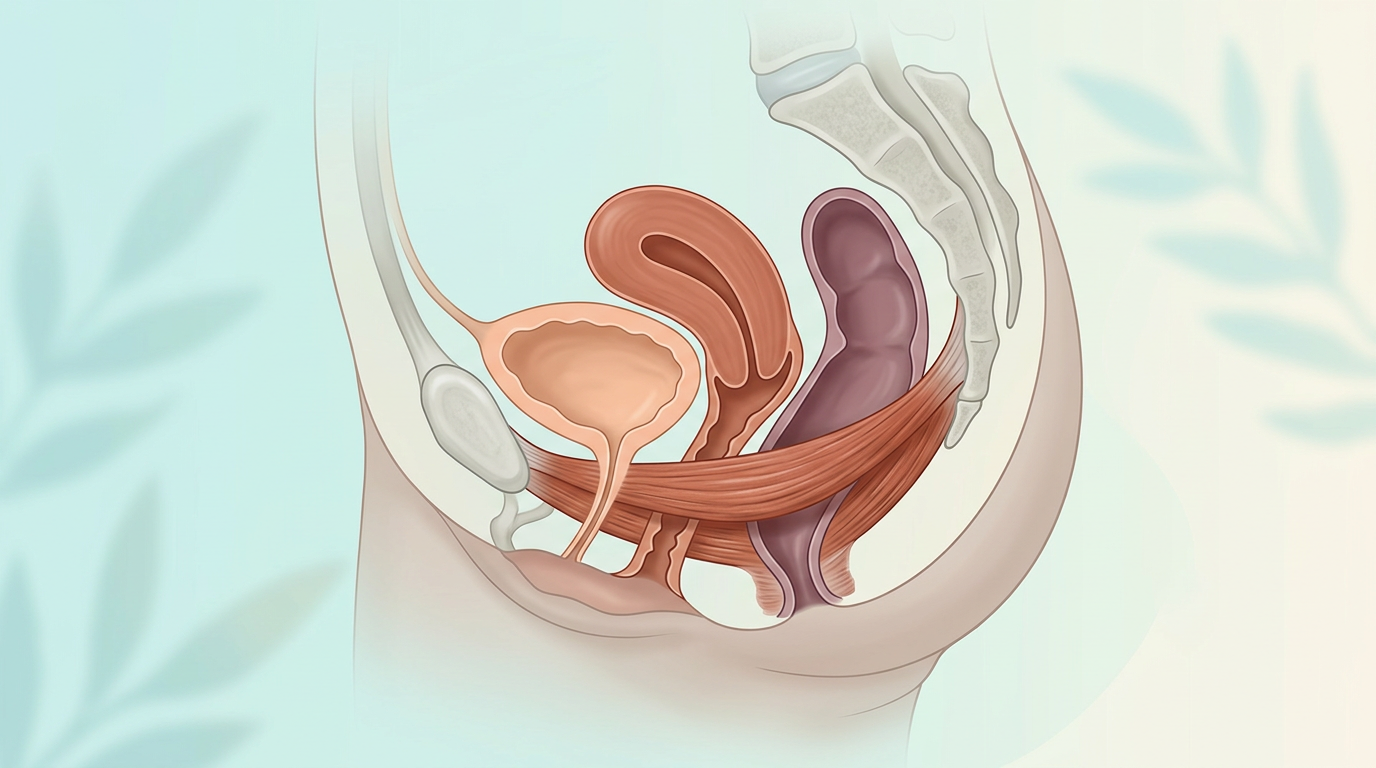
Anatomical illustration showing the pelvic floor muscles from a side view, highlighting the bladder, uterus, rectum, and the hammock-like muscle structure supporting them
Signs Your Pelvic Floor Needs Attention
Many women don't realize they have pelvic floor dysfunction until symptoms interfere with their workouts or daily activities. Recognizing these signs early allows you to address issues before they worsen.
Common indicators include:
- Leaking urine when coughing, sneezing, laughing, or during high-impact exercise
- Urgent need to urinate with difficulty making it to the bathroom in time
- Difficulty controlling gas or experiencing fecal leakage
- A feeling of heaviness or bulging in the vaginal area
- Lower back pain that doesn't respond to typical treatments
- Difficulty engaging your core during exercises like planks or squats
- Pain during intercourse or reduced sensation
- Inability to insert or retain a tampon comfortably
If you experience any of these symptoms, you're not alone, and more importantly, you're not stuck with them. Targeted pelvic floor training can significantly improve or completely resolve these issues for most women.
The Connection Between Pelvic Floor and Athletic Performance
Your pelvic floor isn't separate from your fitness—it's integral to it. These muscles contribute to force transfer during compound movements, breathing mechanics during cardiovascular exercise, and spinal stability during loaded exercises.
Athletes with strong, functional pelvic floors generate more power, maintain better form, and reduce injury risk. Conversely, dysfunction in this area can limit your ability to progress with heavier weights, perform high-impact activities comfortably, or even breathe efficiently during intense training.
How to Perform Pelvic Floor Exercises Correctly
The foundation of all pelvic floor work is learning to isolate and control these muscles. This requires body awareness, proper cueing, and patience as you develop the mind-muscle connection.
Finding Your Pelvic Floor Muscles
Before you can strengthen these muscles, you need to identify them correctly. Many women mistakenly engage their glutes, inner thighs, or abdominals instead of their pelvic floor.
Try these methods to locate the correct muscles:
- Sit or lie down comfortably and imagine stopping the flow of urine midstream without squeezing your legs together
- Visualize drawing a blueberry up through a straw using only your pelvic floor muscles
- Think about gently lifting your pelvic floor away from your seat or the floor beneath you
- Place your hand on your lower abdomen—it should remain soft and relaxed while your pelvic floor engages
The key is to engage without holding your breath, clenching your glutes, or bearing down. Your pelvic floor should lift and squeeze inward, not push outward. This distinction is crucial for effective training.
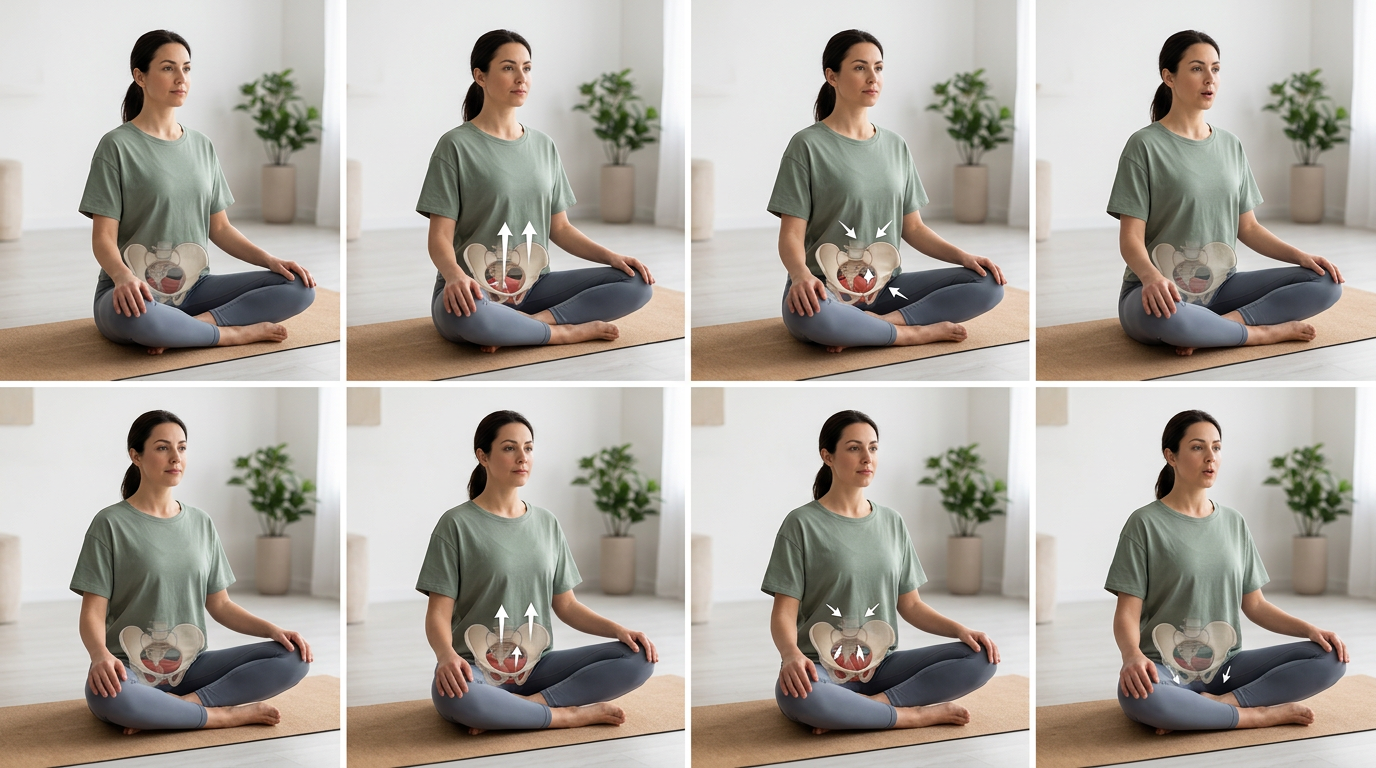
Step-by-step visual guide showing a woman in a comfortable seated position demonstrating proper pelvic floor engagement with anatomical overlay and directional arrows indicating the upward and inward contraction
Basic Kegel Exercise Technique
Kegels are the most well-known pelvic floor exercise, but proper form makes all the difference between results and wasted effort. Here's the best way to perform them for maximum benefit.
Start in a comfortable position—sitting, lying down, or standing all work. Contract your pelvic floor muscles using the techniques above, drawing them up and in. Hold this contraction for 3-5 seconds initially, breathing normally throughout. Release completely and rest for the same duration before repeating.
As you build strength, gradually increase your hold time to 10 seconds per contraction. The rest period between contractions is equally important—your muscles need recovery time to avoid fatigue. Aim for 10-15 repetitions, three times daily.
The Importance of the Release
Many guides focus exclusively on contracting the pelvic floor, but learning to fully relax these muscles is equally critical. An overly tight pelvic floor can cause pain, urgency, and difficulty emptying your bladder completely.
After each contraction, consciously release and allow your pelvic floor to return to its resting state. Imagine your pelvic floor muscles softening and lengthening like a flower opening. This relaxation phase prevents hypertonicity and ensures your muscles function optimally through their full range of motion.
Best Pelvic Floor Exercises for Women
While Kegels form the foundation, a comprehensive approach includes functional exercises that integrate pelvic floor engagement with full-body movement. This builds strength that translates directly to your workouts and daily activities.
Bridge Pose with Pelvic Floor Activation
The bridge exercise naturally engages your glutes and hamstrings while providing an excellent opportunity to coordinate pelvic floor contraction with movement. This exercise strengthens the posterior chain while building pelvic floor endurance.
Lie on your back with knees bent and feet flat on the floor, hip-width apart. As you exhale and lift your hips toward the ceiling, simultaneously engage your pelvic floor. Hold the top position for 3-5 seconds, maintaining the pelvic floor contraction. Lower your hips while releasing your pelvic floor on the inhale.
Perform 10-15 repetitions for 2-3 sets. Focus on smooth, controlled movement rather than speed. Your spine should articulate through the movement, lifting one vertebra at a time.
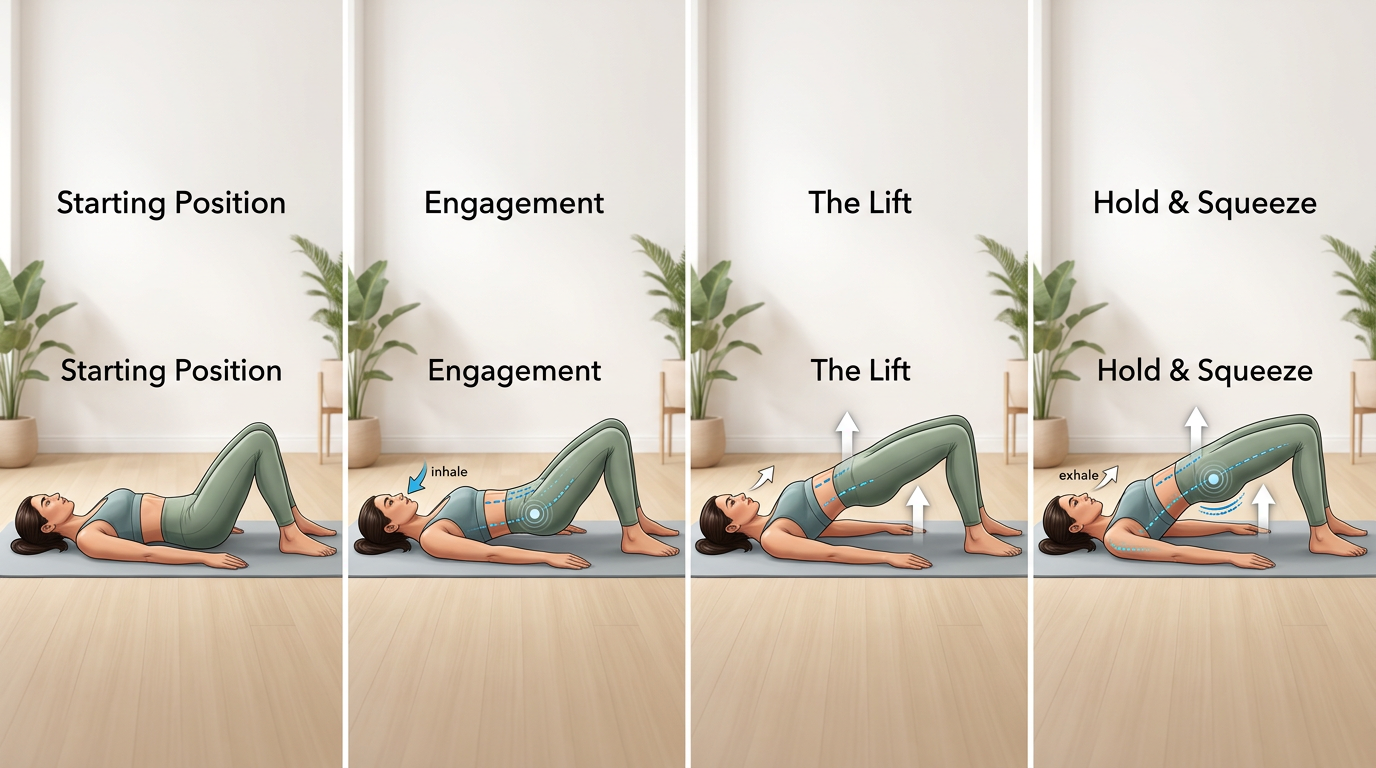
Sequence showing the bridge exercise from starting position through the lift with arrows indicating the upward hip movement and pelvic floor engagement, plus proper breathing cues
Squats with Pelvic Floor Coordination
Squats are a fundamental movement pattern that requires excellent pelvic floor function. Learning to coordinate your pelvic floor with squatting mechanics protects against leakage during this common exercise.
The key is to engage your pelvic floor as you descend and maintain that engagement as you rise. Stand with feet shoulder-width apart. As you inhale and lower into your squat, gently engage your pelvic floor. Maintain this engagement as you exhale and press through your heels to stand. Release at the top before beginning the next repetition.
Start with bodyweight squats and focus on the coordination pattern. Once you've mastered this, you can add resistance. Perform 10-12 repetitions for 3 sets.
Dead Bug Exercise for Core-Pelvic Floor Integration
The dead bug teaches anti-extension core stability while requiring sustained pelvic floor engagement. This exercise is particularly valuable for building the coordination needed during complex movements.
Lie on your back with arms extended toward the ceiling and knees bent at 90 degrees above your hips. Engage your pelvic floor and draw your lower ribs down to flatten your lower back against the floor. Slowly extend one leg while lowering the opposite arm overhead, keeping your pelvic floor engaged and lower back flat. Return to the starting position and alternate sides.
Complete 8-10 repetitions per side for 2-3 sets. If you lose your pelvic floor connection or your back arches, reduce your range of motion.
Bird Dog with Pelvic Floor Focus
The bird dog challenges stability in multiple planes while requiring sustained pelvic floor engagement. This exercise builds the functional strength needed for rotational sports and daily activities.
Start on hands and knees with a neutral spine. Engage your pelvic floor and maintain this engagement throughout the movement. Simultaneously extend one arm forward and the opposite leg back, creating a straight line from fingertips to toes. Hold for 2-3 seconds before returning to start and switching sides.
Perform 8-10 repetitions per side for 2-3 sets. Your hips should remain level throughout—no rotation or tilting.
Wall Sits with Pelvic Floor Pulses
Wall sits build isometric strength in your legs while providing an excellent opportunity for pelvic floor endurance training. This exercise teaches you to maintain pelvic floor engagement during sustained muscle contraction.
Stand with your back against a wall and slide down until your thighs are parallel to the floor. From this position, perform 10 pelvic floor contractions, holding each for 3-5 seconds. Rest for 30 seconds, then repeat for 2-3 sets.
This exercise mimics the sustained engagement needed during longer workouts or activities like hiking.
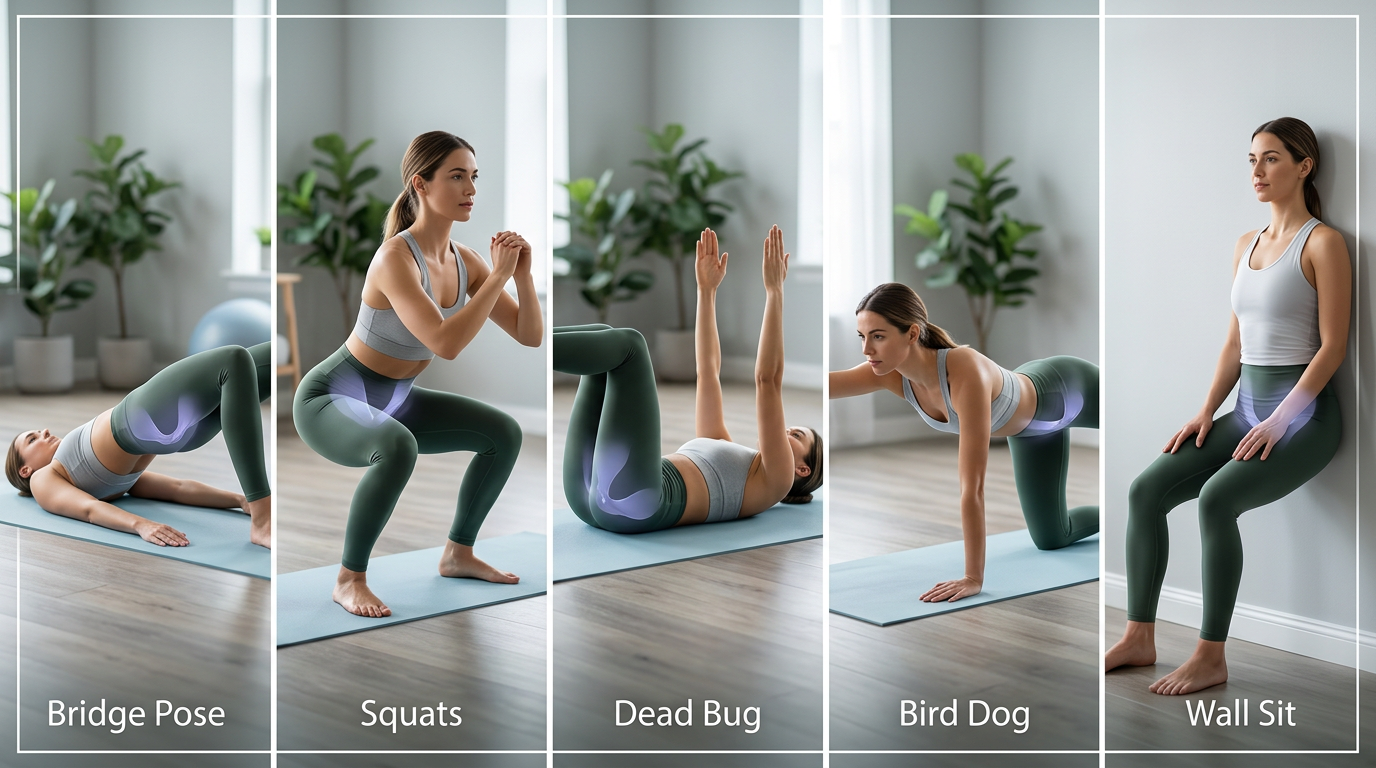
Collage showing proper form for five pelvic floor exercises including bridge pose, squats, dead bug, bird dog, and wall sits with anatomical highlights showing pelvic floor engagement
Creating Your Pelvic Floor Exercise Routine
Consistency and progression are the keys to building pelvic floor strength. A structured routine ensures you're training these muscles effectively without overdoing it.
Beginner Routine (Weeks 1-4)
If you're new to pelvic floor training or rebuilding strength postpartum, start with this foundational routine. Focus on quality over quantity and establishing proper form.
Daily practice:
- Basic Kegels: 10 repetitions, 3-5 second holds, three times daily
- Bridge pose with pelvic floor activation: 10 repetitions, once daily
- Bodyweight squats with coordination: 8-10 repetitions, once daily
- Diaphragmatic breathing with pelvic floor release: 5 minutes, once daily
The goal during this phase is to develop consistent muscle activation and the mind-muscle connection. Don't rush progression—mastering the basics sets you up for long-term success.
Intermediate Routine (Weeks 5-8)
Once you can comfortably hold a pelvic floor contraction for 10 seconds and perform the basic exercises with good form, advance to this routine.
Daily practice:
- Advanced Kegels: 15 repetitions, 10 second holds, twice daily
- Bridge pose: 15 repetitions with 5 second holds, once daily
- Squats with pelvic floor coordination: 12-15 repetitions, once daily
- Dead bug exercise: 10 repetitions per side, once daily
- Bird dog exercise: 10 repetitions per side, once daily
At this stage, you're building endurance and learning to maintain engagement during more complex movements.
Advanced Routine (Weeks 9-12 and Beyond)
Advanced training integrates pelvic floor work into your regular strength training while continuing dedicated practice. This phase prepares you for high-impact activities and heavy lifting.
Weekly structure:
- Quick Kegels: 20 repetitions, 1-2 second contractions, daily
- Endurance Kegels: 10 repetitions, 10-15 second holds, daily
- Functional exercises (bridges, squats, dead bugs, bird dogs): 3-4 times weekly as part of your strength routine
- Wall sits with pelvic floor pulses: 2-3 sets, twice weekly
- Progressive return to high-impact activities with pelvic floor awareness
Integration with Your Existing Workout Routine
Pelvic floor exercises shouldn't exist in isolation. The most effective approach integrates them into your current training program.
Before strength training sessions, perform 5-10 quick Kegels to activate these muscles and prepare them for the work ahead. During compound exercises like squats, deadlifts, and overhead presses, maintain gentle pelvic floor engagement to support your spine and manage intra-abdominal pressure. After workouts, include pelvic floor release work to prevent excessive tension.
This integrated approach ensures your pelvic floor becomes stronger in the context of real movement, not just in isolation.
Pelvic Floor Exercises for Specific Conditions
Different life stages and conditions require tailored approaches to pelvic floor training. Understanding these nuances helps you get the best results for your specific situation.
Postpartum Recovery and Pelvic Floor Restoration
Pregnancy and childbirth place enormous stress on the pelvic floor. Whether you delivered vaginally or via cesarean section, your pelvic floor needs intentional rehabilitation.
Begin gentle pelvic floor engagement as early as the first few days postpartum, unless your healthcare provider advises otherwise. Start with simple awareness exercises—gently contracting and releasing without holding. Progress gradually to short holds (3-5 seconds) as healing allows.
Avoid high-impact exercise, heavy lifting, and bearing down until you've rebuilt your foundation. Most women benefit from 8-12 weeks of dedicated pelvic floor work before returning to intense training. A pelvic floor physical therapist can assess your recovery and provide personalized guidance.
Addressing Stress Incontinence During Exercise
Stress incontinence—leaking during activities that increase abdominal pressure—is common but not normal. It indicates your pelvic floor isn't managing the demands placed on it.
The solution involves both strengthening your pelvic floor and modifying your breathing and bracing strategies during exercise. Practice exhaling during the exertion phase of exercises rather than holding your breath. This reduces downward pressure on your pelvic floor. Engage your pelvic floor before movements that typically cause leakage, such as jumping or lifting.
If leakage persists despite consistent training, consult a pelvic floor physical therapist. Sometimes the issue is muscle coordination or excessive tension rather than weakness.
Diastasis Recti and Pelvic Floor Connection
Diastasis recti—the separation of the abdominal muscles—often coexists with pelvic floor dysfunction. These two issues are interconnected because both are part of your core canister system.
Pelvic floor exercises help diastasis recti by restoring proper pressure management within your core. When your pelvic floor functions correctly, it prevents excessive downward pressure that can worsen abdominal separation. Combine pelvic floor work with exercises that promote tension along the linea alba, such as dead bugs, bird dogs, and modified planks.
Avoid traditional crunches, sit-ups, and exercises that cause doming or coning of your abdomen until the separation has improved. Focus on coordination and pressure management rather than forcing the gap closed.
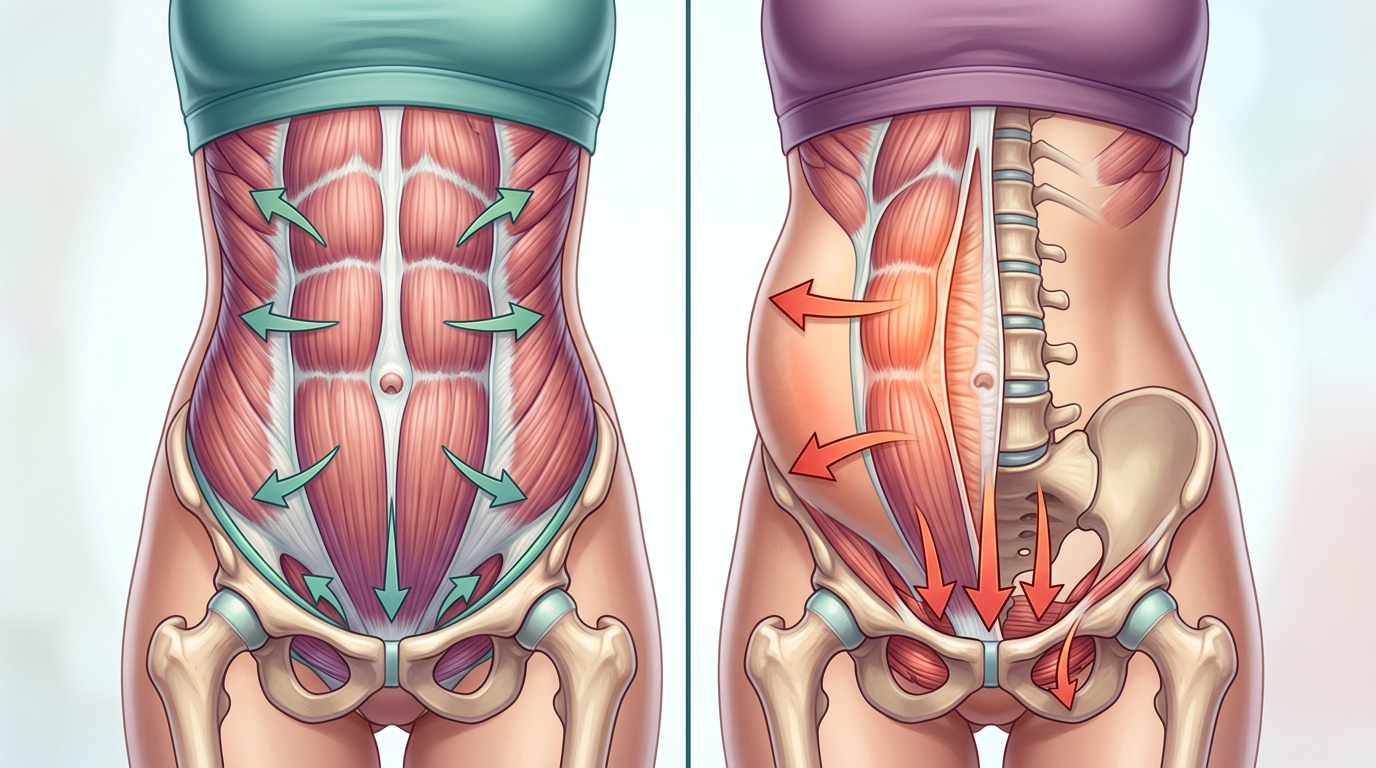
Infographic showing the relationship between diastasis recti and pelvic floor dysfunction with anatomical cross-section and arrows indicating pressure patterns
Pelvic Floor Training for Athletes and High-Impact Activities
Athletes face unique pelvic floor challenges due to the repetitive impact and high intra-abdominal pressures generated during training. Runners, CrossFit athletes, and gymnasts commonly experience pelvic floor symptoms.
Athletic pelvic floor training requires both strength and power development. Include quick, forceful contractions (1-2 seconds) to train the fast-twitch muscle fibers needed for impact absorption. Practice pelvic floor engagement during sport-specific movements, gradually building intensity.
If you experience symptoms during your sport, temporarily reduce intensity while you build your foundation. Many athletes find that addressing pelvic floor dysfunction actually improves their performance by enhancing core stability and power transfer.
Common Mistakes to Avoid
Even with the best intentions, many women make errors that limit their results or potentially worsen their symptoms. Awareness of these pitfalls helps you train more effectively.
Bearing Down Instead of Lifting Up
The most common mistake is pushing downward instead of lifting upward during pelvic floor exercises. This bearing down pattern actually weakens the pelvic floor and can contribute to prolapse over time.
Always focus on the sensation of lifting and drawing inward, never pushing outward or bearing down. If you're unsure whether you're doing this correctly, place your hand on your perineum—you should feel the muscles draw away from your hand, not push into it.
Holding Your Breath During Contractions
Many women instinctively hold their breath during pelvic floor contractions, but this creates excessive pressure and teaches poor coordination. Your pelvic floor needs to function while you breathe normally during all activities.
Practice breathing steadily throughout your contractions. This takes concentration initially but becomes automatic with practice. Proper breathing coordination is essential for translating your training to real-world function.
Overtraining and Creating Excessive Tension
More isn't always better with pelvic floor training. Overtraining can create a hypertonic (overly tight) pelvic floor, which causes pain, urgency, and difficulty relaxing these muscles.
Stick to the recommended training frequency—typically 3-4 times daily for isolated exercises. Include relaxation work in every session. If you develop pain, urgency, or difficulty urinating, reduce your training volume and consult a pelvic floor physical therapist.
Expecting Immediate Results
Pelvic floor training requires patience and consistency. Most women need 8-12 weeks of regular practice before noticing significant improvement in symptoms.
Track your progress with objective measures—how many jumping jacks can you do without leakage? How long can you hold a pelvic floor contraction? These concrete markers help you see progress even when changes feel gradual.
Lifestyle Factors That Support Pelvic Floor Health
Exercise is just one piece of the pelvic floor health puzzle. Several lifestyle factors significantly impact these muscles' function and your overall results.
Managing Constipation and Straining
Chronic straining during bowel movements places enormous stress on your pelvic floor, stretching and weakening these muscles over time. Preventing constipation protects your pelvic floor and supports your training efforts.
Ensure adequate fiber intake (25-30 grams daily), stay well-hydrated, and establish regular bowel habits. Use a footstool to elevate your feet while on the toilet, which optimizes the angle for easier elimination. Never strain or hold your breath during bowel movements.
Maintaining a Healthy Body Weight
Excess body weight increases chronic pressure on your pelvic floor, making dysfunction more likely and recovery more challenging. Even modest weight loss can significantly improve pelvic floor symptoms.
Focus on sustainable, gradual weight loss through balanced nutrition and regular exercise rather than extreme dieting. This approach supports your pelvic floor while improving your overall health and fitness.
The Role of Walking in Pelvic Floor Health
Walking is excellent for pelvic floor health when done with proper posture and body mechanics. This low-impact activity promotes circulation, maintains muscle tone, and supports overall pelvic floor function without excessive stress.
Walk with good posture—shoulders back, core gently engaged, and pelvic floor maintaining its natural tone. Aim for 30-60 minutes of walking most days. Walking is particularly beneficial during postpartum recovery as a bridge between rest and more intense exercise.
Proper Lifting Mechanics
How you lift objects throughout your day matters as much as your formal exercise technique. Poor lifting mechanics can undo your training progress and contribute to pelvic floor dysfunction.
Before lifting, engage your pelvic floor and core. Exhale during the lifting phase rather than holding your breath. Keep objects close to your body and use your legs rather than your back. These principles apply whether you're lifting a toddler, groceries, or a barbell.
When to Seek Professional Help
While many women successfully improve their pelvic floor function with self-directed exercise, certain situations warrant professional evaluation and treatment.
Signs You Need a Pelvic Floor Physical Therapist
Pelvic floor physical therapists are specialists trained in assessing and treating pelvic floor dysfunction. Consider consulting one if you experience any of the following:
- Symptoms that persist despite 8-12 weeks of consistent pelvic floor exercise
- Pain during intercourse or pelvic floor exercises
- Visible or palpable bulging in the vaginal area
- Inability to identify or contract your pelvic floor muscles correctly
- Urgency or frequency that interferes with daily life
- Fecal incontinence or difficulty controlling gas
A pelvic floor physical therapist can perform an internal examination to assess muscle strength, tone, and coordination. They provide personalized treatment including manual therapy, biofeedback, and customized exercise programs. This specialized care often resolves issues that don't respond to general exercises alone.
What to Expect During Pelvic Floor Physical Therapy
Your first appointment typically includes a detailed history and discussion of your symptoms, goals, and concerns. The therapist will assess your posture, breathing patterns, and movement mechanics.
If you consent, they'll perform an internal vaginal examination to assess your pelvic floor muscles directly. This allows them to evaluate strength, identify areas of tension or weakness, and determine whether you're contracting correctly. Based on this assessment, they'll create a personalized treatment plan.
Treatment may include manual therapy techniques, biofeedback to improve muscle awareness, electrical stimulation in some cases, and a progressive exercise program. Most women attend sessions weekly or biweekly for several weeks to months, depending on their condition.
Tracking Progress and Setting Realistic Goals
Measurable goals and consistent tracking keep you motivated and help you identify what's working. Pelvic floor improvement isn't always linear, so objective measures provide valuable perspective.
Functional Assessments You Can Do at Home
Track these functional markers every 2-4 weeks to assess your progress:
- Number of jumping jacks completed without leakage
- Duration of pelvic floor contraction hold (in seconds)
- Number of quick contractions you can perform in 10 seconds
- Ability to stop urine flow midstream (test occasionally, not regularly)
- Symptom frequency—how many times per week you experience leakage or urgency
- Exercise modifications needed—can you do high-impact moves comfortably?
Document these measurements in a training journal or app. Seeing concrete improvement, even if gradual, reinforces your commitment to the work.
Setting Milestone Goals
Break your pelvic floor journey into achievable milestones rather than focusing solely on the end goal. This approach maintains motivation through the weeks of consistent practice required for results.
Sample milestones:
- Successfully identify and contract pelvic floor muscles without engaging glutes or abs
- Hold a pelvic floor contraction for 10 seconds while breathing normally
- Complete 10 jumping jacks without leakage
- Perform a heavy squat set with proper pelvic floor coordination
- Go one week without any leakage episodes
- Return to running or high-impact exercise comfortably
Celebrate each milestone—these victories represent real progress toward your ultimate goal of optimal pelvic floor function.
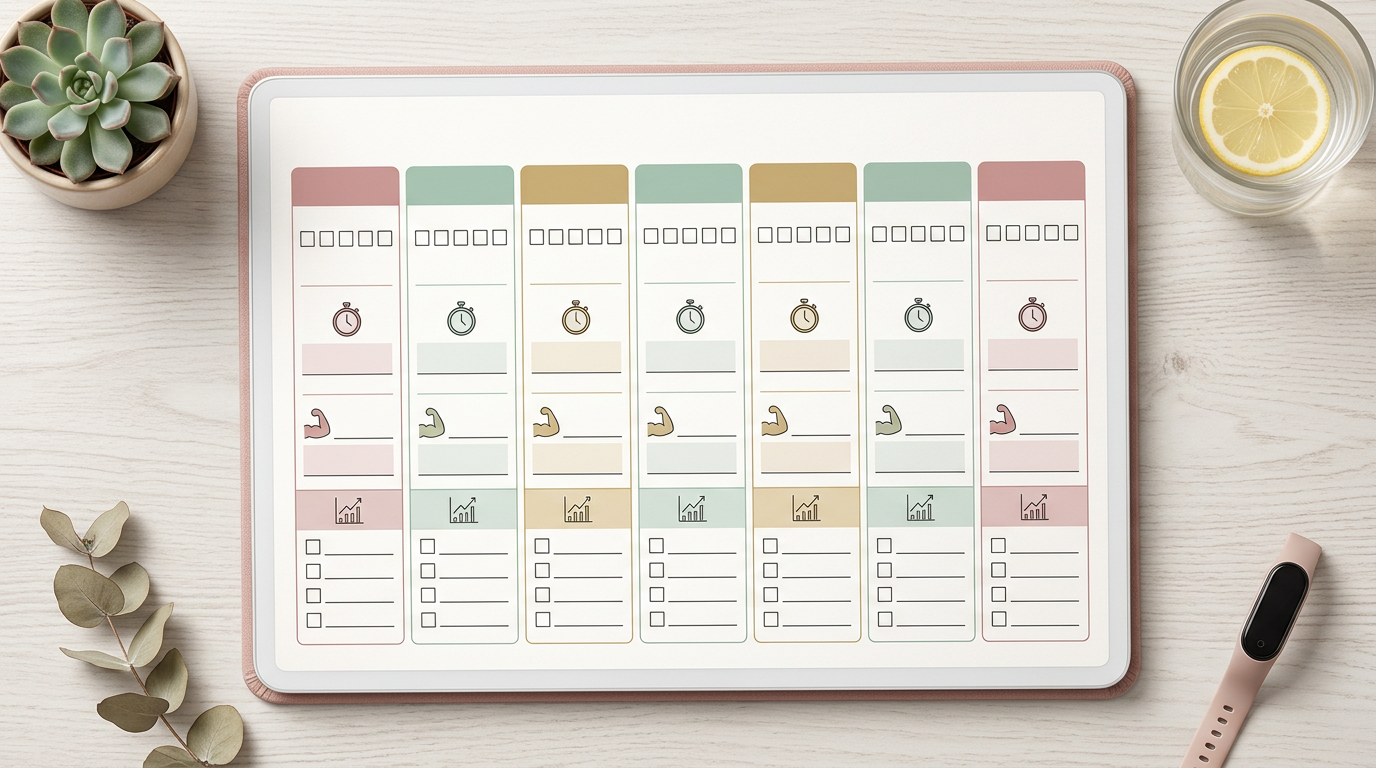
Progress tracking template showing a weekly pelvic floor exercise log with checkboxes for daily practice and spaces to record hold times, repetitions, and symptom frequency
Frequently Asked Questions
What is the best exercise to strengthen the pelvic floor?
Kegel exercises are the most effective for isolated pelvic floor strengthening, involving controlled contractions held for 5-10 seconds. However, functional exercises like bridges, squats, and dead bugs that integrate pelvic floor engagement with full-body movement provide the most comprehensive benefits for daily activities and fitness performance.
What are the signs of a weak pelvic floor?
Common signs include leaking urine during coughing, sneezing, laughing, or exercise, urgent bathroom needs, difficulty controlling gas, a feeling of heaviness or bulging in the vaginal area, lower back pain, and reduced core stability during workouts. Many women experience multiple symptoms simultaneously.
Will pelvic floor exercises help diastasis recti?
Pelvic floor exercises help diastasis recti by restoring proper core pressure management and preventing excessive downward force that worsens abdominal separation. Combining pelvic floor work with exercises that promote tension along the linea alba, such as dead bugs and modified planks, provides the most effective approach for healing.
Is walking good for the pelvic floor?
Walking is excellent for pelvic floor health as a low-impact activity that promotes circulation and maintains muscle tone without excessive stress. Walk with good posture and gentle core engagement for 30-60 minutes most days. Walking is particularly beneficial during postpartum recovery as a bridge to more intense exercise.
How long does it take to see results from pelvic floor exercises?
Most women notice improvement in symptoms within 8-12 weeks of consistent daily practice. Some experience changes sooner, while others need longer depending on the severity of dysfunction. Consistency matters more than intensity—performing exercises correctly three times daily produces better results than sporadic intense sessions.
Can I do pelvic floor exercises while pregnant?
Pelvic floor exercises are safe and beneficial throughout pregnancy, helping prepare these muscles for childbirth and reducing incontinence risk. Focus on both strengthening and relaxation techniques, as the ability to relax your pelvic floor is important during delivery. Consult your healthcare provider about your specific situation.
How many Kegels should I do per day?
Aim for 30-45 Kegels daily, divided into three sessions of 10-15 repetitions each. Hold each contraction for 5-10 seconds with equal rest time between repetitions. Quality and proper form matter more than quantity—fewer correctly performed Kegels produce better results than many poorly executed ones.
Building Your Strong Foundation with Pelvic Floor Exercises
Your pelvic floor is the literal foundation of your core strength, supporting your organs, maintaining continence, and stabilizing your body during every movement. Investing time in pelvic floor exercises pays dividends across every aspect of your fitness and daily life, from preventing leakage during workouts to lifting heavier weights with confidence.
The journey to optimal pelvic floor function requires patience, consistency, and proper technique. Start with the basics, progress gradually, and don't hesitate to seek professional guidance when needed. Remember that improvement happens over weeks and months, not days, but the results are worth the commitment.
Whether you're navigating postpartum recovery, managing symptoms that interfere with your training, or proactively building strength for lifelong health, these exercises deserve a permanent place in your routine. Your pelvic floor works tirelessly for you—give it the attention and care it deserves.