Mobility Exercises for Women: Unlock Better Range of Motion
Mobility exercises are dynamic movements that improve joint range of motion and functional movement patterns. The most effective include hip circles, thoracic rotations, ankle rolls, and shoulder pass-throughs, performed through controlled, active ranges to enhance flexibility, reduce injury risk, and support strength training performance.
Have you ever struggled to reach the top shelf, felt stiff getting out of bed, or noticed your squats don't go as deep as they used to? You're not alone. Many women experience decreased range of motion as they navigate busy schedules, desk jobs, and the natural aging process. The good news? mobility exercises can transform how your body moves and feels, creating a foundation for strength, confidence, and pain-free daily living.
Unlike static stretching, mobility work actively prepares your joints and muscles for movement. It's the missing piece in many fitness routines, especially for women focused on strength training and body sculpting. When you prioritize mobility, you'll lift heavier, move better, and reduce your risk of injury.
This comprehensive guide will walk you through everything you need to know about mobility exercises: what they are, why they matter for women's fitness, and exactly how to incorporate them into your routine. You'll discover specific exercises targeting key areas like hips, shoulders, and spine, plus practical tips for building a sustainable mobility practice that fits your lifestyle.
Key Takeaways
- Mobility exercises improve joint range of motion through active, controlled movements that enhance functional fitness and daily activities
- Women benefit from mobility work through better squat depth, reduced injury risk, and improved posture from desk work or daily stress
- Key areas to target include hips, thoracic spine, ankles, and shoulders for comprehensive movement quality
- Consistency matters more than duration—just 5-10 minutes daily yields better results than occasional longer sessions
- Mobility work complements strength training by preparing joints for loaded movements and supporting progressive overload
What Are Mobility Exercises and Why Do They Matter?
Mobility exercises are active movements that take your joints through their full range of motion while maintaining control and stability. Unlike passive stretching where you hold a static position, mobility work requires muscular engagement and neuromuscular coordination. This distinction makes mobility training particularly valuable for women pursuing strength and fitness goals.
The Difference Between Mobility and Flexibility
While flexibility refers to the passive range of motion in a joint, mobility is your ability to actively control that range. You might be flexible enough to touch your toes in a seated stretch, but lack the hip mobility to squat deeply with proper form. Mobility training bridges this gap by teaching your nervous system to access and control your available range.
This distinction matters for functional fitness. You need active control over your joints during exercises like lunges, deadlifts, and overhead presses. Flexibility alone won't give you that control.
How Mobility Supports Women's Fitness Goals
For women focused on strength training and body sculpting, mobility work provides several key benefits. First, it allows you to perform exercises through their full range of motion, maximizing muscle activation and development. A deep squat with proper hip mobility targets your glutes far more effectively than a shallow squat.
Second, mobility reduces injury risk by ensuring your joints can handle the demands of training. When one area lacks mobility, your body compensates elsewhere, creating imbalances and potential injury points. Third, mobility work supports recovery by promoting blood flow and reducing muscle tension between strength sessions.
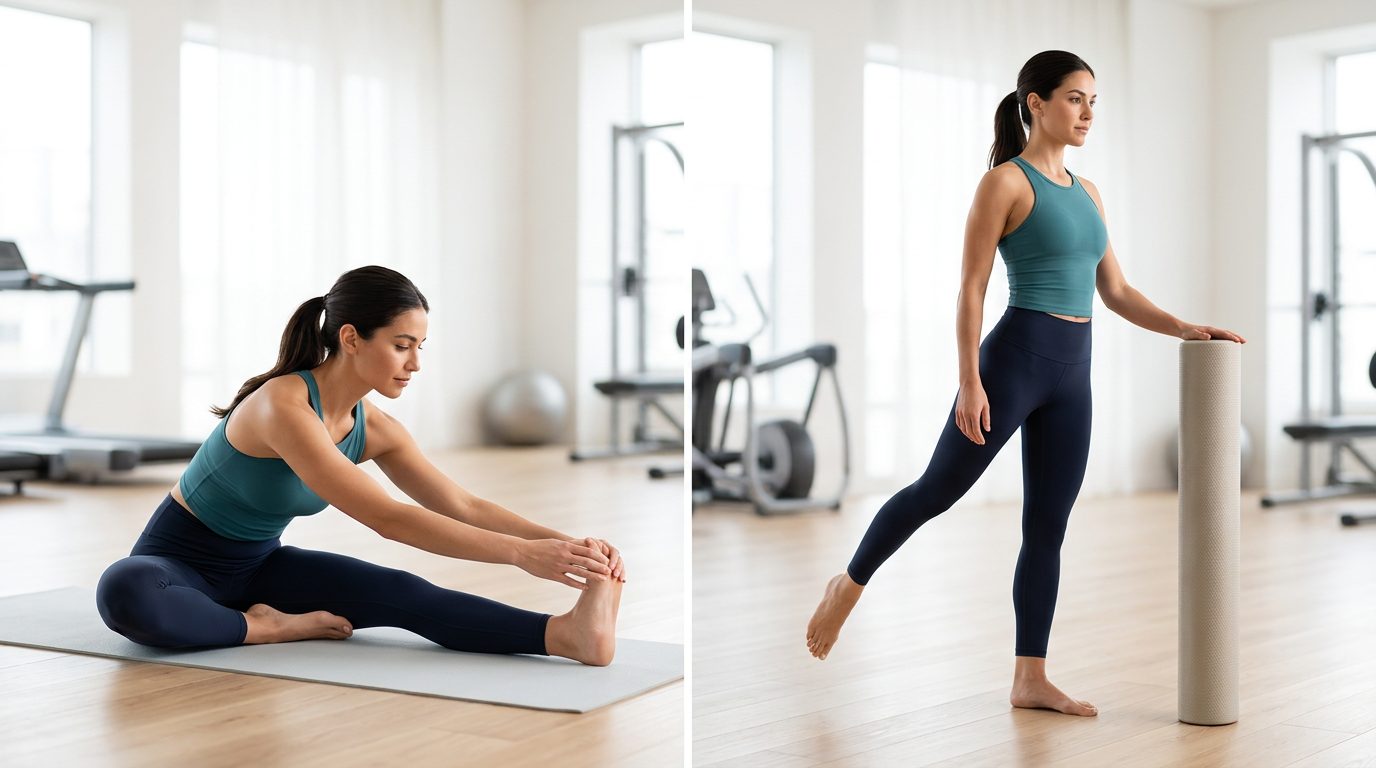
Infographic comparing flexibility vs mobility showing a woman performing a passive hamstring stretch versus an active leg swing demonstrating controlled range of motion
Best Mobility Exercises for Women: A Complete Guide
The most effective mobility routine targets the joints and movement patterns you use daily and during workouts. These exercises form the foundation of improved range of motion for women at any fitness level.
Hip Mobility Exercises
Your hips are the powerhouse of lower body movement. Limited hip mobility affects everything from squats and deadlifts to walking and sitting comfortably. These exercises restore and maintain healthy hip function:
- Hip Circles: Stand on one leg and draw large circles with your opposite knee, moving from the hip joint. Perform 10 circles each direction per leg.
- 90/90 Hip Rotations: Sit with both legs bent at 90 degrees, one in front and one behind. Rotate to switch leg positions, emphasizing the internal and external rotation of your hips.
- Deep Squat Hold: Sit in the bottom of a squat position for 30-60 seconds, gently pushing your knees outward with your elbows to open the hips.
- Hip Flexor Flow: From a low lunge position, shift your weight forward and back, then rotate your torso toward your front leg to mobilize multiple hip angles.
- Frog Stretch Rocks: Start on hands and knees with knees wide and ankles in line with knees. Gently rock your hips back toward your heels, then forward, creating movement in the hip joint.
These movements prepare your hips for loaded exercises while addressing common tightness from sitting. Perform them before lower body workouts or as a standalone routine.

Step-by-step demonstration of a woman performing 90/90 hip rotations showing starting position and transition movement with proper form cues
Thoracic Spine Mobility Exercises
Thoracic spine mobility is crucial for proper posture, overhead movements, and preventing neck and shoulder pain. Many women experience thoracic stiffness from desk work, nursing, or carrying children. These exercises restore rotation and extension:
- Thoracic Rotations: In a quadruped position with one hand behind your head, rotate your upper body to bring your elbow toward the ceiling, following it with your eyes.
- Cat-Cow Variations: Move between spinal flexion and extension, emphasizing movement through your mid-back rather than just your lower back.
- Thread the Needle: From hands and knees, reach one arm under your body and across, rotating through your thoracic spine.
- Wall Angels: Stand with your back against a wall and slide your arms up and down while maintaining contact with the wall, promoting thoracic extension.
Improved thoracic mobility enhances your overhead press, reduces shoulder impingement risk, and helps you maintain better posture throughout the day.
Ankle Mobility Exercises
Ankle mobility often gets overlooked, but it directly impacts squat depth, lunge mechanics, and even knee health. Limited ankle dorsiflexion forces compensations up the kinetic chain:
- Ankle Circles: Lift one foot and draw circles with your toes, moving from the ankle joint. Perform 10 circles each direction.
- Wall Ankle Mobilization: Face a wall in a lunge position with your front toes a few inches from the wall. Drive your front knee toward and past your toes while keeping your heel down.
- Calf Raises with Pause: Rise onto your toes, then slowly lower down past neutral into a gentle stretch at the bottom, engaging the full ankle range.
- Ankle Rocks: In a deep squat, shift your weight from side to side, emphasizing ankle mobility in multiple directions.
Better ankle mobility allows you to squat deeper with better form and reduces stress on your knees during lower body exercises.
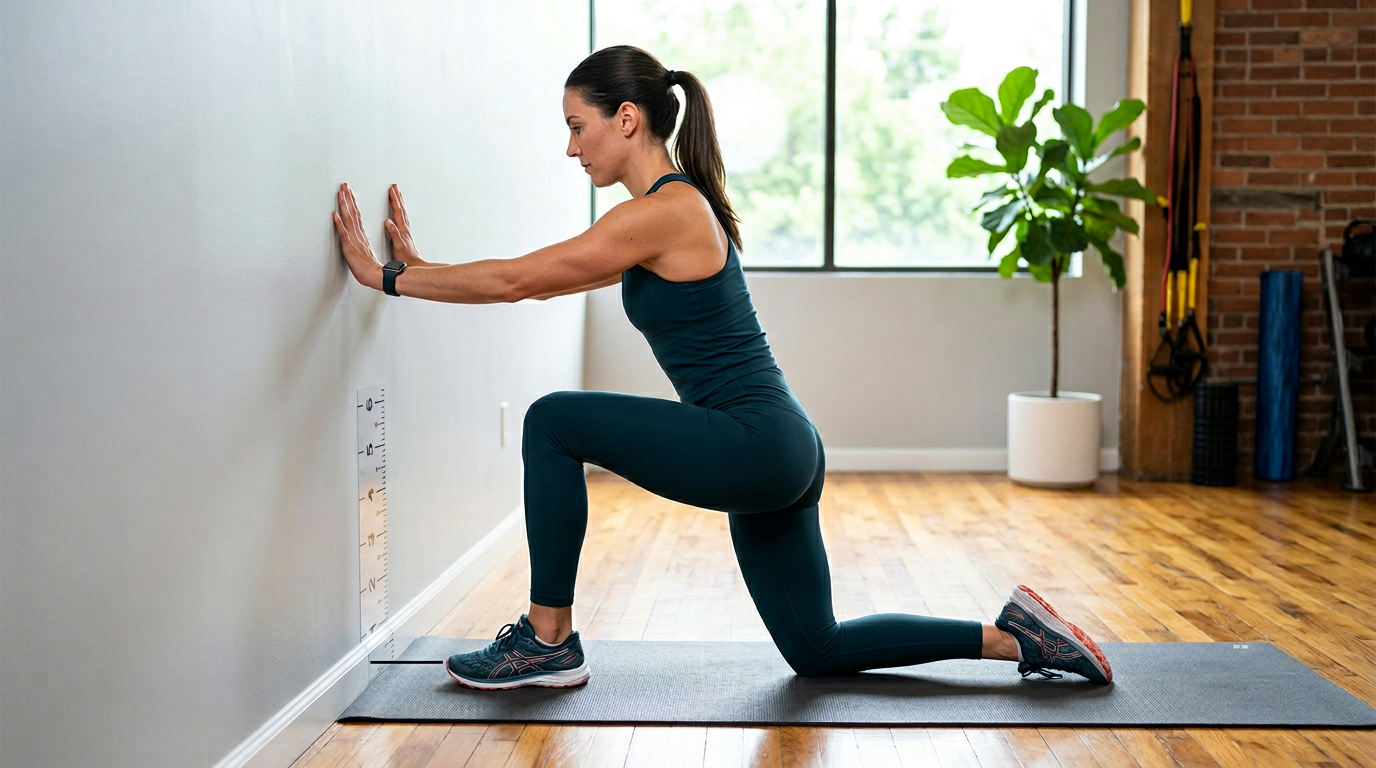
Woman demonstrating wall ankle mobilization exercise showing proper foot placement and knee drive with measurement indicating distance from wall
Shoulder Mobility Exercises
Shoulder mobility supports overhead pressing, pulling exercises, and daily activities like reaching and carrying. These exercises maintain healthy shoulder function:
- Shoulder Pass-Throughs: Hold a resistance band or towel with a wide grip and slowly bring it from in front of your body to behind, then back, keeping your arms straight.
- Shoulder CARs (Controlled Articular Rotations): Make the largest possible circle with your arm, moving slowly and deliberately through your full shoulder range.
- Wall Slides: Stand with your back against a wall and slide your arms up overhead, maintaining contact with the wall throughout the movement.
- Doorway Chest Stretch with Rotation: Place your forearm on a doorframe and gently rotate your body away, then add small rotational movements to mobilize multiple shoulder angles.
These movements counteract the forward shoulder posture common from desk work and support safe, effective upper body training.
How to Incorporate Mobility Exercises Into Your Routine
Knowing the exercises is one thing; building a sustainable practice is another. The key to mobility results is consistency, not perfection. Here's how to make mobility work a natural part of your fitness routine.
Creating a Daily Mobility Practice
Start with just 5-10 minutes daily rather than attempting longer sessions you won't maintain. Morning mobility work prepares your body for the day ahead, while evening sessions help you unwind and process the day's physical stress. Choose the time that fits your schedule best.
A simple daily sequence might include: 2 minutes of hip mobility, 2 minutes of thoracic spine work, 2 minutes of shoulder mobility, and 2 minutes of ankle and wrist circles. Rotate through different exercises to keep it interesting and address all major joints.
Mobility as Part of Your Warm-Up
Before strength training sessions, use mobility exercises specific to the movements you'll perform. Before a lower body workout, focus on hip and ankle mobility. Before upper body training, prioritize thoracic spine and shoulder work.
This approach serves double duty: you maintain your mobility practice while preparing your body for loaded exercises. Spend 5-7 minutes on targeted mobility work before your main workout begins.
Recovery Day Mobility Sessions
On rest days from strength training, longer mobility sessions (15-20 minutes) support recovery without adding training stress. These sessions promote blood flow, reduce muscle tension, and maintain your range of motion between workouts.
Combine mobility work with breathwork or gentle stretching for a restorative practice that supports your harder training days.
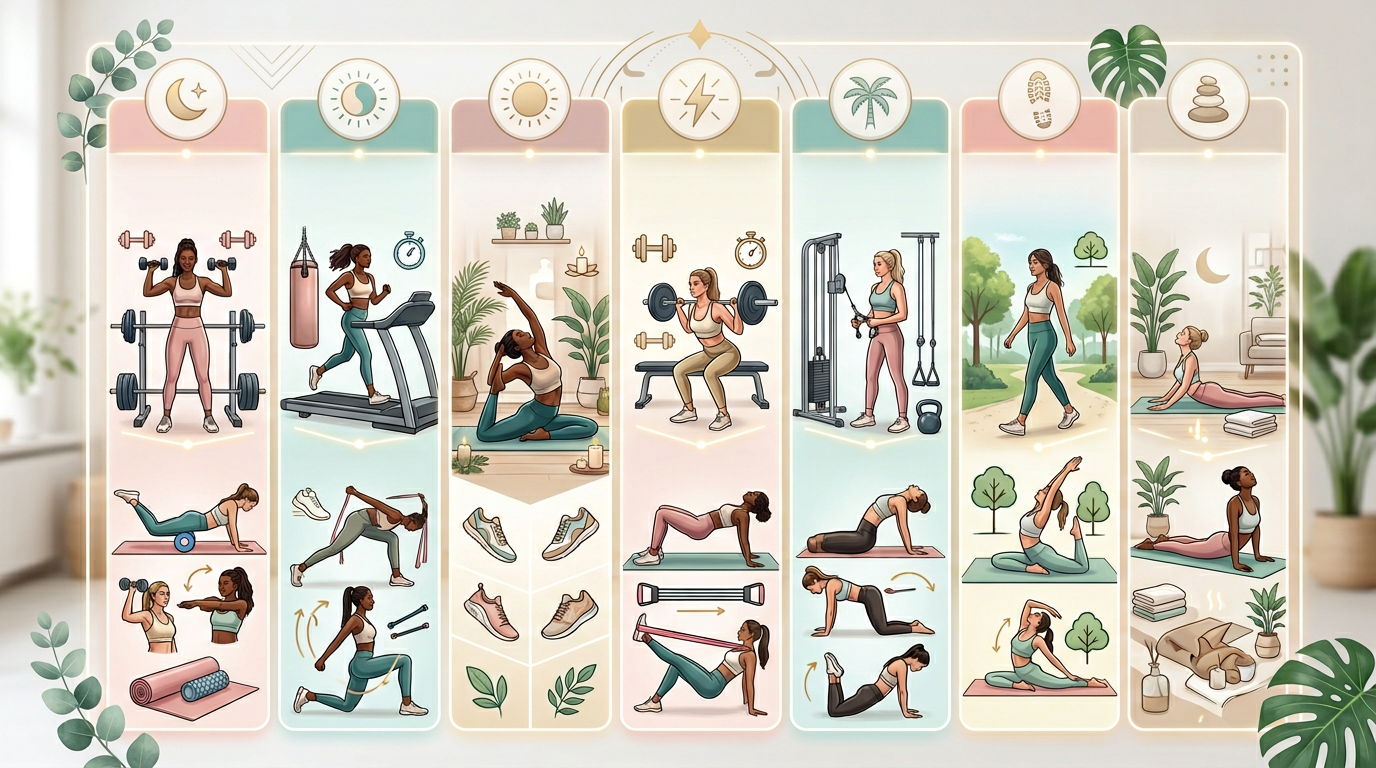
Weekly workout schedule infographic showing how to integrate mobility exercises on training days, rest days, and as standalone sessions for optimal results
Common Mobility Mistakes to Avoid
Even with the best intentions, certain mistakes can limit your mobility progress or even cause discomfort. Avoid these common pitfalls to maximize your results.
Pushing Through Pain
Mobility work should feel like productive discomfort, never sharp pain. You're exploring your current range of motion, not forcing your body into positions it's not ready for. If you feel pinching, sharp pain, or joint discomfort, back off and modify the movement.
Productive discomfort feels like muscular tension or a stretching sensation. Pain signals your body isn't ready for that range yet. Honor these signals and progress gradually.
Moving Too Quickly
Mobility exercises require slow, controlled movement to allow your nervous system to adapt. Rushing through movements doesn't give your body time to register and integrate new ranges of motion. Each repetition should take several seconds, with focus on control throughout.
Slow movement also helps you identify restrictions and compensations you might miss at faster speeds.
Neglecting Consistency
Mobility improvements require regular practice. One excellent session per week won't create lasting change. Your body adapts to consistent input, so daily short sessions outperform occasional longer ones. Even 5 minutes daily yields better results than a 30-minute session once weekly.
Skipping Progressive Overload
Just like strength training, mobility work benefits from progression. As movements become easier, increase the challenge by moving through larger ranges, adding repetitions, or incorporating more complex variations. Your body needs progressive stimulus to continue improving.
Mobility Exercises for Specific Goals
Different fitness goals benefit from targeted mobility work. Here's how to customize your approach based on your primary objectives.
Mobility for Better Squats
Deep, controlled squats require mobility in your ankles, hips, and thoracic spine. Prioritize wall ankle mobilizations, deep squat holds, and hip flexor flows. Before squat sessions, spend extra time on goblet squat pulses and ankle rocks to prepare these specific movement patterns.
Improved squat mobility allows you to train through fuller ranges, increasing glute activation and building more strength and muscle.
Mobility for Deadlift Performance
Deadlifts benefit from hip hinge mobility and thoracic spine extension. Focus on good mornings with a dowel, hip flexor stretches, and cat-cow variations emphasizing spinal extension. These movements prepare the hip hinge pattern and ensure you can maintain proper spinal position under load.
Mobility for Overhead Pressing
Pressing weight overhead safely requires thoracic extension and shoulder mobility. Prioritize wall angels, shoulder pass-throughs, and thoracic rotations. These exercises create the foundation for strong, pain-free overhead pressing.
Mobility for Daily Life and Posture
If your primary goal is feeling better during daily activities and combating desk posture, focus on thoracic rotations, shoulder CARs, hip circles, and neck mobility. These exercises counteract the forward-hunched position common in modern life and help you move through daily tasks with ease.
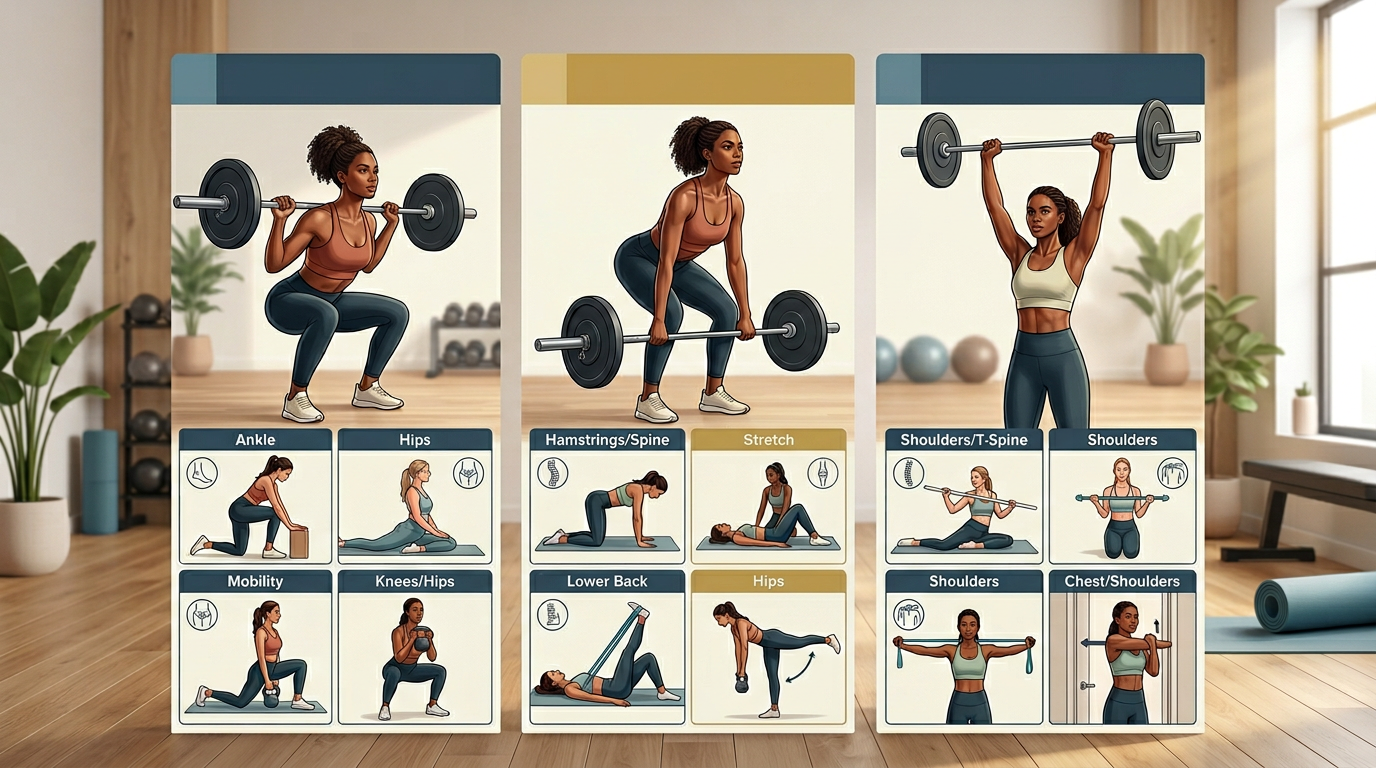
Comparison chart showing which mobility exercises benefit specific strength training movements like squats, deadlifts, and overhead presses
Understanding Mobility Training Principles
To maximize your mobility results, understand the principles that make this training effective. These concepts guide how you approach each session and progress over time.
The Concept of Active Range of Motion
Active range of motion means you can control a joint position using your own muscular strength, not just passively reaching it with assistance. This distinction is crucial for functional movement and injury prevention. Mobility exercises develop active control by requiring muscular engagement throughout each movement.
When you perform a leg swing, you're not just letting momentum move your leg. You're actively controlling the movement at the end ranges, teaching your nervous system that these positions are safe and usable.
Joint-by-Joint Approach
The body alternates between joints that need stability and joints that need mobility. Ankles need mobility, knees need stability, hips need mobility, lumbar spine needs stability, thoracic spine needs mobility, and so on. Understanding this pattern helps you target the right areas with mobility work rather than trying to mobilize joints that actually need stability.
This is why we focus on hip, ankle, thoracic spine, and shoulder mobility rather than trying to increase lumbar spine or knee mobility.
The Role of Nervous System Adaptation
Mobility limitations often stem from your nervous system restricting range of motion it perceives as unsafe, not just tight muscles. Consistent, controlled mobility work teaches your nervous system that new ranges are safe, gradually expanding what your body allows. This is why forcing positions doesn't work—it triggers protective responses instead of adaptation.
Mobility Exercise Progressions for All Levels
Whether you're new to mobility work or have been practicing for years, proper progressions ensure continued improvement and prevent plateaus.
Beginner Mobility Progressions
If you're new to mobility exercises, start with these foundational movements:
- Week 1-2: Focus on simple joint circles for ankles, hips, and shoulders. Perform 5-10 circles each direction, emphasizing smooth, controlled movement.
- Week 3-4: Add cat-cow variations and hip flexor stretches. Hold positions for 5-10 seconds rather than moving continuously.
- Week 5-6: Incorporate wall ankle mobilizations and thoracic rotations. Begin exploring slightly larger ranges of motion.
- Week 7-8: Combine movements into simple flows, like moving from a deep squat into a hip flexor stretch into a thoracic rotation.
Progress gradually, ensuring you can control each movement before advancing to more complex variations.
Intermediate Mobility Progressions
Once basic movements feel comfortable, increase complexity and challenge:
- Add longer hold times (20-30 seconds) in end-range positions
- Perform movements with increased range of motion
- Combine multiple joints in single exercises (like hip flexor flows with thoracic rotation)
- Add light resistance with bands to build strength through new ranges
- Incorporate balance challenges by performing mobility work on one leg
Advanced Mobility Practices
Advanced practitioners can explore Controlled Articular Rotations (CARs) for each major joint, spending 2-3 minutes per joint to explore maximum ranges. You can also add loaded mobility work, using light weights through full ranges to build strength and control simultaneously.
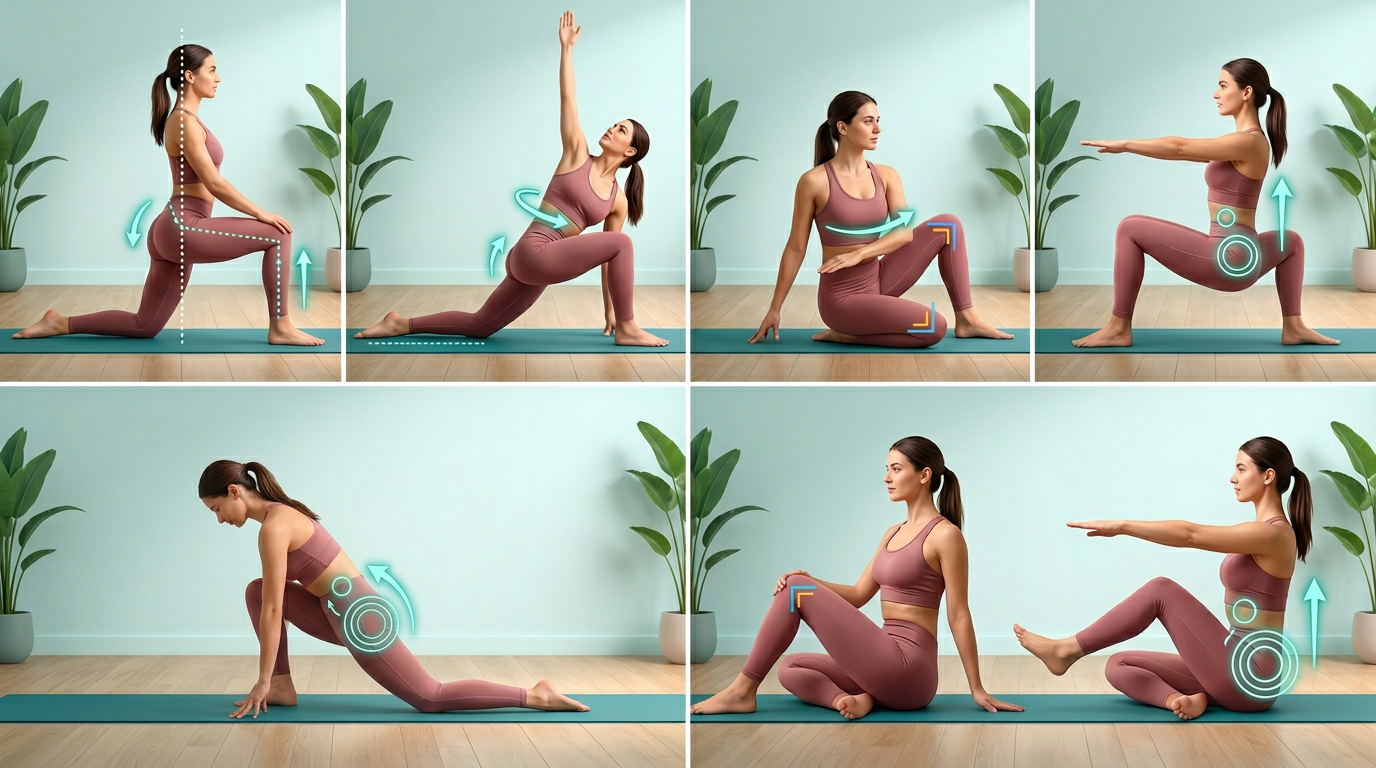
Progressive sequence showing beginner to advanced variations of hip mobility exercises with form cues for each level
Tracking Your Mobility Progress
Unlike strength training where you track weights and reps, mobility progress requires different metrics. Here's how to measure your improvements and stay motivated.
Objective Mobility Assessments
Test your mobility monthly using these simple assessments: deep squat depth (can you reach parallel or below with heels down?), overhead reach (can you bring your arms fully overhead without arching your lower back?), and hip internal rotation (sitting with legs extended, can you rotate your thighs inward equally on both sides?).
Take photos or videos of these positions monthly to visually track your improvements. Sometimes progress is subtle and hard to notice day-to-day, but monthly comparisons reveal significant changes.
Subjective Markers of Improvement
Pay attention to how your body feels during daily activities and workouts. Do you move more easily in the morning? Can you squat deeper during leg day? Does your back feel less stiff after sitting? These subjective improvements matter as much as objective measurements.
Keep a simple journal noting how your body feels and any changes you notice in your movement quality. This reinforces the connection between your mobility practice and real-world benefits.
Combining Mobility Work with Strength Training
For women focused on building strength and sculpting their bodies, mobility work isn't separate from your training—it's the foundation that makes better training possible.
Pre-Workout Mobility Sequences
Before lifting, perform 5-7 minutes of mobility work targeting the joints you'll use that session. For lower body days, this means hips, ankles, and thoracic spine. For upper body days, focus on shoulders, thoracic spine, and wrists. This preparation improves your movement quality during the workout and reduces injury risk.
Post-Workout Mobility and Recovery
After strength training, spend 5 minutes on gentle mobility work to promote recovery. Focus on the areas you just trained, using slow, controlled movements to maintain range of motion and reduce post-workout stiffness. This isn't intense mobility work—it's a gentle cooldown that supports recovery.
How Mobility Supports Progressive Overload
Better mobility allows you to train through fuller ranges of motion, which increases time under tension and muscle activation. A deep squat with full hip mobility builds more glute strength than a shallow squat. Improved shoulder mobility allows you to press overhead with better mechanics, reducing injury risk as you increase weight. Mobility work directly supports your strength gains by ensuring your joints can handle progressive training demands.
Frequently Asked Questions
What exercise is best for mobility?
The best mobility exercise depends on your specific limitations, but hip circles, thoracic rotations, and shoulder pass-throughs address the most common restriction areas for women. These movements target joints that need mobility rather than stability, improving functional movement patterns for daily activities and strength training.
How long should I do mobility exercises each day?
Start with 5-10 minutes of daily mobility work rather than longer, infrequent sessions. Consistency matters more than duration for improving range of motion. You can extend sessions to 15-20 minutes on recovery days, but daily short practices yield better results than weekly longer ones.
What is the 3-3-3 rule for exercise?
The 3-3-3 rule suggests performing three different exercises, for three sets each, with three minutes of rest between sets. While this framework can work for strength training, mobility exercises benefit more from daily consistency and controlled movement rather than set-based protocols focused on rest periods.
What is the 4 2 1 rule exercise?
The 4-2-1 rule refers to a weekly training split: four strength sessions, two conditioning sessions, and one recovery day. For optimal results, incorporate mobility work daily rather than treating it as a separate training category, using it as warm-ups before strength sessions and standalone practices on recovery days.
Should I do mobility exercises before or after strength training?
Perform mobility exercises before strength training as part of your warm-up to prepare joints for loaded movements and improve exercise form. You can also include gentle mobility work after training to support recovery. The pre-workout session should be more dynamic and targeted to the movements you'll perform.
What are 5 exercises that increase bone density?
Weight-bearing exercises that increase bone density include squats, deadlifts, lunges, overhead presses, and jumping exercises like box jumps. These movements load your bones, stimulating bone formation. Mobility work supports these exercises by ensuring you can perform them through full ranges with proper form, maximizing their bone-building benefits.
Can mobility exercises help with lower back pain?
Mobility exercises can help reduce lower back pain by improving hip and thoracic spine mobility, which reduces compensatory stress on the lumbar spine. Focus on hip flexor flows, thoracic rotations, and cat-cow variations rather than trying to increase lumbar spine mobility, as the lower back needs stability more than additional range.
Conclusion
Mobility exercises are the foundation for pain-free movement, better strength training performance, and confident daily living. By dedicating just 5-10 minutes daily to targeted mobility work for your hips, thoracic spine, ankles, and shoulders, you'll unlock deeper squats, stronger lifts, and improved posture. Remember that consistency trumps intensity—regular practice with controlled, active movements teaches your nervous system to access and control new ranges of motion.
Start with the basic exercises outlined in this guide, focusing on the areas that feel most restricted in your body. Progress gradually, honor your body's signals, and integrate mobility exercises into your existing routine rather than treating them as separate workouts. As your range of motion improves, you'll notice the benefits extending far beyond the gym into every aspect of your daily movement.
Begin with one mobility exercise today that addresses your biggest movement limitation.