Low impact cardio is cardiovascular exercise that minimizes stress on joints while elevating heart rate. The most effective options include swimming, cycling, rowing, and walking, which strengthen your heart, burn calories, and protect knees, hips, and ankles for sustainable fitness progress.
If you've ever felt that familiar ache in your knees after a high-intensity workout, or worried that traditional cardio might be too hard on your body, you're not alone. Many women face the challenge of wanting to improve cardiovascular health and burn calories without compromising joint health. Whether you're recovering from an injury, managing chronic joint concerns, or simply seeking a sustainable approach to fitness, low impact cardio offers the perfect solution for building endurance while protecting your body.
The beauty of low impact cardio lies in its versatility and accessibility. You don't need to pound the pavement or jump through intense plyometric routines to achieve remarkable fitness results. This comprehensive guide explores the best low impact cardio options specifically designed for women who want to strengthen their cardiovascular system, support weight management goals, and build lasting fitness habits without the joint stress that comes with high-impact activities.
From water-based workouts to equipment options and bodyweight movements, you'll discover how to incorporate these joint-friendly exercises into your routine while still achieving the heart-pumping benefits you're looking for. Let's explore the most effective low impact cardio exercises that will help you build strength, confidence, and sustainable fitness progress.
Key Takeaways
- Low impact cardio protects joints while delivering effective cardiovascular benefits and calorie burn
- Swimming, cycling, and rowing provide full-body workouts with zero to minimal joint stress
- You can lose weight and improve fitness with low impact options when performed consistently
- Most low impact exercises require minimal equipment and can be done at home or outdoors
- Combining different low impact modalities prevents boredom and targets various muscle groups
Understanding Low Impact Cardio for Women
Low impact cardio refers to any cardiovascular exercise where at least one foot remains in contact with the ground or your body is fully supported throughout the movement. This fundamental characteristic distinguishes it from high-impact activities like running or jumping, where both feet leave the ground simultaneously, creating significant force upon landing.
What Counts as Low Impact Cardio
The defining feature of low impact exercise is the reduced stress on your joints, particularly the knees, hips, and ankles. Activities qualify as low impact when they minimize jarring movements and distribute force more evenly throughout your body. Examples include walking, swimming, cycling, rowing, and using elliptical machines. Even dance-based workouts can be low impact when performed without jumping movements.
This doesn't mean low impact equals low intensity. You can absolutely elevate your heart rate, break a sweat, and challenge your cardiovascular system while keeping impact minimal. The key is understanding that impact and intensity are separate variables in your workout equation.
Why Women Benefit from Low Impact Options
Women face unique considerations when it comes to joint health. Hormonal fluctuations throughout the menstrual cycle can affect ligament laxity and joint stability. Additionally, women are more prone to certain joint conditions and may experience joint discomfort during pregnancy, postpartum recovery, or menopause.
Low impact cardio provides a sustainable approach to fitness that you can maintain throughout all life stages. Whether you're building back strength after childbirth, managing the natural changes of aging, or simply prioritizing long-term joint health, these exercises offer consistency without compromise. They allow you to maintain cardiovascular fitness during recovery periods and provide options when high-impact activities aren't appropriate.
The Science Behind Joint-Friendly Exercise
Your joints contain cartilage that acts as a cushion between bones. While cartilage is remarkably durable, repetitive high-impact forces can wear it down over time. Low impact cardio reduces this cumulative stress while still promoting joint health through movement and circulation.
Movement actually nourishes your joints by pumping synovial fluid through the joint space, delivering nutrients and removing waste products. Low impact exercises provide this benefit without the excessive force that can accelerate joint wear. This makes them ideal for both prevention and management of joint concerns.
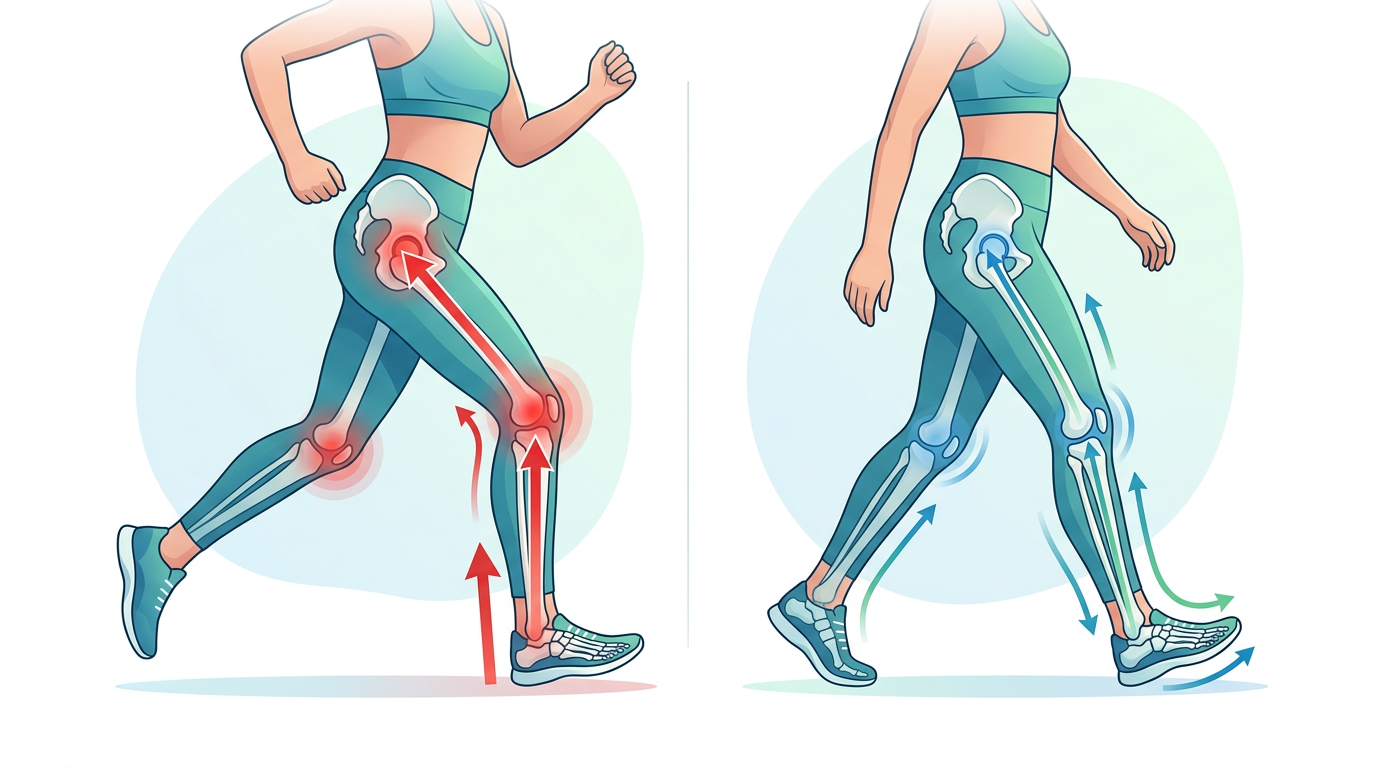
Anatomical illustration showing the difference in joint impact between high-impact running and low-impact walking, with arrows indicating force distribution on knee and hip joints
Comparison of Best Low Impact Cardio Options
Exercise
Equipment Needed
Calorie Burn
Best For
Accessibility
Swimming
Pool access
High
Full-body conditioning
Requires facility
Cycling
Bike or stationary bike
Moderate-High
Lower body strength
Indoor or outdoor
Rowing
Rowing machine
High
Upper and lower body
Home or gym
Walking
None
Moderate
Beginners, daily movement
Anywhere
Elliptical
Elliptical machine
Moderate-High
Running alternative
Gym or home
Water Aerobics
Pool access
Moderate
Group fitness, arthritis
Requires facility
Yoga Flow
Yoga mat
Low-Moderate
Flexibility and cardio
Home or studio
Barre
Minimal equipment
Moderate
Toning and endurance
Home or studio
Dance Cardio
None
Moderate-High
Fun, coordination
Home or studio
Stair Climbing
Stairs or machine
High
Glute development
Anywhere with stairs
1. Swimming
Swimming stands as one of the most comprehensive low impact cardio exercises available. The water's buoyancy supports your body weight, eliminating nearly all impact on your joints while providing natural resistance that challenges your muscles. Every stroke engages multiple muscle groups simultaneously, making swimming an exceptionally efficient full-body workout.
The resistance provided by water is approximately 12 times greater than air, meaning every movement requires more muscular effort without any jarring impact. This unique combination makes swimming ideal for building cardiovascular endurance, muscular strength, and flexibility all at once. Different strokes target various muscle groups, with freestyle emphasizing shoulders and core, breaststroke working inner thighs and chest, and backstroke strengthening your back muscles.
For women concerned about joint health, swimming offers therapeutic benefits beyond basic exercise. The hydrostatic pressure of water reduces swelling and improves circulation, while the horizontal body position takes pressure off your spine. Whether you're doing laps, water jogging, or participating in aqua aerobics classes, you'll build endurance without the pounding associated with land-based activities.
Pros
- Zero impact on joints with complete body weight support
- Works entire body with natural water resistance
- Excellent calorie burn while staying cool
- Improves flexibility and range of motion
- Therapeutic for arthritis and chronic pain
Cons
- Requires access to a pool facility
- May involve membership or facility fees
- Need to manage wet hair and changing logistics
- Learning proper technique takes time
2. Cycling (Indoor or Outdoor)
Cycling delivers powerful cardiovascular benefits while your bike supports your body weight, making it exceptionally gentle on joints. Whether you prefer outdoor rides through scenic routes or indoor cycling sessions on a stationary bike, this low impact cardio option strengthens your lower body while protecting your knees, hips, and ankles from repetitive impact.
The circular pedaling motion promotes joint mobility without compression, making cycling particularly beneficial for women with knee concerns. As you pedal, you build strength in your quadriceps, hamstrings, glutes, and calves while improving cardiovascular endurance. The resistance can be easily adjusted to match your fitness level, allowing for both steady-state cardio and high-intensity interval training without ever increasing joint stress.
Indoor cycling offers climate control and convenience, letting you maintain consistency regardless of weather. Outdoor cycling provides fresh air, changing scenery, and the added challenge of terrain variation. Both options burn substantial calories while building lower body strength and endurance. Many women find cycling particularly effective for glute development when incorporating hill climbs or increased resistance.
Pros
- Excellent for building lower body strength
- Easily adjustable intensity and resistance
- Can be done indoors or outdoors
- Effective for glute and leg development
- Sustainable for long duration workouts
Cons
- Requires bike or stationary bike investment
- May cause saddle discomfort initially
- Limited upper body engagement
- Outdoor cycling depends on weather and safety
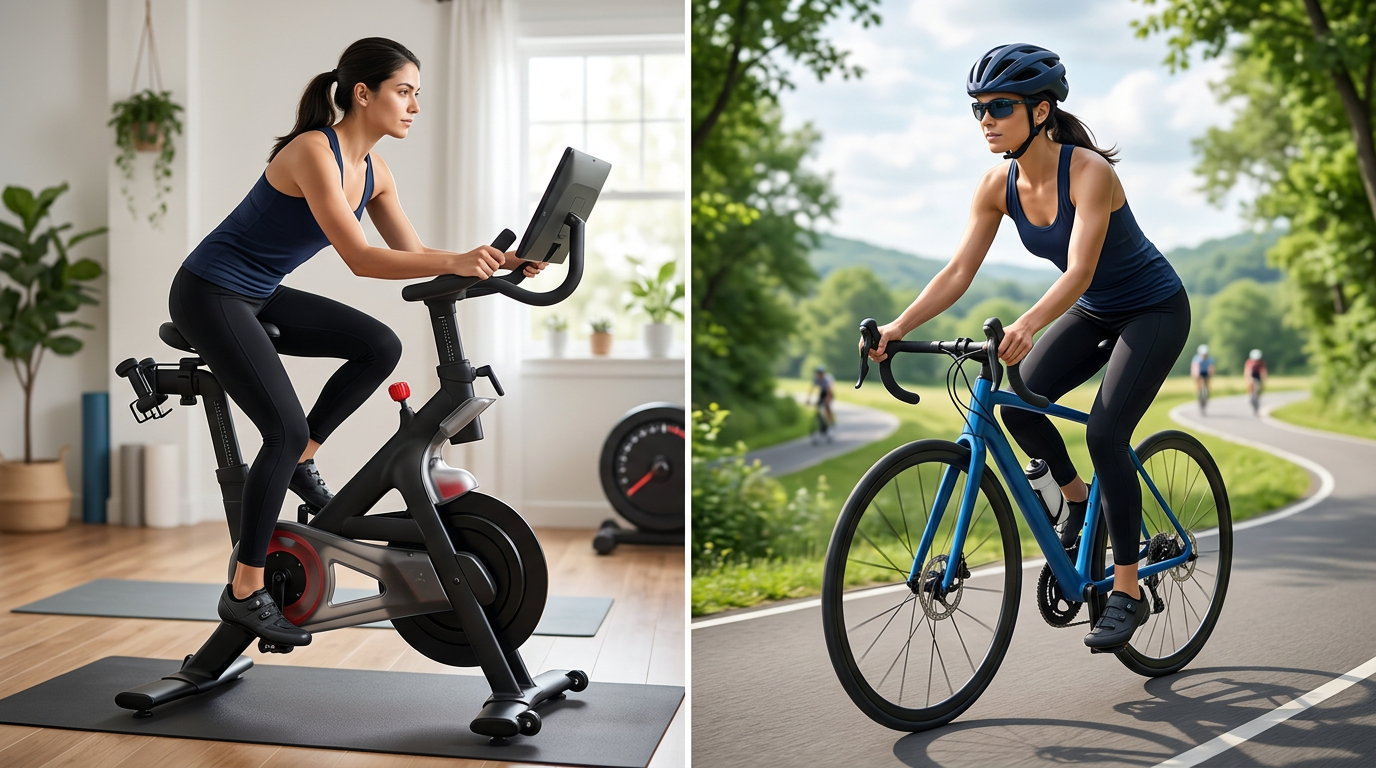
Split image showing a woman on an indoor stationary bike and outdoor cycling, highlighting proper posture and form for joint-friendly cycling
3. Rowing Machine
Rowing machines provide one of the most complete low impact cardio workouts available, engaging approximately 85% of your body's muscles with each stroke. This seated exercise eliminates impact while delivering both cardiovascular conditioning and strength training benefits. The rowing motion works your legs, core, back, shoulders, and arms in a coordinated sequence that builds functional strength alongside endurance.
The beauty of rowing lies in its power-to-impact ratio. You can generate significant intensity and calorie burn while remaining seated with your joints fully supported. Each stroke begins with leg drive, transitions through core engagement, and finishes with an upper body pull, creating a full-body movement pattern that mimics functional activities without joint stress.
Proper rowing technique is essential for maximizing benefits and preventing strain. The movement should flow smoothly with a ratio of one second pulling and two seconds recovering. Focus on driving through your legs first, then engaging your core, and finally pulling with your arms. This sequence ensures optimal muscle recruitment while protecting your lower back. Many women find rowing particularly effective for building back strength and improving posture.
Pros
- Engages 85% of body muscles per stroke
- High calorie burn with zero impact
- Builds upper and lower body strength simultaneously
- Improves posture and back strength
- Compact equipment option for home use
Cons
- Requires proper technique to avoid back strain
- Learning curve for beginners
- Can be expensive for quality machines
- Repetitive motion may cause boredom for some
4. Walking
Walking is the most accessible form of low impact cardio, requiring no equipment, no gym membership, and no special skills. Despite its simplicity, walking provides substantial cardiovascular benefits when performed consistently and with appropriate intensity. Brisk walking elevates your heart rate, burns calories, and strengthens your lower body while maintaining constant contact with the ground to protect your joints.
The key to maximizing walking as cardio is maintaining a purposeful pace that challenges your cardiovascular system. Aim for a speed where you can talk but not sing comfortably. Adding inclines, whether on a treadmill or outdoor hills, significantly increases intensity and calorie burn while targeting your glutes and hamstrings more effectively. Walking also offers mental health benefits, particularly when done outdoors in nature.
You can easily incorporate walking into your daily routine by taking the stairs, parking farther away, or scheduling dedicated walking sessions. For progressive overload, gradually increase your distance, speed, or add intervals of faster-paced walking. Many women find walking sustainable long-term because it doesn't require recovery time and can be adjusted to any fitness level or schedule constraint.
Pros
- Requires zero equipment or gym access
- Can be done anywhere, anytime
- Easily modified for any fitness level
- Sustainable for daily practice
- Provides mental health benefits and stress relief
Cons
- Lower calorie burn compared to other options
- May require longer duration for significant results
- Weather dependent for outdoor walking
- Can become monotonous without variation
5. Elliptical Machine
The elliptical machine provides a running-like motion without any impact, making it the perfect alternative for women who want the cardiovascular benefits of running without the joint stress. Your feet remain in constant contact with the pedals throughout the entire movement, eliminating the impact forces that occur when your foot strikes the ground during running.
Elliptical training allows you to achieve running-level intensity while protecting your knees, hips, and ankles from repetitive impact. Most machines offer adjustable resistance and incline, letting you customize your workout intensity. The addition of moving handles engages your upper body, creating a more complete workout that burns more calories than lower-body-only cardio options.
Many elliptical machines also allow reverse pedaling, which targets your hamstrings and glutes differently than forward motion. This versatility prevents adaptation and keeps your muscles challenged. For women building back fitness after injury or managing joint concerns, the elliptical provides an excellent bridge between walking and running, offering cardiovascular challenge without compromise.
Pros
- Mimics running motion without impact
- Engages both upper and lower body
- Adjustable resistance and incline for progression
- Reverse motion targets different muscle groups
- Lower perceived exertion than running
Cons
- Requires gym access or home equipment purchase
- Fixed movement pattern may feel unnatural initially
- Quality machines can be expensive
- Less functional than free-movement exercises
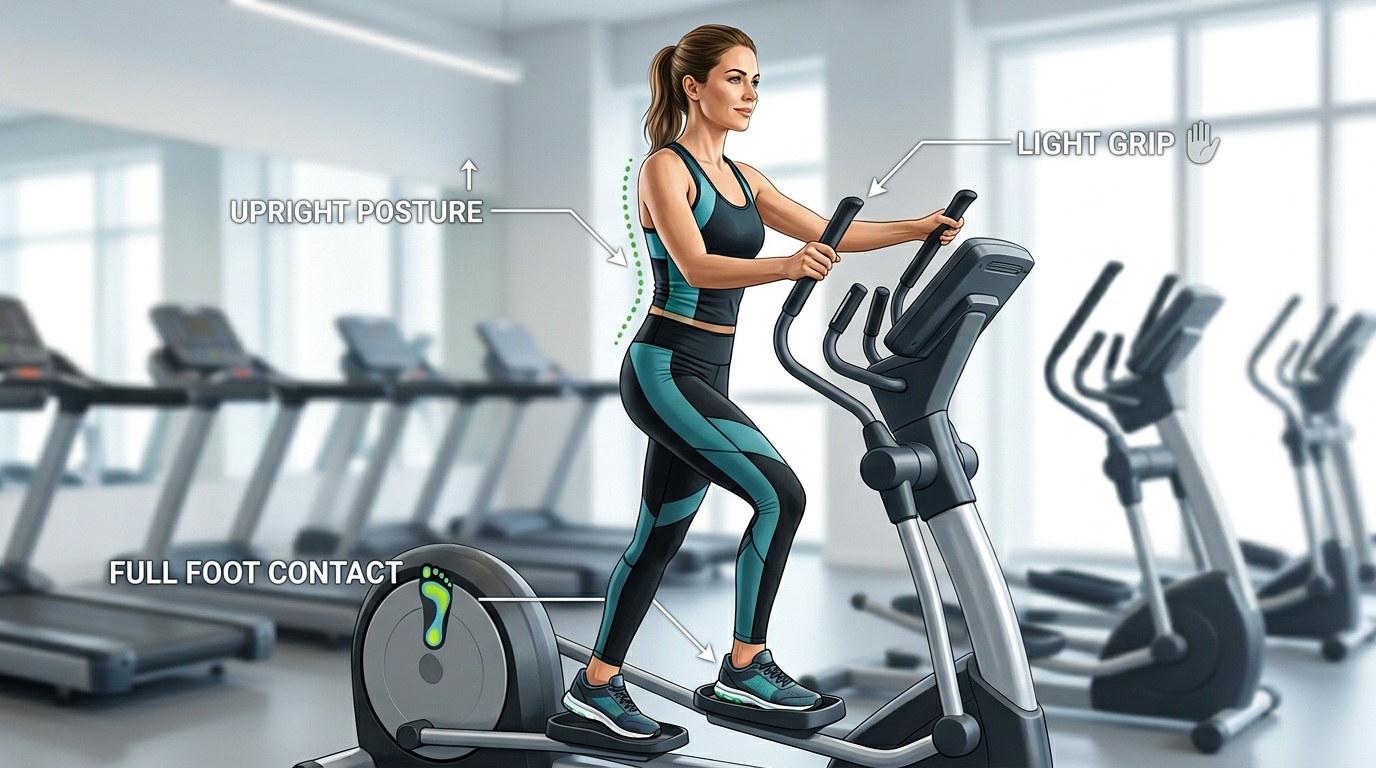
Woman demonstrating proper elliptical form with callouts showing correct posture, hand position, and foot placement for maximum effectiveness and joint protection
6. Water Aerobics
Water aerobics combines the joint-protecting benefits of aquatic exercise with the social motivation of group fitness classes. Performed in chest-deep water, these classes involve choreographed movements set to music, creating a fun and effective cardiovascular workout. The water's resistance challenges your muscles from all directions while its buoyancy reduces your body weight by up to 90%, virtually eliminating impact on joints.
Water aerobics classes typically include a variety of movements such as jogging, jumping jacks, leg lifts, and arm exercises, all performed in water. What would be high-impact on land becomes completely joint-friendly in the pool. The water's resistance increases with the speed of your movements, allowing you to control intensity while maintaining zero impact.
This option is particularly beneficial for women with arthritis, osteoporosis, or significant joint concerns. The warm water used in many aquatic fitness classes can help reduce stiffness and improve range of motion. Additionally, the group setting provides accountability, social connection, and expert instruction, making it easier to maintain consistency and proper form throughout your workout.
Pros
- Extremely gentle on joints with maximum buoyancy
- Social and motivating group environment
- Suitable for all fitness levels and ages
- Warm water reduces stiffness and pain
- Instructor guidance ensures proper technique
Cons
- Requires pool facility with scheduled classes
- Less convenient than at-home options
- Fixed class times may not fit schedule
- Moderate calorie burn compared to higher intensity options
7. Vinyasa Yoga Flow
While traditional yoga focuses on flexibility and mindfulness, vinyasa flow sequences can provide genuine cardiovascular benefits when practiced continuously. This dynamic style links breath with movement, flowing through poses in a way that elevates your heart rate while maintaining the controlled, low-impact nature of yoga. Vinyasa flow builds cardiovascular endurance, muscular strength, and flexibility simultaneously while keeping your joints safe through controlled, deliberate movements.
The continuous nature of vinyasa practice, moving from downward dog to plank to upward dog and back, creates sustained muscular engagement that challenges your cardiovascular system. Sun salutations performed in sequence provide an effective warm-up and can be repeated for cardiovascular conditioning. More advanced flows incorporate standing balance poses, warrior sequences, and core work that build strength alongside endurance.
Yoga offers additional benefits beyond traditional cardio, including improved body awareness, stress reduction, and enhanced mind-body connection. For women seeking a holistic approach to fitness, vinyasa flow provides cardiovascular conditioning within a practice that also addresses flexibility, balance, and mental well-being. The low-impact nature makes it sustainable for daily practice without the recovery needs of higher-impact activities.
Pros
- Combines cardio with flexibility and strength
- Minimal equipment needed (just a mat)
- Reduces stress while building fitness
- Improves balance and body awareness
- Can be practiced at home or in studio
Cons
- Lower calorie burn than traditional cardio
- Requires learning proper form and sequencing
- May not satisfy those seeking intense cardio
- Cardiovascular benefits depend on flow intensity
8. Barre Workouts
Barre workouts blend elements of ballet, Pilates, and strength training into a low-impact cardio format that emphasizes muscular endurance through small, controlled movements. These classes use a ballet barre, light weights, and your body weight to create sustained muscular engagement that elevates your heart rate without jumping or impact. The signature small pulses and isometric holds build muscular endurance and create cardiovascular challenge through continuous muscle activation rather than explosive movements.
A typical barre class moves through upper body work, lower body sequences targeting thighs and glutes, core strengthening, and flexibility work. The constant engagement of muscles, often held in challenging positions while performing small movements, creates metabolic demand that burns calories and builds endurance. The low-impact nature protects joints while the precise movements improve posture, alignment, and body awareness.
Barre is particularly effective for women seeking to tone and strengthen without building bulk. The high-repetition, low-weight approach creates lean muscle definition while the continuous movement provides cardiovascular conditioning. Many women appreciate the ballet-inspired movements and the focus on lengthening and strengthening simultaneously, creating a balanced approach to fitness that feels graceful yet challenging.
Pros
- Tones muscles while providing cardio benefits
- Improves posture and alignment
- Low impact with precise, controlled movements
- Minimal equipment required for home practice
- Builds muscular endurance and definition
Cons
- Learning curve for proper form and technique
- May feel repetitive or slow-paced initially
- Moderate rather than high calorie burn
- Small movements can cause muscle fatigue quickly
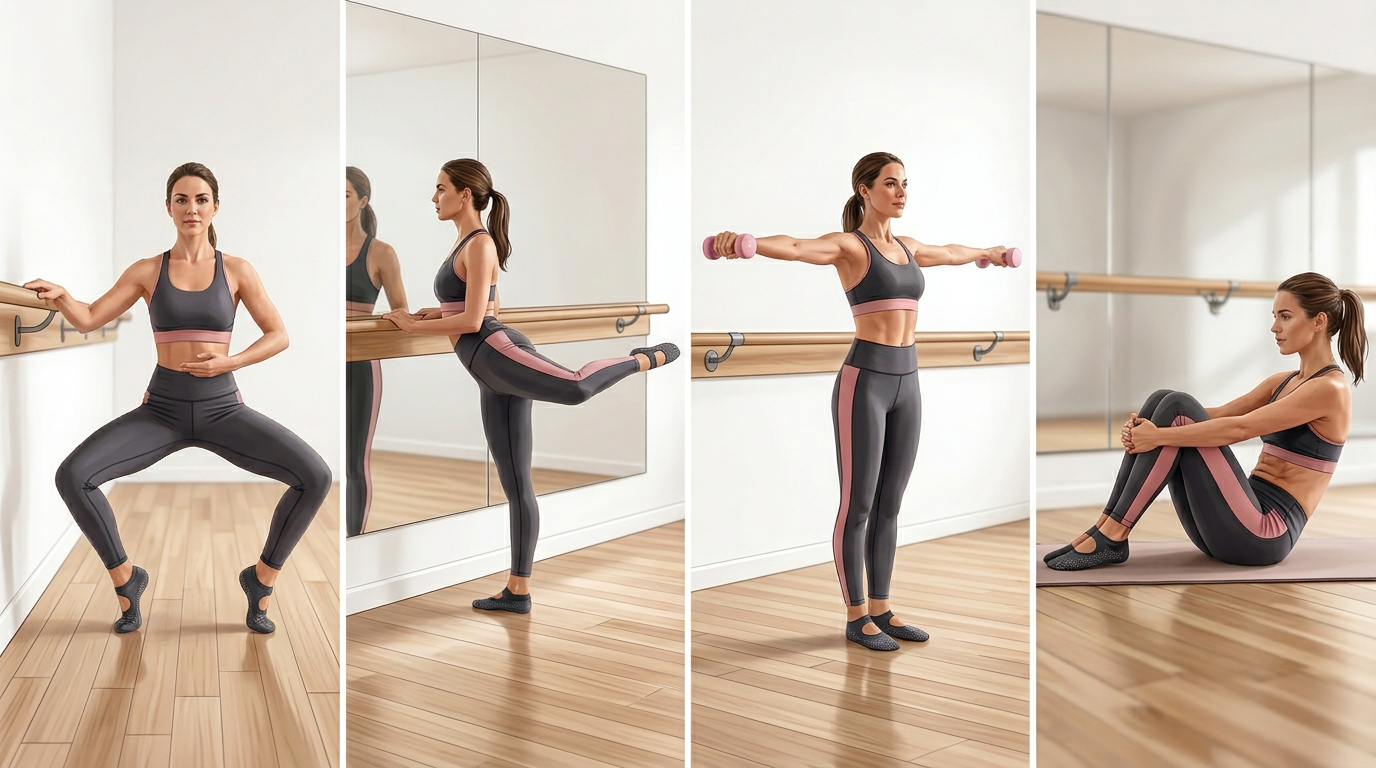
Sequence of four barre exercises showing proper form for pliés, leg lifts at the barre, arm work with light weights, and core work, demonstrating the low-impact full-body nature of barre workouts
9. Low-Impact Dance Cardio
Dance cardio without jumping movements offers an enjoyable way to elevate your heart rate while protecting your joints. By eliminating jumps and high-impact choreography, low-impact dance maintains the fun and motivation of dance fitness while keeping at least one foot on the ground at all times. The rhythmic movements, directional changes, and continuous motion provide effective cardiovascular conditioning while the music and choreography make the workout feel more like fun than exercise.
Low-impact dance classes incorporate moves from various dance styles including jazz, Latin, hip-hop, and contemporary, all modified to eliminate jumping. Side steps, grapevines, knee lifts, hip movements, and arm choreography combine to create sustained movement that challenges your cardiovascular system. The variety of movements works different muscle groups while improving coordination, rhythm, and agility.
Dance cardio provides psychological benefits that enhance adherence. The music creates motivation and energy, while learning choreography engages your mind alongside your body. For women who find traditional cardio boring or repetitive, dance offers an engaging alternative that delivers results while feeling entertaining. Many online platforms and studios now offer specifically low-impact dance options designed for joint protection.
Pros
- Fun and engaging with music motivation
- No equipment needed
- Improves coordination and rhythm
- Can be done at home with online classes
- Variety prevents boredom and monotony
Cons
- Learning choreography may be challenging initially
- Requires adequate space for movement
- May feel self-conscious as a beginner
- Effectiveness depends on maintaining intensity
10. Stair Climbing (Controlled Pace)
Stair climbing at a controlled, steady pace provides excellent cardiovascular conditioning and lower body strengthening with minimal impact when performed correctly. Unlike running stairs with explosive movements, controlled stair climbing maintains constant contact and deliberate motion that protects joints while effectively targeting your glutes, quadriceps, hamstrings, and calves. The vertical component significantly increases calorie burn compared to flat walking while the upward motion emphasizes glute development more than most other cardio options.
You can perform stair climbing on actual stairs, a stair-climbing machine, or even a step platform at home. The key to keeping this exercise low-impact is maintaining a steady, controlled pace rather than bounding or jumping up steps. Place your entire foot on each step, engage your glutes to lift your body, and use the handrail only for balance, not to pull yourself up.
Stair climbing offers excellent progression potential. Start with shorter durations or fewer flights, then gradually increase as your fitness improves. The natural resistance provided by lifting your body weight against gravity creates strength-building benefits alongside cardiovascular conditioning. For women focused on glute development, stair climbing provides functional strengthening that translates to improved performance in other activities and daily life movements.
Pros
- Excellent for glute and leg development
- High calorie burn compared to flat walking
- Can be done on any staircase
- Builds functional lower body strength
- Easily scalable by adjusting pace or duration
Cons
- Can stress knees if performed incorrectly
- Requires access to stairs or machine
- May cause muscle soreness initially
- Limited upper body engagement
Maximizing Results with Low Impact Cardio
Creating an Effective Low Impact Cardio Routine
To achieve optimal results from low impact cardio, consistency matters more than intensity. Aim for at least 150 minutes of moderate-intensity cardio per week, spread across multiple sessions. This could look like five 30-minute sessions or three 50-minute sessions, depending on your schedule and preferences.
Progressive overload applies to cardio just as it does to strength training. Gradually increase duration, resistance, speed, or incline over time to continue challenging your cardiovascular system. Your body adapts to consistent stimulus, so introducing variation prevents plateaus and maintains progress toward your fitness goals.
Combining Low Impact Cardio with Strength Training
The most effective fitness programs combine cardiovascular exercise with strength training. While low impact cardio improves heart health and burns calories, strength training builds muscle, increases metabolism, and enhances functional fitness. Structure your week to include both elements, perhaps alternating cardio and strength days or combining them in single sessions.
For women focused on body composition, this combination proves particularly powerful. Strength training builds the muscle that shapes your physique, while cardio supports cardiovascular health and creates the calorie deficit needed for fat loss when combined with appropriate nutrition. The low-impact nature of the cardio options discussed allows for adequate recovery between strength sessions.
Monitoring Intensity Without Impact
Just because an exercise is low impact doesn't mean it's low intensity. You can achieve various intensity levels with any of these exercises by adjusting speed, resistance, or duration. Use the talk test as a simple intensity gauge: during moderate intensity, you should be able to talk but not sing; during vigorous intensity, you can only speak a few words before needing to catch your breath.
Heart rate monitoring provides more precise intensity tracking. For moderate intensity, aim for 50-70% of your maximum heart rate; for vigorous intensity, target 70-85%. Remember that perceived exertion matters too. Your workout should feel challenging but sustainable, pushing you without causing pain or excessive fatigue.
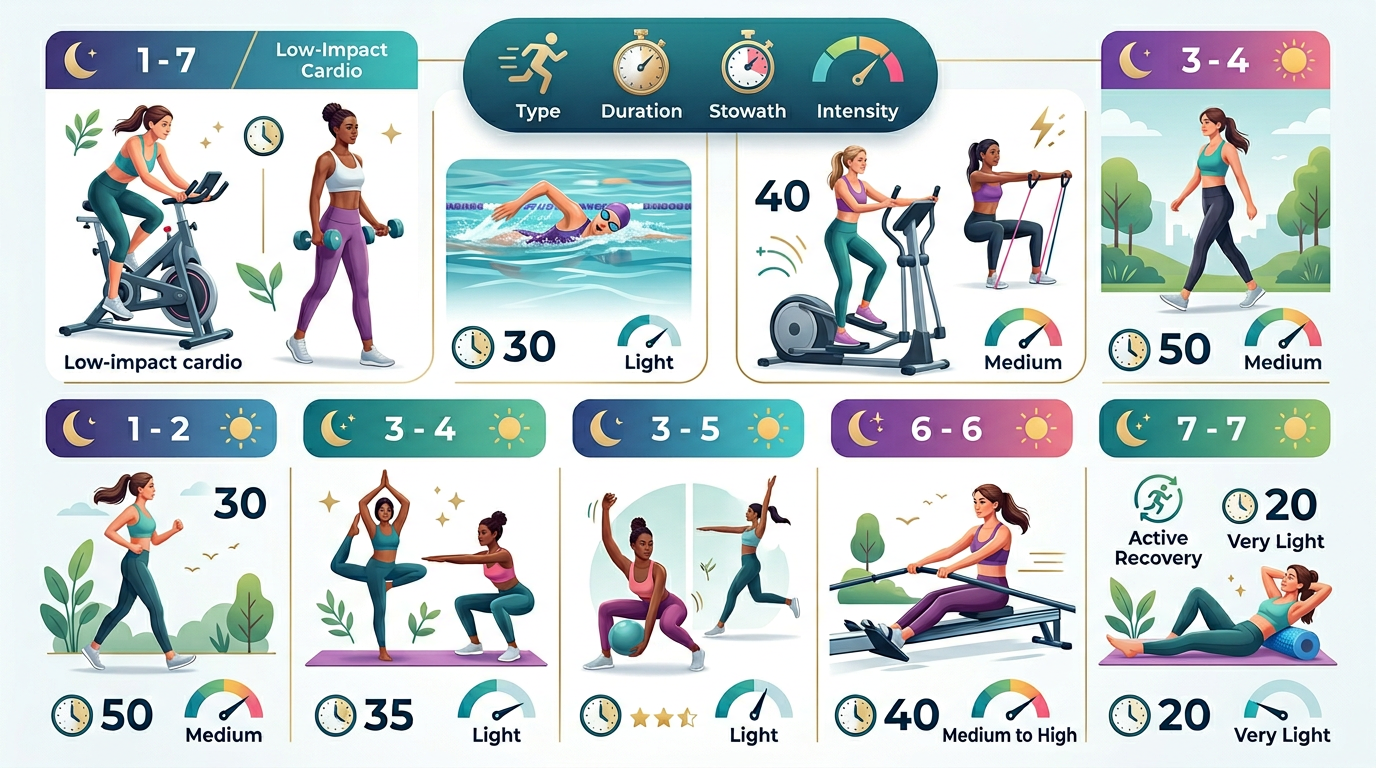
Infographic showing a sample weekly workout schedule combining different low-impact cardio options with strength training, including duration and intensity recommendations for each session
Common Mistakes to Avoid
Assuming Low Impact Means Easy
One of the biggest misconceptions about low impact cardio is that it's inherently easy or ineffective. In reality, you can achieve significant cardiovascular challenge and calorie burn with low impact exercises when performed with appropriate intensity. Don't underestimate these workouts or fail to push yourself appropriately just because they're joint-friendly.
Neglecting Proper Form
Even low impact exercises require proper form to maximize benefits and prevent injury. Poor posture on a rowing machine can strain your back; incorrect bike setup can cause knee pain; improper swimming technique creates shoulder stress. Invest time in learning correct form for your chosen activities, whether through professional instruction, quality online resources, or personal training sessions.
Lacking Variety in Your Routine
Repeating the same low impact cardio workout indefinitely leads to adaptation, boredom, and plateaus. Your body becomes efficient at repeated movements, reducing calorie burn and fitness improvements over time. Incorporate variety by trying different activities, adjusting intensity, or changing workout structure. Cross-training with multiple low impact options prevents overuse injuries while keeping workouts mentally engaging.
Which Low Impact Cardio Is Best For You?
Selecting the ideal low impact cardio depends on your individual goals, preferences, and circumstances. Here's how to match options to your specific needs:
Best for Complete Beginners
Walking offers the most accessible entry point, requiring no equipment or special skills. Start with 15-20 minute sessions and gradually build duration and intensity as your fitness improves.
Best for Maximum Calorie Burn
Swimming, rowing, and stair climbing provide the highest calorie expenditure among low impact options. These full-body or high-resistance exercises create significant metabolic demand while protecting joints.
Best for Home Workouts
Low-impact dance cardio, yoga flow, and barre require minimal equipment and can be effectively performed at home with online classes or apps. A simple mat and optional light weights provide everything you need.
Best for Joint Concerns or Arthritis
Water-based exercises including swimming and water aerobics offer maximum joint protection with therapeutic benefits. The buoyancy and warm water reduce pain while improving mobility.
Best for Lower Body Strengthening
Cycling and stair climbing effectively build leg and glute strength while providing cardiovascular conditioning. These options create the most lower body muscle development among cardio exercises.
Best for Full-Body Conditioning
Rowing and swimming engage the most muscle groups simultaneously, creating comprehensive conditioning that develops both upper and lower body strength alongside cardiovascular fitness.
Best for Variety and Fun
Dance cardio and barre classes provide entertainment alongside exercise, making them ideal for women who struggle with motivation or find traditional cardio boring.
Frequently Asked Questions
What is the best low-impact cardio?
The best low-impact cardio depends on your goals, but swimming offers the most comprehensive benefits with zero joint stress and full-body engagement. Rowing provides similar advantages if you prefer land-based exercise. For accessibility, walking remains highly effective when performed consistently at a brisk pace with progressive increases in duration or intensity.
What is the 3 3 3 rule cardio?
The 3 3 3 rule cardio suggests performing three cardio sessions per week, for 30 minutes each, at a moderate intensity where you can maintain conversation. This guideline provides a sustainable starting point for cardiovascular fitness. You can apply this rule to any low-impact option like walking, cycling, or swimming to build consistency and establish a regular cardio habit.
Can you lose weight with low-impact cardio?
Yes, you can absolutely lose weight with low-impact cardio when combined with appropriate nutrition creating a calorie deficit. Low-impact exercises burn calories effectively, especially options like swimming, rowing, and cycling. The key is consistency, adequate duration, and appropriate intensity. Weight loss depends on total energy expenditure and nutrition rather than exercise impact level.
What counts as low-impact cardio?
Low-impact cardio includes any cardiovascular exercise where at least one foot remains on the ground or your body stays fully supported throughout the movement. Common examples include walking, swimming, cycling, rowing, elliptical training, water aerobics, and controlled stair climbing. These activities minimize joint stress while elevating heart rate and providing cardiovascular benefits.
How often should I do low-impact cardio for results?
Aim for 150 minutes of moderate-intensity or 75 minutes of vigorous-intensity low-impact cardio per week for health benefits and fitness results. This could be five 30-minute sessions or three 50-minute sessions. Consistency matters more than individual session length. Combine cardio with strength training twice weekly for optimal body composition and overall fitness improvements.
Is low-impact cardio effective for belly fat?
Low-impact cardio contributes to overall fat loss, including belly fat, when combined with proper nutrition and strength training. You cannot spot-reduce fat from specific areas, but consistent cardio creates the calorie deficit needed for fat loss throughout your body. Swimming, rowing, and cycling are particularly effective due to their high calorie burn and full-body engagement.
Can beginners do low-impact cardio every day?
Beginners can do gentle low-impact cardio like walking daily, but should start with 3-4 sessions weekly for more intense options like rowing or cycling. Your body needs recovery time to adapt and strengthen. Listen to your body and gradually increase frequency as your fitness improves. Alternating different low-impact activities allows daily movement while preventing overuse of specific muscle groups.
Conclusion
Low impact cardio provides a sustainable, joint-friendly path to cardiovascular fitness, weight management, and overall health without the stress that high-impact activities place on your body. From swimming and cycling to walking and dance, you have numerous effective options that protect your joints while delivering the heart-pumping benefits your body needs. The best low impact cardio is the one you'll do consistently, so choose activities you enjoy and can realistically maintain long-term.
Remember that sustainable fitness comes from consistency rather than intensity alone. By incorporating these low impact cardio options into your routine alongside strength training and proper nutrition, you'll build cardiovascular endurance, support healthy body composition, and create fitness habits that serve you throughout all life stages. Start with one or two activities that appeal to you, focus on progressive improvement, and trust that protecting your joints today ensures you can continue moving and thriving for years to come.