Hip Thrust Benefits: Why Women Need This Move
Hip thrust benefits include building stronger glutes, improving athletic performance, enhancing posture, reducing lower back pain, and increasing functional strength. This exercise effectively targets the gluteus maximus while engaging hamstrings and core muscles, making it essential for women seeking lower body power and injury prevention.
If you've spent months doing squats and lunges but still feel like your glutes aren't responding the way you'd hoped, you're not alone. Many women focus on traditional lower body exercises without realizing they're missing one of the most powerful glute-building movements available. The hip thrust has emerged as a game-changing exercise in women's fitness, and understanding the hip thrust benefits can transform not just your workout routine, but your entire approach to lower body strength.
This comprehensive guide explores why the hip thrust deserves a permanent place in your training program. You'll discover the specific advantages this movement offers for women, how it compares to other exercises, and exactly how to incorporate it into your routine for maximum results. Whether you're new to strength training or looking to break through a plateau, the science-backed benefits of hip thrusts will give you the confidence to add this powerhouse move to your next workout.
Key Takeaways
- Hip thrusts provide superior glute activation compared to squats and deadlifts, making them the most effective exercise for building stronger, more powerful glutes
- Regular hip thrust training improves athletic performance, running speed, jumping ability, and everyday functional movements
- This exercise helps correct posture imbalances, reduce lower back pain, and protect against common injuries in women
- Hip thrusts can be easily modified for all fitness levels, from bodyweight beginners to advanced lifters using heavy loads
- Consistent hip thrust training creates measurable improvements in strength, power output, and overall lower body development within weeks
What Makes Hip Thrusts Different from Other Lower Body Exercises
The hip thrust stands apart from traditional lower body exercises due to its unique biomechanics and muscle activation patterns. While squats and lunges have their place, hip thrusts offer something distinctly valuable for women focused on glute development and functional strength.
Superior Glute Activation
Hip thrusts activate the gluteus maximus more effectively than any other lower body exercise. The horizontal loading pattern places maximum tension on the glutes at full hip extension, which is exactly where these muscles are designed to work hardest. Unlike squats, which divide effort between quads and glutes, hip thrusts concentrate the workload directly on your posterior chain.
The exercise works by positioning your upper back on a bench while driving your hips upward against resistance. This movement pattern mirrors the primary function of your glutes: hip extension. When you perform daily activities like standing from a chair, climbing stairs, or sprinting, your glutes extend your hips. Hip thrusts train this exact movement pattern under load.
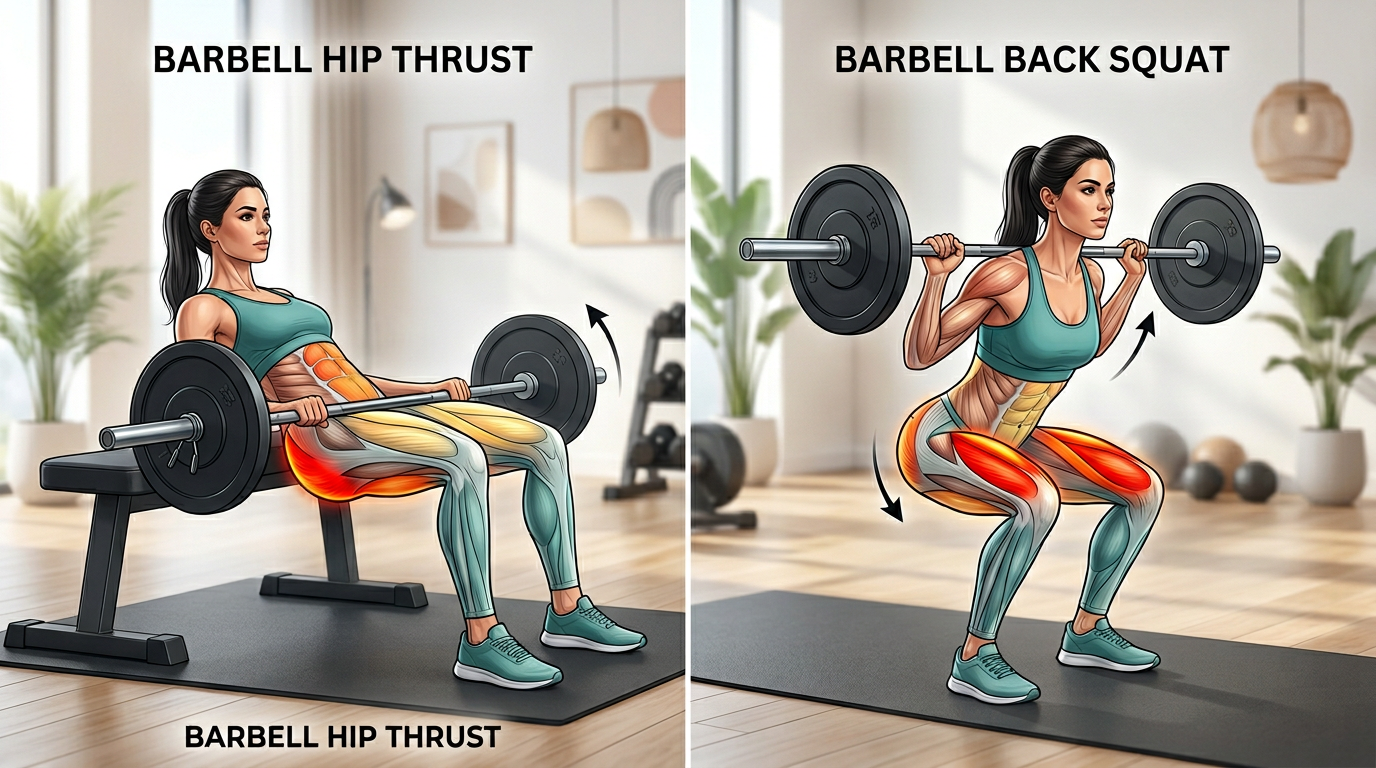
Side-by-side comparison diagram showing muscle activation patterns during hip thrust versus squat, highlighting greater glute engagement in hip thrusts
Reduced Spinal Loading
One significant advantage for women concerned about back health is the minimal spinal compression during hip thrusts. The weight rests across your hips rather than on your shoulders or back, which means you can load the exercise heavily without the same axial loading that occurs during squats or deadlifts.
This makes hip thrusts an excellent choice for women who experience back discomfort with traditional barbell exercises. You can build serious lower body strength while keeping your spine in a neutral, safe position throughout the movement.
Versatility and Scalability
Hip thrusts adapt beautifully to any fitness level. Beginners can start with bodyweight variations, while advanced lifters can progressively load the movement with significant weight. This scalability means the exercise grows with you, providing continuous challenge and adaptation as you get stronger.
The Primary Hip Thrust Benefits for Women
Understanding what hip thrusts are good for helps you appreciate why this exercise has become a cornerstone of effective women's training programs. The benefits extend far beyond aesthetics, touching on performance, health, and functional capacity.
Building Powerful, Functional Glutes
The glutes are the largest and potentially strongest muscle group in the human body, and hip thrusts target them with unmatched precision. Stronger glutes translate directly to improved performance in virtually every physical activity. Whether you're running, cycling, playing sports, or simply carrying groceries up stairs, powerful glutes make movement easier and more efficient.
For women specifically, developing glute strength addresses common muscular imbalances. Many women are quad-dominant due to years of cardio-focused training or sitting-heavy lifestyles. Hip thrusts help rebalance the lower body by strengthening the posterior chain, creating more balanced muscle development and reducing injury risk.
- Enhanced power output for explosive movements like jumping and sprinting
- Improved endurance for activities requiring sustained hip extension
- Better muscle symmetry and balanced lower body development
- Increased metabolic rate due to building lean muscle mass
- Greater confidence in physical capabilities and movement patterns
Improving Athletic Performance
Athletic women who add hip thrusts to their training consistently report improvements across multiple performance metrics. The exercise develops the explosive hip extension power that drives running speed, vertical jump height, and change-of-direction ability.
Research on athletes shows that targeted glute training improves sprint times, particularly acceleration phases where powerful hip extension is critical. For recreational athletes and fitness enthusiasts, this translates to better performance in group fitness classes, recreational sports, and challenging workouts.
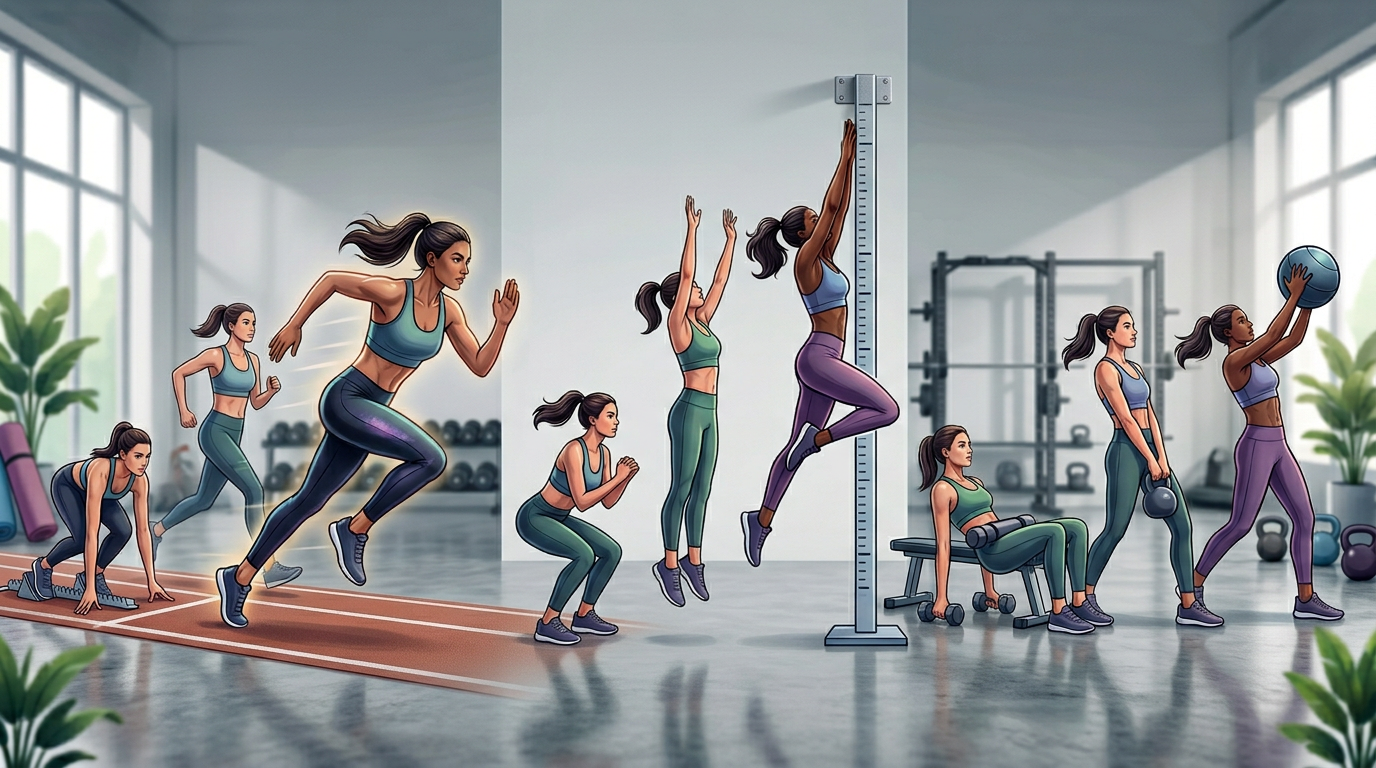
Infographic showing athletic performance improvements from hip thrust training including sprint speed, jump height, and power output metrics
Reducing Lower Back Pain and Improving Posture
Many women struggle with lower back discomfort, often stemming from weak glutes and poor hip extension patterns. When your glutes don't fire properly, other muscles compensate, particularly the lower back extensors. This compensation pattern leads to overwork, fatigue, and eventually pain.
Hip thrusts teach your glutes to activate correctly during hip extension, taking pressure off your lower back. As your glutes become stronger and more responsive, they assume their proper role in movement patterns, allowing your lower back to relax and function as a stabilizer rather than a prime mover.
The exercise also counteracts the effects of prolonged sitting. Modern lifestyles keep most women in hip flexion for hours daily, which shortens hip flexors and inhibits glute activation. Hip thrusts actively work against this pattern by strengthening hip extension and promoting better pelvic positioning.
Enhancing Bone Density in Critical Areas
Weight-bearing exercise is essential for maintaining and building bone density, particularly important for women who face increased osteoporosis risk with age. Hip thrusts load the hips, pelvis, and femur bones directly, providing the mechanical stress needed to stimulate bone remodeling and strengthening.
The hip and femur are common fracture sites in older women, making targeted strengthening in these areas particularly valuable. Starting a hip thrust practice in your twenties, thirties, or forties builds a foundation of bone strength that pays dividends for decades.
Hip Thrust Benefits for Fat Loss and Body Composition
A common question many women ask is: are hip thrusts good for belly fat? While no exercise directly targets fat in specific areas, hip thrusts contribute meaningfully to overall fat loss and improved body composition through several mechanisms.
Building Metabolically Active Muscle
Hip thrusts build significant muscle mass in the largest muscle group of your body. Muscle tissue is metabolically active, meaning it burns calories even at rest. By increasing your overall muscle mass, particularly in a large muscle group like the glutes, you elevate your resting metabolic rate.
This doesn't mean hip thrusts will magically melt belly fat, but they contribute to the overall caloric expenditure and metabolic environment that supports fat loss when combined with appropriate nutrition.
High Caloric Expenditure During Training
Heavy hip thrust sessions require substantial energy, burning significant calories during and after your workout. The exercise engages multiple large muscle groups simultaneously, creating metabolic demand that supports your fat loss goals. When performed with adequate intensity and volume, hip thrusts contribute meaningfully to your weekly caloric expenditure.
Improving Body Composition Beyond the Scale
Many women discover that hip thrust training changes their body shape and appearance even when the scale doesn't move dramatically. Building glute muscle while losing fat creates visible changes in body composition, improving proportions and creating the strong, athletic physique many women seek.
This recomposition effect is particularly valuable because it focuses on building strength and capability rather than simply pursuing weight loss. You become stronger, more powerful, and more confident while improving how you look and feel.
Why Hip Thrusts Are Popular Among Women
You might wonder why girls like to do hip thrusts when there are countless exercise options available. The answer goes beyond any single benefit and touches on the comprehensive value this movement provides.
Visible, Measurable Results
Hip thrusts deliver noticeable results relatively quickly. Women often report seeing and feeling changes in glute strength and development within four to six weeks of consistent training. This positive feedback reinforces commitment and makes the exercise rewarding to perform.
The ability to progressively load the movement also provides clear metrics for improvement. Tracking your hip thrust strength from month to month gives concrete evidence of progress, which is incredibly motivating.
Functional Strength That Transfers
Women appreciate exercises that make daily life easier, and hip thrusts excel in this area. The strength you build translates directly to real-world activities. Climbing stairs feels easier. Playing with children becomes less tiring. Hiking and outdoor activities become more enjoyable when you have the lower body power to tackle challenging terrain.
Inclusive and Adaptable
Hip thrusts work for women at every fitness level and body type. The exercise doesn't require exceptional flexibility, complex coordination, or advanced skills. Most women can learn proper form quickly and begin experiencing benefits immediately, then scale the movement as they progress.
- Bodyweight variations for absolute beginners
- Resistance band options for home training
- Dumbbell and barbell progressions for gym settings
- Single-leg variations for advanced practitioners
- Modifications for different mobility levels and physical limitations
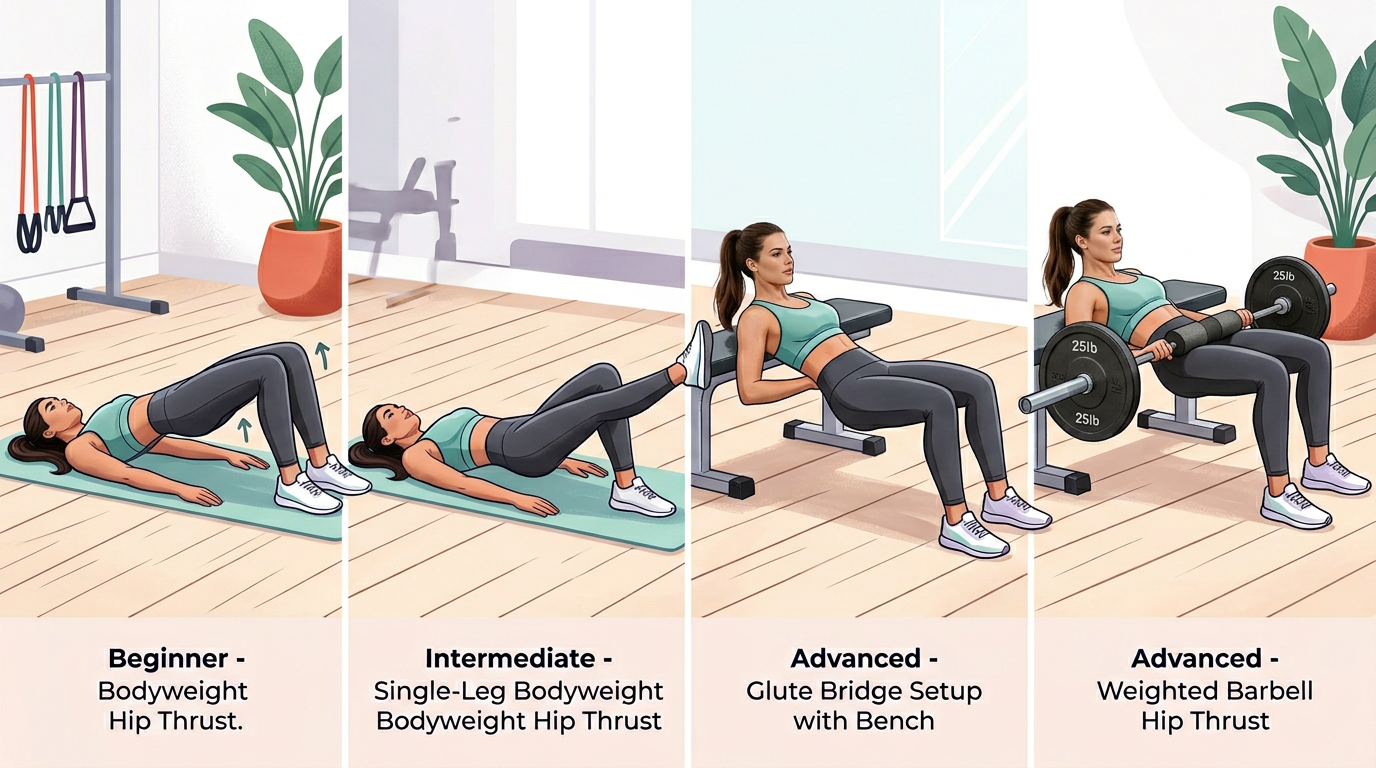
Progressive sequence showing hip thrust variations from bodyweight beginner version to advanced barbell hip thrust with proper form demonstrated
Understanding Hip Thrust Mechanics and Muscle Engagement
To maximize hip thrust benefits, it helps to understand exactly what's happening during the movement and which muscles are working.
Primary Muscles Worked
The gluteus maximus is the star of the hip thrust, receiving maximum activation throughout the movement. This large muscle extends your hip and drives the upward thrust against resistance. The gluteus medius and minimus also engage to stabilize your pelvis and prevent unwanted rotation or tilting.
Your hamstrings work as synergists, assisting with hip extension while also helping control the eccentric (lowering) portion of the movement. This dual engagement makes hip thrusts excellent for complete posterior chain development.
Core and Stabilizer Engagement
While hip thrusts primarily target the glutes, your core muscles work hard to maintain proper positioning throughout the movement. Your abdominals and obliques prevent excessive arching of your lower back, while your erector spinae maintain neutral spinal alignment.
Regarding whether hip thrust works spinal erectors: yes, these muscles engage isometrically to stabilize your spine during the movement. However, unlike squats or deadlifts, they work as stabilizers rather than prime movers, which means they're strengthened without being overloaded.
The Role of Hip Extension
Hip extension is the fundamental movement pattern in hip thrusts. Understanding this helps you focus on the right muscles and execute the movement correctly. At the bottom position, your hips are flexed. As you drive upward, you extend your hips by contracting your glutes and hamstrings, bringing your torso and thighs into alignment.
The peak contraction occurs at full hip extension, where your body forms a straight line from shoulders to knees. This top position is where your glutes work hardest, which is why holding the contraction briefly at the top of each rep enhances the training effect.
How to Incorporate Hip Thrusts Into Your Training Program
Understanding the best hip thrust benefits guide principles helps you implement this exercise effectively rather than randomly adding it to your routine.
Frequency and Volume Recommendations
For most women, performing hip thrusts two to three times per week provides optimal results. This frequency allows adequate recovery between sessions while providing enough training stimulus to drive adaptation. Your glutes are large, resilient muscles that can handle relatively high training volume.
A typical training session might include three to four sets of eight to twelve repetitions. As you become more advanced, you can experiment with different rep ranges: lower reps (four to six) with heavier weight for maximum strength, or higher reps (fifteen to twenty) with moderate weight for muscular endurance and metabolic stress.
Progression Strategies
Progressive overload is essential for continued improvement. This means gradually increasing the challenge your muscles face over time. For hip thrusts, you have several progression options:
- Increase the weight: Add five to ten pounds when you can complete all prescribed reps with good form
- Add repetitions: Perform more reps with the same weight before increasing load
- Improve tempo: Slow down the eccentric phase or add pauses at the top for increased time under tension
- Advance variations: Progress from double-leg to single-leg versions for greater challenge
- Increase training volume: Add an extra set or additional training session per week
Pairing Hip Thrusts with Other Exercises
Hip thrusts work beautifully as part of a comprehensive lower body program. They complement rather than replace other exercises. A balanced approach might include squats for quad development, Romanian deadlifts for hamstring emphasis, and hip thrusts for glute focus.
Many women find success with upper/lower training splits where hip thrusts anchor one or both lower body sessions. Others prefer full-body routines where hip thrusts appear two or three times weekly alongside other compound movements.
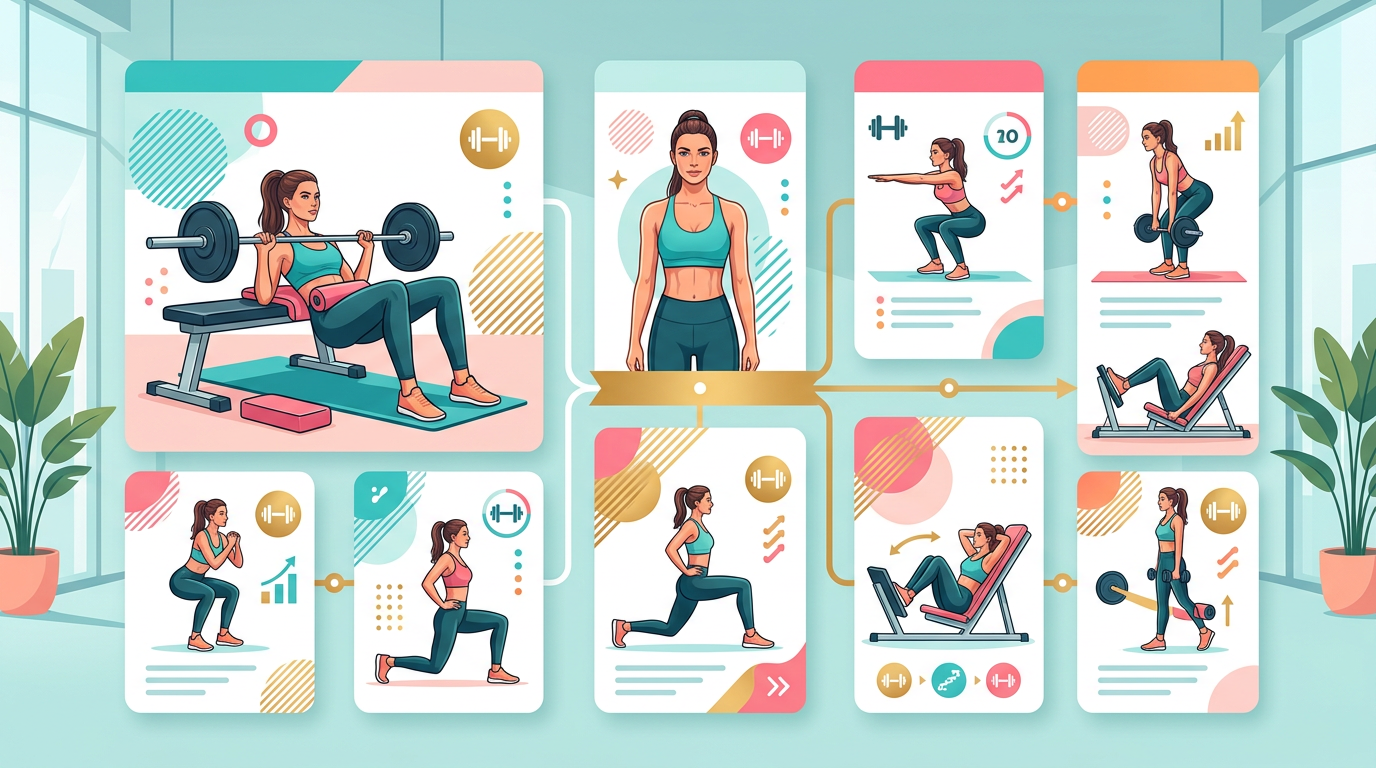
Sample weekly training program layout showing how to incorporate hip thrusts with other exercises for balanced lower body development
Common Hip Thrust Mistakes and How to Avoid Them
Maximizing hip thrust benefits tips requires proper execution. Several common errors can limit your results or increase injury risk.
Hyperextending the Lower Back
The most frequent mistake is arching the lower back excessively at the top of the movement rather than achieving hip extension through glute contraction. This error shifts work away from your glutes and places unnecessary stress on your lumbar spine.
To avoid this, think about tucking your ribcage down toward your pelvis at the top position. Your spine should remain neutral, with the movement occurring entirely at your hips. If you feel your lower back working hard, you're likely hyperextending rather than properly extending your hips.
Inadequate Range of Motion
Some women perform partial reps, failing to achieve full hip extension at the top or adequate depth at the bottom. Full range of motion ensures complete muscle activation and optimal training stimulus.
At the bottom, your hips should descend until your glutes lightly touch the floor (or come close). At the top, your torso and thighs should form a straight line with your hips fully extended. This complete range of motion maximizes the stretch-contraction cycle and glute engagement.
Incorrect Foot Positioning
Foot placement significantly affects which muscles work during hip thrusts. Feet too close to your body shift emphasis toward quads. Feet too far away engage hamstrings more heavily. For optimal glute activation, position your feet so that when your hips are fully extended, your shins are roughly vertical.
Experiment with foot width as well. Most women find a hip-width or slightly wider stance works best, but individual anatomy varies. Pay attention to where you feel the strongest glute contraction and adjust accordingly.
Rushing Through Repetitions
Hip thrusts are most effective when performed with control rather than momentum. Rushing through reps reduces time under tension and diminishes the training effect. Aim for a controlled two-second lowering phase, a brief pause at the bottom, an explosive one-second lift, and a one-second squeeze at the top.
Hip Thrust Variations for Different Goals and Fitness Levels
The versatility of hip thrusts means you can modify the exercise to match your current abilities and specific objectives. Understanding hip thrust benefits results across different variations helps you choose the right option.
Bodyweight Hip Thrusts
Perfect for beginners or warm-ups, bodyweight hip thrusts teach proper movement patterns without external load. Focus on feeling your glutes contract and maintaining neutral spine alignment. These work excellently for higher rep sets (fifteen to twenty-five reps) to build muscular endurance and movement proficiency.
Banded Hip Thrusts
Resistance bands add progressive tension throughout the movement, with maximum resistance at full hip extension where your glutes are strongest. This matches your strength curve beautifully. Banded variations are ideal for home training or as a progression from bodyweight before advancing to weighted versions.
Barbell Hip Thrusts
Barbell hip thrusts allow the greatest loading potential, making them ideal for building maximum strength and muscle mass. Use a padded bar or place a squat pad or towel across your hips for comfort. This variation is the gold standard for women seeking serious glute development and strength gains.
Single-Leg Hip Thrusts
Advanced practitioners can progress to single-leg variations, which dramatically increase the challenge while addressing any strength imbalances between sides. These require significant stability and control but offer excellent benefits for athletic performance and functional strength.
- Elevated single-leg hip thrusts for maximum range of motion
- Banded single-leg variations for home training
- Bodyweight single-leg holds for stability and endurance
- Weighted single-leg progressions for advanced strength development
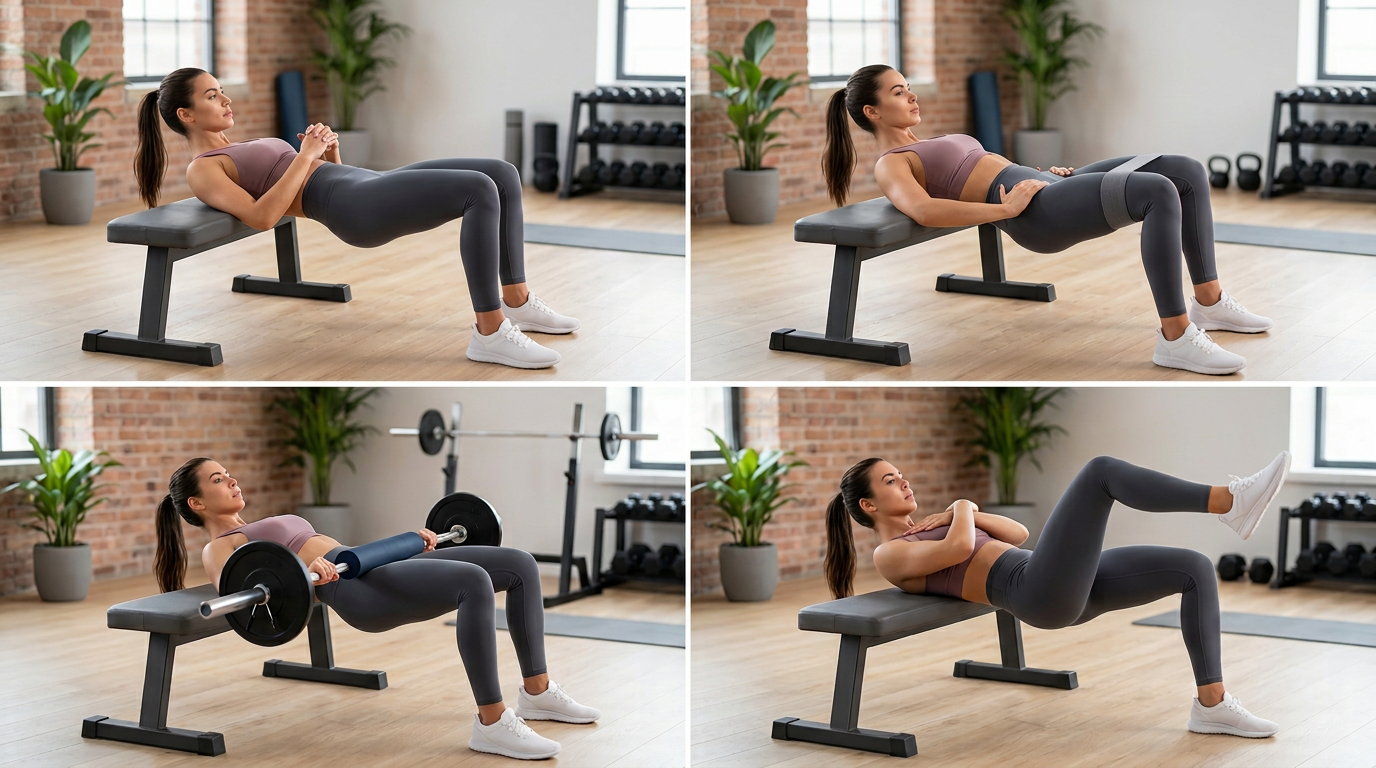
Four-panel demonstration showing proper form for bodyweight, banded, barbell, and single-leg hip thrust variations
Tracking Progress and Measuring Hip Thrust Benefits Results
Monitoring your progress keeps you motivated and helps you make informed adjustments to your training program. Hip thrusts lend themselves well to objective measurement.
Strength Metrics
The most straightforward metric is the weight you can lift for a given rep range. Track your working weight for sets of eight to ten reps, testing periodically to assess progress. Many women find they can increase their hip thrust weight substantially in the first few months of training, with gains of fifty to one hundred pounds being common in the first year.
Performance Improvements
Notice how hip thrust training affects other activities. Are you running faster? Jumping higher? Climbing stairs more easily? These functional improvements demonstrate that your training is translating to real-world benefits.
Physical Changes
While not the only measure of success, visible changes in glute development and overall body composition can be motivating. Progress photos taken monthly from consistent angles provide objective visual feedback. Measurements of hip circumference can also track muscle development, though remember that building muscle while losing fat might not change measurements dramatically even as body composition improves significantly.
Movement Quality
Pay attention to how hip thrusts feel over time. As your glutes become stronger and more responsive, you'll likely notice better mind-muscle connection, smoother movement patterns, and improved control throughout the range of motion. These qualitative improvements are valuable indicators of progress.
Frequently Asked Questions
What are hip thrusts good for?
Hip thrusts are excellent for building glute strength, improving athletic performance, reducing lower back pain, and enhancing hip extension power. They activate the gluteus maximus more effectively than squats or lunges while minimizing spinal loading. This makes them ideal for women seeking functional lower body strength and improved posture.
Are hip thrusts good for belly fat?
Hip thrusts don't directly target belly fat, as spot reduction isn't possible. However, they build metabolically active muscle mass and burn significant calories during training, supporting overall fat loss when combined with proper nutrition. The exercise contributes to improved body composition by increasing muscle while creating conditions favorable for fat loss.
Why do girls like to do hip thrusts?
Women appreciate hip thrusts because they deliver visible results quickly, improve functional strength for daily activities, and accommodate all fitness levels. The exercise provides clear progress metrics through weight increases and builds confidence through measurable strength gains. Hip thrusts also address common goals like glute development and improved athletic performance effectively.
Does hip thrust work spinal erectors?
Hip thrusts engage spinal erectors isometrically as stabilizers to maintain neutral spine alignment during the movement. Unlike squats or deadlifts, the spinal erectors work to prevent movement rather than create it, strengthening them without excessive loading. This stabilization role helps improve core strength and spinal stability safely.
How often should women do hip thrusts?
Most women benefit from performing hip thrusts two to three times weekly with at least one rest day between sessions. This frequency provides adequate training stimulus while allowing proper recovery. Perform three to four sets of eight to twelve repetitions per session, adjusting volume based on your fitness level and recovery capacity.
Can beginners do hip thrusts?
Beginners can absolutely perform hip thrusts, starting with bodyweight variations to learn proper form and movement patterns. The exercise doesn't require advanced coordination or exceptional flexibility. Progress gradually by adding resistance bands, then dumbbells, and eventually barbells as strength and confidence increase over several weeks.
What weight should I use for hip thrusts?
Start with bodyweight to master form, then add weight that allows eight to twelve controlled repetitions with proper technique. Many women progress to using their bodyweight or more within several months. Focus on gradual increases of five to ten pounds when you can complete all reps with excellent form rather than rushing to heavy loads.
The hip thrust benefits for women extend far beyond building stronger glutes. This powerful exercise improves athletic performance, reduces injury risk, enhances functional strength for daily activities, and contributes to better body composition. The movement's unique biomechanics provide superior glute activation while minimizing spinal stress, making it accessible and effective for women at all fitness levels.
Whether you're just beginning your strength training journey or looking to break through a plateau, incorporating hip thrusts into your routine delivers measurable improvements in strength, power, and overall lower body development. The exercise scales beautifully from bodyweight variations to heavily loaded barbell movements, ensuring continuous challenge and progress as you grow stronger.
Start with proper form using bodyweight or light resistance, focus on feeling your glutes work throughout the movement, and progressively increase the challenge as your strength improves.