Hamstring stretches are exercises that lengthen the muscles at the back of your thighs to improve flexibility and reduce injury risk. The best hamstring stretches for women include standing forward folds, seated hamstring stretches, supine leg stretches, downward dog, and dynamic leg swings, each targeting different aspects of hamstring flexibility for optimal results.
5 Best Hamstring Stretches for Women's Flexibility
Have you ever felt that frustrating tightness in the back of your thighs when bending down to tie your shoes or reaching for your toes? You're not alone. Tight hamstrings affect countless women, limiting mobility, contributing to lower back pain, and hindering workout performance. Whether you're a dedicated gym-goer or just starting your fitness journey, understanding and implementing effective hamstring stretches can transform your flexibility and overall movement quality.
Your hamstrings are three powerful muscles running along the back of each thigh, connecting your pelvis to your lower leg. They're essential for walking, running, jumping, and nearly every lower body movement. Yet they're also prone to tightness from prolonged sitting, intense training, or simply lack of regular stretching. This comprehensive guide will walk you through the best hamstring stretches specifically designed for women's bodies, helping you build the flexibility you need to move with confidence and strength.
In this article, you'll discover five proven hamstring stretches that work, complete with step-by-step instructions, modifications for all fitness levels, and expert tips to maximize your results. We'll also explore how these stretches can address common concerns like sciatica relief and overall wellness benefits.
Key Takeaways
- Hamstring flexibility improves overall mobility, reduces lower back pain, and enhances workout performance
- Consistent stretching for 20-30 seconds per stretch, 3-4 times weekly, delivers the best results
- Proper form matters more than depth—never bounce or force a stretch beyond mild discomfort
- Dynamic stretches work best before workouts, while static stretches are ideal for post-workout or dedicated flexibility sessions
- Progressive improvement takes time—expect noticeable flexibility gains within 4-6 weeks of consistent practice
Understanding Your Hamstrings and Why They Get Tight
Before diving into the best hamstring stretches, it's important to understand what you're working with. Your hamstring muscle group consists of three distinct muscles: the biceps femoris, semitendinosus, and semimembranosus. These muscles work together to bend your knee and extend your hip, playing a crucial role in nearly every lower body movement.
Why Women Experience Hamstring Tightness
Several factors contribute to tight hamstrings in women. Prolonged sitting throughout the workday keeps hamstrings in a shortened position for hours, causing them to adapt by becoming less flexible. Additionally, intense lower body training without adequate stretching, wearing high heels regularly, and even hormonal fluctuations can affect muscle flexibility.
Pelvic anatomy also plays a role. Women's wider pelvic structure can create different biomechanical demands on the hamstrings compared to men, making targeted flexibility work even more important for balanced movement patterns.
The Benefits of Flexible Hamstrings
Improving hamstring flexibility offers benefits that extend far beyond touching your toes. Flexible hamstrings reduce strain on your lower back, improve posture, enhance athletic performance, and decrease injury risk during squats, deadlifts, and other compound movements. They also support better hip mobility, which is essential for proper squat depth and glute activation—key components of effective strength training for women.
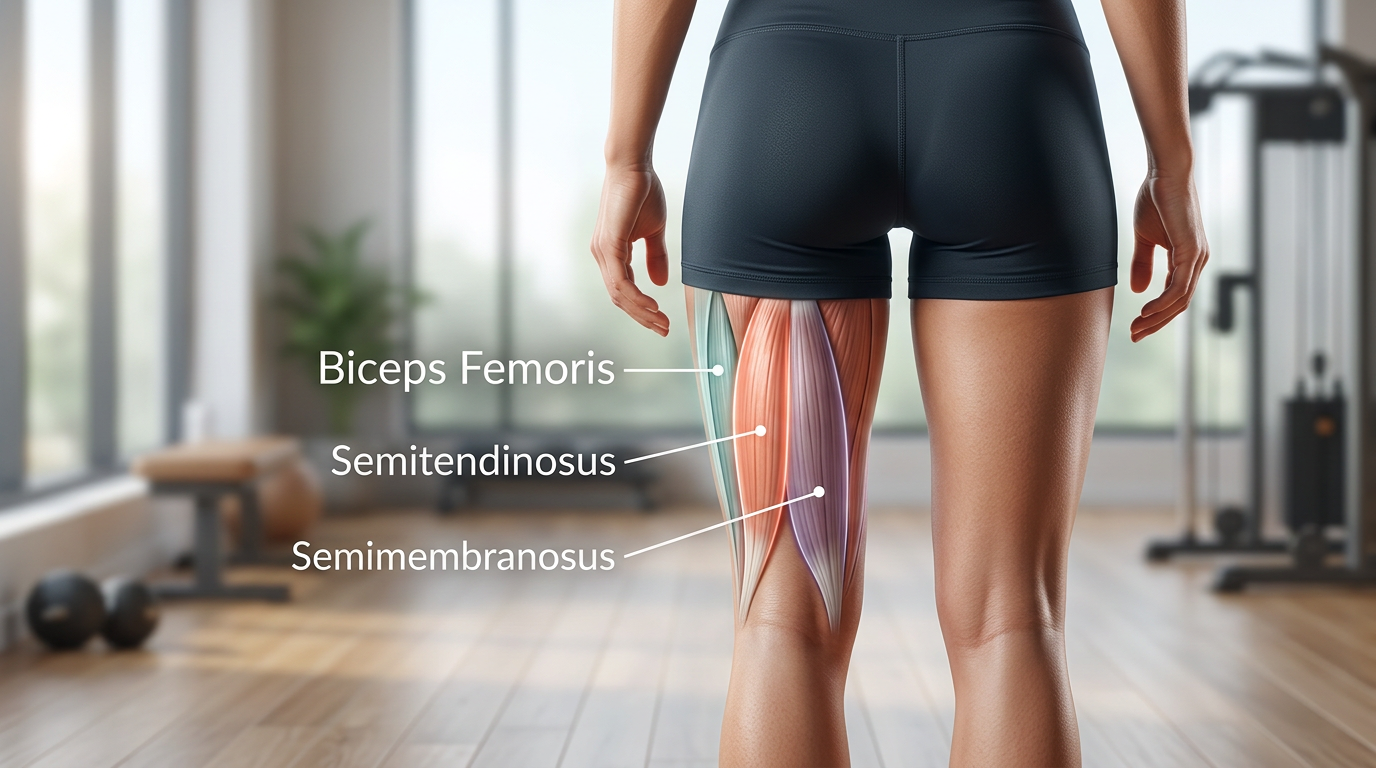
Anatomical illustration showing the three hamstring muscles (biceps femoris, semitendinosus, semimembranosus) highlighted on the back of a woman's thigh with labels
How to Approach Hamstring Stretches Safely
Safety and proper technique form the foundation of effective stretching. Understanding how to stretch correctly prevents injury and accelerates your flexibility gains.
Static vs. Dynamic Stretching
Two main stretching approaches serve different purposes. Static stretching involves holding a position for 20-60 seconds, ideal for post-workout flexibility work or dedicated stretching sessions. Dynamic stretching uses controlled movements through your range of motion, perfect for warming up before exercise.
Research supports using dynamic stretches before workouts to prepare muscles for activity, while static stretches work best after training when muscles are warm and pliable. This timing optimization helps you get maximum benefit from your stretching routine.
Essential Stretching Guidelines
Follow these evidence-based principles for safe, effective hamstring stretches:
- Always warm up with 5-10 minutes of light cardio before static stretching
- Breathe deeply and continuously—never hold your breath during stretches
- Aim for mild tension, not pain—you should feel a gentle pull, not sharp discomfort
- Hold static stretches for 20-30 seconds, repeating 2-3 times per side
- Progress gradually—forcing flexibility gains leads to injury, not improvement
- Maintain consistency with 3-4 stretching sessions weekly for optimal results
When to Avoid Aggressive Stretching
Certain situations require modified or gentler approaches. If you're recovering from a hamstring strain, experiencing acute lower back pain, or dealing with sciatica flare-ups, consult a healthcare provider before aggressive stretching. Pregnancy also affects flexibility and joint stability, so modifications may be necessary.
1. Standing Forward Fold (Uttanasana)
The standing forward fold ranks among the most accessible and effective hamstring stretches for women at any fitness level. This classic yoga pose stretches your entire posterior chain while offering the flexibility to modify intensity based on your current flexibility.
To perform a standing forward fold, stand with feet hip-width apart and knees slightly bent. Hinge at your hips (not your waist) and fold forward, letting your upper body hang heavy. Allow your arms to dangle or hold opposite elbows. The key is maintaining length in your spine rather than rounding your back to reach lower—proper form trumps depth every time.
For beginners, keep a generous bend in your knees and place your hands on yoga blocks or your shins. As flexibility improves, gradually straighten your legs while maintaining that hip hinge. Advanced practitioners can work toward placing palms flat on the floor beside their feet.
Hold this position for 30-60 seconds, breathing deeply into the stretch. You should feel a gentle pull along the back of your thighs and potentially into your calves and lower back. If you experience sharp pain or tingling down your legs, ease off immediately.
Pros
- Requires no equipment and can be done anywhere
- Stretches entire posterior chain including hamstrings, calves, and back
- Easily modified for all flexibility levels
- Promotes spinal decompression and stress relief
Cons
- Can cause dizziness when standing up if held too long
- May aggravate lower back issues if performed with poor form
- Not ideal immediately after waking when muscles are stiffest
2. Supine Hamstring Stretch with Strap
The supine hamstring stretch offers exceptional control and safety, making it ideal for beginners or anyone recovering from injury. Lying on your back removes balance concerns and allows you to focus entirely on the stretch itself.
Lie flat on your back with both legs extended. Loop a yoga strap, resistance band, or even a towel around the ball of one foot. Keeping that leg as straight as comfortable, use the strap to gently pull your leg toward your chest. Your opposite leg can remain extended on the floor or bent with foot flat for lower back comfort.
The beauty of this stretch lies in your complete control over intensity—simply adjust how firmly you pull the strap to increase or decrease the stretch. Keep your shoulders relaxed on the floor and avoid letting your hips lift or twist. Your raised leg should track straight up toward the ceiling, not angling inward or outward.
Hold for 30 seconds per leg, completing 2-3 repetitions. This stretch works beautifully as part of a post-workout cool-down or evening flexibility routine. Many women find this position particularly comfortable for longer holds, making it excellent for developing flexibility over time.
Pros
- Provides excellent control and safety for all levels
- Eliminates balance challenges of standing stretches
- Allows precise adjustment of stretch intensity
- Comfortable position for longer holds
Cons
- Requires a strap, band, or towel
- Less functional than standing stretches
- May feel awkward when done in public spaces like gyms
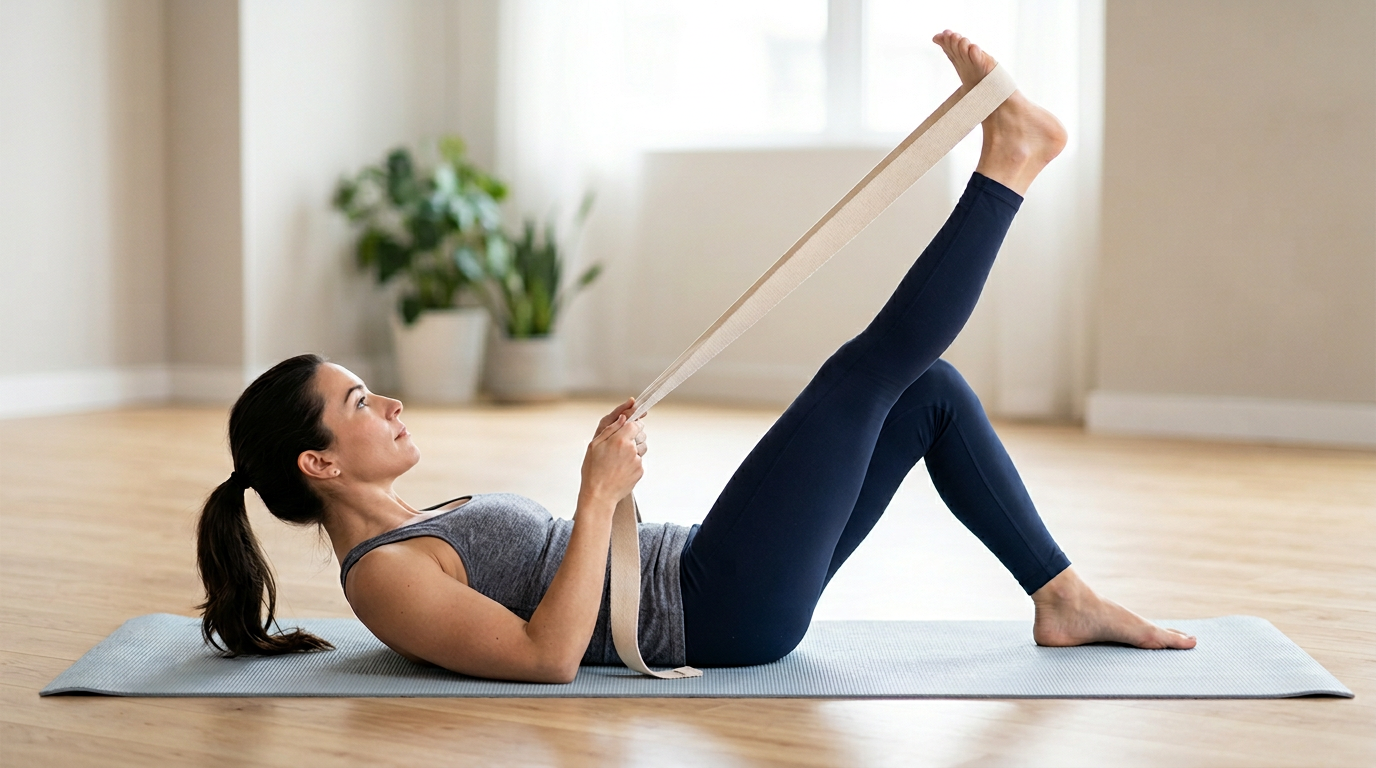
Woman lying on yoga mat demonstrating supine hamstring stretch with yoga strap around foot, one leg raised straight toward ceiling, proper form shown from side angle
3. Seated Forward Fold (Paschimottanasana)
The seated forward fold provides a deep, sustained hamstring stretch while simultaneously working your lower back flexibility. This position allows you to relax into the stretch, making it perfect for longer holds during dedicated flexibility sessions.
Sit on the floor with both legs extended straight in front of you, feet flexed. Sit tall, lengthening your spine before you begin folding. Hinge at your hips and reach your hands toward your feet, shins, or thighs—wherever you can reach with good form. The goal isn't touching your toes but rather maintaining a long spine as you fold forward.
If sitting with straight legs feels too intense, try these modifications: sit on a folded blanket or yoga block to elevate your hips, place a rolled towel under your knees for support, or keep a slight bend in your knees. Proper alignment with modified depth delivers better results than poor form with impressive-looking depth.
Breathe deeply and hold for 30-60 seconds. With each exhale, you might find you can fold slightly deeper, but never force the movement. This stretch works wonderfully as part of an evening wind-down routine, helping release the day's accumulated tension.
Pros
- Stretches both hamstrings simultaneously for time efficiency
- Calming position ideal for stress relief and meditation
- No equipment required beyond comfortable flooring
- Easy to incorporate into yoga or flexibility routines
Cons
- Can be uncomfortable for those with very tight hamstrings
- Requires adequate floor space
- May strain lower back if performed with rounded spine
4. Downward-Facing Dog (Adho Mukha Svanasana)
Downward dog transcends its yoga origins to become one of the most versatile hamstring stretches available. This dynamic position stretches your hamstrings while building upper body strength and promoting full-body awareness.
Start on hands and knees in a tabletop position. Tuck your toes and lift your hips up and back, forming an inverted V-shape with your body. Your hands should be shoulder-width apart, fingers spread wide, and feet hip-width apart. Press your chest toward your thighs while reaching your heels toward the floor—though they don't need to touch.
Here's the key modification that makes this stretch work for various flexibility levels: bend your knees generously if needed. Maintaining a long, neutral spine with bent knees delivers more hamstring benefit than straight legs with a rounded back. You can also pedal your feet, alternating bending one knee while pressing the opposite heel down, creating a dynamic stretch.
Hold for 30-60 seconds, or incorporate it into a flowing sequence where you move in and out of the pose. This stretch works excellently as part of a warm-up routine, combining flexibility work with active muscle engagement.
Pros
- Stretches multiple muscle groups including hamstrings, calves, and shoulders
- Builds upper body and core strength simultaneously
- Can be dynamic or static depending on your needs
- Integrates seamlessly into yoga or mobility flows
Cons
- Requires adequate wrist and shoulder mobility
- Can be challenging for beginners to find proper alignment
- Not suitable for those with wrist injuries or carpal tunnel
5. Dynamic Leg Swings
Dynamic leg swings represent the perfect pre-workout hamstring stretch, warming up your muscles while improving flexibility through active movement. Unlike static stretches, leg swings prepare your nervous system for activity while taking your hamstrings through their full range of motion.
Stand beside a wall or sturdy surface for light balance support. Keeping your standing leg slightly bent and your core engaged, swing one leg forward and back in a controlled motion. Start with small swings and gradually increase the range as your muscles warm up. Your leg should swing from hip flexion (leg in front) to hip extension (leg behind), engaging and stretching your hamstrings throughout the movement.
Control matters more than height—focus on smooth, controlled swings rather than forcing your leg as high as possible. Keep your torso relatively still, avoiding excessive leaning or twisting. Perform 10-15 swings per leg, completing 2-3 sets.
For variety, add lateral leg swings (side to side) to target your inner and outer thighs alongside your hamstrings. This comprehensive approach prepares your entire lower body for training. Dynamic leg swings work perfectly before running, lower body strength training, or any activity requiring hip mobility.
Pros
- Ideal pre-workout warm-up that prepares muscles for activity
- Improves dynamic flexibility and movement control
- Requires minimal space and no equipment
- Builds hip mobility and core stability simultaneously
Cons
- Requires balance and coordination
- Less effective for developing long-term static flexibility
- May look awkward in crowded gym spaces
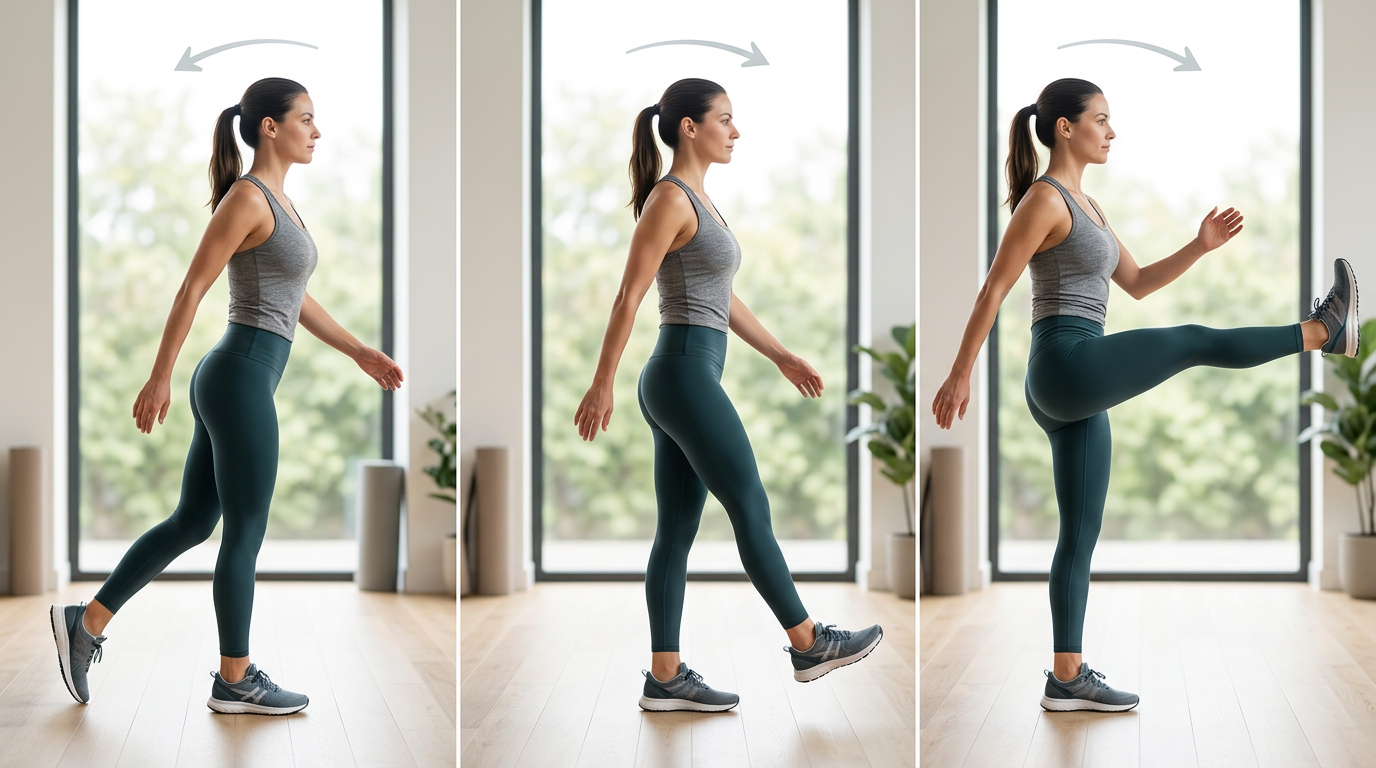
Side-view demonstration sequence showing woman performing dynamic leg swings with proper form, showing three positions of the swing motion from back to forward
Creating Your Hamstring Stretching Routine
Understanding individual stretches is just the beginning. Building an effective routine that fits your schedule and goals determines your long-term success with hamstring flexibility.
Pre-Workout Hamstring Preparation
Before lower body training or running, prioritize dynamic stretches that warm up your muscles without reducing power output. A simple pre-workout sequence might include:
- 5 minutes of light cardio (walking, cycling, or jumping jacks)
- Dynamic leg swings: 10-15 reps per leg, 2 sets
- Walking lunges with a reach: 10 per leg
- Downward dog with pedaling feet: 30 seconds
This approach prepares your hamstrings for activity without the temporary strength reduction that can follow prolonged static stretching before training.
Post-Workout Flexibility Development
After training, when muscles are warm and pliable, focus on static stretches to build long-term flexibility. Post-workout represents the ideal time for flexibility gains because elevated muscle temperature increases tissue extensibility. Try this sequence:
- Supine hamstring stretch with strap: 30 seconds per leg, 2-3 sets
- Seated forward fold: 45-60 seconds, 2 sets
- Standing forward fold: 30-45 seconds, 2 sets
Dedicated Flexibility Sessions
For maximum flexibility improvements, schedule 2-3 dedicated stretching sessions weekly, separate from your workouts. These 15-20 minute sessions allow you to hold stretches longer and work through all five stretches with full attention to form and breath work.
Common Hamstring Stretching Mistakes to Avoid
Even with the best intentions, certain mistakes can limit your progress or increase injury risk. Recognizing and correcting these common errors accelerates your flexibility journey.
Bouncing or Forcing Stretches
Ballistic stretching—bouncing to force greater depth—triggers your muscle's protective stretch reflex, actually limiting flexibility gains while increasing injury risk. Smooth, sustained stretches with controlled breathing allow your nervous system to relax into the stretch, delivering superior results. If you feel the urge to bounce, you're likely pushing too hard too fast.
Holding Your Breath
Breath holding creates tension throughout your body, counteracting the relaxation necessary for effective stretching. Instead, practice deep belly breathing: inhale for 4 counts, exhale for 6 counts. This breathing pattern activates your parasympathetic nervous system, helping muscles release tension and lengthen more effectively.
Neglecting Consistency
Sporadic stretching delivers sporadic results. Flexibility develops through consistent practice over weeks and months, not occasional intense sessions. Even 10 minutes of daily stretching outperforms hour-long sessions once monthly. Build stretching into your routine like brushing your teeth—a non-negotiable daily practice.
Ignoring Pain Signals
Stretching should create mild tension or discomfort, never sharp pain. Pain indicates you've exceeded your current safe range of motion. Back off immediately if you experience shooting pain, numbness, tingling, or pain that worsens rather than eases during the stretch. Progressive improvement requires working at your edge, not beyond it.
Addressing Specific Concerns with Hamstring Stretches
Hamstring flexibility work offers benefits beyond simple flexibility, addressing several common concerns women face.
Hamstring Stretches for Lower Back Pain
Tight hamstrings contribute significantly to lower back pain by pulling on your pelvis and affecting spinal alignment. When hamstrings are chronically tight, they tilt your pelvis posteriorly, flattening your lower back's natural curve and creating compensatory stress on spinal structures.
Improving hamstring flexibility often provides noticeable lower back pain relief within weeks. The supine hamstring stretch with strap works particularly well for this purpose, as the supported position prevents additional back strain while stretching. Combine hamstring work with hip flexor stretches for comprehensive pelvic balance.
Can Hamstring Stretches Help Sciatica?
Sciatica—pain radiating down your leg along the sciatic nerve—sometimes responds well to gentle hamstring stretching, though the relationship is complex. Tight hamstrings can contribute to sciatic nerve compression, and careful stretching may provide relief for some women.
However, aggressive stretching can aggravate sciatica if nerve irritation is the primary issue. If you experience sciatica, start with very gentle supine stretches, never pushing into pain. If stretching increases leg pain, numbness, or tingling, stop immediately and consult a healthcare provider. Sciatica requires proper diagnosis to ensure appropriate treatment.
Hamstring Flexibility for Better Workouts
Improved hamstring flexibility directly enhances workout performance, particularly for lower body exercises. Better hamstring length allows deeper squat depth, improving glute activation and overall leg development. It also supports proper deadlift form, reducing injury risk while allowing you to lift heavier weights safely.
For runners, flexible hamstrings contribute to longer stride length and reduced injury risk. The dynamic interplay between hamstring flexibility and strength creates optimal movement patterns for athletic performance.
Tracking Your Flexibility Progress
Measuring progress keeps you motivated and helps you identify what's working in your routine.
Simple Flexibility Tests
The sit-and-reach test provides a straightforward flexibility benchmark. Sit with legs extended and feet against a wall. Reach forward with arms extended, noting where your fingertips land relative to your toes. Retest monthly to track improvement. Remember, absolute numbers matter less than your personal progress over time.
Another useful assessment: stand and perform a standing forward fold, noting how close your hands come to the floor. Take photos monthly from the same angle to visualize your progress—sometimes improvements feel subtle but look dramatic in comparison photos.
Setting Realistic Expectations
Flexibility improvements follow a predictable timeline with consistent practice. Most women notice initial improvements within 2-3 weeks—movements feel slightly easier, stretches reach a bit deeper. Significant changes typically emerge around 4-6 weeks, with continued progress over months.
Age, genetics, and training history all influence your flexibility baseline and improvement rate, so avoid comparing yourself to others. Focus on your personal progress and celebrate small wins along the way.
Which Hamstring Stretch Is Best For You?
Choosing the right hamstring stretches depends on your current fitness level, goals, and lifestyle. Here's how to match stretches to your situation:
For Complete Beginners
Start with the supine hamstring stretch with strap. This position offers maximum control and safety while you develop body awareness and learn proper stretching sensations. Combine it with the standing forward fold with bent knees for a simple, effective routine.
For Pre-Workout Preparation
Dynamic leg swings are your best choice before training. They warm up your hamstrings without temporarily reducing strength, preparing your nervous system for activity. Add downward dog with pedaling feet for comprehensive lower body preparation.
For Post-Workout Flexibility
The seated forward fold and standing forward fold work beautifully after training when muscles are warm. These static stretches capitalize on elevated muscle temperature to develop long-term flexibility gains.
For Desk Workers with Tight Hamstrings
If prolonged sitting is your primary challenge, prioritize the standing forward fold and supine hamstring stretch. Perform brief standing forward folds every 2-3 hours during your workday to counteract sitting's effects, then dedicate 10-15 minutes to supine stretches each evening.
For Advanced Practitioners
If you already have good flexibility, focus on downward dog and more advanced variations of the seated forward fold. Work on holding stretches longer (60-90 seconds) and exploring deeper variations while maintaining perfect form.
Frequently Asked Questions
What is the fastest way to loosen tight hamstrings?
The fastest approach combines gentle dynamic stretches like leg swings to warm muscles, followed by static holds of 30-60 seconds in positions like the supine hamstring stretch. Consistency matters more than intensity—daily 10-minute sessions deliver better results than occasional long sessions. Avoid forcing depth, which triggers protective muscle tension.
What stretches are best for hamstrings?
The most effective hamstring stretches include supine stretches with a strap for control, standing forward folds for accessibility, seated forward folds for deep static stretching, downward dog for dynamic flexibility, and leg swings for pre-workout preparation. Choose based on your goals: dynamic stretches before workouts, static stretches afterward or during dedicated flexibility sessions.
Do hamstring stretches help sciatica?
Gentle hamstring stretches may help some sciatica cases by reducing nerve compression from tight muscles. However, aggressive stretching can worsen symptoms if nerve irritation is severe. Start with very gentle supine stretches, never pushing into pain. If stretching increases leg pain, numbness, or tingling, stop immediately and consult a healthcare provider for proper diagnosis.
How long should I hold a hamstring stretch?
Hold static hamstring stretches for 20-30 seconds to start, working up to 45-60 seconds as flexibility improves. Repeat each stretch 2-3 times per session. Research shows that holding stretches beyond 60 seconds offers minimal additional benefit for most people, so focus on consistency and proper form rather than excessive duration.
Can stretching lower blood pressure?
Regular stretching routines may contribute to modest blood pressure reductions by promoting relaxation and reducing arterial stiffness. The effect is generally small but can complement other healthy lifestyle practices. Stretching activates the parasympathetic nervous system, which helps regulate blood pressure. However, stretching should not replace medical treatment for hypertension.
Should I stretch my hamstrings every day?
Daily hamstring stretching is safe and beneficial for most women, particularly if you sit extensively or train intensely. Aim for at least 10 minutes daily for optimal flexibility development. However, if you experience muscle soreness, take a rest day or reduce intensity. Listen to your body and adjust frequency based on how you feel and recover.
Why are my hamstrings always tight even after stretching?
Persistent hamstring tightness despite stretching often indicates weak glutes or core muscles, causing hamstrings to overwork and remain tense. Anterior pelvic tilt, prolonged sitting, or nerve tension can also create chronic tightness. Address the root cause by strengthening glutes, improving posture, and combining stretching with strength training for lasting flexibility improvements.
Conclusion
Developing flexible hamstrings transforms your movement quality, workout performance, and overall comfort in daily activities. The five hamstring stretches covered in this guide—standing forward folds, supine stretches with straps, seated forward folds, downward dog, and dynamic leg swings—provide a comprehensive toolkit for building the flexibility you need. Remember that consistency trumps intensity, proper form matters more than depth, and progressive improvement unfolds over weeks and months, not days.
Start with just one or two stretches that match your current fitness level and goals, then build from there. Whether you're preparing for a workout with dynamic leg swings or winding down your evening with a gentle seated forward fold, each session contributes to your flexibility journey. Your hamstrings will respond to regular attention with improved length, reduced tightness, and better movement patterns that support all your fitness goals.
Track your progress monthly, celebrate small improvements, and trust the process. With patient, consistent practice of these proven hamstring stretches, you'll build the flexibility foundation that supports stronger workouts, reduced injury risk, and confident movement in everything you do.