Does Pilates Count as Strength Training for Women?
Pilates counts as strength training because it uses resistance to build muscle endurance and functional strength. While it differs from traditional weightlifting in intensity and approach, Pilates effectively strengthens muscles through controlled movements, bodyweight resistance, and progressive challenge, making it a legitimate strength-building modality for women at all fitness levels.
You've probably seen the Pilates studios popping up everywhere, watched the reformer videos on social media, and heard friends rave about their core strength. But if you're serious about building strength, you might be wondering: does pilates count as strength training, or should you be hitting the weight rack instead?
This question matters because your time is valuable, and you want to invest it in workouts that deliver real results. The answer isn't as simple as yes or no—it depends on your goals, current fitness level, and how you define strength training. Understanding where Pilates fits in your strength-building journey empowers you to make informed decisions about your workout routine.
In this comprehensive guide, we'll break down the science behind Pilates as strength training, compare it to traditional resistance training, explore who benefits most from this approach, and help you determine whether Pilates alone can meet your strength goals or if you need to supplement it with other training methods.
Key Takeaways
- Pilates builds muscular endurance and functional strength through controlled resistance movements, qualifying it as a form of strength training
- Traditional weightlifting typically produces greater muscle hypertrophy and maximal strength gains than Pilates alone
- Combining Pilates with resistance training creates a balanced approach that addresses both functional movement patterns and progressive overload
- Pilates excels at core stability, mind-muscle connection, and injury prevention—valuable components of any strength program
- Your strength goals determine whether Pilates alone suffices or should complement heavier resistance work
Understanding What Qualifies as Strength Training
Before we can answer whether does pilates count as strength training, we need to establish what strength training actually means. Many women assume strength training only happens with barbells and dumbbells, but the definition is broader than that.
The Core Principles of Strength Training
Strength training is any exercise that uses resistance to create muscular tension, causing muscle fibers to adapt and become stronger over time. This resistance can come from various sources: free weights, machines, resistance bands, or your own bodyweight.
The key principles that define effective strength training include:
- Progressive overload: Gradually increasing the challenge to continue stimulating adaptation
- Muscular tension: Creating sufficient stress on muscle fibers to trigger growth and strength gains
- Mechanical damage: Controlled muscle fiber breakdown that repairs stronger
- Metabolic stress: The accumulation of metabolic byproducts that signal muscle growth
- Specificity: Training adaptations that match the type of resistance and movement patterns used
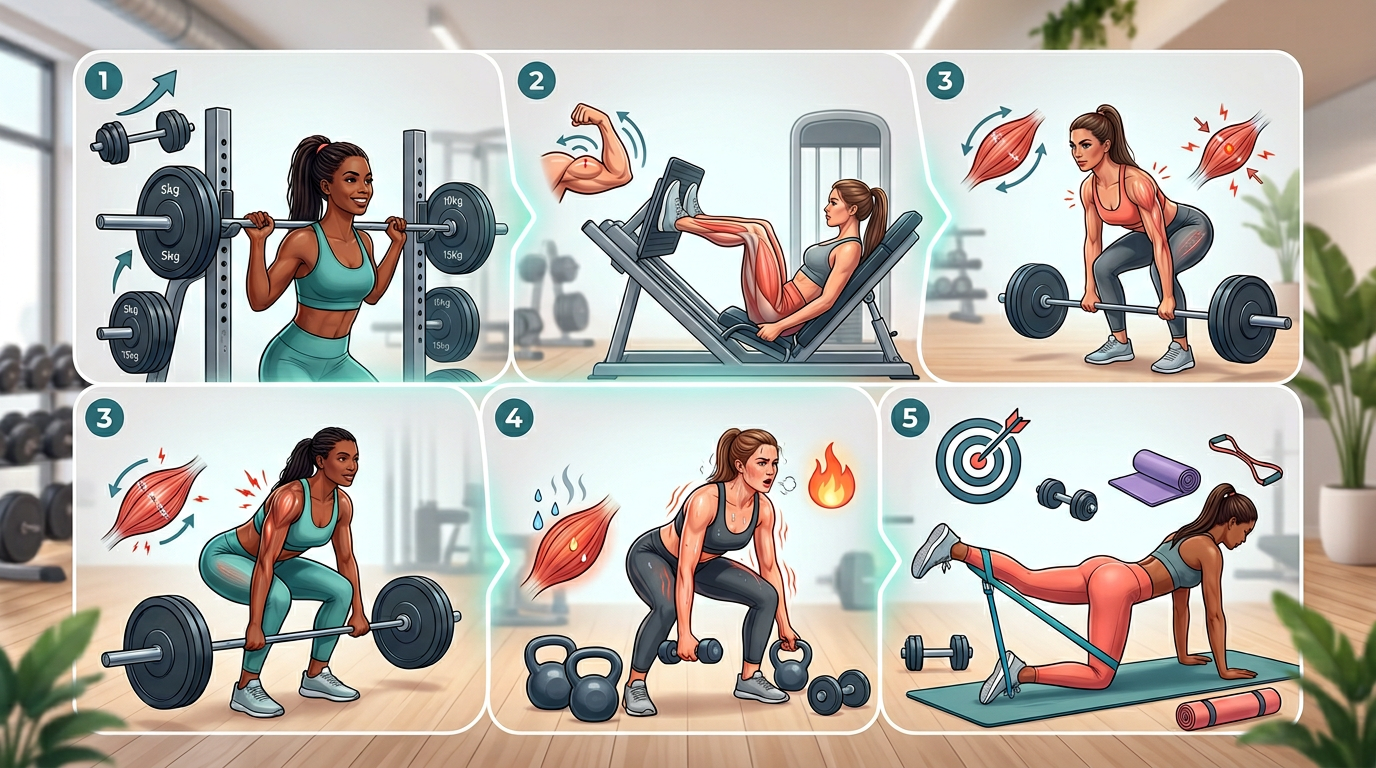
Infographic showing the five core principles of strength training with icons for progressive overload, muscular tension, mechanical damage, metabolic stress, and specificity
Different Types of Strength
Not all strength is created equal. Understanding these distinctions helps clarify where Pilates fits:
- Maximal strength: The maximum force you can generate in a single effort (your one-rep max)
- Muscular endurance: Your ability to sustain repeated contractions over time
- Power: The combination of strength and speed
- Functional strength: Strength that translates to real-world movements and activities
Traditional weightlifting excels at building maximal strength and muscle size. Pilates, on the other hand, primarily develops muscular endurance and functional strength through sustained holds and controlled repetitions.
How Pilates Builds Strength in Your Body
Now that we've established the framework, let's examine the specific mechanisms through which Pilates creates strength adaptations in your body.
The Resistance Methods in Pilates
Pilates uses several forms of resistance to challenge your muscles:
Bodyweight resistance forms the foundation of mat Pilates, where you work against gravity and your own mass. Exercises like the Pilates hundred, leg circles, and roll-ups require significant core and muscular engagement to execute properly.
Spring resistance on reformer equipment provides variable tension throughout movements. Unlike free weights where gravity determines resistance direction, springs create resistance in multiple planes, challenging muscles differently than traditional strength training.
Isometric holds create muscular tension without joint movement. Holding a plank position or maintaining a teaser pose forces muscles to contract continuously, building endurance-based strength.
Muscle Activation Patterns in Pilates
Research shows that Pilates activates muscles differently than conventional strength training. The emphasis on controlled, precise movements with constant core engagement creates high levels of muscle activation, particularly in the deep stabilizing muscles.
During a typical Pilates session, you'll experience:
- Sustained muscle contractions lasting 30-90 seconds
- Eccentric (lengthening) contractions that build strength while improving flexibility
- Multi-planar movements that engage stabilizer muscles often neglected in traditional training
- Mind-muscle connection that enhances motor control and muscle recruitment efficiency
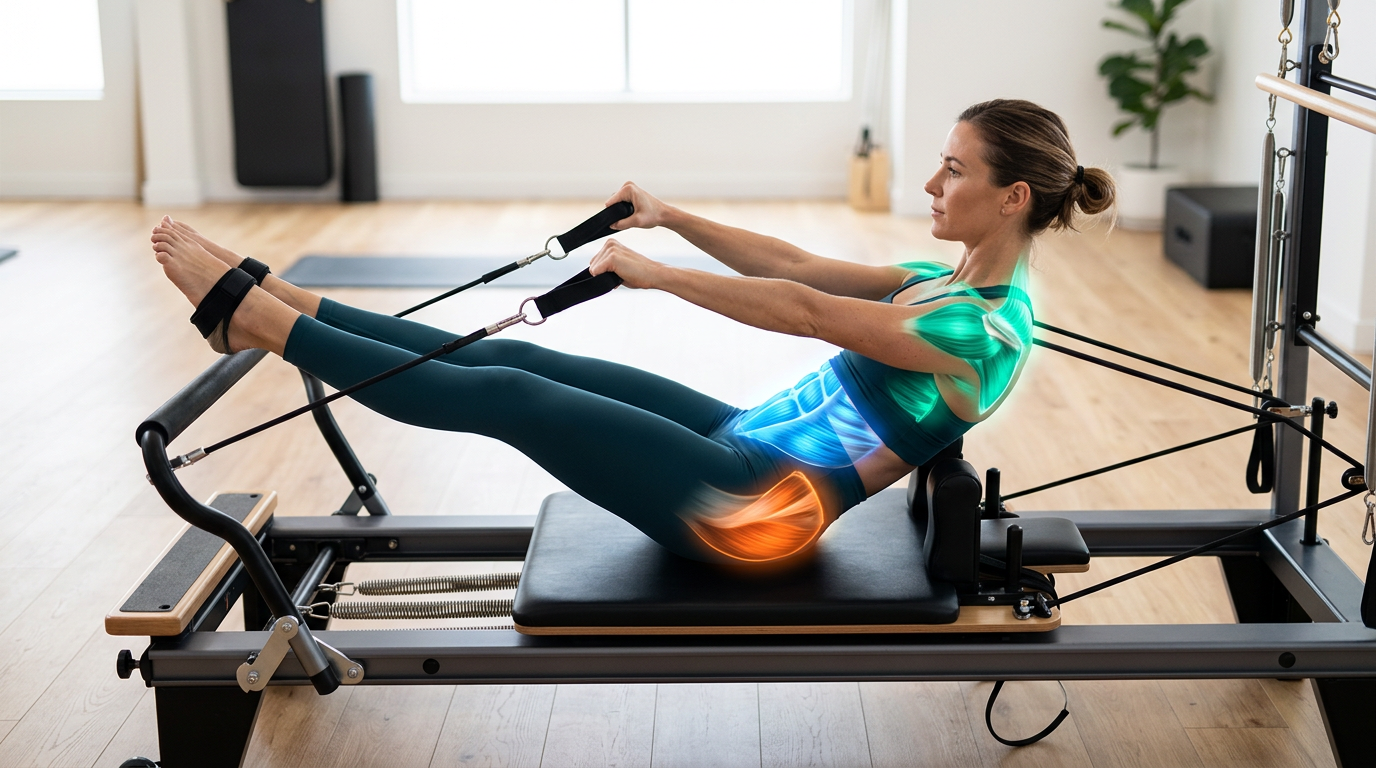
Diagram showing muscle activation during a Pilates reformer exercise with highlighted muscle groups including deep core stabilizers, glutes, and shoulder stabilizers
The Progressive Overload Question
One limitation of Pilates for pure strength development is the challenge of progressive overload. In traditional strength training, you simply add more weight to the bar. In Pilates, progression happens through:
- Increasing repetitions or hold times
- Advancing to more challenging exercise variations
- Adding heavier springs on reformer equipment
- Reducing stability (like moving from two legs to one)
- Increasing range of motion
- Combining movements into more complex sequences
While these methods do create adaptation, they eventually reach a ceiling for building maximal strength and significant muscle mass.
Pilates vs. Traditional Strength Training: The Key Differences
Understanding how Pilates compares to conventional resistance training helps you determine whether does pilates count as strength training for your specific goals.
Intensity and Load Capacity
Traditional strength training allows you to progressively load muscles with external resistance that far exceeds your bodyweight, creating the mechanical tension needed for substantial muscle growth. You can squat, deadlift, or press weights that challenge your muscles to their maximum capacity.
Pilates, while challenging, typically operates at lower absolute loads. Even with added springs or resistance, you're unlikely to match the loading capacity of barbell training. This difference significantly impacts the type of adaptations your body makes.
Muscle Fiber Recruitment
Heavy resistance training recruits high-threshold motor units and fast-twitch muscle fibers—the ones with the greatest growth potential. Pilates primarily engages slow-twitch fibers and lower-threshold motor units, which excel at endurance but have limited capacity for size increases.
Training Volume and Frequency
A typical strength training session might include 3-5 sets of 6-12 repetitions per exercise with 2-3 minutes rest between sets. Pilates classes often involve higher repetitions (15-25+) with minimal rest, creating a different stimulus.
This difference affects recovery needs and training frequency. You might need 48-72 hours between heavy leg training sessions, but could potentially do Pilates more frequently since the muscle damage is typically less severe.
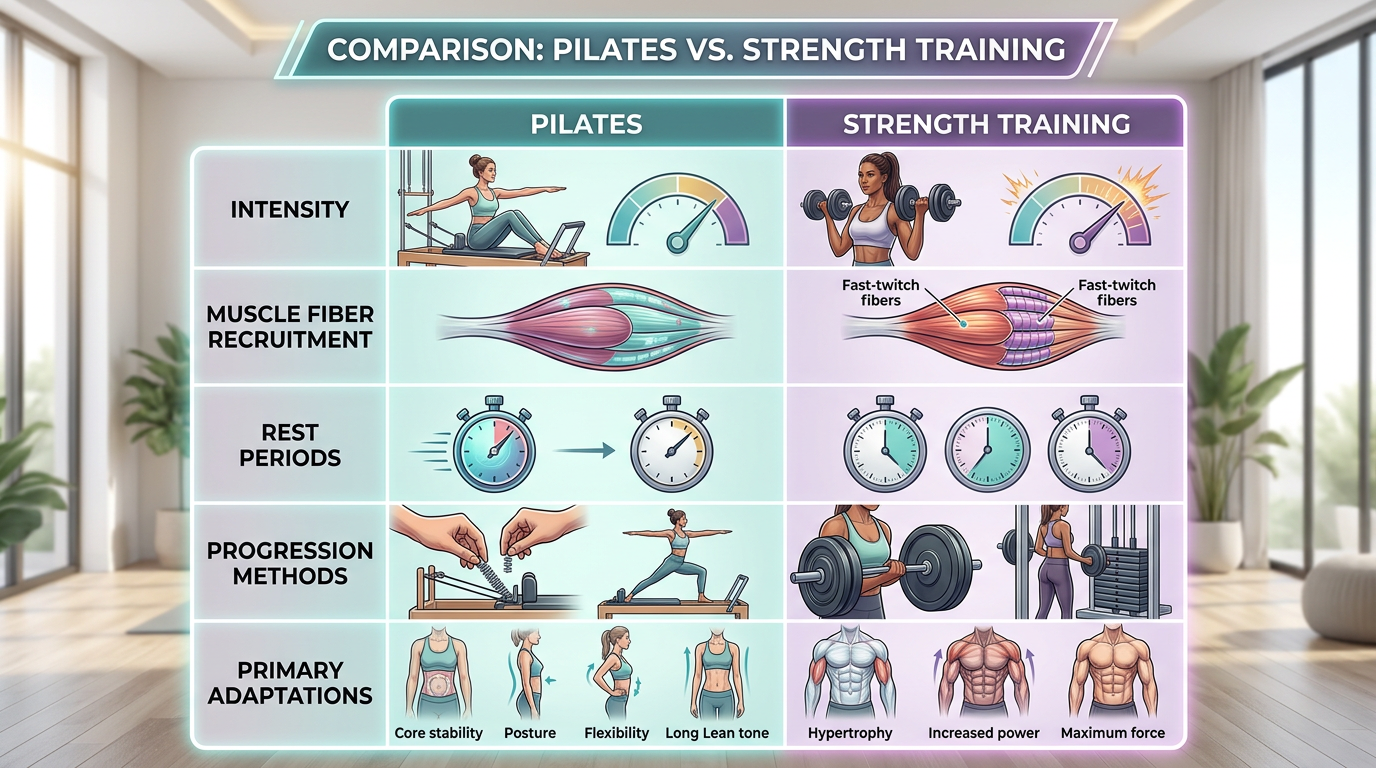
Comparison table showing Pilates versus traditional strength training across categories including intensity, muscle fiber recruitment, rest periods, progression methods, and primary adaptations
Who Benefits Most from Pilates as Strength Training
For certain populations and goals, Pilates serves as an excellent primary strength training method. Let's identify who fits this category.
Beginners Building a Foundation
If you're new to structured exercise, Pilates provides an accessible entry point to strength training. The controlled environment, emphasis on form, and scalable difficulty make it ideal for developing body awareness and foundational strength without the intimidation factor of a weight room.
You'll build:
- Core stability that transfers to all other activities
- Proper movement patterns that prevent injury later
- Baseline strength in stabilizer muscles
- Confidence in your body's capabilities
Women Recovering from Injury or Managing Conditions
The low-impact nature and controlled movements make Pilates valuable for women dealing with joint issues, recovering from injury, or managing certain medical conditions. The question "can people with Ehlers Danlos do Pilates?" comes up frequently—and the answer is often yes, with modifications.
For women with hypermobility conditions like Ehlers-Danlos Syndrome, Pilates can be adapted to avoid end-range positions while building the muscular support needed to stabilize joints. Always work with a qualified instructor who understands your specific condition.
Active Agers Maintaining Functional Strength
For women over 50 focused on maintaining independence and functional capacity rather than maximizing muscle mass, Pilates addresses key concerns: balance, flexibility, bone density maintenance, and functional movement patterns for daily activities.
Athletes Seeking Supplemental Training
Many athletes use Pilates not as their primary strength training but as complementary work that addresses weaknesses, improves body awareness, and prevents injury. Runners benefit from the core stability, while tennis players improve rotational control.
When Pilates Alone Isn't Enough for Your Strength Goals
Honesty matters when discussing fitness. While Pilates offers real benefits, it has limitations for certain objectives.
Building Significant Muscle Mass
If your goal includes substantial muscle hypertrophy—building noticeable size in your glutes, shoulders, or legs—Pilates alone won't get you there efficiently. Muscle growth requires progressive mechanical tension that Pilates simply cannot provide at the same level as heavy resistance training.
You need to challenge muscles with loads in the 65-85% of your one-rep max range to maximize hypertrophy. Pilates rarely achieves this intensity level.
Developing Maximal Strength
If you want to be able to deadlift your bodyweight, do multiple pull-ups, or develop significant pushing strength, you need to train with heavier external loads. The principle of specificity means you get strong at what you practice—and Pilates doesn't practice maximal force production.
Bone Density Optimization
While Pilates provides some bone-loading stimulus, research suggests that higher-impact activities and heavier resistance training create superior bone density adaptations. For women concerned about osteoporosis prevention, combining Pilates with weight-bearing resistance training offers the best protection.
Time Efficiency Considerations
If you can only train 2-3 times weekly, traditional strength training typically delivers more comprehensive strength gains per hour invested. Pilates requires more frequent practice to maintain and build strength since the stimulus is less intense.
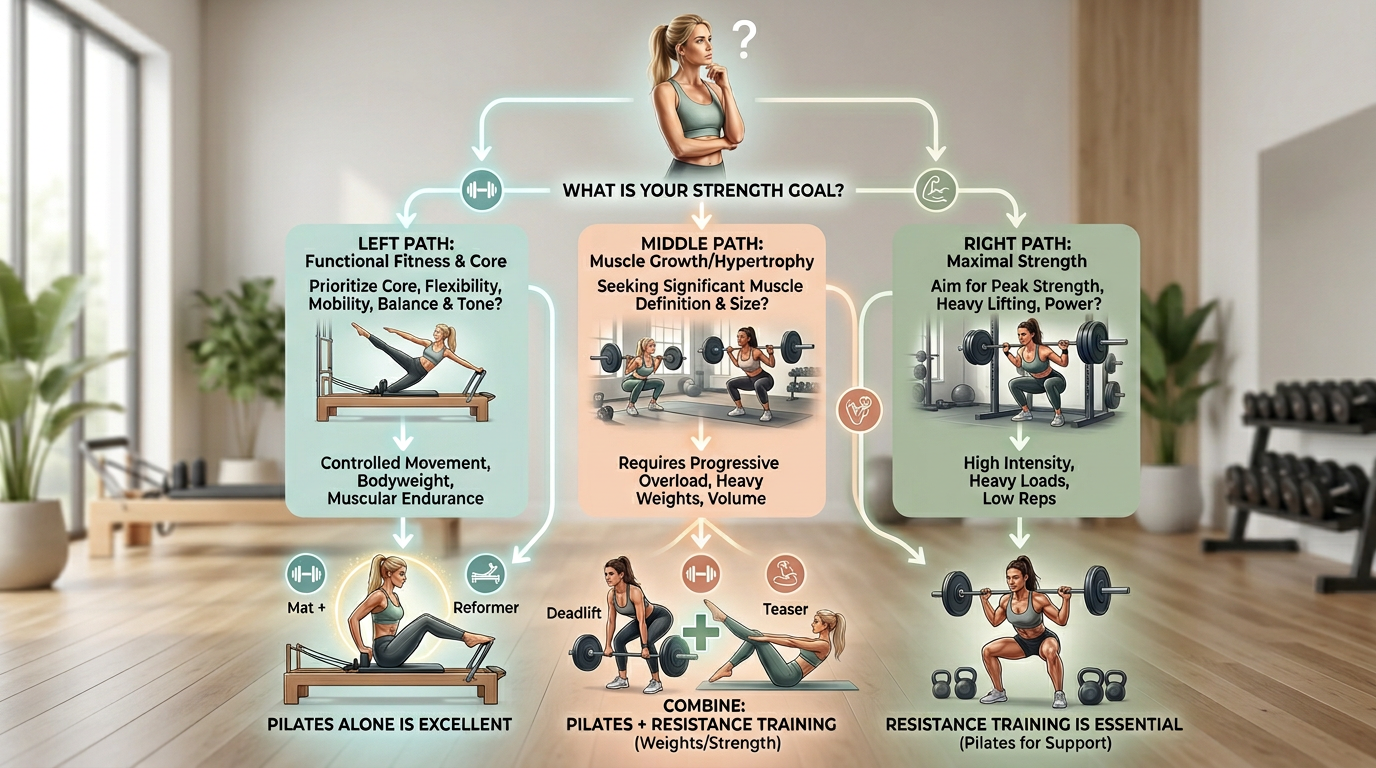
Visual decision tree helping women determine if Pilates alone meets their strength goals or if they should add traditional resistance training based on objectives like muscle growth, maximal strength, or functional fitness
Creating a Balanced Approach: Combining Pilates with Resistance Training
For many women, the optimal answer to does pilates count as strength training is "yes, and..." rather than "yes, but." Combining both modalities creates synergistic benefits.
The Complementary Benefits
When you integrate Pilates with traditional strength training, you get:
- Enhanced mind-muscle connection from Pilates that improves lifting technique
- Better core stability that supports heavier compound lifts
- Improved flexibility and mobility that increases your strength training range of motion
- Active recovery on days between heavy lifting sessions
- Injury prevention through balanced muscle development
Sample Weekly Training Split
Here's how you might structure a week combining both approaches:
- Monday: Lower body strength training (squats, deadlifts, lunges)
- Tuesday: Pilates mat or reformer class focusing on core and upper body
- Wednesday: Rest or gentle movement
- Thursday: Upper body strength training (pressing, pulling, shoulder work)
- Friday: Pilates class emphasizing lower body and flexibility
- Saturday: Full-body strength circuit or active recovery
- Sunday: Rest
This structure allows you to build maximal strength through resistance training while developing the functional strength, stability, and body awareness that Pilates provides.
Sequencing Considerations
Perform your heavy strength training before Pilates sessions when possible, as pre-fatiguing muscles with Pilates can compromise your ability to lift maximal loads safely. However, Pilates makes an excellent active recovery session 24-48 hours after intense strength work.
The Unique Benefits Pilates Offers Beyond Traditional Strength
Even if Pilates doesn't replace heavy resistance training for pure strength development, it offers distinct advantages that enhance your overall fitness profile.
Core Integration and Functional Movement
Unlike isolation exercises that work muscles independently, Pilates trains your body as an integrated system. Every movement requires core stabilization while limbs move, mimicking real-world functional demands.
This integration translates to better posture, reduced back pain, and improved performance in sports and daily activities. You're not just building stronger muscles—you're teaching them to work together efficiently.
Mind-Body Connection and Movement Quality
The deliberate, controlled nature of Pilates develops exceptional body awareness. You learn to identify and correct compensatory movement patterns, engage specific muscles on command, and move with precision.
This heightened kinesthetic awareness carries over to your resistance training, helping you maintain proper form, prevent injury, and maximize muscle engagement during lifts.
Stress Management and Cortisol Regulation
The question "does Pilates lower cortisol?" reflects growing interest in exercise's stress-management benefits. While any enjoyable movement can reduce stress, Pilates' emphasis on breathing, controlled movement, and present-moment focus creates a meditative quality that may help regulate cortisol levels.
Unlike high-intensity training that temporarily elevates cortisol, Pilates provides moderate-intensity movement with stress-reduction elements, making it valuable for women dealing with chronic stress or hormonal imbalances.
Injury Prevention and Rehabilitation
The balanced muscle development and emphasis on stability in Pilates addresses common weakness patterns that lead to injury. Strengthening deep core muscles, hip stabilizers, and scapular muscles creates a resilient body better equipped to handle the demands of heavy lifting and daily life.
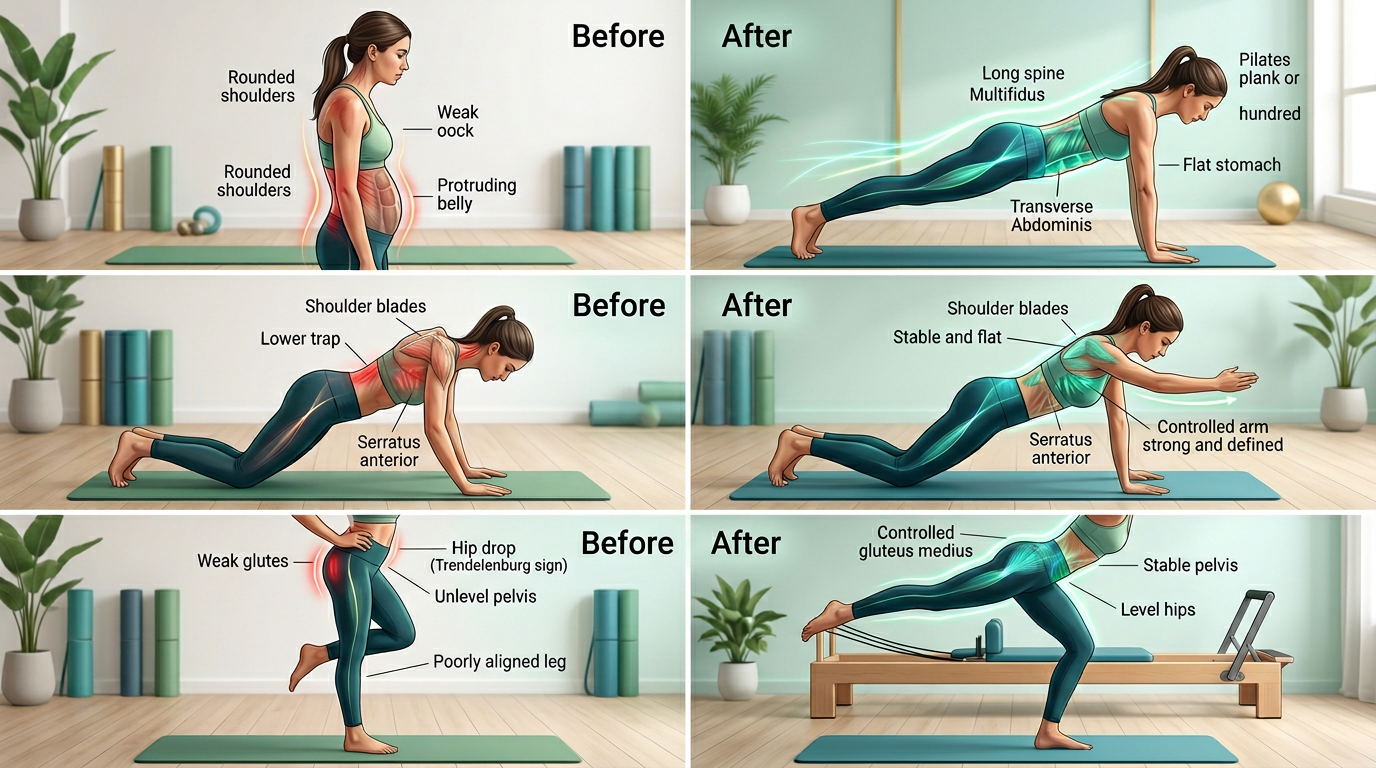
Illustration showing how Pilates addresses common muscle imbalances and weakness patterns including weak deep core, poor scapular stability, and hip instability with before and after comparison
Making Pilates More Strength-Focused
If you love Pilates and want to maximize its strength-building potential, certain modifications can enhance the stimulus.
Progression Strategies
To continue building strength through Pilates:
- Slow down the tempo: Reducing speed increases time under tension
- Add pauses: Holding positions at peak contraction enhances muscle engagement
- Increase spring resistance: Use heavier springs on reformer equipment
- Reduce stability: Single-leg variations or unstable surfaces increase challenge
- Add external load: Light hand weights during certain mat exercises
- Master advanced variations: Progress to more challenging exercise versions
Reformer vs. Mat Pilates for Strength
Reformer Pilates typically offers greater strength-building potential than mat work because the spring resistance can be adjusted and provides consistent tension throughout movements. The equipment also allows for exercises that would be impossible on the mat.
However, mat Pilates shouldn't be dismissed. Advanced mat exercises require tremendous strength, and the lack of equipment assistance means your muscles work harder to stabilize and control movements.
Supplementing with Resistance Tools
Many Pilates instructors now incorporate resistance bands, light dumbbells, and weighted balls to increase the strength component. While purists might object, these additions can bridge the gap between traditional Pilates and conventional strength training.
Special Considerations for Women's Strength Training
Women face unique considerations when building strength, and understanding how Pilates fits into this context matters.
Hormonal Fluctuations and Training
Your menstrual cycle affects energy levels, recovery capacity, and training performance. Pilates' moderate intensity makes it accessible during all cycle phases, while heavy lifting might feel challenging during certain weeks.
Having both options in your training toolkit allows you to match your workout to how you feel while still maintaining consistency.
Pregnancy and Postpartum Strength
Pilates is frequently recommended during pregnancy and postpartum recovery because it strengthens the pelvic floor and deep core muscles while avoiding excessive intra-abdominal pressure. For women navigating these life stages, Pilates may be the most appropriate form of strength training available.
After receiving medical clearance, gradually reintroducing traditional strength training alongside Pilates creates a comprehensive approach to postpartum recovery and strength rebuilding.
Addressing Specific Conditions
Women with conditions like diastasis recti, pelvic floor dysfunction, or chronic pain conditions often find Pilates more accessible than conventional strength training. The controlled movements and ability to modify exercises make it therapeutic while still building strength.
For issues like spondylolisthesis (a spinal condition), the question "is yoga or Pilates better for spondylolisthesis?" depends on individual presentation. Pilates' emphasis on neutral spine and core stability often makes it preferable, but always consult healthcare providers for personalized guidance.
Frequently Asked Questions
Can Pilates be my only strength training?
Pilates can be your sole strength training if your goals focus on functional strength, core stability, and muscular endurance rather than maximal strength or significant muscle growth. Beginners and women prioritizing movement quality over muscle size often thrive with Pilates alone. However, combining it with resistance training optimizes results for most women.
How often should I do Pilates to build strength?
Practice Pilates 3-4 times weekly to build and maintain strength effectively. This frequency allows adequate stimulus for adaptation while providing recovery time. Beginners may start with 2 sessions weekly, gradually increasing as strength and endurance improve. Consistency matters more than intensity when building strength through Pilates.
Does Pilates lower cortisol levels?
Pilates may help regulate cortisol through its combination of controlled breathing, moderate intensity movement, and mindful focus. Unlike high-intensity exercise that temporarily spikes cortisol, Pilates provides stress-reducing benefits similar to mind-body practices. Regular practice can support overall stress management and hormonal balance for many women.
Can people with Ehlers Danlos do Pilates safely?
Women with Ehlers-Danlos Syndrome can often do modified Pilates safely with proper instruction. The key is avoiding end-range positions that stress hypermobile joints while building muscular support for joint stability. Work with an instructor experienced in hypermobility who can adapt exercises appropriately. Always consult your healthcare provider first.
Is yoga or Pilates better for spondylolisthesis?
Pilates is often better for spondylolisthesis because it emphasizes neutral spine positioning and core stabilization without excessive spinal extension. Yoga poses frequently involve deep backbends that may aggravate this condition. However, individual presentation varies, so consult a physical therapist or healthcare provider for personalized recommendations.
Will Pilates make me bulky?
Pilates will not make you bulky. It builds lean, functional strength and muscular endurance rather than significant muscle mass. The moderate resistance and high repetition format creates toned muscles without substantial size increases. Building noticeable muscle requires heavier progressive resistance that Pilates alone does not provide.
What results can I expect from Pilates in 3 months?
After three months of consistent Pilates practice, expect improved core strength, better posture, enhanced flexibility, and increased muscular endurance. You'll notice better body awareness and movement control. Visible muscle tone typically develops, though significant size changes require longer commitment or additional resistance training. Most women report reduced back pain and improved functional strength.
Conclusion: Does Pilates Count as Strength Training?
The answer to does pilates count as strength training is a qualified yes. Pilates absolutely builds strength—specifically muscular endurance, functional strength, and core stability. It uses resistance to create muscular tension and adaptation, meeting the fundamental definition of strength training.
However, Pilates differs from traditional resistance training in intensity, loading capacity, and the type of strength adaptations it produces. It excels at developing the stabilizer muscles, mind-muscle connection, and movement quality that create a resilient, functional body. For women seeking maximal strength or significant muscle growth, combining Pilates with heavier resistance training creates the most comprehensive approach.
Your individual goals determine whether Pilates alone meets your needs or serves as valuable complementary training. Both approaches have merit, and the strongest women often embrace multiple training modalities that work together to build capable, confident bodies.