What Deadlift Muscles Worked: A Woman's Guide
Deadlift muscles worked include the glutes, hamstrings, lower back (erector spinae), quadriceps, core, lats, traps, and forearms. This compound movement strengthens the entire posterior chain while building functional strength, improving posture, and increasing bone density for women at all fitness levels.
Have you ever wondered why deadlifts are called the "queen of all exercises" for women looking to build strength? Understanding the deadlift muscles worked is your first step toward unlocking one of the most powerful movements in strength training. Whether you're new to the weight room or looking to perfect your form, knowing exactly which muscles fire during a deadlift will transform how you approach this foundational exercise.
Deadlifts aren't just about lifting heavy weight off the ground. They're a full-body movement that engages multiple muscle groups simultaneously, making them incredibly efficient for building strength, sculpting your physique, and improving everyday functional fitness. From carrying groceries to picking up your kids, the strength you build through deadlifts translates directly to real-world activities.
In this comprehensive guide, we'll break down every muscle activated during the deadlift, explain why this matters for your fitness goals, and show you how to maximize the benefits of this powerful exercise. You'll learn how deadlifts work for your specific body, what variations target different muscle groups, and how to incorporate them safely into your training routine.
Key Takeaways
- Deadlifts are a compound exercise that works over 200 muscles, with primary emphasis on the glutes, hamstrings, and lower back
- The posterior chain muscles (backside of your body) receive the most activation, making deadlifts essential for balanced strength development
- Different deadlift variations shift emphasis between muscle groups, allowing you to target specific areas based on your goals
- Deadlifts build functional strength that transfers to daily activities while improving posture and bone density
- Proper form is essential to maximize muscle activation and prevent injury, especially for the lower back and core
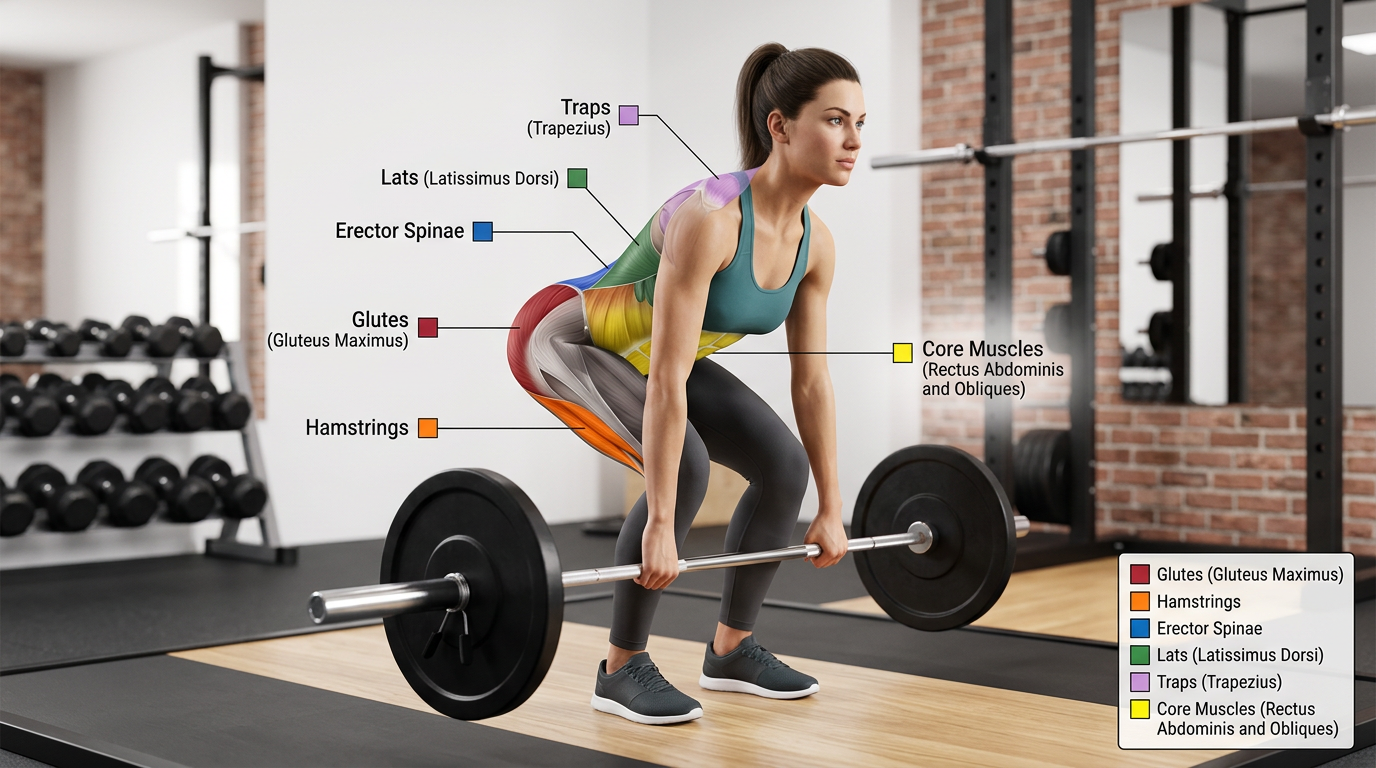
Anatomical illustration showing a woman performing a deadlift with highlighted muscle groups including glutes, hamstrings, erector spinae, lats, traps, and core muscles labeled in different colors
Understanding the Primary Deadlift Muscles Worked
When you perform a deadlift, you're engaging what trainers call a "compound movement." This means multiple joints and muscle groups work together to complete the lift. The deadlift activates more muscle mass than almost any other single exercise, making it incredibly efficient for building overall strength.
The beauty of understanding which muscles work during deadlifts is that you can better connect your mind to your body during the movement. This mind-muscle connection helps you engage the right muscles at the right time, improving both your performance and results.
The Posterior Chain: Your Powerhouse
The posterior chain refers to all the muscles along the back of your body. These muscles are often undertrained in women because many traditional exercises focus on the front of the body. Deadlifts specifically target this critical area.
Your posterior chain includes your glutes, hamstrings, and back muscles. These work together to extend your hips and spine during the lifting phase. When you strengthen your posterior chain, you improve your posture, reduce lower back pain, and build that strong, athletic physique many women desire.
Glutes: The Primary Driver
Your glutes (gluteus maximus, medius, and minimus) are the primary movers in a deadlift. The glutes are responsible for hip extension, which is the powerful thrust forward that happens as you stand up with the weight.
For women specifically interested in glute development, deadlifts are non-negotiable. The heavy load and full range of motion create the mechanical tension needed for muscle growth. Unlike isolation exercises, deadlifts allow you to use heavier weights, which translates to greater glute activation and development.
The lockout phase at the top of the deadlift is where your glutes work hardest. Squeezing your glutes at the top ensures maximum activation and helps protect your lower back from hyperextension.
Hamstrings: The Supporting Cast
Your hamstrings (biceps femoris, semitendinosus, and semimembranosus) work throughout the entire deadlift movement. They assist with hip extension and help control the descent of the weight.
During the initial pull from the floor, your hamstrings are stretched under load, creating what's called "eccentric tension." This is particularly effective for building muscle strength and size. As you lower the weight back down, your hamstrings work to control the movement and prevent you from simply dropping the bar.
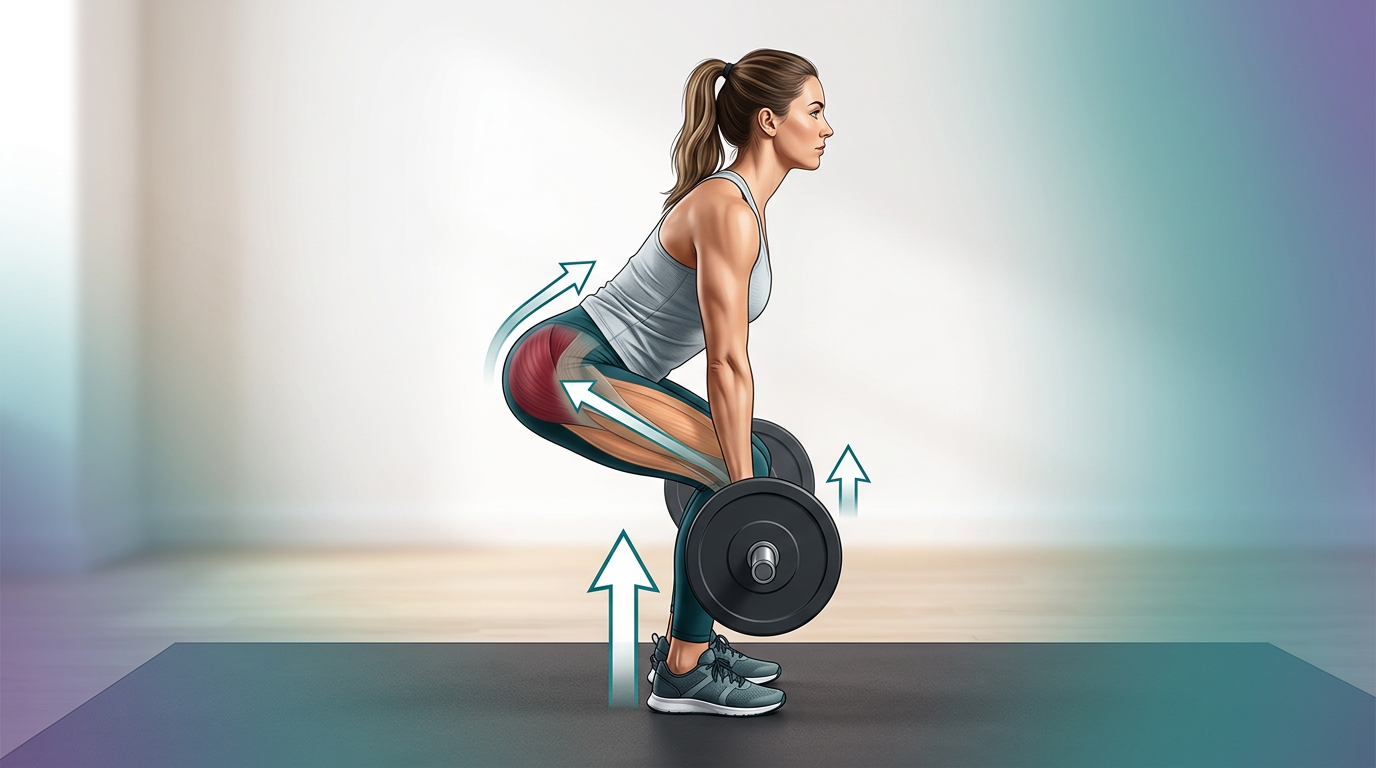
Side-view diagram of a woman in the bottom position of a deadlift, showing the stretched hamstrings and engaged glutes with arrows indicating the direction of force
Back Muscles Activated During Deadlifts
Your back does significant work during deadlifts, though it's important to understand that your back muscles primarily work to stabilize rather than move the weight. This distinction is crucial for maintaining proper form and preventing injury.
Erector Spinae: Your Spinal Support System
The erector spinae muscles run along your spine from your neck to your lower back. These muscles work isometrically during deadlifts, meaning they contract without changing length to keep your spine in a safe, neutral position.
For women concerned about lower back health, strengthening the erector spinae through deadlifts is incredibly beneficial. These muscles support your spine during everyday activities like bending, lifting, and even sitting. A strong lower back reduces your risk of injury and chronic pain.
The key is maintaining a neutral spine throughout the movement. Your erector spinae shouldn't be rounding or hyperextending. Instead, they maintain that natural S-curve of your spine while other muscles do the lifting.
Latissimus Dorsi (Lats): The Hidden Workers
Your lats are the large, wing-shaped muscles on the sides of your back. During deadlifts, they work to keep the bar close to your body and stabilize your shoulder blades.
Think of the cue "bend the bar" or "pull the bar into your shins." This engages your lats and creates tension throughout your upper back. This tension is essential for maintaining proper form and protecting your spine. Strong lats also contribute to that V-tapered back shape many women find attractive.
Trapezius Muscles: Upper Back Stabilizers
Your traps (upper, middle, and lower trapezius) work to stabilize your shoulder blades and support the weight. The upper traps are particularly active at the top of the movement, while the middle and lower traps work throughout to keep your shoulders back and down.
Proper trap engagement prevents your shoulders from rounding forward, which is a common form mistake. This also helps build that strong, confident posture that comes with regular deadlifting.
Core and Stabilizing Muscles in the Deadlift
Your core does much more than just your abs. It includes all the muscles that stabilize your trunk, and these muscles work intensely during deadlifts.
Rectus Abdominis and Obliques
Your abdominal muscles (the rectus abdominis or "six-pack" muscles and the obliques on your sides) work to prevent your spine from flexing or rotating under load. This anti-movement function is one of the most important roles your core plays in strength training.
When you brace your core before a deadlift, you're creating intra-abdominal pressure that supports your spine like a natural weight belt. This bracing protects your back and allows you to lift heavier weights safely.
Transverse Abdominis: Your Deep Core
The transverse abdominis is your deepest core muscle, wrapping around your midsection like a corset. It's the primary muscle responsible for that bracing action we just discussed.
Strengthening your transverse abdominis through deadlifts improves your overall core stability, which benefits every other exercise you do and supports your spine during daily activities.
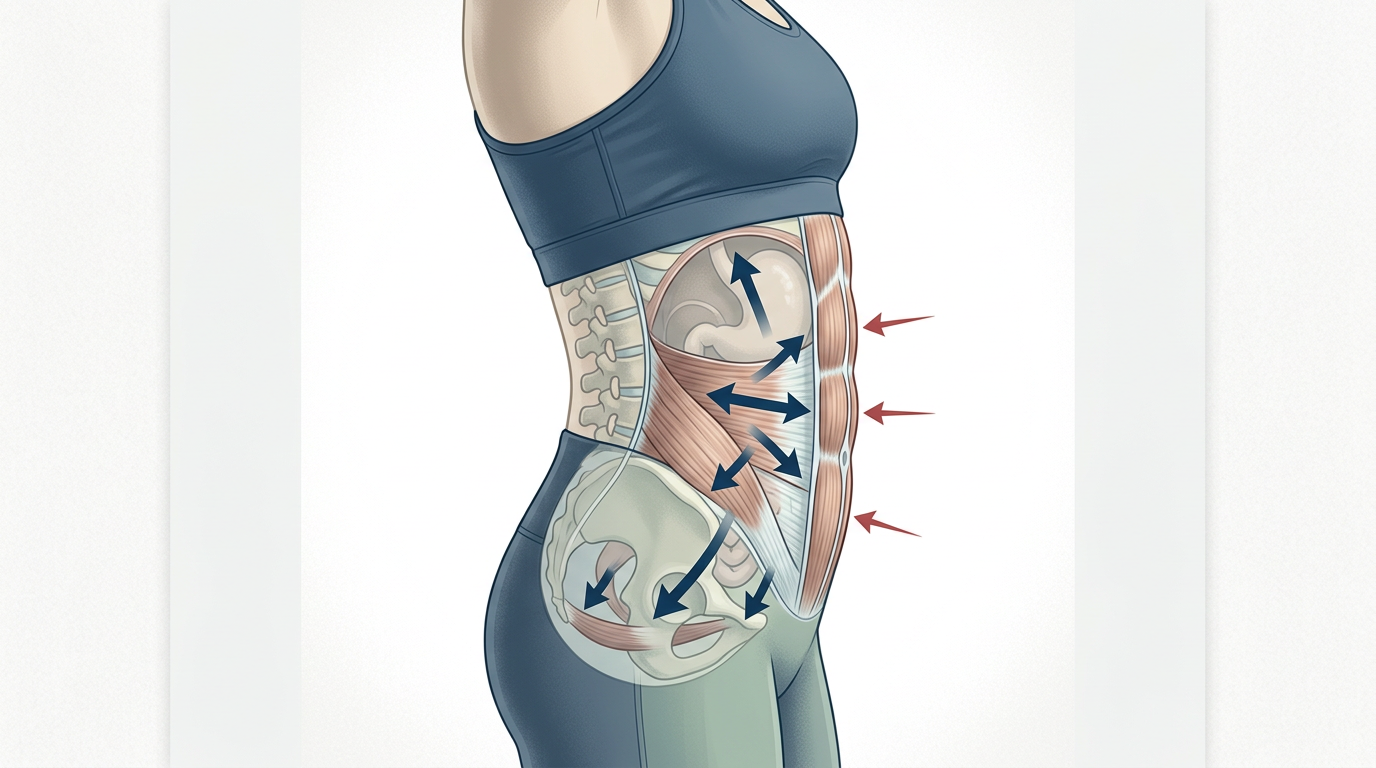
Cross-sectional anatomical view of the torso showing the layers of core muscles (rectus abdominis, obliques, and transverse abdominis) engaged during a deadlift with pressure arrows indicating intra-abdominal bracing
Leg and Lower Body Muscles Beyond the Hamstrings
While the hamstrings and glutes get most of the attention, several other lower body muscles contribute to the deadlift movement.
Quadriceps: The Knee Extensors
Your quadriceps (the four muscles on the front of your thigh) are most active during the initial pull from the floor. They work to extend your knees as you begin the lift.
The amount of quad activation depends on your starting position. A conventional deadlift with your hips higher involves less quad work than a sumo deadlift or trap bar deadlift where your hips start lower and your knees are more bent.
Adductors: Inner Thigh Strength
Your adductors (inner thigh muscles) help stabilize your legs during the deadlift, particularly in the sumo variation where your stance is wider. These often-neglected muscles contribute to hip stability and power transfer from your legs to the bar.
Calves and Ankle Stabilizers
While not primary movers, your calf muscles and the small stabilizing muscles around your ankles work to keep you balanced and stable throughout the lift. This is especially important when lifting heavy weights where even small balance shifts can affect your form.
Upper Body and Grip Strength Muscles
Don't overlook the significant upper body work happening during deadlifts, particularly in your arms and shoulders.
Forearms and Grip Muscles
Your forearms work intensely to maintain your grip on the bar throughout the lift, making deadlifts one of the best exercises for building functional grip strength.
For many women, grip strength becomes the limiting factor in deadlifts before leg or back strength does. This is why you'll see lifters using chalk, straps, or mixed grip as they progress to heavier weights. However, building your natural grip strength through deadlifts has tremendous carryover to daily activities and other exercises.
Rhomboids and Rear Deltoids
These upper back and shoulder muscles work to retract your shoulder blades and keep your shoulders stable. They contribute to that "chest up, shoulders back" position that's essential for proper deadlift form.
Strong rhomboids and rear delts also help counteract the rounded-shoulder posture many women develop from desk work and phone use.
How Different Deadlift Variations Change Muscle Emphasis
Understanding how deadlift variations shift muscle emphasis allows you to customize your training based on your specific goals.
Conventional Deadlift
The conventional deadlift, with feet hip-width apart and hands outside your legs, provides balanced activation of all the muscles we've discussed. It's the standard variation and excellent for overall posterior chain development.
Sumo Deadlift
The sumo deadlift uses a wider stance with your hands inside your legs. This variation increases quadriceps and adductor activation while slightly reducing the load on your lower back.
Many women prefer sumo deadlifts because the more upright torso position feels more natural and places less stress on the lower back. The wider stance also allows for greater glute activation for some lifters.
Romanian Deadlift (RDL)
The Romanian deadlift starts from the top position and emphasizes the eccentric (lowering) phase. It targets the hamstrings and glutes more intensely than conventional deadlifts while reducing quad involvement.
RDLs are excellent for women looking to specifically target hamstring development and improve hip hinge mechanics. The constant tension on the hamstrings throughout the movement makes this variation particularly effective for muscle building.
Trap Bar Deadlift
Using a trap bar (hex bar) allows you to stand inside the weight with handles at your sides. This variation increases quadriceps activation and reduces lower back stress, making it an excellent option for beginners or those with back concerns.
The trap bar deadlift is also easier to learn and allows most people to lift heavier weights, which can be motivating and effective for building overall strength.
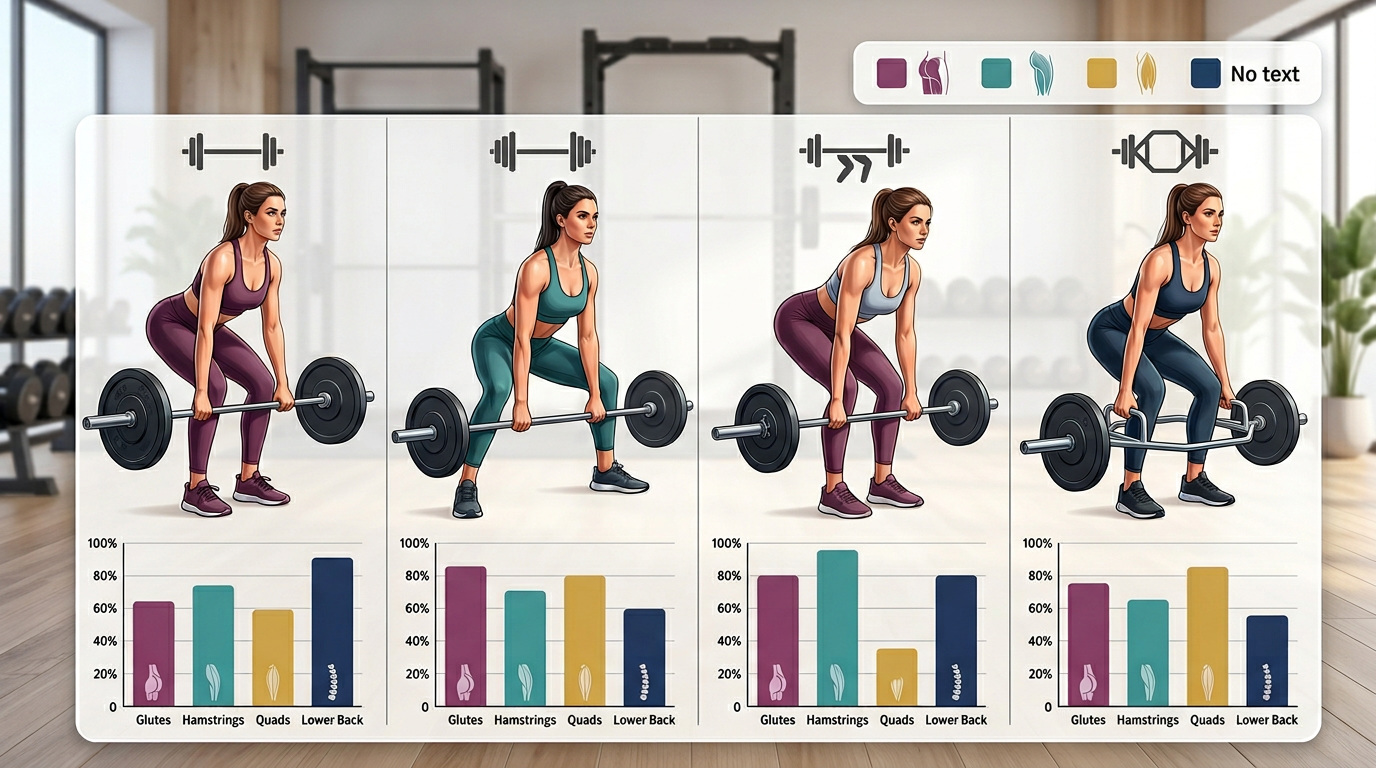
Comparison chart showing four deadlift variations (conventional, sumo, Romanian, and trap bar) with muscle activation percentages displayed as bar graphs for glutes, hamstrings, quads, and lower back
Benefits of Understanding Deadlift Muscles Worked
Knowing which muscles work during deadlifts isn't just academic knowledge. It has practical applications for your training and results.
Improved Mind-Muscle Connection
When you understand which muscles should be working, you can consciously engage them during the lift. This mind-muscle connection improves muscle activation and leads to better results.
For example, knowing that your glutes should be the primary driver helps you focus on pushing through your heels and squeezing your glutes at the top, rather than pulling with your back.
Better Form and Injury Prevention
Understanding muscle activation helps you identify form breakdowns. If you feel your lower back straining excessively, you know something is wrong with your setup or execution. The load should be distributed across all the muscles we've discussed, not concentrated in one area.
Targeted Training Programs
Knowing how different variations emphasize different muscles allows you to design programs that address your specific goals and weaknesses. If your hamstrings are lagging, you can emphasize RDLs. If you want more quad development, trap bar or sumo deadlifts might be better choices.
Functional Strength for Daily Life
The muscles worked during deadlifts are the same ones you use for countless daily activities. Building strength in these muscles through deadlifts makes you more capable and resilient in everyday life, from lifting heavy objects to maintaining good posture throughout the day.
Common Mistakes That Reduce Muscle Activation
Even when you know which muscles should be working, certain form mistakes can reduce their activation and limit your results.
Rounding Your Back
When your back rounds during a deadlift, your erector spinae can no longer maintain that safe, neutral position. This shifts excessive load to your spinal discs and ligaments, increasing injury risk while reducing the training stimulus to the muscles that should be working.
The solution is to reduce the weight, reset your form, and focus on maintaining a neutral spine throughout the entire movement. Your ego might want to lift heavier, but your body will thank you for prioritizing form.
Not Engaging Your Lats
Failing to engage your lats allows the bar to drift away from your body, creating a longer lever arm and making the lift much harder. This also reduces the stability of your upper back and shoulders.
Before you pull, think about "bending the bar" or "pulling it into your shins." This cue activates your lats and creates the tension you need for a strong, stable lift.
Squatting the Deadlift
Starting with your hips too low turns the deadlift into more of a squat, which changes the muscle emphasis and often leads to the bar hitting your knees on the way up. Your hips should be higher than your knees but lower than your shoulders in the starting position.
Hyperextending at the Top
Leaning back excessively at the top of the lift doesn't increase glute activation. Instead, it places unnecessary stress on your lower back. The top position should simply be standing tall with your glutes squeezed, not leaning backward.
Programming Deadlifts for Optimal Muscle Development
To maximize the benefits of deadlifts for the muscles worked, you need to program them intelligently into your training routine.
Frequency and Volume
Most women benefit from deadlifting once or twice per week. Deadlifts are demanding on your central nervous system and require adequate recovery. If you deadlift twice weekly, consider using different variations or intensity levels for each session.
For example, you might do heavy conventional deadlifts on one day and lighter Romanian deadlifts on another. This provides training stimulus without overwhelming your recovery capacity.
Rep Ranges for Different Goals
Different rep ranges emphasize different adaptations:
- 1-5 reps: Builds maximum strength and neural adaptations with heavy loads
- 6-12 reps: Optimal for muscle hypertrophy (growth) with moderate loads
- 12-20 reps: Develops muscular endurance and work capacity with lighter loads
- Variation is key: Cycling through different rep ranges over time provides comprehensive development
Progressive Overload
To continue building muscle and strength, you must progressively increase the demands placed on your muscles over time. This doesn't always mean adding weight to the bar.
Progressive overload can come from:
- Adding weight to the bar while maintaining form and reps
- Performing more reps with the same weight
- Completing the same work with shorter rest periods
- Improving your form and range of motion
- Increasing training volume over time
Complementary Exercises
While deadlifts work many muscles, they don't work everything equally. A balanced program includes complementary exercises that address potential gaps.
Consider pairing deadlifts with exercises like:
- Hip thrusts for additional glute emphasis
- Leg curls for isolated hamstring work
- Rows for balanced back development
- Core exercises for additional stability training
- Mobility work for hip and ankle flexibility
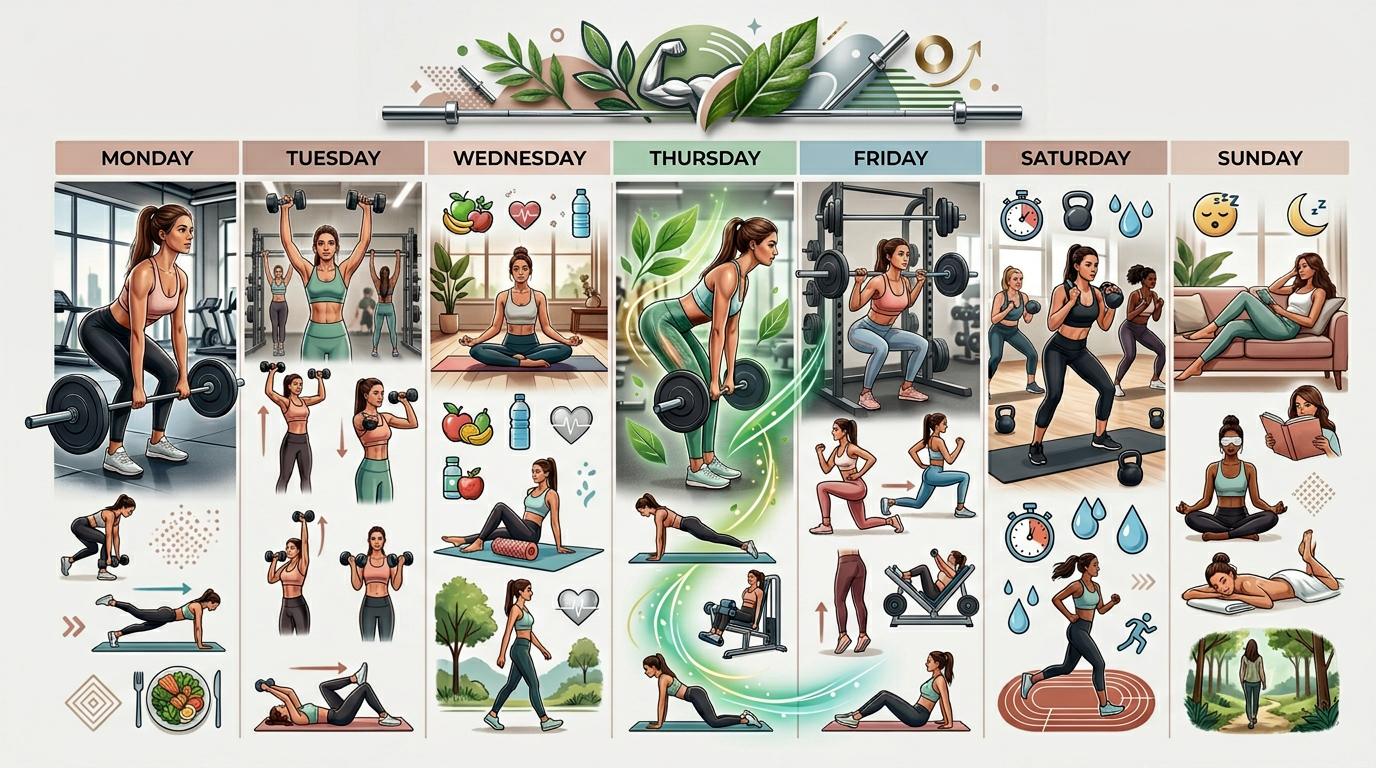
Weekly training split calendar showing optimal deadlift programming with conventional deadlifts on Monday, Romanian deadlifts on Thursday, and complementary exercises labeled for each day
Frequently Asked Questions
What muscles does the deadlift work?
Deadlifts primarily work the glutes, hamstrings, and erector spinae (lower back). They also engage the quadriceps, core muscles, lats, traps, forearms, and various stabilizing muscles throughout your body. This makes deadlifts one of the most comprehensive compound exercises for building full-body strength.
Are deadlifts for legs or back?
Deadlifts work both your legs and back simultaneously. Your glutes and hamstrings are the primary movers that generate force, while your back muscles work to stabilize your spine and maintain proper position. This makes deadlifts a complete posterior chain exercise rather than purely a leg or back movement.
Do deadlifts help with bone density?
Yes, deadlifts are excellent for building bone density. The heavy loading and mechanical stress placed on your bones during deadlifts stimulate bone formation, which is particularly beneficial for women concerned about osteoporosis. Regular deadlifting can help maintain and improve bone density throughout your spine, hips, and legs.
Do deadlifts actually build muscle?
Deadlifts are highly effective for building muscle throughout your posterior chain, including your glutes, hamstrings, and back. The heavy loads and full range of motion create the mechanical tension and muscle damage needed for growth. Combined with proper nutrition and recovery, deadlifts are one of the best exercises for muscle development.
How often should women deadlift for muscle growth?
Most women benefit from deadlifting 1-2 times per week for optimal muscle growth. This frequency provides adequate training stimulus while allowing sufficient recovery time. If training twice weekly, consider using different variations or intensities each session, such as heavy conventional deadlifts one day and lighter Romanian deadlifts another.
Which deadlift variation is best for glute development?
Romanian deadlifts and sumo deadlifts are particularly effective for glute development. Romanian deadlifts emphasize the stretched position and hip hinge, while sumo deadlifts allow for greater glute activation due to the wider stance. Both variations can be excellent additions to a glute-focused training program alongside conventional deadlifts.
Can beginners start with deadlifts or should they build strength first?
Beginners can and should start deadlifting, but with appropriate weight and proper form instruction. Start with trap bar deadlifts or Romanian deadlifts using light weight to learn the hip hinge pattern. Focus on technique before adding significant load. Even bodyweight hip hinge drills provide valuable practice for beginners.
Conclusion
Understanding the deadlift muscles worked transforms this exercise from a simple lift into a strategic tool for building full-body strength. From your glutes and hamstrings to your core and back, deadlifts engage more muscle mass than almost any other movement, making them incredibly efficient for women looking to build strength, improve posture, and develop functional fitness.
The key is choosing the right variation for your goals, maintaining proper form to maximize muscle activation, and programming deadlifts intelligently within your training routine. Whether you're focused on glute development, overall strength, or injury prevention, the comprehensive muscle activation from deadlifts delivers results that extend far beyond the gym.
Start with manageable weight, focus on mastering the hip hinge pattern, and progressively challenge yourself as your strength improves.