Core Exercises for Beginners: Strengthen Your Foundation
Core exercises for beginners are foundational movements that strengthen the abdominal muscles, lower back, hips, and pelvis. Effective beginner exercises include planks, dead bugs, bird dogs, and glute bridges, performed 2-3 times weekly with proper form to build stability, improve posture, and prevent injury.
Have you ever felt your lower back ache after a long day at your desk? Or struggled to maintain good posture during everyday activities? A strong core is the solution, yet many women skip core training because they don't know where to start. The good news is that core exercises for beginners don't require fancy equipment or hours at the gym—just consistency and proper form.
Your core is far more than just your abs. It's the powerhouse that stabilizes your entire body during movement, protects your spine, and makes everyday activities easier. Whether you're lifting groceries, playing with your kids, or working toward more advanced fitness goals, a solid core foundation is essential.
In this comprehensive guide, you'll discover the most effective core exercises for women who are just starting their fitness journey. We'll break down proper form, common mistakes to avoid, and how to build a sustainable routine that delivers real results. Let's build that strong foundation together.
Key Takeaways
- Your core includes more than just abs—it encompasses your entire midsection including lower back, hips, and pelvis
- Beginners should start with 2-3 core sessions per week, allowing rest days for muscle recovery
- Proper form always trumps repetitions—quality movements prevent injury and deliver better results
- Progressive overload applies to core training too—gradually increase difficulty as you build strength
- Core strength improves posture, reduces back pain, and enhances performance in all physical activities
Understanding Your Core: More Than Just Abs
Before diving into specific core exercises for beginners, it's essential to understand what your core actually includes. Many women mistakenly believe core training only means doing crunches for a flat stomach. The reality is much more comprehensive and empowering.
What Muscles Make Up Your Core?
Your core is a complex system of muscles that work together to stabilize your spine and pelvis. The major core muscles include the rectus abdominis (front abs), transverse abdominis (deep stabilizing layer), internal and external obliques (sides), erector spinae (lower back), and the pelvic floor muscles. Understanding this helps you appreciate why balanced core training matters.
The transverse abdominis acts like a natural weight belt, wrapping around your midsection. The obliques handle rotation and side bending. Your lower back muscles work in opposition to your front abs, creating balance. When all these muscles work together efficiently, you move better and feel stronger.
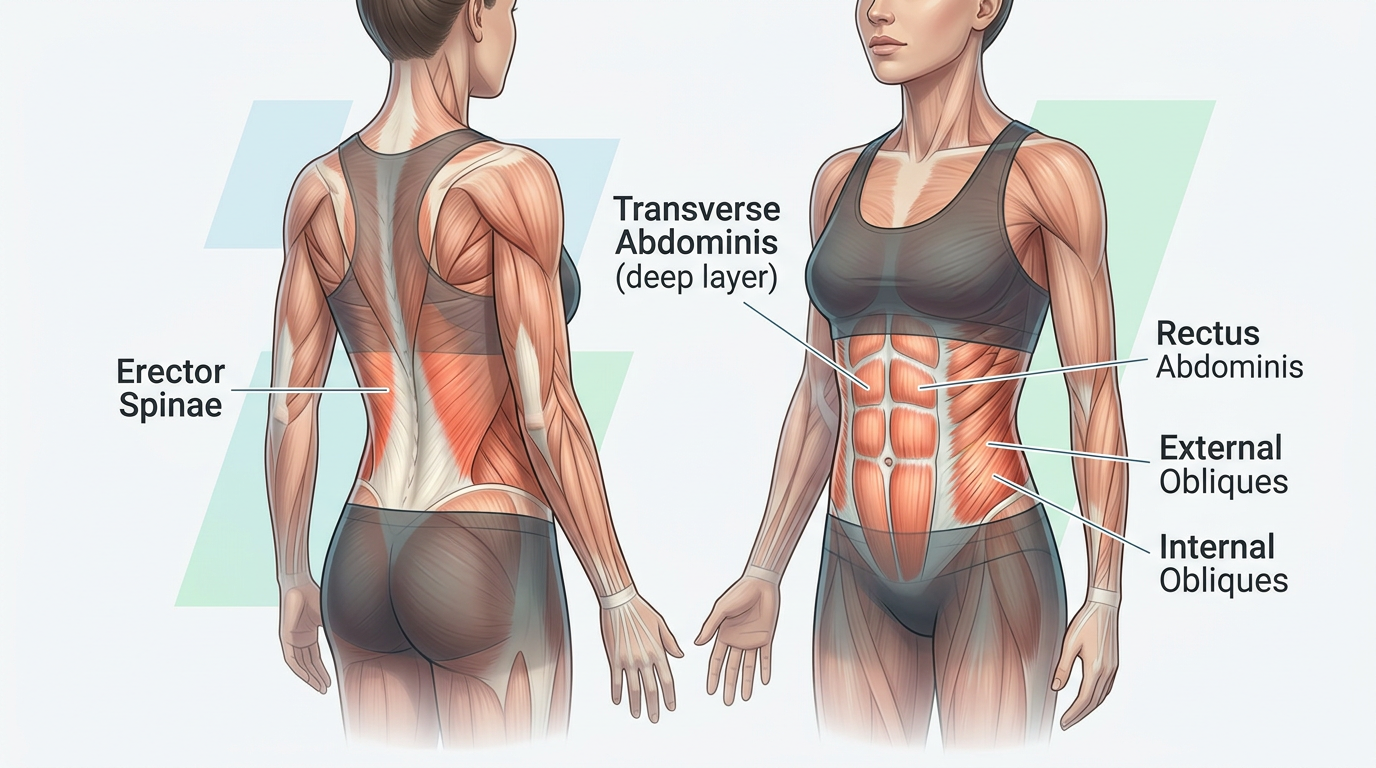
Anatomical illustration showing the major core muscle groups in a female body, highlighting rectus abdominis, transverse abdominis, obliques, and erector spinae with clear labels
Why Core Strength Matters for Women
Core strength impacts nearly every aspect of your daily life and fitness journey. A strong core improves your posture, reducing that forward slouch many women develop from desk work. It protects your spine during lifting movements, whether you're deadlifting at the gym or picking up a toddler.
For women specifically, core strength becomes increasingly important during pregnancy and postpartum recovery. It also helps combat the natural muscle loss that accelerates after age 30. Strong core muscles enhance your performance in other exercises, from squats to running, making your entire fitness routine more effective.
Common Core Training Myths Debunked
Let's clear up some persistent myths. First, you cannot spot-reduce belly fat with core exercises. Fat loss happens through a combination of nutrition and overall activity. Core exercises build and strengthen muscles underneath, which improves tone and definition as you lose fat.
Second, doing hundreds of crunches daily won't give you a strong, functional core. In fact, excessive crunching can strain your neck and lower back. Effective core training uses varied movements that challenge your core in multiple planes of motion. Third, core work isn't just for aesthetics—it's fundamental for injury prevention and functional strength.
Essential Core Exercises for Beginners
Now let's explore the most effective core exercises for beginners. These movements form the foundation of a strong, stable core. Master these before progressing to more advanced variations.
The Plank: Your Core Stability Foundation
The plank is the gold standard for core exercises for beginners because it teaches full-body tension and anti-extension strength. To perform a proper plank, start on your forearms and toes with your body in a straight line from head to heels. Your elbows should be directly under your shoulders.
Engage your core by pulling your belly button toward your spine, squeeze your glutes, and maintain neutral spine alignment without letting your hips sag or pike up. Breathe normally throughout the hold. Start with 15-20 second holds and gradually work up to 60 seconds.
Common mistakes include holding your breath, letting your lower back sag, or hiking your hips too high. If a full plank feels too challenging, modify by dropping to your knees while maintaining that straight line from knees to shoulders. This knee plank variation still delivers excellent core engagement.
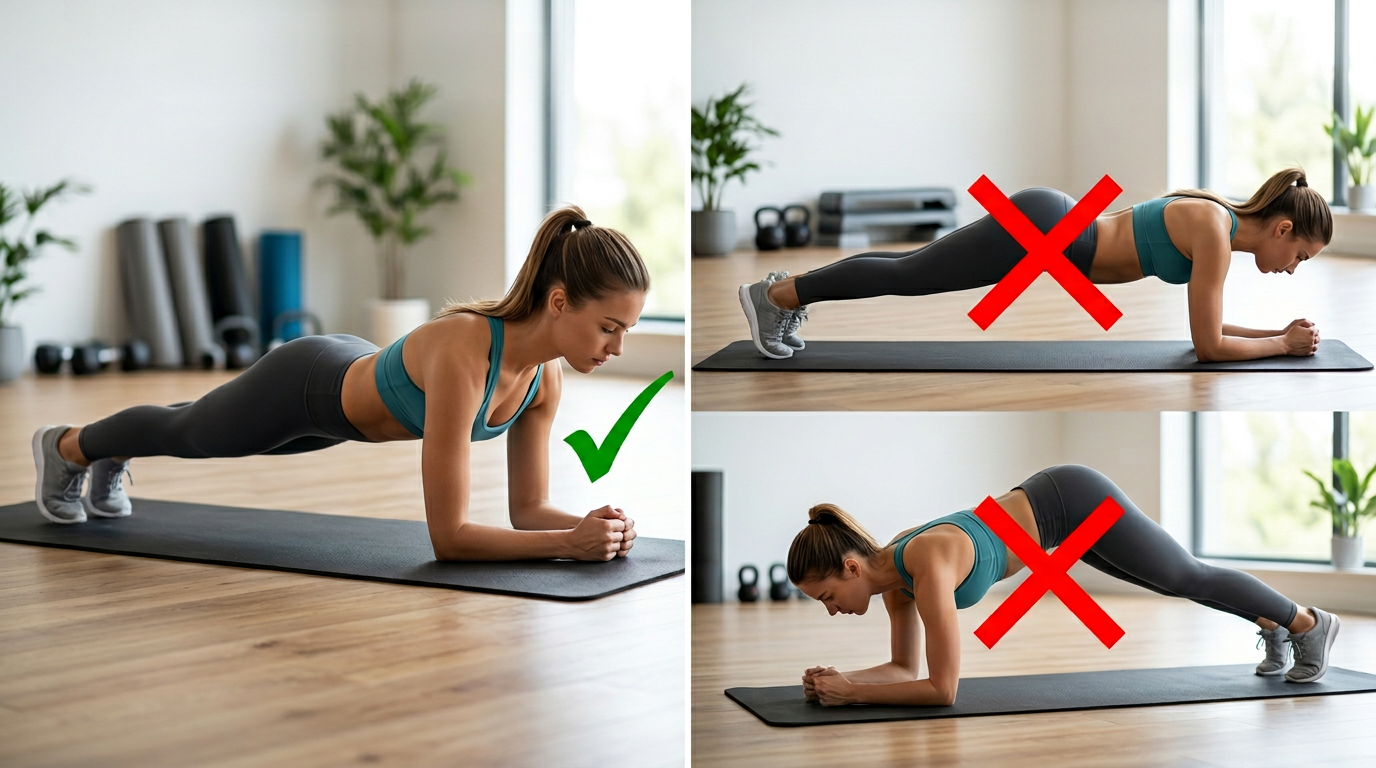
Side-by-side comparison showing proper plank form versus common mistakes, with a woman demonstrating correct alignment and incorrect positions with red X marks
Dead Bug: Coordination and Control
The dead bug exercise might have a funny name, but it's incredibly effective for teaching core stability while moving your limbs. Lie on your back with arms extended toward the ceiling and knees bent at 90 degrees above your hips. This is your starting position.
Slowly lower your right arm overhead while extending your left leg, hovering it just above the floor. Keep your lower back pressed into the mat throughout the movement. Return to start and repeat on the opposite side. This alternating pattern challenges your core to prevent rotation and maintain stability.
The key is moving slowly and deliberately. If your lower back arches off the floor, you've gone too far. Reduce your range of motion until you can maintain that back-to-floor contact. Perform 8-12 reps per side, focusing on control rather than speed.
Bird Dog: Balance and Posterior Chain
Bird dog exercises strengthen your entire core while emphasizing the often-neglected lower back muscles. Start on hands and knees in a tabletop position with your wrists under shoulders and knees under hips. Engage your core to create a stable, neutral spine.
Extend your right arm forward and left leg back simultaneously, creating a straight line from fingertips to toes. Hold for 2-3 seconds while maintaining balance, then return to start and switch sides. The challenge is preventing your hips from rotating or your spine from arching.
Focus on quality over quantity. If balance is difficult initially, practice lifting just one arm or one leg at a time before combining them. Perform 8-10 reps per side. This exercise translates directly to improved posture and back health.
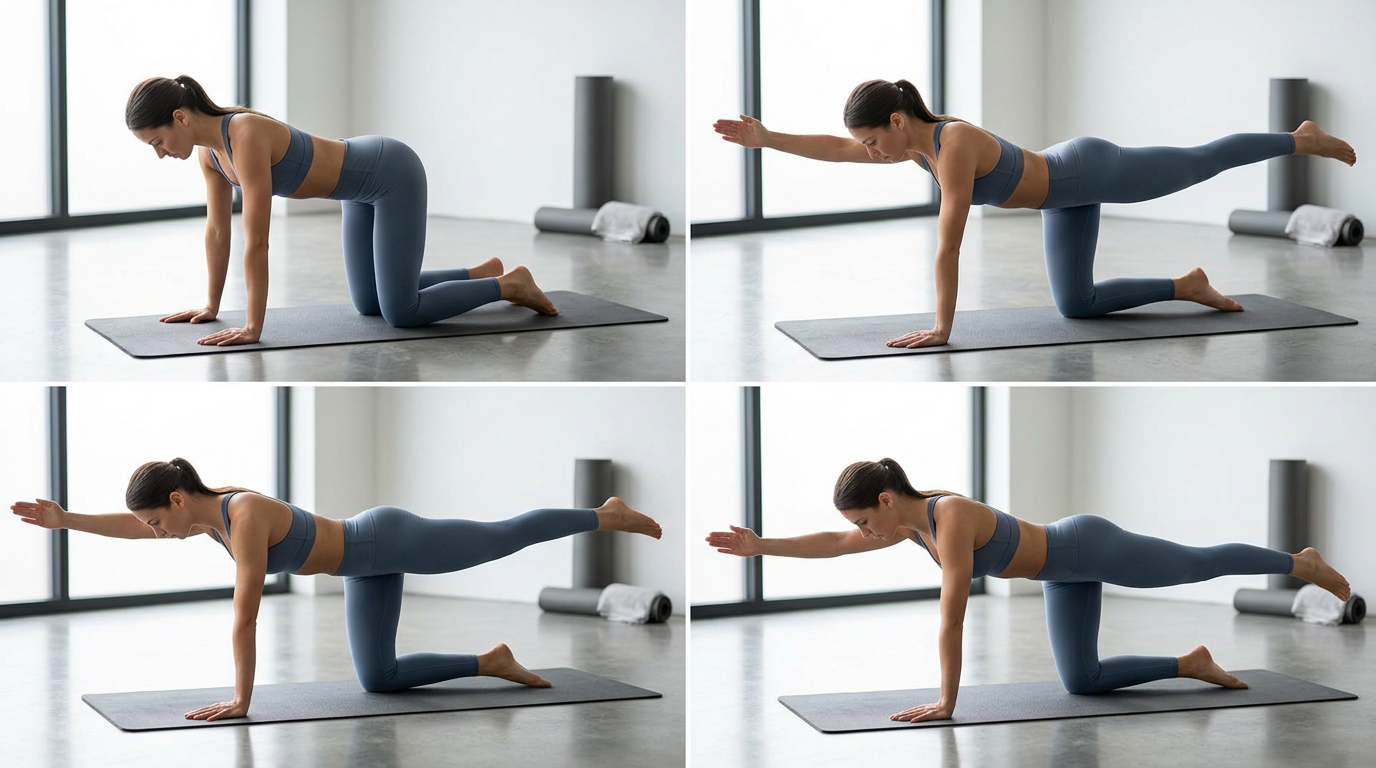
Step-by-step sequence showing a woman performing the bird dog exercise from starting tabletop position through full extension with proper form cues
Glute Bridge: Posterior Core Activation
The glute bridge is essential for core exercises for beginners because it strengthens your posterior chain—the muscles along your backside including glutes, hamstrings, and lower back. Lie on your back with knees bent and feet flat on the floor, hip-width apart.
Press through your heels to lift your hips toward the ceiling, creating a straight line from shoulders to knees. Squeeze your glutes at the top and engage your core to prevent overarching your lower back. Hold for 2-3 seconds, then lower with control.
Many women feel this primarily in their lower back, which indicates weak glutes. Focus on really squeezing your glutes at the top of the movement. You can place a small resistance band around your thighs to increase glute activation. Perform 12-15 reps for 2-3 sets.
Modified Side Plank: Lateral Stability
Side planks target your obliques and help prevent lateral spine movement. For beginners, start with a modified version on your knees. Lie on your side with your elbow directly under your shoulder and knees bent at 90 degrees behind you.
Lift your hips off the ground, creating a straight line from your head to your knees. Your top arm can rest on your hip or extend toward the ceiling for added challenge. Keep your core tight and avoid letting your hips sag toward the floor. Hold for 15-30 seconds per side.
As you build strength, progress to a full side plank with legs extended and stacked. This exercise is particularly important for women because it strengthens the muscles that support your spine during rotational movements and carrying loads on one side of your body.
Building Your Beginner Core Workout Routine
Having individual exercises is great, but knowing how to structure them into an effective routine makes all the difference. Here's how to create a sustainable core training program.
Frequency and Volume Guidelines
For beginners, training your core 2-3 times per week provides optimal results while allowing adequate recovery. Your core muscles need rest to grow stronger, just like any other muscle group. Space your core workouts throughout the week rather than doing them on consecutive days.
Start with 2-3 sets of each exercise, performing 8-12 reps or holding for 15-30 seconds depending on the movement. As you progress, increase difficulty by adding reps, extending hold times, or progressing to more challenging variations rather than simply doing more sets. Quality always beats quantity in core training.
Listen to your body. Some muscle soreness is normal when starting out, but sharp pain or discomfort that persists beyond a day or two signals you need to reduce intensity or check your form.
Sample Beginner Core Workout
Here's a complete beginner core workout you can do at home with no equipment. Perform this routine 2-3 times per week on non-consecutive days:
- Plank hold: 3 sets of 20-30 seconds
- Dead bug: 3 sets of 8-10 reps per side
- Bird dog: 3 sets of 8-10 reps per side
- Glute bridge: 3 sets of 12-15 reps
- Modified side plank: 2 sets of 20-30 seconds per side
Rest 30-60 seconds between sets. The entire workout takes 15-20 minutes. As you build strength over 4-6 weeks, gradually increase your hold times or reps before moving to more advanced variations.
Progression Strategies for Continued Growth
Progressive overload is essential for continued improvement. For isometric holds like planks, increase your time by 5-10 seconds each week. For dynamic exercises, add 1-2 reps per set weekly or every other week.
Once you can comfortably perform the upper end of the rep ranges with perfect form, progress to more challenging variations. For example, move from knee planks to full planks, or from dead bugs to leg lowers. You might also explore standing ab exercises as you advance, which challenge your core while incorporating balance and coordination.
Track your workouts in a journal or app. Recording your sets, reps, and how exercises felt helps you identify when you're ready to progress and ensures you're consistently challenging yourself.
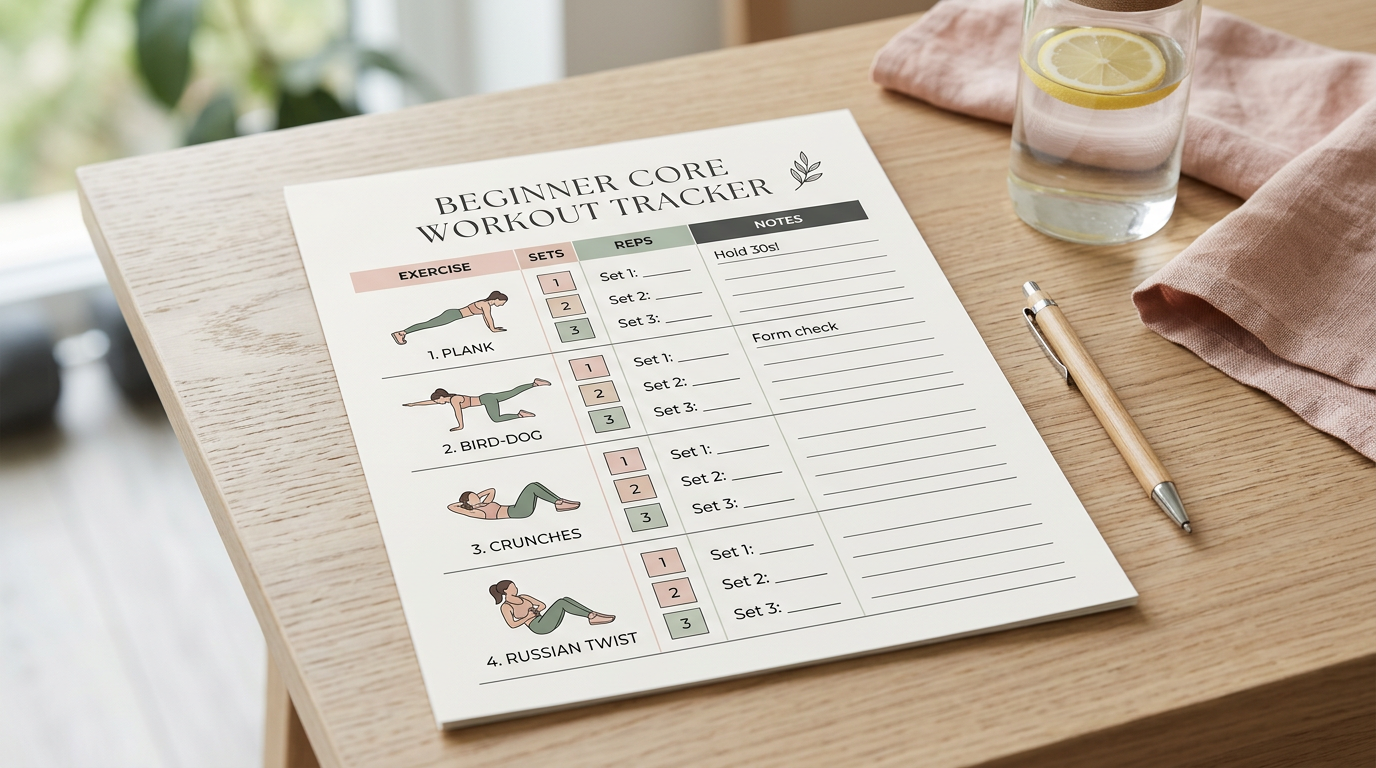
Clean, minimalist workout tracker template showing the sample beginner core workout with spaces to record sets, reps, and notes
Proper Form and Technique Tips
Perfect form is non-negotiable when it comes to core exercises for beginners. Poor technique not only reduces effectiveness but also increases injury risk, particularly to your lower back and neck.
Breathing During Core Exercises
Many beginners hold their breath during core work, which increases internal pressure and can cause dizziness. The proper breathing pattern is to exhale during the exertion phase and inhale during the easier phase. For planks and other holds, breathe normally and steadily throughout.
During dead bugs, exhale as you extend your arm and leg, inhale as you return to start. For glute bridges, exhale as you lift your hips, inhale as you lower. This breathing pattern helps maintain core engagement and provides oxygen to working muscles.
Protecting Your Lower Back
Lower back pain during core exercises usually indicates your core isn't strong enough to maintain proper position, or you're using momentum instead of muscle control. Always prioritize maintaining neutral spine alignment—your lower back should have its natural slight curve, not excessively arched or completely flat.
If you feel strain in your lower back during exercises like dead bugs or leg raises, reduce your range of motion. Keep your working leg higher off the ground until your core is strong enough to prevent your back from arching. Using a small towel under your lower back can help you feel when you lose that neutral position.
Engaging Your Core Properly
"Engage your core" is common advice, but what does it actually mean? Think about gently pulling your belly button toward your spine without holding your breath or sucking in dramatically. You should still be able to breathe normally while maintaining this tension.
Another cue is to imagine bracing for a punch to your stomach—you naturally tighten all the muscles around your midsection. This full-body tension, not just sucking in your stomach, creates true core stability. Practice this engagement while standing or sitting before adding it to exercises.
Common Mistakes Beginners Make
Avoiding these common pitfalls will accelerate your progress and keep you injury-free as you build core strength.
Rushing Through Repetitions
Speed is the enemy of effective core training. Using momentum to complete reps means your muscles aren't doing the work. Slow, controlled movements with 2-3 second holds at peak contraction deliver far better results than rapid-fire reps.
Count slowly during your exercises. For dead bugs, take 3-4 seconds to extend, hold for 1-2 seconds, then 3-4 seconds to return. This time under tension is what builds strength. If you can't maintain control at a slower pace, reduce your reps or range of motion.
Neglecting the Lower Back
Many women focus exclusively on front ab exercises while ignoring their lower back muscles. This creates imbalance and can actually worsen posture problems. Your core is a 360-degree system that requires balanced development.
Include exercises like bird dogs and glute bridges that strengthen your posterior chain. If you experience lower back tightness, it often means these muscles are weak and overworked, not that you should avoid training them. Strengthening them properly actually reduces discomfort.
Expecting Immediate Visible Results
Core exercises build strength and muscle, but visible abs depend primarily on body fat percentage. You might feel significantly stronger and notice improved posture within 4-6 weeks, but visible definition takes longer and requires attention to nutrition alongside training.
Focus on performance goals rather than appearance goals—can you hold a plank longer, do more reps with perfect form, or maintain better posture throughout your day? These functional improvements matter more than aesthetics and will keep you motivated.
Modifications for Different Fitness Levels
Everyone starts somewhere different. These modifications ensure core exercises for beginners remain accessible regardless of your current fitness level.
Making Exercises Easier
If standard beginner exercises feel too challenging, don't get discouraged. For planks, start on your knees or elevate your hands on a bench or wall. The more upright your body angle, the easier the exercise becomes.
For dead bugs, keep your knees bent rather than extending your legs fully. For bird dogs, practice just lifting one arm or one leg at a time before combining them. These regressions still build strength while you develop the stability for full versions.
There's no shame in modifications—they're strategic tools for meeting yourself where you are. Use them until you build enough strength to progress, which typically takes 2-4 weeks of consistent practice.
Making Exercises More Challenging
Once beginner exercises become comfortable, add challenge without jumping to advanced moves. For planks, try lifting one foot slightly off the ground or adding shoulder taps. For glute bridges, perform single-leg variations or add a pause at the top.
Increase time under tension by slowing down your tempo even more. For dead bugs, add a 3-5 second hold at full extension. For bird dogs, hold the extended position for 5-10 seconds instead of 2-3. These subtle progressions build serious strength.
Special Considerations and Contraindications
Certain conditions require exercise modifications. If you have diastasis recti (abdominal separation common after pregnancy), avoid exercises that create a doming effect in your midline. Focus on deep core engagement exercises and consult a pelvic floor physical therapist.
For women with scoliosis, some rotational movements may feel uncomfortable. Focus on exercises that promote stability rather than excessive rotation, and work with a qualified trainer who understands your condition. If you have osteoporosis, avoid excessive spinal flexion exercises like crunches.
Always consult with a healthcare provider before starting a new exercise program if you have any medical conditions or concerns. Your safety is paramount.
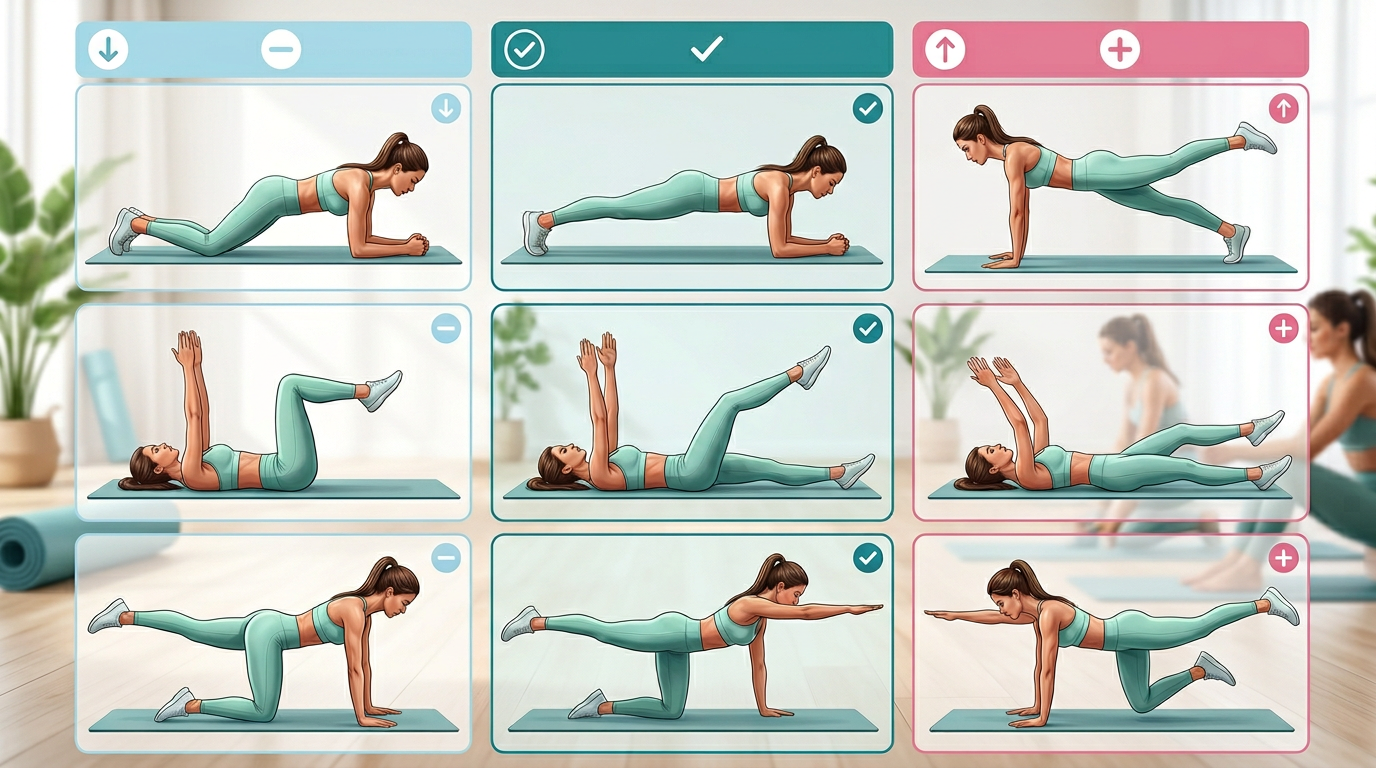
Infographic showing exercise modifications in three columns: easier regression, standard version, and advanced progression for plank, dead bug, and bird dog exercises
Integrating Core Work Into Your Overall Fitness Routine
Core training doesn't exist in isolation. Here's how to incorporate these exercises into a comprehensive fitness approach.
Core Training and Strength Workouts
You don't need separate core days if you're following a well-designed strength training program. Compound movements like squats, deadlifts, and overhead presses require significant core engagement. These exercises build functional core strength while working multiple muscle groups.
Add dedicated core exercises for beginners at the end of your strength workouts 2-3 times per week. This ensures your core is fresh for your main lifts while still getting targeted work. Alternatively, do core work on your rest days from strength training as active recovery.
Core Strength for Cardio Performance
A strong core dramatically improves your cardio performance. Runners benefit from reduced energy leaks and better form maintenance during long runs. Cyclists generate more power through a stable core. Even walking becomes more efficient with proper core engagement.
Your core acts as the link between your upper and lower body, transferring force during movement. Weak core muscles mean energy leaks and compensation patterns that reduce efficiency and increase injury risk. Investing time in core strength pays dividends across all physical activities.
Recovery and Rest Days
Your core muscles need recovery just like your legs or arms. Avoid training your core intensely on consecutive days. If you do full-body strength training, your core is already working during compound movements, so you may need less dedicated core work.
Signs you need more recovery include persistent soreness lasting more than 48 hours, decreased performance, or difficulty maintaining proper form. Rest is when adaptation happens—your muscles grow stronger during recovery, not during the workout itself.
Nutrition and Core Strength
While this article focuses on exercises, nutrition plays a supporting role in building core strength and revealing muscle definition.
Protein for Muscle Building
Adequate protein intake supports muscle recovery and growth. Women should aim for approximately 0.7-1 gram of protein per pound of body weight daily, especially when strength training. Distribute protein across your meals rather than consuming it all at once.
Good protein sources include lean meats, fish, eggs, Greek yogurt, legumes, and protein supplements if needed. Your core muscles require protein to repair and strengthen after workouts, just like any other muscle group.
Overall Nutrition for Fat Loss
If your goal includes visible ab definition, understand that this requires reducing body fat through a moderate caloric deficit combined with strength training. You cannot spot-reduce fat from your midsection, but you can build muscle while gradually losing fat overall.
Focus on whole foods, adequate protein, plenty of vegetables, and appropriate portions. Crash diets and extreme restrictions often backfire, causing muscle loss alongside fat loss. A sustainable approach that preserves muscle while gradually reducing fat produces the best long-term results.
Hydration and Performance
Proper hydration affects exercise performance and recovery. Even mild dehydration reduces strength and endurance. Aim for at least 8-10 glasses of water daily, more if you're exercising intensely or in hot conditions.
Your muscles are approximately 75% water, and adequate hydration supports nutrient delivery, waste removal, and muscle function. Keep a water bottle handy during workouts and sip regularly throughout the day.
Frequently Asked Questions
How do I strengthen my core as a beginner?
Start with foundational exercises like planks, dead bugs, bird dogs, and glute bridges performed 2-3 times weekly. Focus on proper form over repetitions, beginning with 2-3 sets of 8-12 reps or 15-30 second holds. Gradually increase difficulty as your strength improves over 4-6 weeks.
What core exercises should a person with scoliosis avoid?
People with scoliosis should typically avoid exercises involving excessive spinal rotation or unilateral movements that may exacerbate curve patterns. Focus on symmetrical exercises like planks and dead bugs that promote stability. Always consult with a physical therapist or healthcare provider for personalized guidance based on your specific curve pattern.
What are the big 3 exercises for the core?
The big 3 core exercises are the plank for anti-extension, the side plank for lateral stability, and the bird dog for anti-rotation. These movements train your core's primary functions of resisting unwanted movement rather than creating it, building functional strength that transfers to daily activities and other exercises.
What is the 3-3-3 rule for exercise?
The 3-3-3 rule suggests exercising 3 times per week, for 30 minutes per session, for at least 3 months to establish a sustainable habit. This framework provides enough frequency for adaptation while allowing recovery. For core training specifically, 2-3 weekly sessions of 15-20 minutes effectively builds strength for beginners.
How long does it take to see results from core exercises?
You'll typically feel stronger and notice improved posture within 3-4 weeks of consistent core training. Visible muscle definition depends on body fat percentage and takes longer, usually 8-12 weeks with proper nutrition. Focus on performance improvements like holding planks longer or completing more reps with better form as meaningful progress markers.
Can I do core exercises every day?
While possible, daily intense core training isn't optimal for beginners. Your core muscles need 48 hours to recover and adapt between challenging sessions. Training 2-3 times weekly with rest days allows proper recovery while building strength effectively. Light core engagement during daily activities or gentle mobility work is fine on rest days.
Do I need equipment for beginner core exercises?
No equipment is necessary for effective beginner core training. Bodyweight exercises like planks, dead bugs, and bird dogs provide excellent results. An exercise mat adds comfort but isn't essential. As you progress, resistance bands or stability balls can add variety, but they're optional for building a strong foundational core.
Conclusion
Building a strong core foundation doesn't require complicated equipment or hours of training. The core exercises for beginners outlined in this guide—planks, dead bugs, bird dogs, glute bridges, and side planks—provide everything you need to develop stability, strength, and confidence. Remember that consistency and proper form matter far more than intensity or volume when you're starting out.
Start with 2-3 sessions per week, focus on quality movement, and progressively challenge yourself as you build strength. Your core supports every movement you make, from picking up groceries to advancing in your fitness journey. The investment you make now in building this foundation will pay dividends in improved posture, reduced back pain, and enhanced performance across all activities. Begin with just one exercise today, and build from there—your stronger, more stable self is waiting.