Cardio Before or After Weights: What Women Need to Know
Cardio before or after weights depends on your fitness goals. For maximum strength gains and muscle building, perform weights first when energy is highest. For endurance-focused goals or warm-up purposes, cardio first works well. Most women benefit from prioritizing strength training before cardio to preserve performance quality.
You've committed to hitting the gym, you've got your workout playlist ready, and you're motivated to crush your fitness goals. But as you walk through those doors, a familiar question hits you: should you jump on the treadmill first or head straight to the weights?
This debate about cardio before or after weights isn't just gym small talk—it's a legitimate question that can significantly impact your results. The order in which you structure your workout affects everything from your energy levels and strength performance to how effectively you build muscle and burn fat.
For women specifically, understanding how to sequence cardio and strength training becomes even more important. Whether you're focused on building those strong curves, improving your overall fitness, or maximizing fat loss while maintaining muscle, the timing of your cardio matters. This comprehensive guide will break down the science, debunk the myths, and give you actionable strategies to structure your workouts for optimal results.
Key Takeaways
- Lifting weights before cardio preserves strength performance and maximizes muscle-building potential
- Your primary fitness goal should dictate workout order—strength goals favor weights first, endurance goals may benefit from cardio first
- Short cardio warm-ups (5-10 minutes) before weights can enhance performance without depleting energy
- Separating cardio and weights by several hours or different days provides optimal recovery for both
- Most women see better body composition results by prioritizing strength training over extended cardio sessions
Understanding the Cardio Before or After Weights Debate
The question of whether to do cardio before or after weights has sparked countless discussions in fitness circles. The answer isn't one-size-fits-all—it depends entirely on your individual goals, energy levels, and what you're trying to achieve from your training.
At its core, this debate centers on energy systems and workout quality. Your body has limited resources during any given training session. When you perform one type of exercise first, you're using up glycogen stores, fatiguing your muscles, and tapping into your central nervous system's capacity to generate force.
How Exercise Order Affects Performance
Think of your energy like a tank of gas. When you start your workout, that tank is full. Each exercise you perform drains that tank a little more. If you spend 30 minutes running before you lift weights, you've already used a significant portion of your available energy.
This matters because strength training requires high-quality effort. To build muscle and get stronger, you need to lift with proper form and sufficient intensity. When you're already fatigued from cardio, your lifting performance suffers—you can't lift as heavy, your form breaks down faster, and you may not adequately stimulate muscle growth.
The Science of Energy Systems
Your body uses different energy pathways for cardio versus strength training. Resistance training primarily relies on the phosphagen and glycolytic systems—quick, powerful energy sources that fuel short bursts of effort. Cardio uses the oxidative system, which is more sustainable but less explosive.
When you do cardio first, you deplete glycogen stores that your muscles need for strength training. You also create metabolic byproducts like lactate that can interfere with force production. This physiological reality is why most experts recommend a specific workout order based on your goals.

Infographic showing energy systems used during cardio versus strength training, with visual representation of glycogen depletion patterns
Weights Before Cardio: The Best Approach for Most Women
For most women focused on building strength, sculpting their physique, and improving body composition, performing weights before cardio is the superior strategy. This approach allows you to tackle your strength training when you're fresh, energized, and capable of lifting at your peak performance.
Why Prioritize Strength Training
Strength training is a skill-based activity that requires focus, coordination, and maximal effort. Unlike steady-state cardio where you can push through fatigue, lifting weights demands technical precision. When you're tired, several things happen:
- Your form deteriorates, increasing injury risk
- You can't lift as heavy, reducing the muscle-building stimulus
- Your mind-muscle connection weakens, making exercises less effective
- You're more likely to cut your workout short due to fatigue
- Recovery between sets takes longer, extending workout time
- Your central nervous system is already taxed, limiting power output
By lifting first, you ensure that your most important work—the training that builds lean muscle, boosts metabolism, and creates those strong curves—gets your best effort.
Muscle Building and Fat Loss Benefits
When you prioritize weights, you create an optimal environment for muscle growth. Your muscles need adequate stimulus to adapt and grow stronger. This requires lifting with sufficient intensity and volume, which is only possible when you're not pre-fatigued.
Additionally, strength training creates an "afterburn effect" known as EPOC (excess post-exercise oxygen consumption). Your metabolism stays elevated for hours after lifting, burning additional calories. When you add cardio after weights, you extend this calorie-burning window even further.
Hormonal Considerations for Women
Women's bodies respond particularly well to strength training. Building muscle helps balance hormones, improves insulin sensitivity, and increases bone density—all crucial factors for long-term health. However, excessive cardio before lifting can elevate cortisol levels, potentially interfering with muscle recovery and growth.
By doing weights first, you maximize the anabolic (muscle-building) response from your training while minimizing excessive stress hormone production that can occur with prolonged or intense cardio sessions.
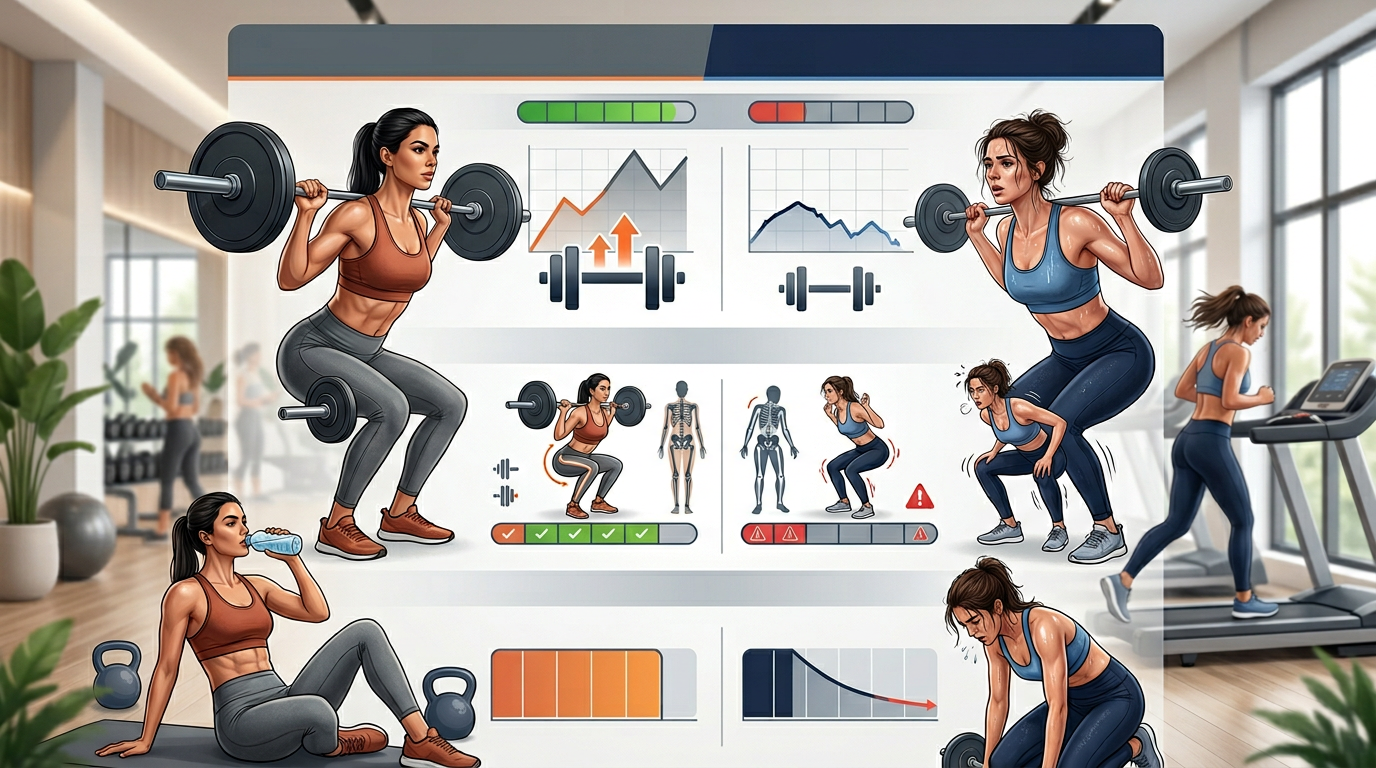
Comparison chart showing workout quality metrics (strength output, form quality, time to fatigue) for weights-first versus cardio-first approaches
When Cardio Before Weights Makes Sense
While weights-first is the gold standard for most goals, there are specific scenarios where doing cardio before weights can be beneficial or even necessary for your training plan.
Training for Endurance Events
If you're preparing for a half-marathon, triathlon, or other endurance event, your cardio performance takes priority. In this case, you want to do your quality cardio work when you're fresh. Your strength training becomes supplementary—important for injury prevention and performance support, but not your primary focus.
Endurance athletes should structure their training to prioritize their sport-specific work. This means doing your key running, cycling, or swimming sessions first, then adding strength work afterward to build resilience and prevent imbalances.
Using Cardio as an Active Warm-Up
A short, light cardio session before weights is actually beneficial. Five to ten minutes of low-intensity cardio—like walking on an incline, easy cycling, or rowing—increases blood flow, elevates body temperature, and prepares your body for strength training.
This type of warm-up is different from a full cardio workout. You're not trying to get breathless or accumulate significant fatigue. Instead, you're priming your cardiovascular system and loosening up your joints. This can actually improve your lifting performance.
Personal Preference and Sustainability
Sometimes, the best workout order is the one you'll actually stick with. If you genuinely prefer doing cardio first and it doesn't negatively impact your strength training, that consistency might be worth more than the theoretical optimal order.
The key is being honest with yourself. If doing cardio first means you're too tired to lift properly, you're shortchanging your results. But if a quick jog helps you mentally transition into your workout and you still lift with good intensity, then it's working for you.
The Best Cardio Before or After Weights Strategy for Different Goals
Your fitness goals should be the primary factor determining your workout structure. Here's how to sequence cardio and weights based on what you're trying to achieve.
Goal: Building Muscle and Strength
Recommended order: Weights first, minimal cardio after (if any)
When muscle building is your priority, structure your workouts like this:
- 5-10 minute light cardio warm-up (optional)
- Dynamic stretching and mobility work
- Complete your entire strength training session
- 10-15 minutes of low-intensity cardio for cool-down (optional)
- Static stretching and recovery work
Keep cardio minimal and low-intensity. Your body needs energy and recovery resources for muscle growth. Excessive cardio can interfere with this process by creating competing demands on your system.
Goal: Fat Loss While Maintaining Muscle
Recommended order: Weights first, moderate cardio after
For body recomposition—losing fat while preserving or building muscle—use this approach:
- 5-10 minute light cardio warm-up
- Full strength training session (45-60 minutes)
- 20-30 minutes of moderate-intensity cardio
- Cool-down and stretching
This order ensures you maintain the muscle-building stimulus from strength training while adding a cardio component to increase total calorie burn. The cardio after weights also takes advantage of depleted glycogen stores, potentially enhancing fat oxidation.
Goal: Overall Fitness and Health
Recommended order: Flexible, based on preference and energy
If you're training for general health and wellness without specific body composition goals, you have more flexibility. Consider alternating your approach:
- Monday/Thursday: Weights first, then 15-20 minutes cardio
- Tuesday/Friday: 20-30 minutes cardio, then lighter strength work
- Wednesday/Saturday: Separate sessions or rest days
- Sunday: Active recovery like walking or yoga
This variety keeps your training interesting while ensuring both cardiovascular and muscular fitness improve over time.
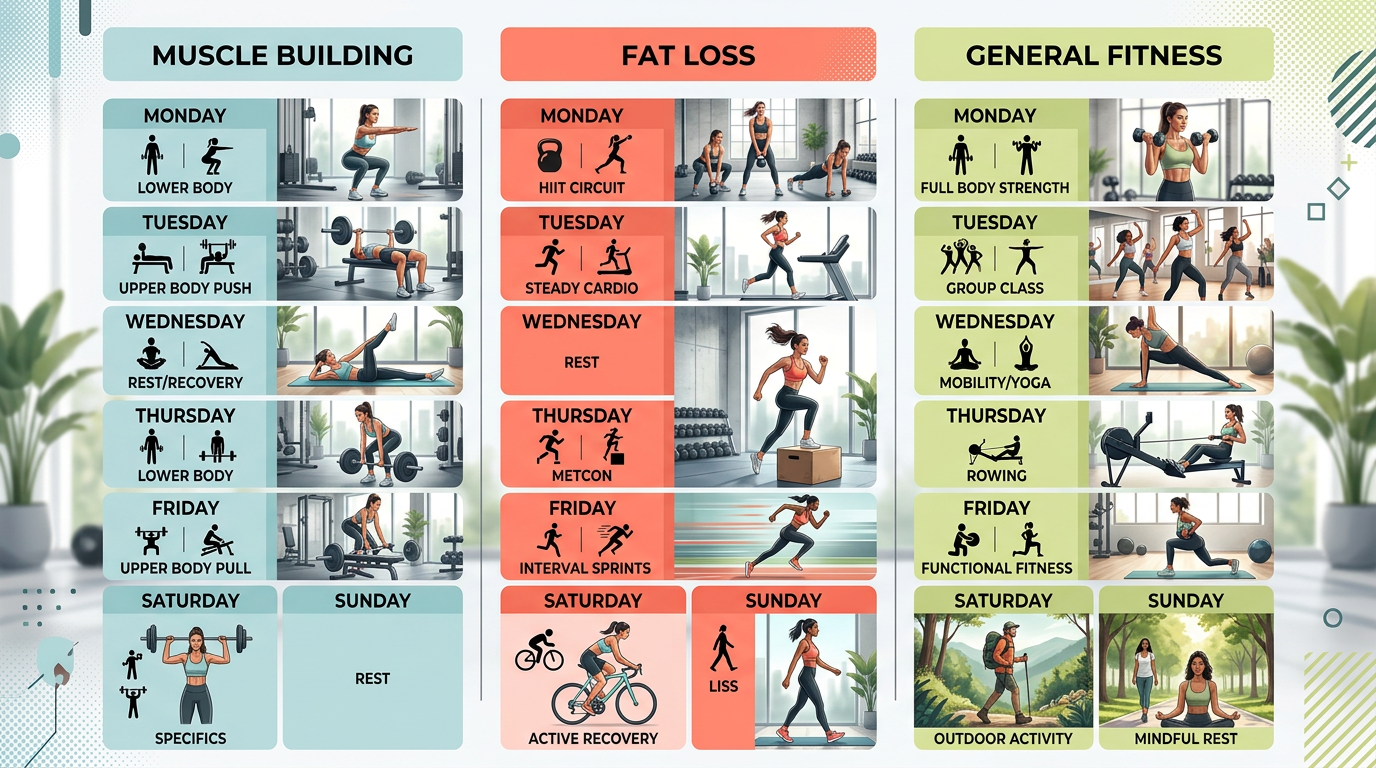
Visual workout template showing three different training week layouts based on muscle building, fat loss, and general fitness goals
How to Structure Your Cardio and Weights for Maximum Results
Beyond simply deciding what comes first, the specific details of how you structure both components matter significantly for your results.
Cardio Duration and Intensity Guidelines
Not all cardio is created equal. The type, duration, and intensity of your cardiovascular work dramatically affects how it interacts with your strength training.
If doing cardio after weights:
- Keep sessions to 20-30 minutes maximum
- Use moderate intensity (conversational pace)
- Consider HIIT for time efficiency (10-15 minutes)
- Focus on lower-impact options if leg training was intense
- Allow your heart rate to recover between strength and cardio
If doing cardio before weights:
- Limit to 5-10 minutes as a warm-up only
- Keep intensity very light (50-60% max heart rate)
- Choose activities that don't pre-fatigue target muscles
- Avoid high-impact or technically demanding cardio
Rest Periods Between Cardio and Weights
If you're doing both in the same session, the transition period matters. Take 3-5 minutes between finishing cardio and starting weights (or vice versa) to allow your heart rate to normalize and your energy systems to recover slightly.
Use this time to hydrate, adjust equipment, review your workout plan, or do some light stretching. This brief recovery period can significantly improve the quality of your second training modality.
The Ideal Solution: Separate Sessions
If your schedule allows, the absolute best approach is separating cardio and weights by several hours or doing them on different days entirely. This gives each workout your full energy and attention.
Options for separation include:
- Morning cardio, evening weights (or vice versa)
- Alternating days (Monday/Wednesday/Friday weights, Tuesday/Thursday cardio)
- Cardio on active recovery days between strength sessions
- Focused training blocks (4 weeks strength-focused, 2 weeks cardio-focused)
Common Mistakes Women Make with Cardio and Weights Timing
Understanding what not to do is just as important as knowing the right approach. Here are the most common errors that can sabotage your results.
Doing Too Much Cardio Before Lifting
The biggest mistake is treating your pre-lifting cardio like a full workout. Running hard for 30-45 minutes before attempting to squat or deadlift is a recipe for poor performance and potential injury. Your pre-lifting cardio should be a gentle warm-up, not a workout in itself.
If you feel significantly winded or fatigued after your cardio portion, you've done too much. You should feel warm and loose, not tired and depleted.
Neglecting Strength Training Entirely
Many women fall into the cardio-only trap, believing that hours on the treadmill or elliptical are the key to their ideal body. This approach often leads to frustration when results plateau and the body becomes "skinny fat"—lacking muscle definition despite being relatively lean.
Strength training is non-negotiable for building the strong, sculpted physique most women desire. Cardio is a supplement to strength work, not a replacement for it.
Not Adjusting Based on Training Intensity
Your workout structure should flex based on what you're doing that day. If you're planning a particularly intense leg day with heavy squats and deadlifts, extensive cardio afterward might be too much. Conversely, on an upper body day, adding some lower-body cardio like cycling is less problematic.
Learn to read your body and adjust accordingly. Progressive overload in strength training requires you to be fresh enough to push your limits safely.
Ignoring Recovery Needs
Combining intense cardio with heavy lifting in the same session, day after day, is a fast track to overtraining. Your body needs adequate recovery to adapt and grow stronger. If you're constantly exhausted, your performance is declining, or you're getting injured frequently, you're likely doing too much.
Remember that rest and recovery are when your body actually improves. The workout is the stimulus; the adaptation happens during recovery.
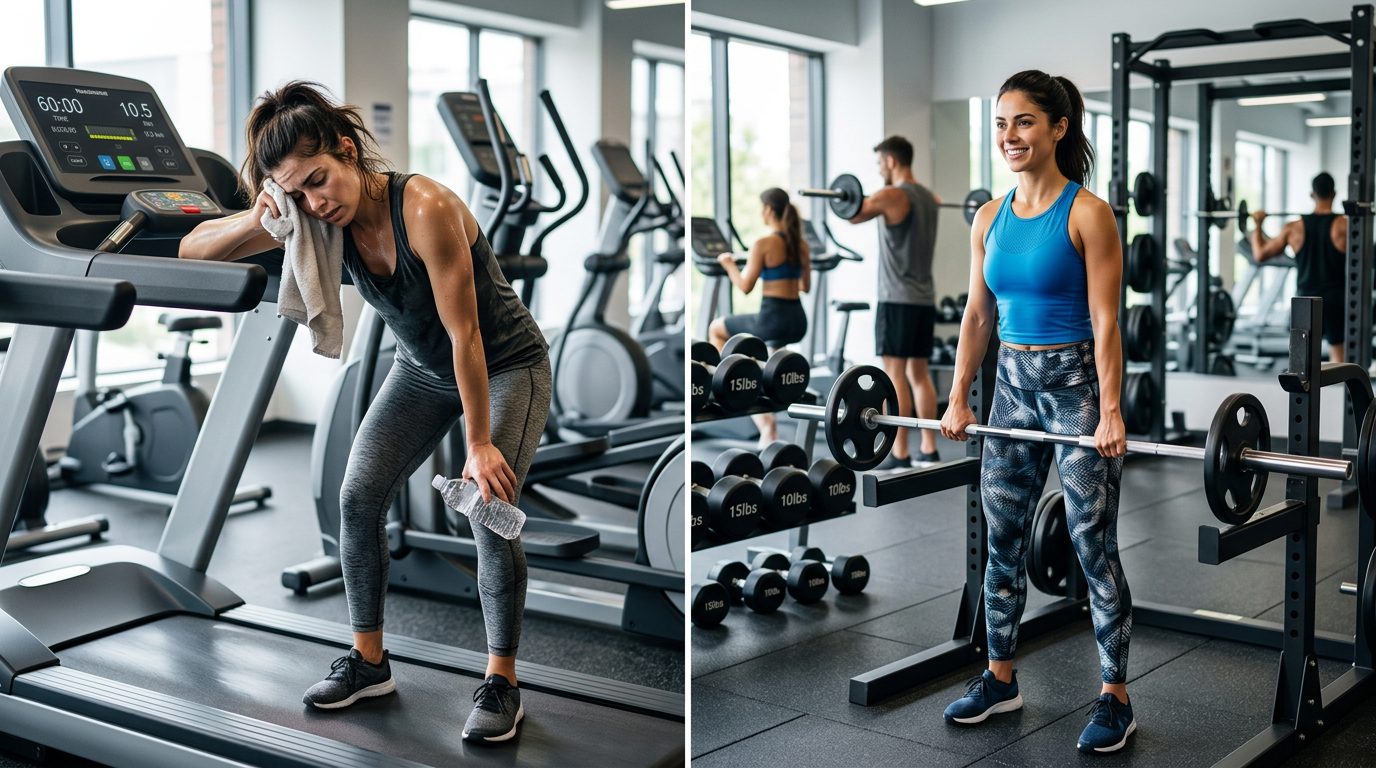
Side-by-side comparison showing incorrect workout structure (exhausted woman after too much cardio) versus correct structure (energized woman starting strength training fresh)
Practical Tips for Implementing the Right Workout Order
Knowing the theory is one thing; putting it into practice is another. Here are actionable strategies to help you structure your workouts effectively.
Start with a Proper Warm-Up
Regardless of whether you prioritize cardio or weights, always begin with a proper warm-up. This should include:
- 5-10 minutes of light cardio to increase heart rate and blood flow
- Dynamic stretching targeting the muscles you'll use
- Movement-specific warm-up sets with lighter weights
- Mental preparation and workout review
This comprehensive warm-up reduces injury risk and primes your body for optimal performance.
Track Your Performance
Keep a workout journal noting how different workout orders affect your performance. Track variables like:
- Weight lifted and reps completed
- Energy levels throughout the session
- Form quality and difficulty
- Recovery time needed between workouts
- Overall enjoyment and sustainability
This data helps you identify what actually works for your body, rather than relying solely on general recommendations.
Fuel Your Workouts Appropriately
Nutrition timing can help mitigate some of the challenges of combining cardio and weights. Consider having a small snack with carbohydrates and protein 30-60 minutes before training to ensure adequate energy for both components.
Post-workout nutrition is equally important. After completing both cardio and weights, prioritize protein intake to support muscle recovery and carbohydrates to replenish glycogen stores.
Listen to Your Body
While science provides general guidelines, your individual response matters most. Some women genuinely perform better with cardio first, while others need weights first to feel their best. Pay attention to:
- Which order leaves you feeling more accomplished
- When you're able to push harder and lift heavier
- What structure you're most likely to maintain consistently
- How different approaches affect your recovery and soreness
The best workout plan is one you can sustain long-term while making consistent progress toward your goals.
Frequently Asked Questions
Should you do cardio first or weights?
Most women should do weights first to maximize strength performance and muscle-building stimulus. Cardio after weights allows you to lift with full energy while still getting cardiovascular benefits. Reserve cardio-first only for endurance training goals or brief warm-ups.
What is the 2 2 2 rule in gym?
The 2 2 2 rule suggests spending 2 minutes warming up, 2 minutes on main exercises, and 2 minutes cooling down for each workout segment. While this provides a basic framework, most effective workouts require longer durations for each component to achieve meaningful results.
Is 20 minutes of cardio after weights enough?
Yes, 20 minutes of cardio after weights is sufficient for most fitness goals including fat loss and cardiovascular health. This duration provides cardiovascular benefits without compromising recovery from strength training. Focus on moderate intensity for best results without overtraining.
Can I do cardio and weights on the same day?
Yes, combining cardio and weights in the same session is effective when structured properly. Prioritize your primary goal first, keep cardio moderate in duration and intensity, and ensure adequate nutrition and recovery. Separating them by several hours optimizes performance for both.
How long should I wait between cardio and weights?
Wait 3-5 minutes between cardio and weights to allow heart rate normalization and partial energy system recovery. Use this time for hydration, equipment setup, and mental preparation. For optimal performance, separate them by 6-8 hours or do them on different days.
Does doing cardio before weights burn more fat?
No, cardio before weights does not significantly increase fat burning compared to weights first. Total calorie expenditure and dietary habits matter most for fat loss. Weights first preserves muscle mass while creating metabolic benefits that support long-term fat loss more effectively.
What type of cardio is best after strength training?
Low to moderate intensity steady-state cardio works best after strength training, such as brisk walking, cycling, or rowing. These activities promote recovery without excessive additional fatigue. Avoid high-impact or highly technical cardio that requires significant coordination when already fatigued from lifting.
Conclusion
The question of cardio before or after weights doesn't have a universal answer, but for most women focused on building strength and improving body composition, weights first is the winning strategy. This approach ensures you're lifting at your peak performance, maximizing muscle-building stimulus, and setting yourself up for long-term success.
Remember that your primary fitness goal should always dictate your workout structure. Whether you're building curves, training for an endurance event, or simply improving overall health, understanding how cardio and strength training interact allows you to make informed decisions about your training.
Start implementing these principles in your next workout and track how different approaches affect your performance, energy, and results over time.