Best Hamstring Exercises for Strong, Sculpted Legs
The best hamstring exercises include Romanian deadlifts, Nordic curls, glute-ham raises, lying leg curls, and kettlebell swings. These movements target all three hamstring muscles through hip extension and knee flexion, building strength, preventing injury, and creating balanced, sculpted legs when performed 2-3 times weekly.
Your hamstrings are the unsung heroes of lower body strength. These powerful muscles running along the back of your thighs don't just shape your legs—they protect your knees, stabilize your hips, and power every sprint, jump, and squat you perform. Yet many women overlook hamstring training, focusing exclusively on glutes and quads. This imbalance doesn't just limit your aesthetic goals; it increases injury risk and compromises athletic performance.
Strong hamstrings are essential for functional movement patterns, whether you're chasing after kids, hiking challenging trails, or crushing personal records in the gym. The best hamstring exercises target these muscles through multiple movement patterns, ensuring complete development of all three hamstring muscles: the biceps femoris, semitendinosus, and semimembranosus.
In this comprehensive guide, you'll discover the most effective hamstring exercises backed by research and real-world results. We'll cover exercises for every fitness level, explain proper form to maximize muscle activation, and show you how to build balanced, powerful legs that support your active lifestyle.
Key Takeaways
- The hamstrings consist of three muscles that require varied exercises targeting both hip extension and knee flexion for complete development
- Romanian deadlifts and Nordic curls consistently show the highest muscle activation in research studies
- Training hamstrings 2-3 times weekly with progressive overload prevents knee injuries and creates balanced lower body strength
- Combining compound movements with isolation exercises produces superior results compared to either approach alone
- Strong hamstrings improve athletic performance, reduce lower back pain, and enhance overall leg aesthetics
Quick Comparison: Top Hamstring Exercises
Exercise
Difficulty Level
Equipment Needed
Primary Focus
Best For
Romanian Deadlift
Intermediate
Barbell/Dumbbells
Hip Extension
Overall Mass
Nordic Hamstring Curl
Advanced
Bodyweight/Anchor
Knee Flexion
Injury Prevention
Glute-Ham Raise
Advanced
GHD Machine
Both Functions
Complete Development
Lying Leg Curl
Beginner
Machine
Knee Flexion
Isolation
Kettlebell Swing
Intermediate
Kettlebell
Hip Extension
Power Development
Single-Leg RDL
Intermediate
Dumbbell/Bodyweight
Hip Extension
Balance & Stability
Good Morning
Intermediate
Barbell
Hip Extension
Posterior Chain
Stability Ball Curl
Beginner
Exercise Ball
Knee Flexion
Home Training
Cable Pull-Through
Beginner
Cable Machine
Hip Extension
Learning Hip Hinge
Walking Lunge
Beginner
Dumbbells/Bodyweight
Eccentric Control
Functional Strength
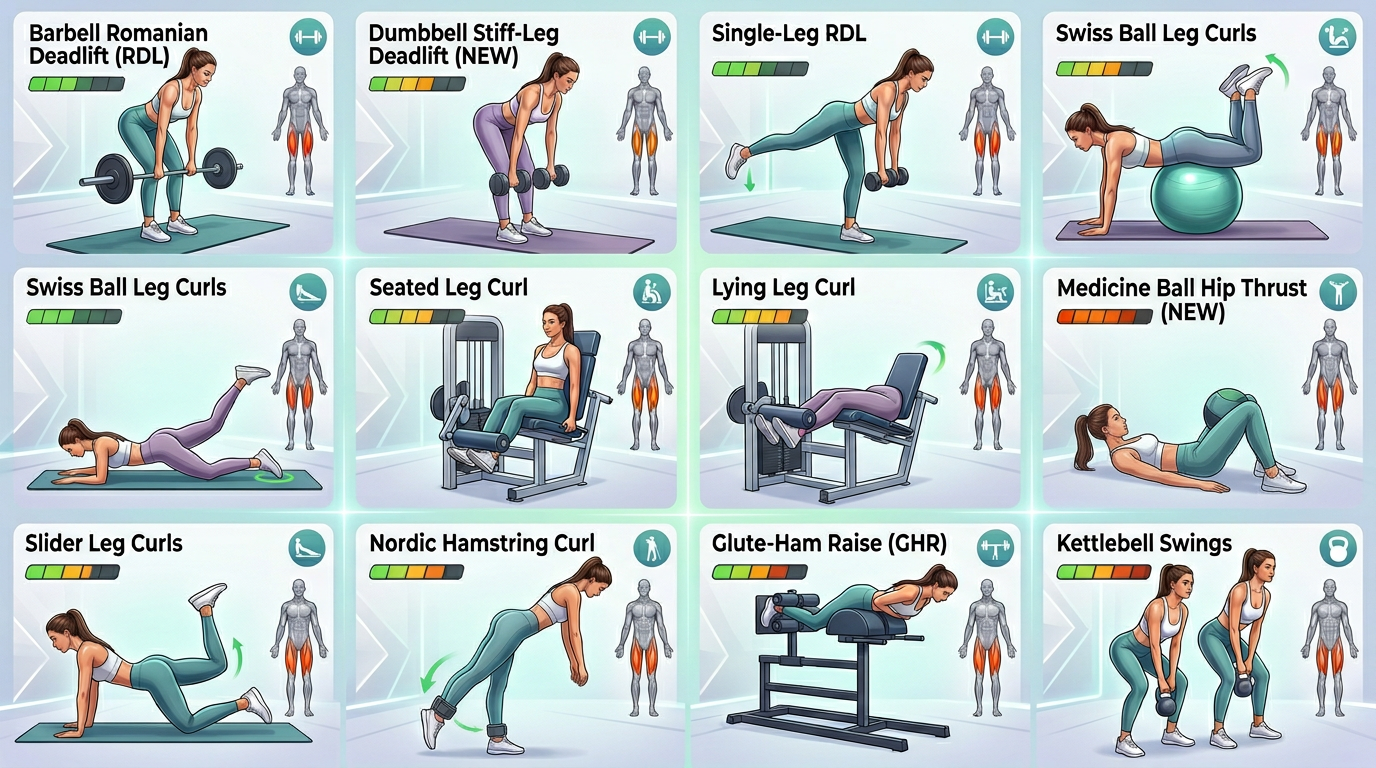
Infographic comparing the 10 best hamstring exercises with illustrations showing proper form for each movement, labeled with difficulty level and primary muscle focus
Understanding Your Hamstrings: Why Targeted Training Matters
Before diving into specific exercises, understanding hamstring anatomy helps you train smarter. Your hamstrings aren't a single muscle—they're a group of three distinct muscles working together to control hip and knee movement.
The Three Hamstring Muscles
The biceps femoris (long and short head) runs along the outer back thigh, while the semitendinosus and semimembranosus occupy the inner portion. All three muscles cross both the hip and knee joints, giving them dual functions: extending your hip (moving your thigh backward) and flexing your knee (bending your leg).
This dual function means you need exercises targeting both movement patterns to fully develop your hamstrings. Hip-dominant exercises like Romanian deadlifts emphasize the upper hamstrings and glute-hamstring tie-in, while knee-dominant exercises like leg curls target the lower portion near the knee.
Why Women Need Strong Hamstrings
Research consistently shows that women have a higher risk of ACL injuries compared to men, partly due to quad-dominant movement patterns and relatively weaker hamstrings. Strong hamstrings act as knee stabilizers, reducing anterior tibial translation and protecting the ACL during dynamic movements.
- Improved knee stability during running, jumping, and cutting movements
- Reduced lower back pain through better pelvic positioning
- Enhanced athletic performance in virtually every lower body movement
- Better posture and reduced anterior pelvic tilt
- Balanced leg development that creates proportional, sculpted legs
- Injury prevention during everyday activities and sports
Common Hamstring Training Mistakes
Many women unknowingly sabotage their hamstring development through these common errors. Relying exclusively on compound exercises like squats provides minimal hamstring activation—research shows squats primarily target quads and glutes. Neglecting knee flexion exercises leaves the lower hamstrings underdeveloped.
Additionally, using momentum instead of controlled movement reduces time under tension, the key stimulus for muscle growth. Finally, inadequate frequency—training hamstrings only once weekly—limits adaptation compared to the 2-3 sessions optimal for muscle development.
1. Romanian Deadlift (RDL)
The Romanian deadlift stands as the gold standard for hamstring development. This hip-hinge movement loads the hamstrings through their full range of motion while they're lengthened, creating significant mechanical tension—the primary driver of muscle growth.
To perform an RDL, stand with feet hip-width apart, holding a barbell or dumbbells at thigh level. Initiate the movement by pushing your hips backward while maintaining a neutral spine and slight knee bend. Lower the weight along your legs until you feel a deep stretch in your hamstrings, typically when the bar reaches mid-shin level. Drive your hips forward to return to standing, squeezing your glutes at the top.
The RDL teaches the essential hip-hinge pattern while building serious hamstring strength and mass. Focus on the eccentric (lowering) phase, taking 3-4 seconds to descend. This time under tension maximizes muscle damage and metabolic stress, both crucial for hypertrophy.
Start with 3 sets of 8-12 reps using moderate weight. As you progress, gradually increase load while maintaining perfect form. Your hamstrings should feel the work, not your lower back—if your back fatigues first, reduce the weight and focus on the hip hinge pattern.
Pros
- Highest overall hamstring activation in research studies
- Builds functional hip-hinge pattern used in daily life
- Allows progressive overload with heavy weights
- Strengthens entire posterior chain including glutes and erectors
Cons
- Requires good hip mobility and body awareness
- Easy to compensate with lower back if form breaks down
- May be challenging for beginners to master the movement pattern
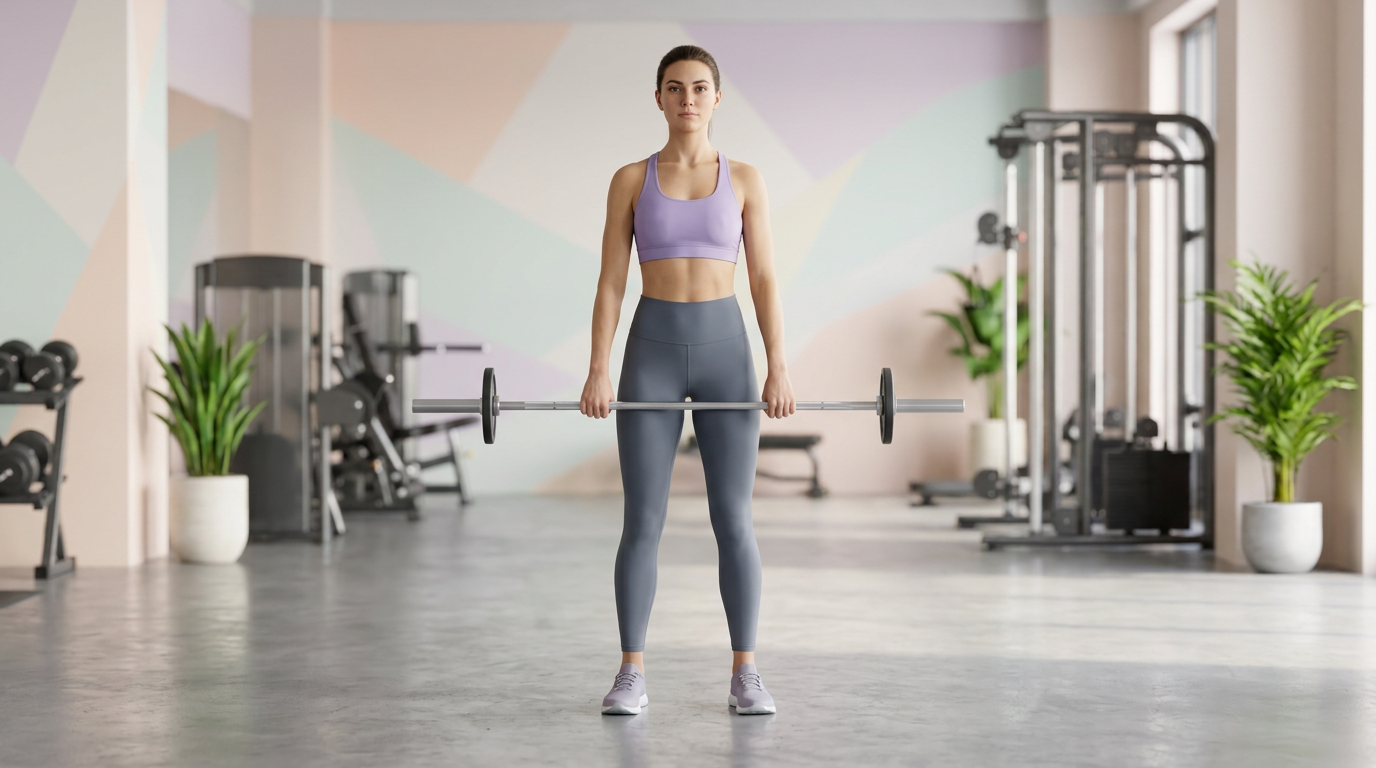
Step-by-step demonstration of proper Romanian deadlift form showing starting position, bottom position with hip hinge, and common form mistakes to avoid
2. Nordic Hamstring Curl
The Nordic hamstring curl has gained legendary status in sports performance and injury prevention circles. This bodyweight exercise involves kneeling with your ankles anchored, then slowly lowering your torso toward the ground while keeping your hips extended. Your hamstrings work eccentrically to control the descent.
Research demonstrates that Nordic curls significantly reduce hamstring injury rates in athletes. The exercise uniquely loads the hamstrings in a lengthened position during the eccentric phase, building resilience in the muscle-tendon junction where most strains occur.
To perform Nordic curls, kneel on a padded surface with your ankles secured under a bench, loaded barbell, or held by a partner. Keep your body in a straight line from knees to shoulders. Slowly lower yourself forward as far as you can control, then catch yourself with your hands and push back to the starting position.
Most women need to start with assisted variations, using resistance bands or pushing off the ground to help return to the starting position. Even partial range of motion provides significant benefits. Progress gradually by lowering yourself further before catching yourself, eventually achieving full range of motion.
Include Nordic curls 1-2 times weekly, performing 3-4 sets of 4-8 reps. The low rep range reflects the exercise's difficulty—quality trumps quantity. Rest 2-3 minutes between sets to maintain performance.
Pros
- Evidence-based injury prevention benefits
- No equipment needed beyond an anchor point
- Exceptional eccentric strength development
- Targets knee flexion function specifically
Cons
- Very challenging for beginners
- Difficult to progress in small increments
- Can cause significant muscle soreness initially
- Requires anchor point for feet
3. Glute-Ham Raise (GHR)
The glute-ham raise combines the best of both worlds: hip extension and knee flexion in a single movement. Performed on a specialized GHD (glute-ham developer) machine, this exercise challenges your hamstrings through their complete function.
Position yourself on the GHD with your feet secured against the footplate and your hips just past the pad. Start with your body perpendicular to the floor. Curl your body upward by flexing your knees and extending your hips simultaneously, bringing your torso to parallel with the floor. Lower with control back to the starting position.
The GHR provides constant tension throughout the movement, unlike exercises where tension decreases at certain points. This continuous tension maximizes metabolic stress, contributing to muscle growth and endurance.
The glute-ham raise develops hamstring strength across both primary functions, making it one of the most complete hamstring exercises available. However, the movement requires significant baseline strength. Many women need to start with easier variations or build up with other exercises first.
If you're new to GHRs, begin with band-assisted variations or perform only the eccentric (lowering) portion. As you build strength, gradually reduce assistance. Aim for 3 sets of 6-10 reps with 90 seconds rest between sets.
Pros
- Targets both hamstring functions simultaneously
- Builds exceptional posterior chain strength
- Constant tension throughout movement
- Excellent for athletic performance
Cons
- Requires specialized GHD machine
- Very difficult for most beginners
- Limited progression options once bodyweight becomes easy
- Can strain lower back if core is weak
4. Lying Leg Curl
The lying leg curl machine provides direct isolation of the hamstrings through knee flexion. While some fitness experts dismiss machine exercises, the lying leg curl offers unique benefits, particularly for beginners or those recovering from injury.
Lie face-down on the leg curl machine with the pad positioned just above your heels. Curl your legs upward, bringing your heels toward your glutes while keeping your hips pressed against the bench. Squeeze at the top for a one-second count, then lower with control.
The machine stabilizes your body, allowing you to focus entirely on hamstring contraction. This isolation makes it easier to establish the mind-muscle connection—consciously feeling your hamstrings work—which research suggests may enhance muscle activation and growth.
Lying leg curls excel at targeting the lower hamstrings near the knee, complementing hip-dominant exercises that emphasize the upper region. The exercise also allows you to train each leg independently, identifying and correcting strength imbalances.
Perform 3-4 sets of 10-15 reps with moderate weight. Focus on controlled movement rather than swinging the weight up with momentum. Pause at the top of each rep to maximize peak contraction. Include lying leg curls after compound exercises when your hamstrings are pre-fatigued.
Pros
- Easy to learn with minimal technique requirements
- Isolates hamstrings without taxing other muscle groups
- Allows precise load adjustment for progressive overload
- Excellent for establishing mind-muscle connection
- Safe for beginners and during injury rehabilitation
Cons
- Requires gym access and specific machine
- Less functional than compound movements
- Limited core and stabilizer involvement
- Some machines may not fit shorter women properly
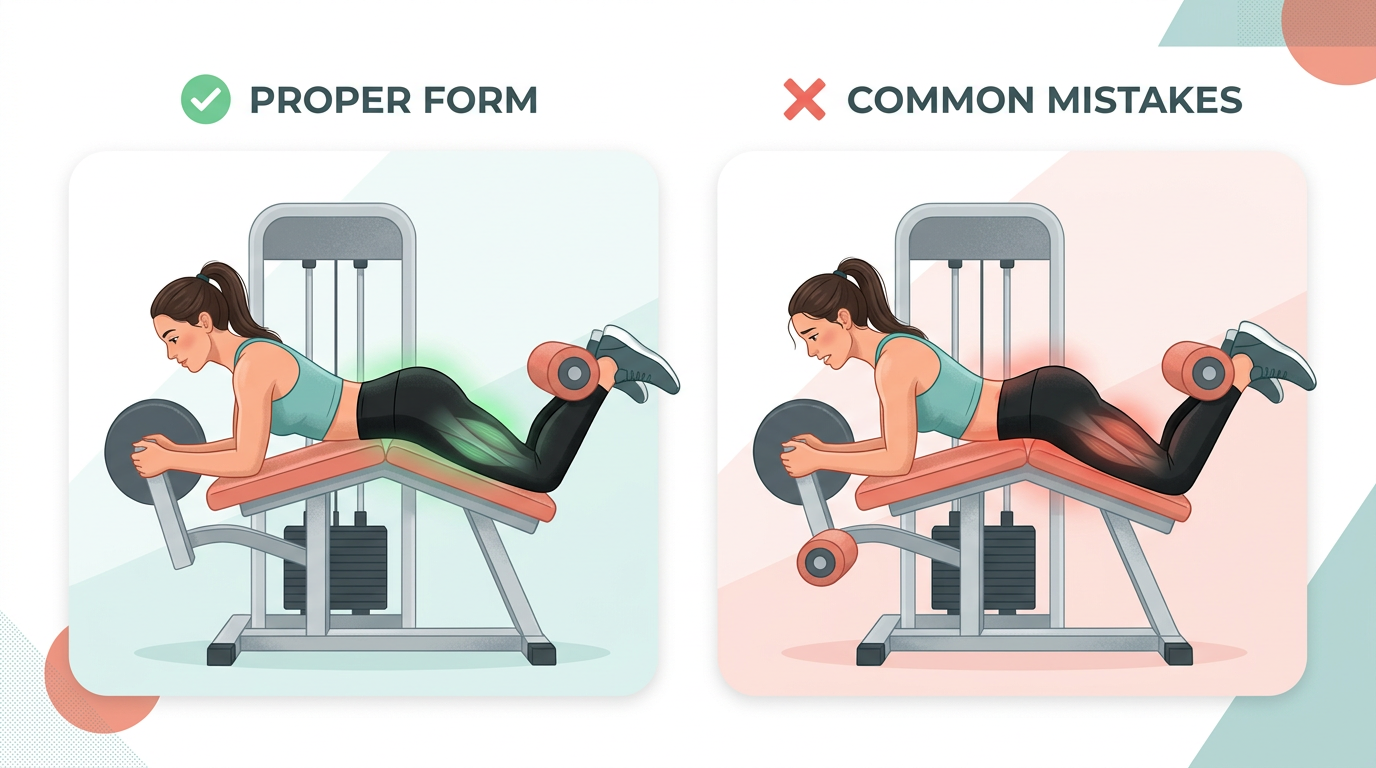
Comparison showing proper lying leg curl form versus common mistakes including lifting hips off the bench and using excessive momentum
5. Kettlebell Swing
The kettlebell swing transforms hamstring training into an explosive, metabolically demanding exercise. This ballistic movement develops power—the ability to generate force quickly—while building hamstring strength and cardiovascular conditioning simultaneously.
Stand with feet slightly wider than hip-width, kettlebell on the floor slightly in front of you. Hinge at your hips to grab the kettlebell with both hands, then hike it back between your legs. Explosively drive your hips forward, allowing the kettlebell to swing to chest height. Let momentum carry the kettlebell back down, then immediately hinge and repeat.
The swing emphasizes the eccentric-to-concentric transition—the powerful hip snap that defines the movement. Your hamstrings and glutes work together to decelerate the kettlebell on the backswing, then explosively reverse direction. This stretch-shortening cycle builds reactive strength crucial for athletic movements.
Kettlebell swings train your hamstrings to produce force rapidly, improving sprint speed, jumping ability, and overall power output. The exercise also burns significant calories, making it valuable for body composition goals alongside muscle development.
Start with 3-4 sets of 15-20 swings using moderate weight. Rest 60-90 seconds between sets. Focus on the hip hinge—the movement comes from your hips, not your arms. Your arms simply hold the kettlebell; your posterior chain powers the swing.
Pros
- Develops explosive power and strength simultaneously
- High calorie burn supports fat loss goals
- Improves cardiovascular conditioning
- Minimal equipment needed
- Time-efficient training option
Cons
- Requires proper hip hinge technique to avoid back strain
- Ballistic nature may be intimidating for beginners
- Less muscle isolation than other exercises
- Can be difficult to master the timing and rhythm
6. Single-Leg Romanian Deadlift
The single-leg RDL adds a stability and balance challenge to the traditional Romanian deadlift. By working one leg at a time, you identify and correct strength imbalances while developing the stabilizing muscles around your hips and ankles.
Stand on one leg holding a dumbbell in the opposite hand. Hinge at your hip, extending your free leg behind you for balance as you lower the weight toward the ground. Keep your standing leg slightly bent and your back neutral. Return to standing by driving through your standing leg and squeezing your glute.
The single-leg variation demands significantly more core stability and hip control than bilateral exercises. Your stabilizer muscles work overtime to maintain balance, creating a comprehensive lower body and core workout from a single exercise.
Single-leg RDLs reveal strength asymmetries that bilateral exercises mask, allowing you to address imbalances before they lead to injury or movement dysfunction. Most people discover one leg is noticeably weaker or less stable than the other.
Perform 3 sets of 8-12 reps per leg. Start with bodyweight or light dumbbells until you master the balance component, then progressively increase load. Focus on controlled movement rather than range of motion—quality over depth prevents compensatory patterns.
Pros
- Identifies and corrects left-right strength imbalances
- Develops balance and stability alongside strength
- Requires minimal weight to challenge muscles
- Excellent for functional movement patterns
- Can be performed anywhere with minimal equipment
Cons
- Balance requirements may limit load used
- Takes longer to complete than bilateral exercises
- Challenging for those with poor balance or ankle stability
- Requires focus and concentration
7. Good Morning
The good morning exercise earns its name from the bowing motion resembling a polite greeting. This barbell movement strengthens your entire posterior chain with emphasis on the hamstrings, glutes, and spinal erectors.
Position a barbell across your upper back as if preparing for a squat. Stand with feet hip-width apart. Keeping your knees slightly bent and your back neutral, hinge forward at your hips until your torso is nearly parallel to the floor. Drive your hips forward to return to standing.
Good mornings teach you to maintain spinal stability while hinging at the hips—a critical skill for injury prevention during deadlifts, squats, and daily activities like lifting objects. The exercise strengthens the muscles responsible for maintaining proper posture under load.
The good morning builds hamstring strength in the stretched position while simultaneously strengthening your lower back and improving hip hinge mechanics. This combination makes it valuable for both muscle development and movement quality.
Start conservatively with just the barbell or light weight. Perform 3 sets of 8-12 reps, focusing on maintaining a neutral spine throughout. Never round your back—if you can't maintain position, reduce the weight. Progress slowly, adding small increments as your strength and confidence improve.
Pros
- Strengthens entire posterior chain comprehensively
- Improves hip hinge mechanics and body awareness
- Builds spinal erector strength for injury prevention
- Allows progressive overload with barbell loading
Cons
- Requires excellent form to avoid back injury
- Can be intimidating for beginners
- Needs adequate hamstring and hip flexibility
- Requires barbell and rack
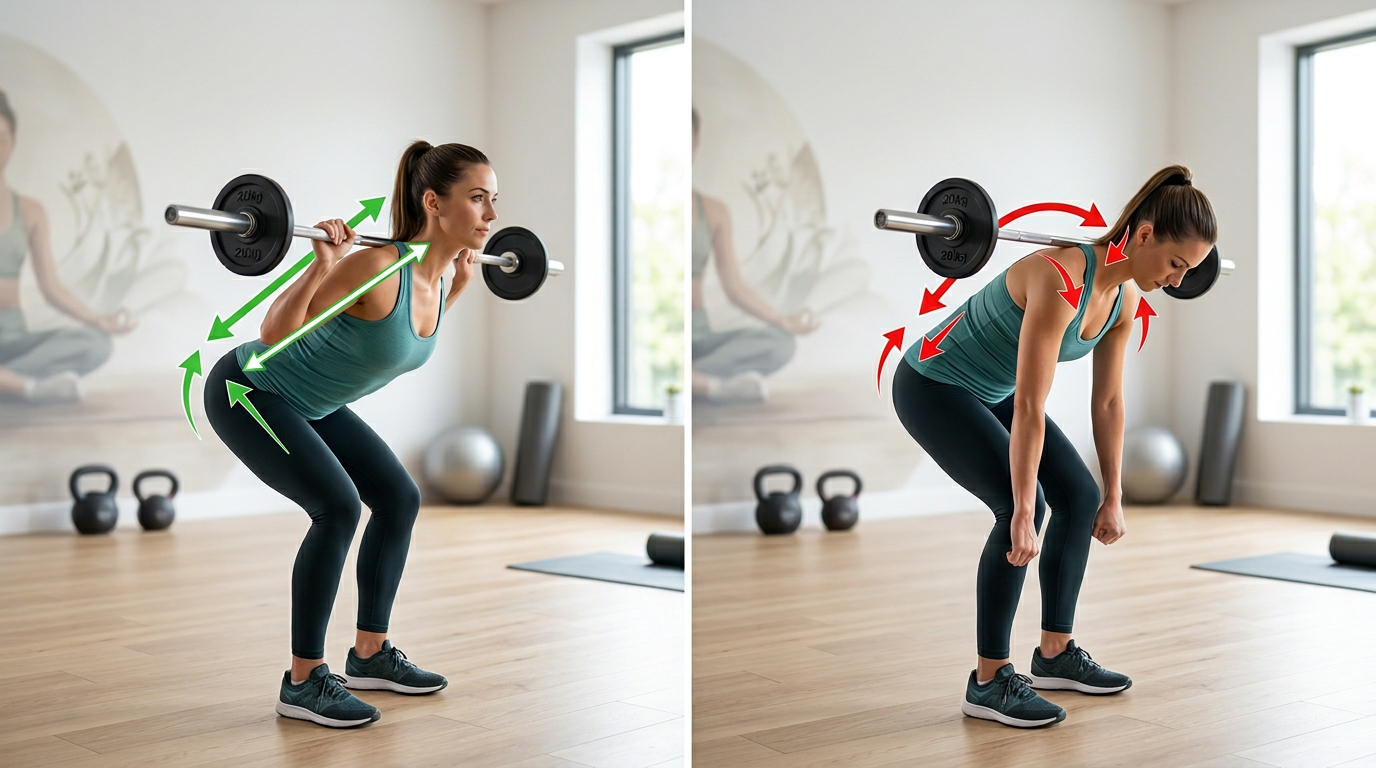
Side-by-side comparison of good morning exercise proper form showing neutral spine versus incorrect form with rounded back, with arrows indicating key alignment points
8. Stability Ball Hamstring Curl
The stability ball hamstring curl brings effective hamstring training to your home with minimal equipment. This exercise challenges your hamstrings while simultaneously engaging your glutes and core for stability.
Lie on your back with your heels on a stability ball and your arms at your sides for balance. Lift your hips off the ground, creating a straight line from shoulders to heels. Curl the ball toward you by bending your knees, lifting your hips higher as the ball approaches. Extend your legs to roll the ball back out while maintaining elevated hips.
The unstable surface forces your hamstrings to work harder to control the movement. Additionally, maintaining the elevated hip position throughout the exercise engages your glutes and core, creating a comprehensive posterior chain workout.
Stability ball curls provide an accessible entry point for hamstring training while offering surprising difficulty even for advanced lifters. The combination of hamstring curl and hip extension makes this a complete posterior chain movement.
Perform 3 sets of 10-15 reps. To increase difficulty, perform single-leg variations or pause at the contracted position. For an additional challenge, place your arms across your chest rather than using them for balance. Include this exercise at the end of leg workouts or as part of home training routines.
Pros
- Requires only a stability ball—perfect for home workouts
- Engages core and glutes alongside hamstrings
- Scalable difficulty through variations
- Low injury risk with proper form
- Develops hamstring-glute coordination
Cons
- Difficult to add significant resistance for progression
- Stability ball may slip on some floor surfaces
- Balance requirements may limit hamstring fatigue
- Less direct hamstring loading than other exercises
9. Cable Pull-Through
The cable pull-through serves as an excellent teaching tool for the hip hinge pattern while providing effective hamstring and glute training. The cable's constant tension creates a unique resistance profile that maintains tension throughout the entire range of motion.
Stand facing away from a cable machine with the rope attachment between your legs. Hold the rope with both hands, step forward to create tension, then hinge at your hips while keeping your back neutral. Allow your arms to travel back between your legs. Drive your hips forward explosively to return to standing, squeezing your glutes at the top.
The cable pull-through teaches proper hip hinge mechanics without the technical demands of deadlifts. The cable's pull provides feedback—if you squat instead of hinge, you'll feel the difference immediately. This makes it valuable for beginners learning movement patterns.
Cable pull-throughs build the foundation for more advanced hip hinge exercises while providing genuine hamstring and glute development. The exercise also reinforces the explosive hip extension pattern crucial for athletic performance.
Perform 3-4 sets of 12-15 reps with moderate weight. Focus on the hip hinge—push your hips back rather than squatting down. Feel the stretch in your hamstrings at the bottom position, then drive through your hips to stand. Rest 60-90 seconds between sets.
Pros
- Excellent for learning hip hinge pattern
- Constant cable tension throughout movement
- Lower technical demand than barbell exercises
- Minimal lower back stress
- Great for higher rep training
Cons
- Requires cable machine access
- Limited heavy loading potential
- Less overall muscle recruitment than free weight exercises
- May feel awkward initially
10. Walking Lunge
Walking lunges challenge your hamstrings through eccentric control during the lowering phase and concentric strength during the drive back up. While often considered a quad exercise, proper lunge technique significantly engages the hamstrings, particularly of the front leg.
Stand tall holding dumbbells at your sides or a barbell across your upper back. Step forward with one leg, lowering your back knee toward the ground until both knees reach approximately 90 degrees. Push through your front heel to stand, bringing your back leg forward into the next lunge. Continue alternating legs.
The forward lunge motion creates a significant eccentric load on your front leg's hamstring as you lower into the lunge. This eccentric emphasis builds strength in the lengthened position, where muscles are most vulnerable to injury.
Walking lunges develop unilateral leg strength, balance, and coordination while providing functional hamstring training that translates to real-world movement patterns. The exercise also improves hip flexibility and ankle mobility through the deep range of motion.
Perform 3 sets of 10-12 lunges per leg. Start with bodyweight to master the movement, then add dumbbells or a barbell for progressive overload. Maintain an upright torso throughout the movement—leaning forward shifts emphasis away from the hamstrings. Take a large enough step that your front shin remains vertical at the bottom position.
Pros
- Functional movement pattern used in daily life
- Develops balance and coordination
- Addresses leg strength imbalances
- Can be performed anywhere with minimal equipment
- Improves hip and ankle mobility
Cons
- Requires space to walk forward
- Balance demands may limit load used
- Can be hard on knees if form is poor
- Less direct hamstring isolation than other exercises
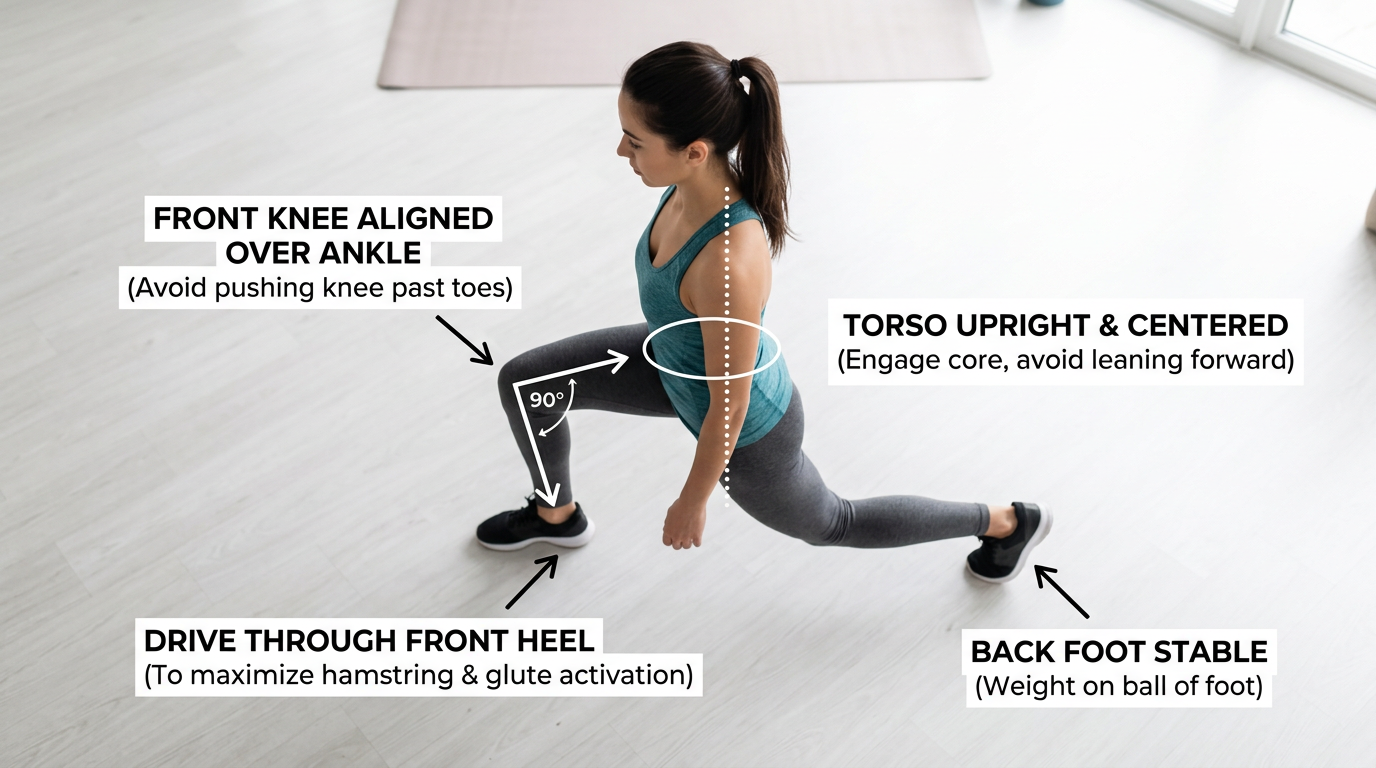
Overhead view showing proper walking lunge form with annotations indicating front knee alignment, torso position, and foot placement for optimal hamstring engagement
How to Structure Your Hamstring Training
Understanding individual exercises is just the beginning. Strategic programming determines your actual results. Your hamstrings require adequate training frequency, volume, and exercise selection to develop optimally.
Training Frequency and Volume
Train your hamstrings 2-3 times weekly for optimal development. This frequency allows adequate recovery between sessions while providing sufficient stimulus for adaptation. Space hamstring workouts at least 48 hours apart to allow complete recovery.
Aim for 10-16 total sets per week distributed across your training sessions. For example, perform 5-6 sets on two separate days or 3-4 sets across three sessions. This volume range consistently produces results without excessive fatigue or injury risk.
Exercise Selection Strategy
Combine hip-dominant and knee-dominant exercises in your program. This ensures complete hamstring development across both primary functions. A balanced approach might include Romanian deadlifts (hip-dominant) and lying leg curls (knee-dominant) in the same training week.
- Start each session with a compound hip-dominant exercise like RDLs or good mornings when you're fresh
- Follow with a knee-dominant isolation exercise like leg curls to target the lower hamstrings
- Consider adding one explosive exercise like kettlebell swings for power development
- Finish with single-leg work to address imbalances and improve stability
Progressive Overload Principles
Progressive overload—gradually increasing training stress over time—drives continuous adaptation and results. Without progression, your body adapts to the current stimulus and stops improving.
Increase weight by the smallest increment available (typically 5 pounds for lower body exercises) once you can complete all prescribed sets and reps with good form. Alternatively, add 1-2 reps per set while maintaining the same weight. Track your workouts to ensure consistent progression over weeks and months.
Recovery and Injury Prevention
Hamstrings are particularly prone to strains, especially during explosive movements or when fatigued. Prioritize recovery through adequate sleep, nutrition, and rest days. Include dynamic stretching before workouts and static stretching afterward to maintain flexibility.
Pay attention to warning signs like persistent tightness, sharp pain, or reduced range of motion. These indicate inadequate recovery or potential injury. Reduce training volume or intensity if you experience these symptoms, and consult a healthcare professional for persistent issues.
Common Form Mistakes and How to Fix Them
Even with the best exercise selection, poor form limits results and increases injury risk. These common mistakes plague hamstring training across all experience levels.
Rounding Your Back During Hip Hinges
Spinal flexion during Romanian deadlifts or good mornings shifts stress from your hamstrings to your lower back. This reduces hamstring activation while dramatically increasing injury risk. Maintain a neutral spine throughout the movement by engaging your core and keeping your chest proud.
Fix: Reduce the weight and focus on the hip hinge pattern. Record yourself from the side to check your spine position. Practice the movement with a PVC pipe along your back—it should maintain contact with your head, upper back, and tailbone throughout the exercise.
Using Momentum Instead of Muscle
Swinging weights up quickly using momentum reduces time under tension and muscle activation. This common mistake occurs most frequently on leg curls and cable exercises. Your muscles grow in response to mechanical tension—momentum eliminates this crucial stimulus.
Fix: Slow down your repetitions. Take 2-3 seconds for both the lifting and lowering phases. Focus on feeling your hamstrings work throughout the entire range of motion. Reduce weight if necessary to maintain controlled movement.
Insufficient Range of Motion
Partial reps limit muscle development by reducing the stretch and contraction your hamstrings experience. This mistake is particularly common on Romanian deadlifts, where lifters fail to achieve adequate hamstring stretch at the bottom position.
Fix: Lower the weight until you feel a significant stretch in your hamstrings—typically when the barbell reaches mid-shin level. Don't sacrifice range of motion for heavier weights. Full range of motion produces superior results compared to partial reps with more weight.
Neglecting the Eccentric Phase
The lowering (eccentric) portion of exercises produces significant muscle damage and growth stimulus. Dropping weights quickly wastes this opportunity. Research shows eccentric training particularly benefits hamstring strength and injury resistance.
Fix: Emphasize the eccentric phase by taking 3-4 seconds to lower weights. This controlled lowering maximizes time under tension and mechanical damage—both crucial for muscle development. You may need to reduce weight initially, but the results justify the adjustment.
Nutrition for Hamstring Development
Training provides the stimulus for muscle growth, but nutrition supplies the building blocks. Your diet directly impacts your ability to build strong, sculpted hamstrings.
Protein Requirements
Consume 0.7-1.0 grams of protein per pound of body weight daily to support muscle recovery and growth. Distribute protein across 3-4 meals for optimal muscle protein synthesis. Include high-quality protein sources like chicken, fish, eggs, Greek yogurt, and plant-based options like legumes and tofu.
Calorie Considerations
Building muscle requires adequate calories. A slight caloric surplus (200-300 calories above maintenance) supports muscle growth while minimizing fat gain. However, you can build hamstring strength and size even in a modest deficit if you're new to training or returning after a break.
Nutrient Timing
While total daily intake matters most, consuming protein and carbohydrates around your workouts may enhance recovery. Have a meal containing 20-40 grams of protein within 2-3 hours before and after training. Post-workout carbohydrates replenish glycogen stores and support recovery.
Which Hamstring Exercise Is Best For You?
The ideal exercise selection depends on your training experience, goals, available equipment, and individual factors. Use this guide to match exercises to your specific situation.
For Complete Beginners
Start with exercises that have a shorter learning curve and lower injury risk. Cable pull-throughs teach the hip hinge pattern, while lying leg curls provide direct hamstring work without technical complexity. Stability ball curls offer effective home training. Master these movements before progressing to more advanced exercises.
For Intermediate Lifters
Romanian deadlifts should form the foundation of your hamstring training. Add kettlebell swings for power development and single-leg RDLs to address imbalances. Include lying leg curls for direct knee flexion work. This combination provides comprehensive hamstring development across all functions.
For Advanced Athletes
Incorporate Nordic curls and glute-ham raises for maximum hamstring strength and injury resilience. Continue Romanian deadlifts with progressively heavier loads. Add good mornings to strengthen your entire posterior chain. Focus on exercise variations and advanced techniques like tempo training or pause reps to continue progressing.
For Home Training
Build your program around single-leg RDLs with dumbbells, stability ball curls, and Nordic curls (using a couch or partner to anchor your feet). These exercises require minimal equipment while providing effective hamstring training. Kettlebell swings add power development if you have a kettlebell available.
For Injury Prevention
Prioritize Nordic curls, which research shows significantly reduce hamstring injury rates. Include Romanian deadlifts to build strength in the lengthened position. Add single-leg exercises to address imbalances that may predispose you to injury. Focus on controlled eccentrics across all exercises.
For Aesthetic Goals
Combine heavy Romanian deadlifts for overall mass with higher-rep lying leg curls for metabolic stress and muscle pump. Include single-leg RDLs to ensure balanced development. Train hamstrings 2-3 times weekly with 12-16 total sets. Maintain a slight caloric surplus with adequate protein to support muscle growth.
Frequently Asked Questions
What is the most effective hamstring exercise?
Romanian deadlifts and Nordic hamstring curls show the highest muscle activation in research studies. RDLs excel at building overall hamstring mass through hip extension, while Nordic curls target knee flexion and provide exceptional injury prevention benefits. Combining both exercises produces superior results compared to either alone.
How often should I train hamstrings for optimal growth?
Train hamstrings 2-3 times weekly with at least 48 hours between sessions. Aim for 10-16 total sets per week distributed across your training days. This frequency provides adequate stimulus for growth while allowing complete recovery between workouts, maximizing adaptation and minimizing injury risk.
Do strong hamstrings help knees?
Strong hamstrings stabilize the knee joint by reducing anterior tibial translation and supporting the ACL. Research shows adequate hamstring strength significantly reduces ACL injury risk, particularly in women. Hamstrings also balance quad-dominant movement patterns that stress the knee, improving overall joint health and function during dynamic activities.
Can I build hamstrings without weights?
Nordic hamstring curls, stability ball curls, and single-leg Romanian deadlifts effectively build hamstring strength using bodyweight or minimal equipment. Nordic curls are particularly challenging and effective. However, progressive overload becomes difficult without external resistance, eventually limiting continued growth compared to weighted exercises.
Why do my hamstrings feel tight all the time?
Chronic hamstring tightness often results from weakness rather than actual shortness. Weak hamstrings remain tense to provide stability, creating the sensation of tightness. Anterior pelvic tilt also places hamstrings in a lengthened position, causing tension. Strengthen your hamstrings and core while addressing posture rather than just stretching.
Can I use an elliptical with a hamstring injury?
Elliptical training may be tolerable for minor hamstring strains since the smooth, low-impact motion reduces eccentric loading compared to running. However, consult a healthcare professional before exercising with any injury. Start with short, low-intensity sessions and stop immediately if you experience pain. Complete rest may be necessary for moderate to severe strains.
Should hamstrings be trained on leg day or back day?
Train hamstrings on leg day since they primarily function as hip extensors and knee flexors—lower body movements. While hamstrings assist during back exercises like deadlifts, they require dedicated training for complete development. Split leg training into quad-focused and hamstring-glute-focused sessions if training volume is high.
Conclusion
Building strong, sculpted hamstrings requires more than random leg curls at the end of your workout. The best hamstring exercises combine hip-dominant movements like Romanian deadlifts with knee-dominant exercises like Nordic curls, creating complete development across all three hamstring muscles. Train your hamstrings 2-3 times weekly with 10-16 total sets, focusing on progressive overload and proper form.
Remember that strong hamstrings protect your knees, improve athletic performance, and create the balanced, powerful legs you're working toward. Whether you're training at home with minimal equipment or have access to a full gym, you now have the knowledge to build exceptional hamstring strength. Choose exercises that match your experience level and available equipment, then commit to consistent, progressive training.
Your hamstrings are capable of remarkable strength and development—give them the focused attention they deserve.