Bat wings exercise: Tone and tighten your arms
Bat wings is the slang term for loose, sagging skin under the upper arms, typically caused by age-related muscle loss, weight fluctuations, or lack of arm training. Targeted tricep exercises like overhead extensions, dips, and push-ups combined with overall strength training effectively tone and tighten this area without surgery.
You've noticed it when you wave goodbye or reach for something on a high shelf—that unwelcome jiggle under your upper arms. You're not alone. Bat wings affect women of all ages and fitness levels, but the good news is that you have the power to transform this common concern through strategic strength training and lifestyle changes.
This comprehensive guide will show you exactly how to address bat wings through evidence-based exercises, nutrition strategies, and realistic expectations. Whether you're just starting your fitness journey or looking to refine your arm training routine, you'll discover actionable steps to build stronger, more defined arms while boosting your confidence.
Understanding what causes bat wings is the first step toward effective solutions. From there, we'll explore the most effective exercises, training protocols, and complementary strategies that deliver real results. Let's dive into everything you need to know about toning and tightening your arms.
Key Takeaways
- Bat wings result from reduced muscle tone, excess skin, and body fat accumulation in the upper arms, not a single cause
- Targeted tricep exercises combined with overall strength training provide the most effective non-surgical approach to toning arms
- Consistency with 2-3 weekly arm workouts plus adequate protein intake accelerates visible improvements
- Results typically appear within 8-12 weeks with proper training, nutrition, and progressive overload
- Building muscle in your arms improves functional strength for daily activities while enhancing appearance
What Does Bat Wings Slang Mean in Fitness?
In fitness terminology, bat wings refers to the loose, flabby skin and underlying fat that hangs from the underside of the upper arms, resembling the stretched wing membrane of a bat. This colloquial term specifically describes the tricep area—the back of your upper arm—where tissue appears to sag or jiggle during movement.
While the term might sound harsh, it's widely used in fitness communities to identify a specific aesthetic and functional concern. The area becomes particularly noticeable when you extend your arms or wave, creating a visible droop beneath the arm.
Why This Area Is Vulnerable
The tricep region is especially prone to losing definition for several physiological reasons. First, the tricep muscle comprises nearly two-thirds of your upper arm mass, making it a large area that shows changes quickly when muscle tone decreases.
Second, this area naturally stores subcutaneous fat—the type of fat located just beneath the skin. Women tend to store more fat in their arms compared to men due to hormonal differences, particularly estrogen's influence on fat distribution patterns.
Third, the tricep muscles are often undertrained in everyday activities. Unlike biceps, which engage during common movements like carrying groceries or lifting children, triceps require more intentional activation through pushing and extending movements.
The Emotional Impact
Beyond the physical aspect, bat wings can affect how women feel about their bodies. Many women report avoiding sleeveless clothing or feeling self-conscious about their arms in photos. This emotional component makes addressing the concern about more than just aesthetics—it's about reclaiming confidence and feeling comfortable in your own skin.
Understanding that bat wings are a common, addressable concern helps remove the stigma. With the right approach, you can build strength and definition in your arms regardless of your starting point.
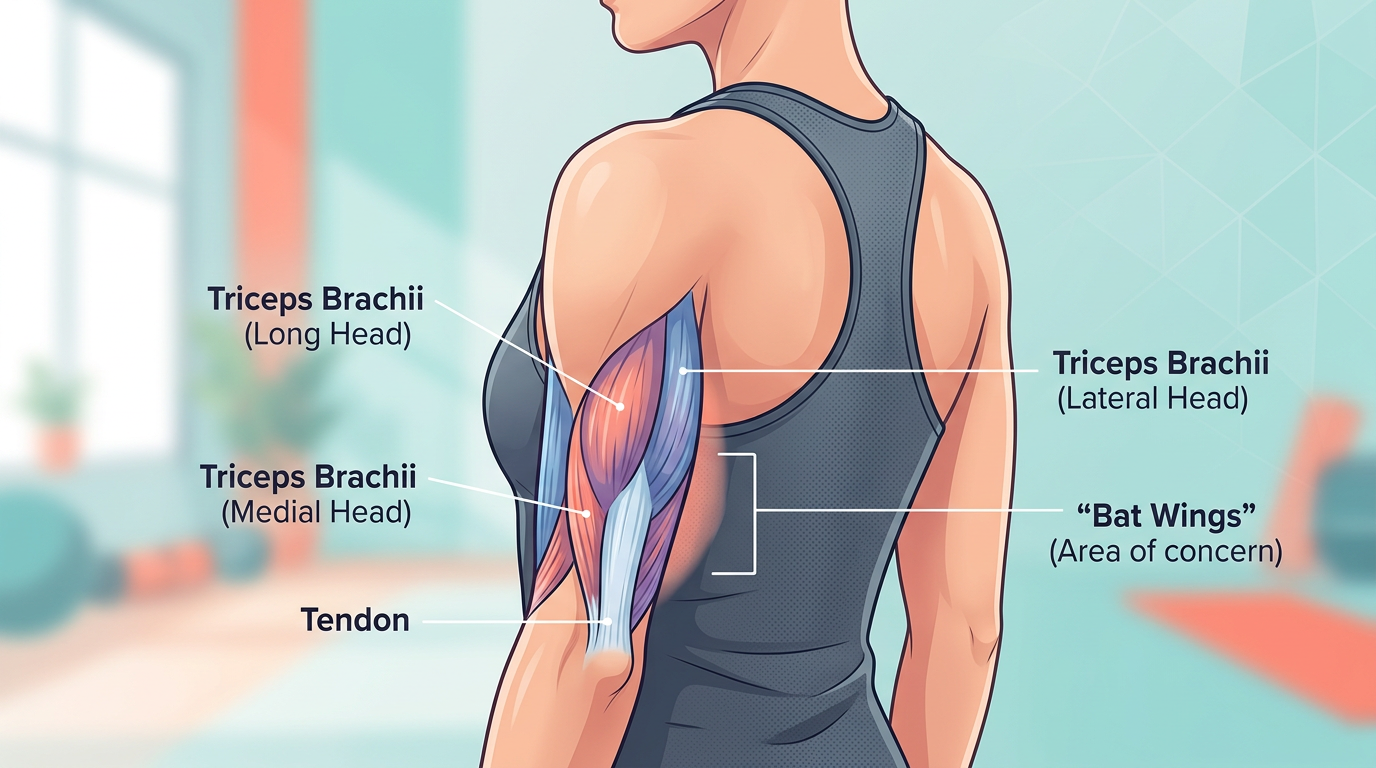
Anatomical illustration showing the tricep muscle location on the back of the upper arm with labels indicating the three tricep heads and the area commonly called bat wings
Why Do I Suddenly Have Bat Wings? Understanding the Causes
Bat wings don't appear overnight, though it might feel that way when you first notice them. Several interconnected factors contribute to their development, and understanding these causes helps you address the root issues effectively.
Age-Related Muscle Loss
Sarcopenia, the natural loss of muscle mass with age, accelerates after age 30 and becomes more pronounced after menopause. Without regular resistance training, women can lose significant muscle tissue in their arms, leaving behind loose skin and reduced definition.
As muscle tissue decreases, the skin that once covered firm muscle now drapes over a smaller structure. This creates the appearance of sagging, even if your weight hasn't changed. The tricep area shows this change prominently because of its large surface area.
Weight Fluctuations
Significant weight loss, particularly rapid weight loss, can contribute to excess skin in the upper arms. When you lose substantial amounts of body fat, the skin doesn't always retract completely to match your new body composition.
Similarly, weight gain followed by loss creates a cycle that can reduce skin elasticity over time. The skin stretches to accommodate increased tissue, then must contract when that tissue decreases—a process that becomes less efficient with repeated cycles.
Lack of Targeted Strength Training
If your fitness routine focuses primarily on cardio or lower body exercises, your arms may lack the muscle development needed to maintain firmness and definition. Many women neglect upper body training, assuming it will make them bulky—a myth we'll address later.
Without progressive resistance training that challenges your triceps, biceps, and shoulders, these muscles remain underdeveloped. This creates an imbalance where your arms don't match the strength or tone of the rest of your body.
Genetics and Skin Elasticity
Your genetic makeup influences where you store fat, how your skin responds to stretching, and your natural muscle-building capacity. Some women are simply more prone to storing fat in their upper arms or have skin that's less elastic.
Factors like sun exposure, smoking, and inadequate hydration also affect skin elasticity over time. While you can't change your genetics, you can optimize the factors within your control through lifestyle choices and targeted exercise.
Hormonal Changes
Hormonal shifts during perimenopause and menopause affect body composition significantly. Declining estrogen levels can lead to increased fat storage and decreased muscle mass, particularly in the upper body. These changes make maintaining arm definition more challenging without intentional strength training.
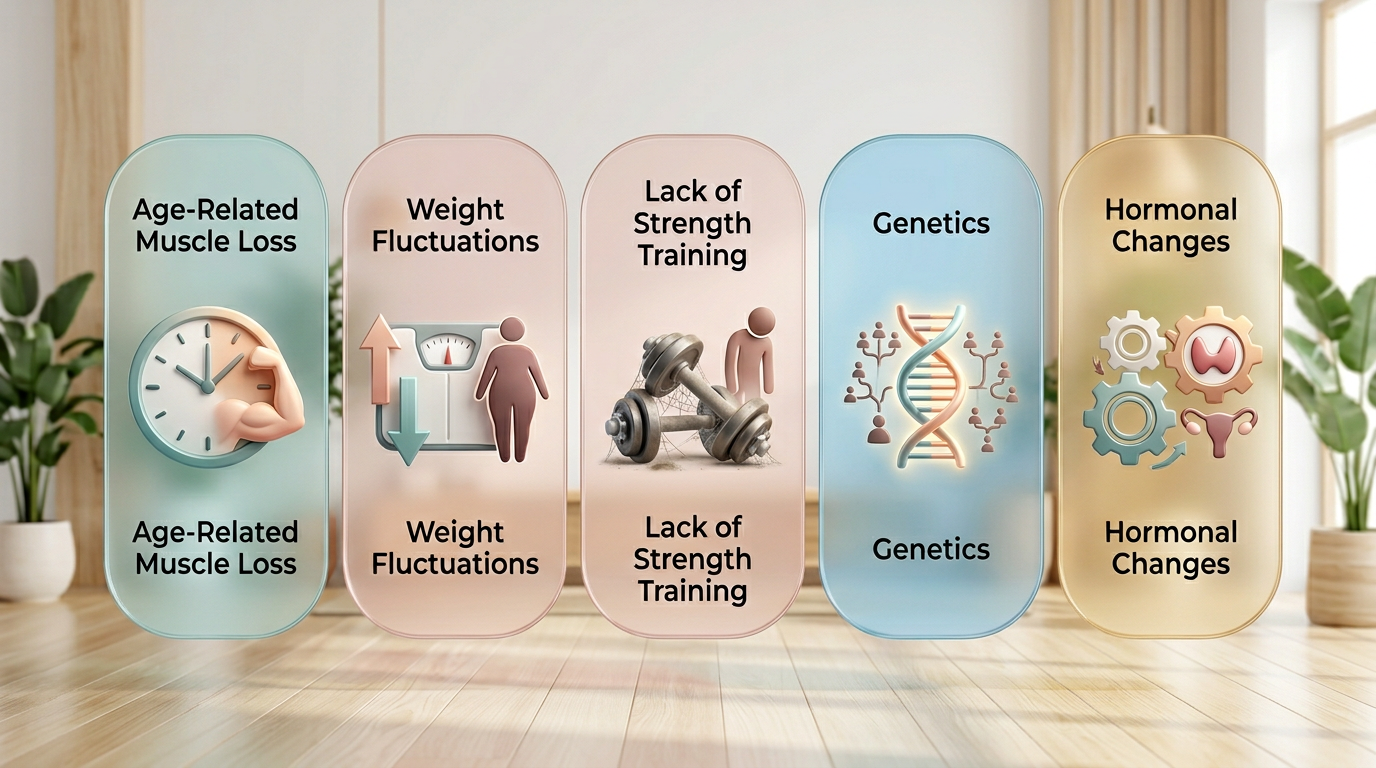
Infographic showing five main causes of bat wings including age-related muscle loss, weight fluctuations, lack of strength training, genetics, and hormonal changes with simple icons for each
Can You Get Rid of Bat Wings Without Surgery?
Yes, you can significantly reduce bat wings through consistent strength training, proper nutrition, and body recomposition strategies without surgical intervention. While surgery offers immediate results, non-surgical approaches build functional strength, improve overall health, and create sustainable changes.
The key lies in understanding that "getting rid of" bat wings involves two primary goals: building muscle in the tricep area and reducing overall body fat. You cannot spot-reduce fat from your arms alone, but you can spot-train muscle while creating a caloric environment that supports fat loss throughout your body.
Building Tricep Muscle
Developing your tricep muscles creates a firmer foundation beneath the skin, reducing the appearance of sagging. As you build muscle tissue, it fills out the area previously occupied by fat and loose skin, creating a more toned appearance.
Muscle tissue is denser than fat, meaning it takes up less space while providing shape and definition. Even modest muscle gains in your triceps can dramatically improve how your arms look and feel.
Reducing Overall Body Fat
Since you cannot target fat loss exclusively in your arms, you'll need to reduce your overall body fat percentage through a combination of strength training, appropriate caloric intake, and potentially cardiovascular exercise. As your body fat decreases, your arms will naturally become leaner along with the rest of your body.
This approach takes longer than surgery but offers comprehensive health benefits including improved metabolic health, increased bone density, better cardiovascular function, and enhanced daily functional capacity.
Realistic Expectations for Loose Skin
Exercise and nutrition can dramatically improve muscle tone and reduce fat, but they have limitations regarding excess skin. If you have significant loose skin from major weight loss or aging, you may see substantial improvement but not complete elimination of all excess skin.
Skin has some capacity to retract over time—this process can take 1-2 years and is supported by staying hydrated, maintaining adequate protein intake, and building muscle. However, extreme cases of loose skin may not fully resolve without surgical intervention.
That said, most women see such significant improvement from strength training that loose skin becomes far less noticeable, and many find they no longer desire surgery once they've built substantial muscle definition.
Timeline for Non-Surgical Results
With consistent training and proper nutrition, most women notice initial improvements within 4-6 weeks and significant visible changes within 8-12 weeks. Continued progress occurs over 6-12 months as muscle development continues and body composition shifts.
The advantage of this timeline is that you're not just changing appearance—you're building strength that enhances your quality of life, from carrying groceries to playing with children to maintaining independence as you age.
The Most Effective Bat Wings Exercises
Targeting bat wings requires exercises that effectively challenge your triceps through their full range of motion. The following movements have been selected based on muscle activation research and practical effectiveness for building arm strength and definition.
Overhead Tricep Extensions
Overhead tricep extensions maximize long head tricep activation, the portion of the muscle most visible from the side and back of your arm. This exercise can be performed with dumbbells, a cable machine, or resistance bands.
To perform: Stand or sit with a dumbbell held overhead in both hands. Keep your elbows close to your head as you lower the weight behind your head by bending at the elbows. Extend back to the starting position, focusing on squeezing your triceps at the top.
Perform 3-4 sets of 10-15 repetitions, progressively increasing weight as you build strength. The overhead position creates a deep stretch in the tricep, maximizing muscle fiber recruitment.
Tricep Dips
Tricep dips are a compound movement that builds serious upper body strength while specifically targeting the triceps. You can perform them on a bench, chair, or parallel bars, making them accessible for home or gym training.
For bench dips: Sit on the edge of a bench with hands gripping the edge beside your hips. Slide your hips forward off the bench and lower your body by bending your elbows to 90 degrees. Press back up to straighten your arms. Keep your elbows tracking backward, not flaring out to the sides.
Start with bent knees to reduce difficulty, progressing to straight legs as you build strength. Advanced exercisers can add weight by placing a plate on their lap. Aim for 3 sets of 8-12 repetitions.
Close-Grip Push-Ups
Close-grip push-ups shift emphasis from the chest to the triceps by narrowing hand placement. This functional movement builds pressing strength while sculpting your arms.
Position your hands directly under your shoulders (or slightly narrower) rather than wide apart. Lower your body while keeping elbows close to your sides, then press back up. This elbow position maximizes tricep engagement.
Modify on your knees if needed, or elevate your hands on a bench to reduce difficulty. Progress to full push-ups and eventually decline variations for increased challenge. Complete 3 sets of 8-15 repetitions.
Tricep Kickbacks
Kickbacks isolate the triceps effectively, allowing you to focus on the muscle contraction without assistance from other muscle groups. This exercise works well with lighter weights and higher repetitions for muscular endurance.
Hold a dumbbell in one hand and hinge forward at the hips, supporting yourself with your other hand on a bench. Position your upper arm parallel to the floor and extend at the elbow, straightening your arm behind you. Squeeze at the top before slowly lowering.
Perform 3 sets of 12-15 repetitions per arm, focusing on control rather than momentum. This exercise is excellent for finishing your arm workout with a muscle-burning pump.
Diamond Push-Ups
Diamond push-ups place your hands together in a diamond shape beneath your chest, creating maximum tricep activation. Research shows this variation produces higher tricep muscle activity than standard push-ups.
Form your hands into a diamond by touching your thumbs and index fingers together. Perform push-ups while maintaining this hand position, keeping your elbows close to your body. The narrow base increases tricep demand substantially.
This advanced variation can be modified on your knees initially. Work toward 3 sets of 6-10 repetitions with perfect form.
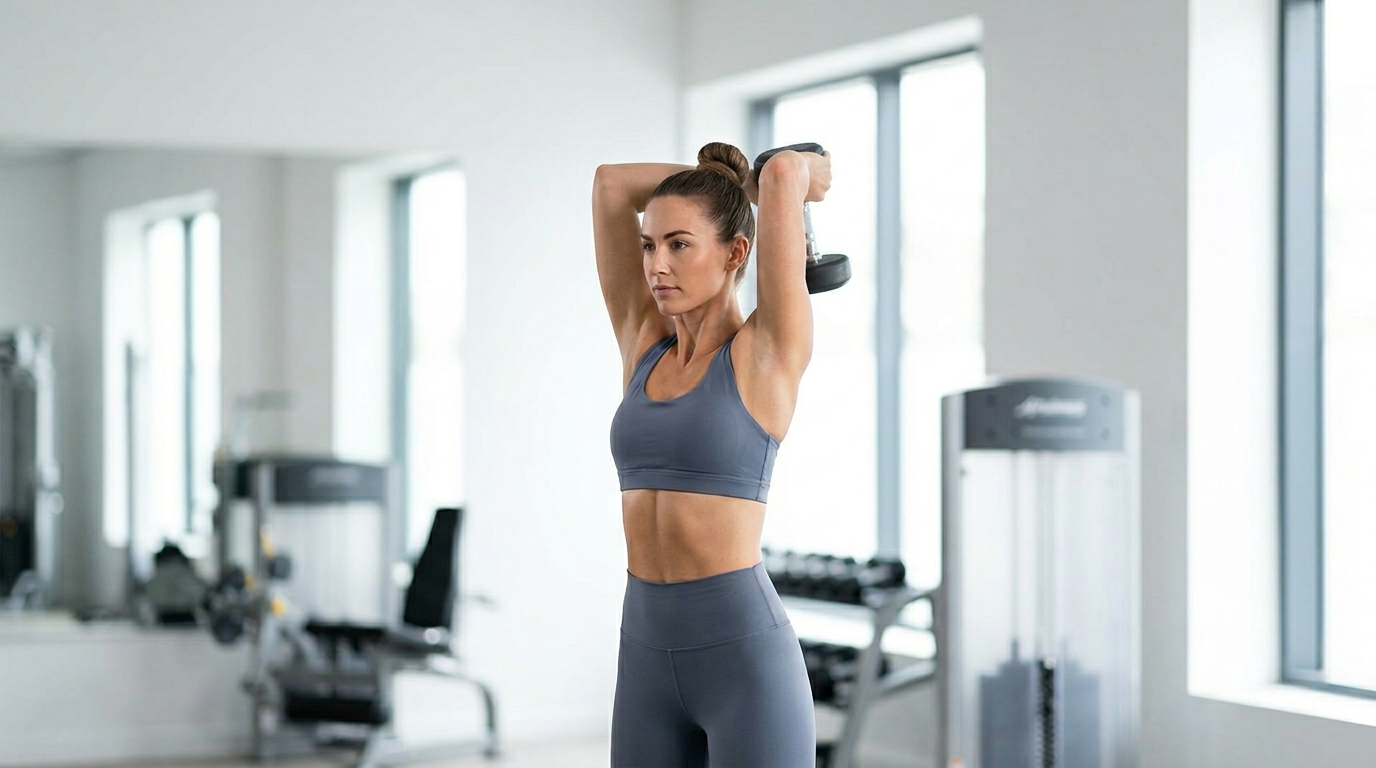
Step-by-step demonstration photos showing proper form for overhead tricep extensions, including starting position with weight overhead and ending position with weight lowered behind head
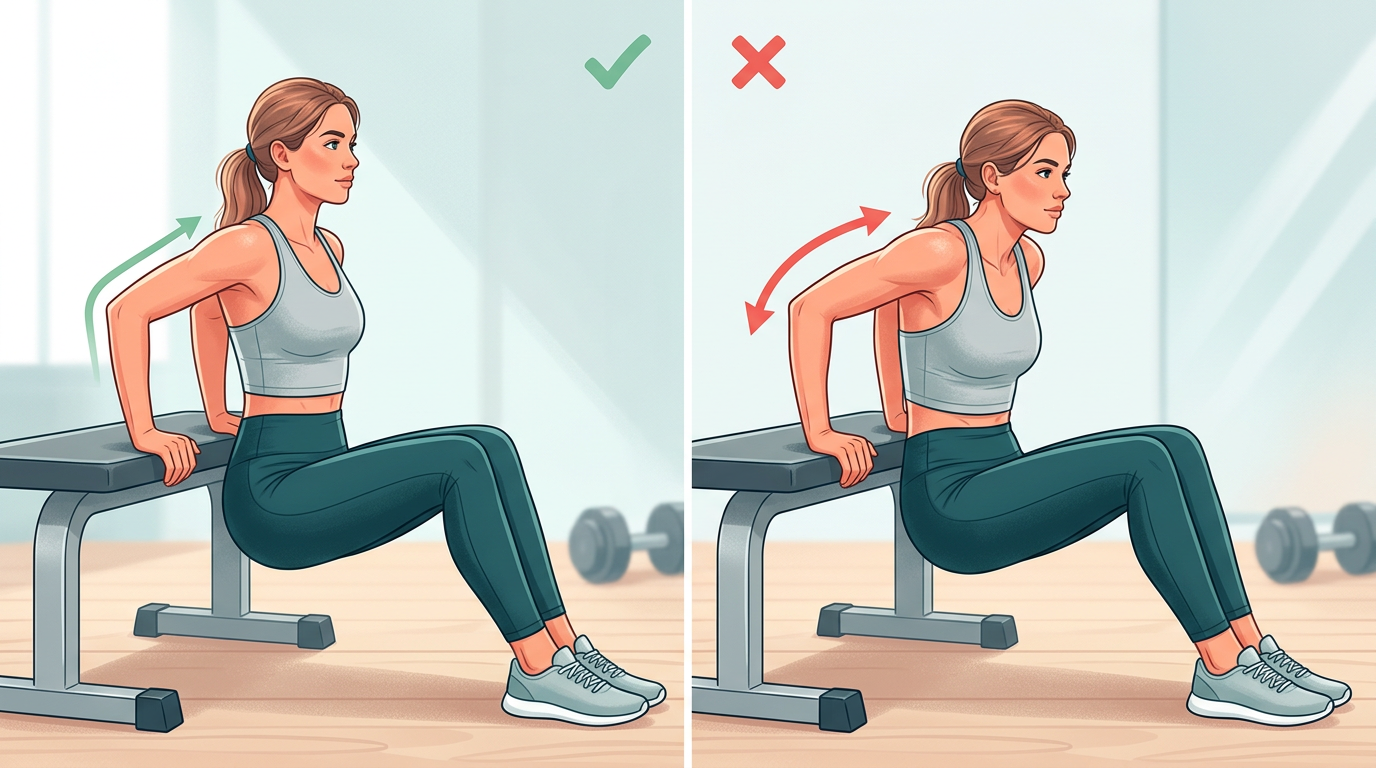
Side-by-side comparison showing correct form for tricep dips with elbows tracking backward versus incorrect form with elbows flaring outward
Creating Your Bat Wings Workout Routine
Understanding individual exercises is just the beginning—organizing them into an effective routine maximizes your results. Here's how to structure your arm training for optimal bat wings reduction.
Training Frequency
Train your triceps directly 2-3 times per week with at least 48 hours between sessions to allow for recovery and muscle growth. This frequency provides sufficient stimulus for muscle development without overtraining.
Your triceps also receive indirect work during chest and shoulder exercises, so account for this when planning your weekly schedule. If you perform a chest workout with push-ups and presses, your triceps are already working hard.
Sample Weekly Schedule
Here's an effective weekly training split that addresses bat wings while building balanced upper body strength:
- Monday: Upper body strength (includes tricep dips and close-grip push-ups)
- Tuesday: Lower body and core
- Wednesday: Active recovery or rest
- Thursday: Arm-focused workout (dedicated tricep exercises)
- Friday: Full body circuit training
- Saturday: Lower body strength
- Sunday: Rest or light activity
This schedule provides two focused tricep training days plus additional stimulation from compound upper body movements, totaling 3 weekly tricep training sessions.
Sets, Reps, and Progressive Overload
For muscle building and toning, aim for 3-4 sets of 8-15 repetitions per exercise. This rep range effectively stimulates muscle growth while building muscular endurance.
Progressive overload is essential—you must gradually increase the challenge to continue seeing results. Implement progression through:
- Adding weight (increase by 2-5 pounds when you can complete all sets with good form)
- Increasing repetitions (add 1-2 reps per set each week)
- Decreasing rest periods (reduce rest from 90 seconds to 60 seconds between sets)
- Advancing exercise variations (progress from knee push-ups to full push-ups to decline push-ups)
- Improving tempo (slow down the lowering phase for increased time under tension)
Track your workouts in a journal or app to ensure you're consistently progressing. Without progressive overload, your muscles adapt to the current stimulus and stop developing.
Combining Tricep Work with Complete Arm Development
While triceps deserve priority for addressing bat wings, don't neglect your biceps and shoulders. Balanced arm development creates better aesthetics and functional strength.
Include bicep curls, hammer curls, and shoulder presses in your routine. Strong shoulders improve arm appearance by creating definition at the top of your arm, while developed biceps balance the overall shape.
A complete arm workout might include 3-4 tricep exercises, 2 bicep exercises, and 1-2 shoulder movements, performed in that priority order since triceps are your primary focus.
Rest and Recovery
Muscles grow during recovery, not during workouts. Ensure you're getting 7-9 hours of quality sleep nightly and taking at least one full rest day per week. Adequate rest allows your body to repair muscle tissue and adapt to training stress.
If your arms feel excessively sore or fatigued, add an extra rest day. Overtraining leads to diminished returns and potential injury, slowing your progress toward toned arms.
Nutrition Strategies to Support Your Bat Wings Goals
Exercise builds muscle, but nutrition determines whether that muscle becomes visible. Your diet plays an equally important role in reducing bat wings as your workout routine.
Protein Intake for Muscle Building
Consume 0.7-1.0 grams of protein per pound of body weight daily to support muscle repair and growth in your arms and throughout your body. Protein provides the amino acids necessary for building new muscle tissue.
Distribute protein throughout the day rather than consuming it all in one meal. Aim for 20-30 grams per meal across 3-4 meals daily. Good protein sources include:
- Lean meats (chicken breast, turkey, lean beef)
- Fish and seafood (salmon, tuna, shrimp)
- Eggs and egg whites
- Greek yogurt and cottage cheese
- Plant-based options (tofu, tempeh, legumes, protein powder)
Adequate protein intake becomes increasingly important as you age, since older adults require more protein to maintain and build muscle compared to younger individuals.
Caloric Balance for Fat Loss
To reduce the fat component of bat wings, you need to create a modest caloric deficit—consuming slightly fewer calories than you burn. A deficit of 200-500 calories daily allows for steady fat loss while preserving muscle mass.
Avoid aggressive caloric deficits, which can lead to muscle loss alongside fat loss. The goal is to lose fat while maintaining or building muscle, creating the toned appearance you desire. Calculate your maintenance calories using our Free TDEE Calculator for Women to determine your starting point.
Focus on nutrient-dense whole foods that provide satiety and nutritional value: vegetables, fruits, whole grains, lean proteins, and healthy fats. These foods support your training performance and recovery while making it easier to maintain a caloric deficit.
Hydration and Skin Health
Proper hydration supports skin elasticity and overall recovery from training. Aim for half your body weight in ounces of water daily—a 150-pound woman should consume approximately 75 ounces of water.
Well-hydrated skin has better elasticity and appearance, potentially improving how your arms look as you build muscle and lose fat. Hydration also supports workout performance and recovery.
Supplements Worth Considering
While whole foods should form the foundation of your nutrition, certain supplements can support your goals:
- Protein powder: Convenient way to meet daily protein targets, especially post-workout
- Creatine monohydrate: Supports strength gains and muscle building with extensive research backing
- Collagen: May support skin elasticity, though research is mixed on effectiveness
- Omega-3 fatty acids: Support overall health and may reduce inflammation from training
Supplements enhance an already solid nutrition foundation—they cannot compensate for poor dietary habits. Prioritize whole food intake first, then consider supplements as additions.

Meal prep containers showing balanced meals with lean protein, vegetables, and complex carbohydrates ideal for supporting muscle building and fat loss goals
Additional Strategies to Enhance Your Results
Beyond targeted exercise and nutrition, several complementary approaches can accelerate your progress toward toned, defined arms.
Cardiovascular Exercise for Fat Loss
While strength training should be your priority, strategic cardio supports overall fat loss. Include 2-3 weekly cardio sessions of 20-30 minutes to increase your caloric expenditure without interfering with recovery.
Choose low-impact options like brisk walking, cycling, or swimming that don't overly tax your upper body. High-intensity interval training (HIIT) offers time-efficient fat-burning benefits but should be limited to 1-2 sessions weekly to avoid overtraining.
Improving Posture
Good posture instantly improves how your arms appear by properly positioning your shoulders and creating better muscle engagement. Slouched shoulders make arms look less defined and can contribute to the appearance of bat wings.
Incorporate posture-strengthening exercises like rows, face pulls, and band pull-aparts. These movements strengthen your upper back and rear shoulders, pulling your shoulders back into proper alignment.
Body Composition Over Scale Weight
The scale doesn't tell the complete story when building muscle and losing fat. You might maintain the same weight while dramatically improving your body composition—losing fat and gaining muscle simultaneously.
Track progress through measurements (measure your upper arms at the widest point), progress photos every 2-4 weeks, and how your clothes fit. These methods provide more accurate feedback about your physical transformation than scale weight alone.
Consistency and Patience
Transforming your arms takes time—typically 8-12 weeks for noticeable changes and 6-12 months for dramatic transformation. Consistency beats perfection; showing up for your workouts 80-90% of the time produces far better results than sporadic perfect weeks.
Celebrate small wins along the way: completing an extra rep, lifting heavier weight, or noticing improved definition. These milestones indicate you're on the right path even before major visual changes appear.
Common Myths About Bat Wings and Arm Training
Misinformation about arm training can derail your progress. Let's address the most common myths that prevent women from effectively addressing bat wings.
Myth: Lifting Weights Will Make Your Arms Bulky
This persistent myth prevents many women from strength training effectively. The reality: women have significantly lower testosterone levels than men, making it extremely difficult to build large, bulky muscles without years of dedicated training and specific nutrition protocols.
Strength training creates toned, defined arms—not bulky ones. The "bulky" appearance some women fear typically results from muscle covered by excess body fat. As you build muscle and reduce fat, you'll achieve the lean, sculpted look you desire.
Myth: High Reps with Light Weights Tone Better
The concept of "toning" is actually muscle definition—visible muscle with low body fat covering it. Building muscle requires progressive overload with challenging weights, not endless repetitions with 2-pound dumbbells.
While higher rep ranges (12-15 reps) work well for muscle building, the weight must be challenging for that rep range. If you can easily perform 20+ reps, the weight is too light to stimulate muscle growth.
Myth: You Can Spot-Reduce Arm Fat
No amount of tricep exercises will specifically burn fat from your arms. Fat loss occurs systemically throughout your body based on genetics, hormones, and overall caloric balance.
However, you can spot-train muscle while creating conditions for overall fat loss. This combination—building tricep muscle while reducing body fat—creates the appearance of targeted improvement in your arms.
Myth: Cardio Is More Important Than Strength Training
For addressing bat wings specifically, strength training takes priority over cardiovascular exercise. While cardio burns calories, it doesn't build the muscle necessary to create definition in your arms.
The most effective approach combines strength training (priority) with moderate cardio for additional caloric expenditure and cardiovascular health benefits.
Myth: Results Should Appear Within Weeks
Unrealistic expectations lead to frustration and abandonment of effective programs. Meaningful physical transformation requires months of consistent effort, not weeks.
Initial strength gains appear within 2-4 weeks as your nervous system adapts, but visible muscle development typically takes 8-12 weeks. Significant transformation requires 6-12 months of dedicated training.
Tracking Your Progress and Staying Motivated
Maintaining motivation throughout your transformation journey requires effective progress tracking and realistic goal-setting.
Measurement Methods
Track your progress using multiple methods for a complete picture:
- Circumference measurements: Measure your upper arm at its widest point every 2-4 weeks
- Progress photos: Take photos from front, side, and back angles in consistent lighting every 2-4 weeks
- Strength benchmarks: Record weights and reps for key exercises to track strength gains
- Clothing fit: Notice how sleeves and fitted tops feel over time
- Functional improvements: Track real-world strength gains like carrying groceries or lifting overhead objects
Avoid measuring too frequently—weekly measurements show too much fluctuation from water retention and other factors. Monthly assessments provide more accurate trend data.
Setting Realistic Goals
Establish both process goals (actions you control) and outcome goals (results you're working toward). Process goals might include completing three arm workouts weekly or hitting your protein target daily. Outcome goals might include increasing your tricep dip reps from 8 to 12 or reducing your arm circumference by one inch.
Process goals deserve more focus since they're entirely within your control. Consistently achieving process goals inevitably leads to outcome goals.
Finding Community Support
Connect with others pursuing similar goals through fitness communities, workout partners, or online groups. Sharing your journey, celebrating wins, and receiving encouragement during challenging periods significantly improves adherence to your program.
Consider working with a qualified personal trainer or using a structured program from our Workouts section designed specifically for women's strength training goals.
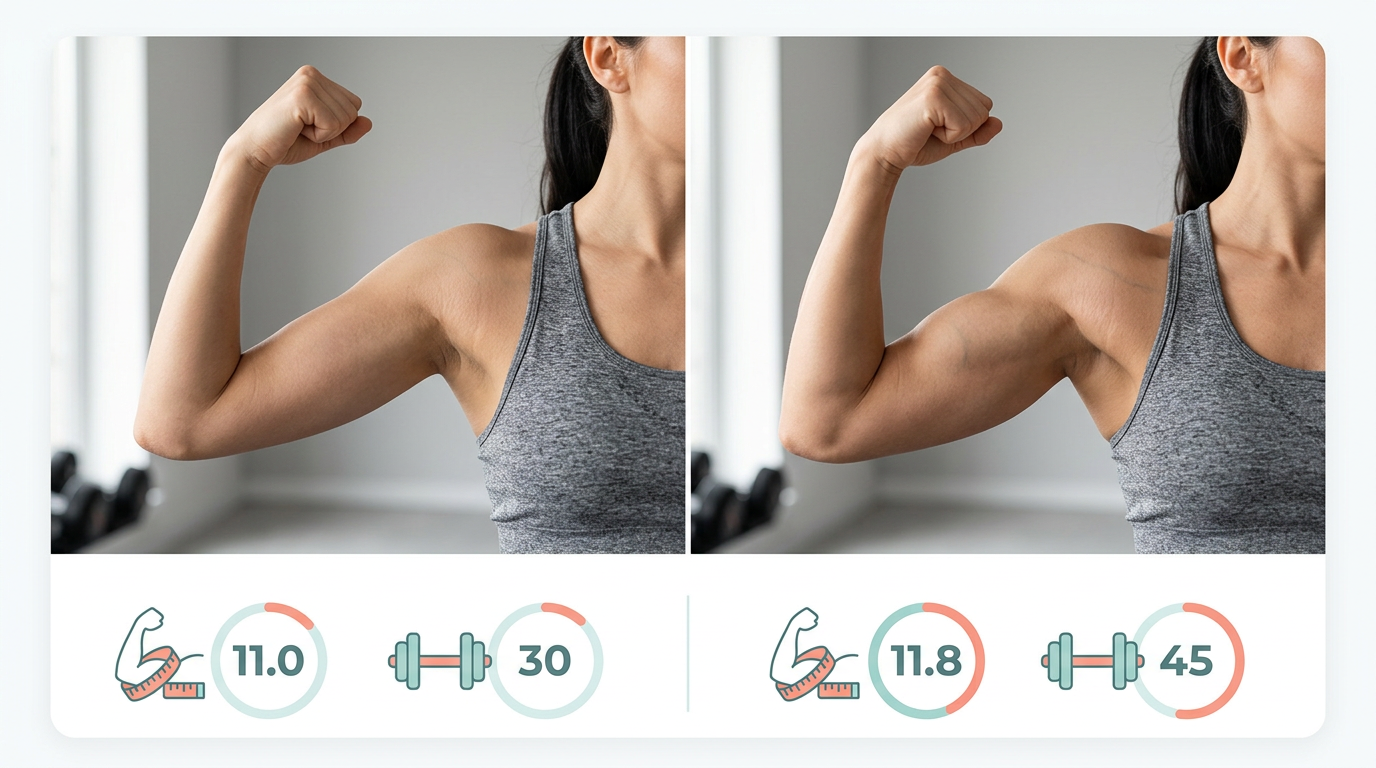
Before and after progress photos showing arm transformation over 12 weeks with consistent strength training, displayed side by side with measurement data
Frequently Asked Questions
What does bat wings slang mean?
Bat wings is slang for loose, sagging skin and fat under the upper arms that jiggles during movement. The term describes the tricep area where tissue hangs down, resembling a bat's wing membrane when arms are extended.
What is unique about bat wings in fitness?
Bat wings uniquely affect the tricep area because this muscle comprises two-thirds of upper arm mass yet remains undertrained in daily activities. Women are particularly prone due to hormonal fat distribution patterns and age-related muscle loss in this specific region.
Can you get rid of bat wings without surgery?
Yes, targeted tricep exercises combined with overall fat loss significantly reduce bat wings without surgery. Building muscle through overhead extensions, dips, and push-ups while maintaining a modest caloric deficit produces visible improvements within 8-12 weeks for most women.
Why do I suddenly have bat wings?
Bat wings develop from age-related muscle loss, weight fluctuations, lack of upper body strength training, and hormonal changes during perimenopause. These factors combine to reduce tricep muscle mass while increasing fat storage and decreasing skin elasticity in the upper arms.
How long does it take to tone bat wings?
Initial improvements appear within 4-6 weeks, with significant visible changes occurring at 8-12 weeks of consistent training. Complete transformation typically requires 6-12 months depending on starting point, training consistency, nutrition adherence, and individual response to exercise.
What exercises work best for bat wings?
Overhead tricep extensions, tricep dips, close-grip push-ups, diamond push-ups, and tricep kickbacks most effectively target bat wings. Perform these exercises 2-3 times weekly with 3-4 sets of 8-15 reps using progressive overload for optimal muscle building.
Will lifting weights make my arms bulky?
No, women lack sufficient testosterone to easily build bulky muscles. Strength training creates lean, defined arms by building muscle and reducing fat. The toned appearance you desire requires lifting challenging weights with progressive overload, not light weights with endless repetitions.
Conclusion: Your Path to Stronger, More Defined Arms
Addressing bat wings requires a comprehensive approach combining targeted tricep exercises, overall strength training, strategic nutrition, and consistent effort over several months. While the journey demands patience, the rewards extend far beyond aesthetics—you'll build functional strength that enhances daily activities and boosts confidence in how you look and feel.
Remember that transformation happens progressively, not overnight. Focus on process goals you can control: showing up for your workouts, hitting your protein targets, and gradually increasing the challenge of your exercises. These consistent actions inevitably produce the outcome you desire—toned, defined arms free from the bat wings that once concerned you.
Start with the exercises outlined in this guide, track your progress through measurements and photos, and trust the process. Explore our comprehensive Exercise Library for detailed form guidance on every movement mentioned in this article.