Anterior pelvic tilt exercises: what actually works
Anterior pelvic tilt exercises are targeted movements that strengthen weak glutes and abs while stretching tight hip flexors and lower back muscles. The most effective include glute bridges, dead bugs, hip flexor stretches, and posterior pelvic tilts performed consistently to realign your pelvis and improve posture.
If you've noticed an exaggerated arch in your lower back, a protruding belly despite being fit, or persistent lower back discomfort, you might be dealing with anterior pelvic tilt. This common postural imbalance affects countless women, especially those who spend long hours sitting or have recently gone through pregnancy. The good news? Anterior pelvic tilt exercises can genuinely correct this issue when performed consistently with proper form.
Created by certified trainer Shelley Darlington with 15+ years experience, this comprehensive guide breaks down the exact exercises that work, why they're effective, and how to incorporate them into your routine. Whether you're new to strength training or looking to refine your approach, you'll discover science-backed strategies trusted by thousands of women worldwide to restore proper pelvic alignment and build a stronger, more functional body.
We'll explore the root causes of anterior pelvic tilt, teach you how to assess your own posture, and provide a progressive exercise plan that targets the specific muscle imbalances causing your symptoms. You'll learn which movements to prioritize, common mistakes to avoid, and how to track your progress effectively.
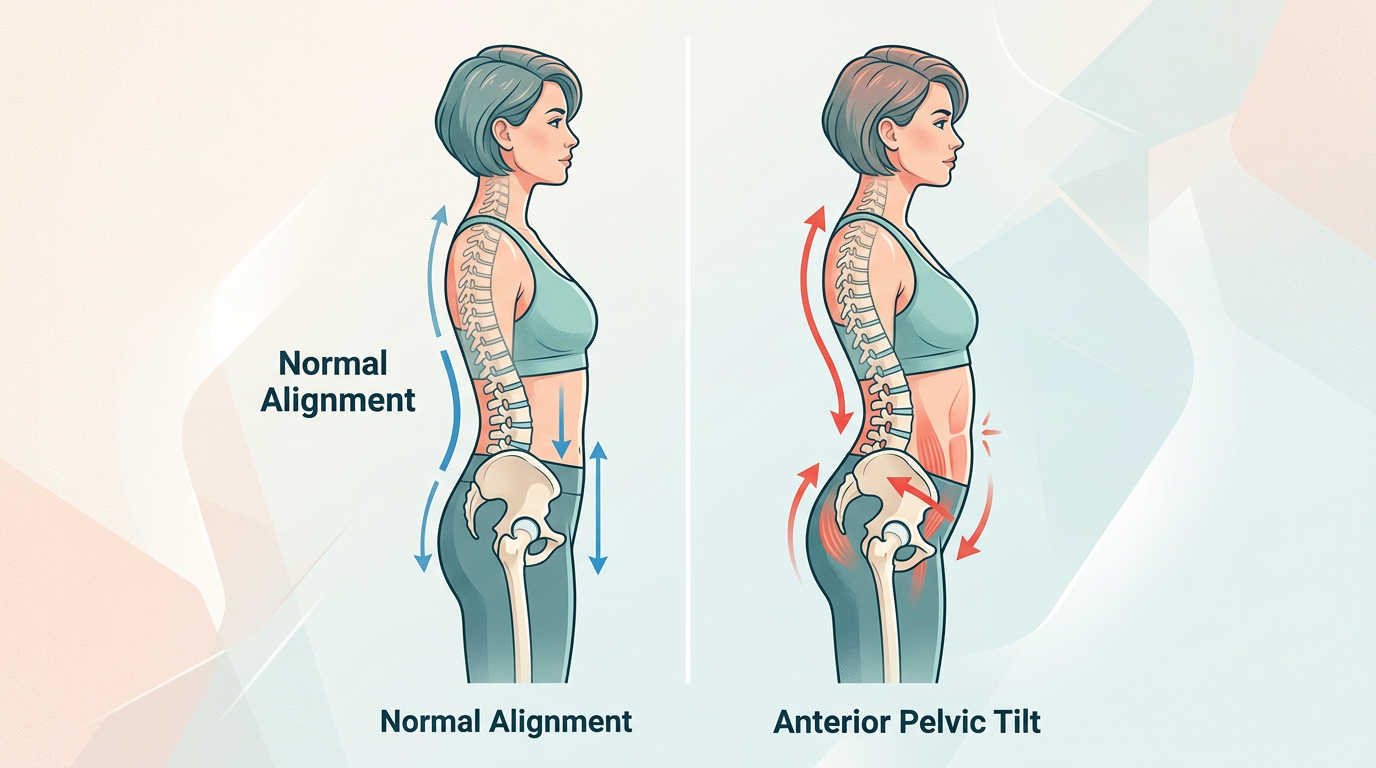
Anatomical illustration showing normal pelvic alignment versus anterior pelvic tilt in a female body, with arrows indicating the forward tilt of the pelvis and exaggerated lumbar curve
Key Takeaways
- Anterior pelvic tilt results from tight hip flexors and lower back muscles combined with weak glutes and core muscles
- Correcting APT requires both strengthening exercises (glute bridges, dead bugs) and stretching tight muscles (hip flexor stretches)
- Consistent practice of targeted exercises for 6-8 weeks typically shows noticeable improvement in posture and symptoms
- Proper sitting posture and daily movement breaks are essential for preventing APT from returning
- Women 35+ focused on strength training and body recomposition benefit most from a comprehensive approach that addresses muscle imbalances
Understanding Anterior Pelvic Tilt: What's Really Happening
Anterior pelvic tilt occurs when your pelvis rotates forward, creating an exaggerated arch in your lower back and causing your belly to push forward even when you're lean. This postural deviation isn't just about aesthetics - it can lead to lower back pain, hip discomfort, and compromised movement patterns during exercise.
The Muscle Imbalances Behind APT
Your pelvis is held in position by opposing muscle groups that work like a system of cables. When certain muscles become too tight while others weaken, your pelvis tilts out of alignment. The primary culprits include:
- Tight hip flexors: These muscles at the front of your hips shorten from prolonged sitting, pulling your pelvis forward
- Tight lower back muscles: The erector spinae and quadratus lumborum become overactive, contributing to the excessive arch
- Weak glutes: Your gluteus maximus and medius fail to counterbalance the forward pull when underdeveloped
- Weak deep core muscles: Your transverse abdominis and internal obliques can't stabilize your pelvis properly
- Tight quadriceps: Particularly the rectus femoris, which crosses both the hip and knee joints
Why Women Are Particularly Susceptible
Women face unique factors that increase APT risk. Pregnancy shifts your centre of gravity forward, often weakening abdominal muscles while tightening the lower back. Wearing high heels regularly forces your pelvis into an anterior tilt position. Additionally, many women naturally carry more weight in their hips and thighs, which can affect pelvic positioning if not balanced with adequate core and glute strength.
Based on feedback from thousands of Strong Curves app users, desk jobs combined with intense lower body training without proper core work create the perfect storm for developing APT. You might be building strong quads and hip flexors through squats and lunges while neglecting the posterior chain muscles that keep your pelvis neutral.
How to Assess Your Own Pelvic Alignment
Stand sideways in front of a mirror in form-fitting clothing. Observe the natural curve of your lower back. Place your hands on your hip bones (the bony protrusions at the front of your pelvis) and your pubic bone. If your hip bones sit noticeably forward of your pubic bone, you likely have anterior pelvic tilt.
Another simple test: Lie on your back with your knees bent and feet flat. Try to press your lower back completely flat against the floor. If there's a significant gap that you struggle to eliminate, APT is present. You can also check if you can fit more than two fingers between your lower back and the floor when lying flat.
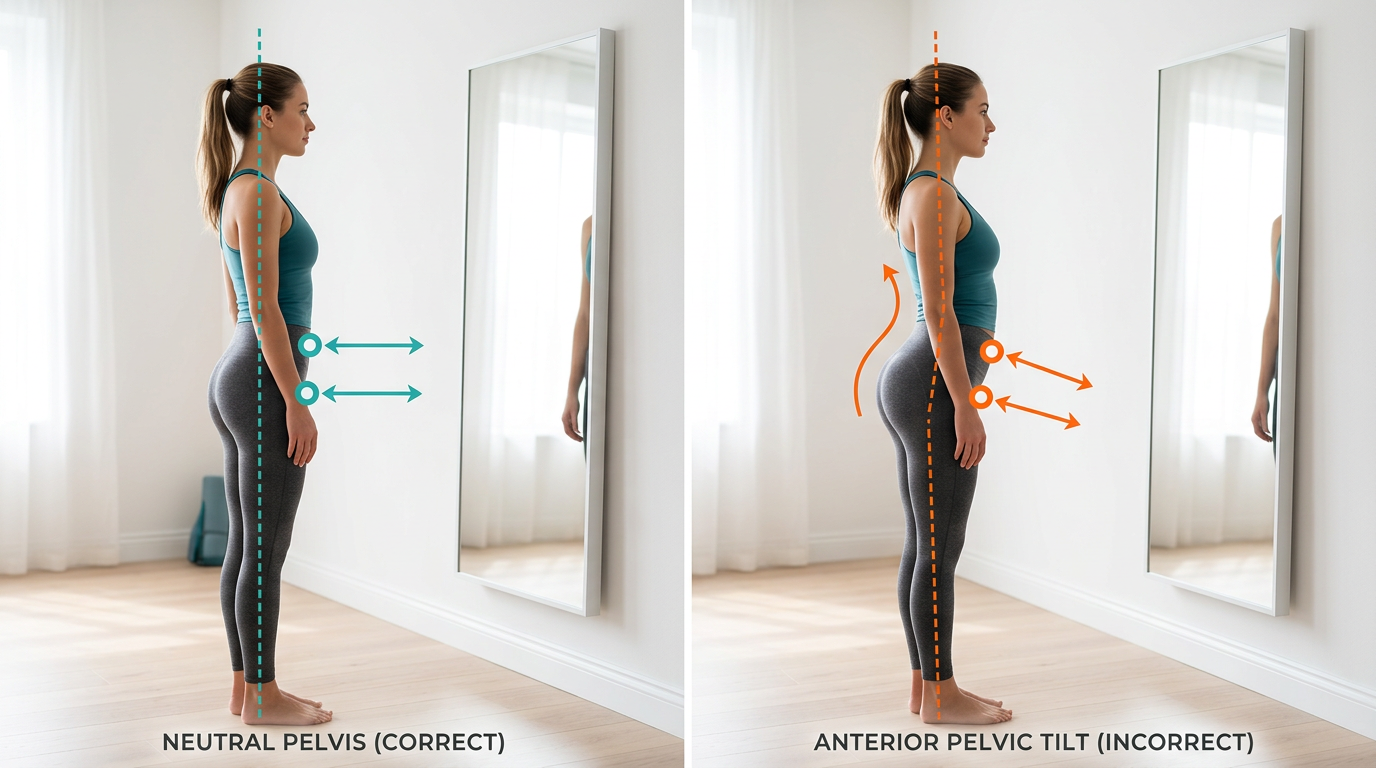
Side-by-side comparison photos showing a woman performing the standing mirror test for anterior pelvic tilt, with visual indicators pointing to hip bones and pubic bone alignment
The Most Effective Anterior Pelvic Tilt Exercises for Correction
Correcting anterior pelvic tilt requires a two-pronged approach: strengthening weak muscles and stretching tight ones. These exercises target the specific imbalances causing your postural deviation. The best anterior pelvic tilt exercises consistently activate your glutes and deep core while releasing tension in your hip flexors and lower back.
The 4 Strength Exercises That Fix Anterior Pelvic Tilt
Here's where most APT correction guides stop short. They give you the warm-up - glute bridges, clamshells, dead bugs, planks, kneeling hip flexor stretches - and call that the fix. Those exercises aren't wrong (more on them below, as your warm-up). But they're not what shifts a pattern that's been compounding for years. The fix is loaded compound work - strength training that loads the posterior chain under resistance, teaches your body to brace its core under load, and rebuilds the muscle mass that holds your pelvis where it belongs.
These four are the exercises I program for every client over 35 with APT. Done properly, with good form, three sets of 8–10 reps each, three to four times a week. Form over weight, always - you can add load as the movements become natural.
1. Hip thrust Position your upper back against a bench, feet flat hip-width apart, barbell or dumbbell across your hips (start with what you can manage with perfect form). Drive through your heels, push your hips up until your thighs are parallel to the floor, and squeeze your glutes hard at the top for a one-second hold. Critical cue: ribs down, core braced, pelvis tucked under at the top (posterior pelvic tilt). This is the single most effective glute strengthener for APT correction.
2. Romanian deadlift (RDL) Stand with feet hip-width, soft bend in your knees, dumbbells or barbell in your hands. Hinge from your hips - push your hips back as if you're closing a car door with your bum - keeping your spine neutral and your ribs down. Lower the weight until you feel a strong stretch in your hamstrings (about mid-shin level), then drive through your heels and squeeze your glutes hard to stand. The RDL is the most underrated APT fix because it strengthens the entire posterior chain - lower back, glutes, hamstrings - exactly the muscles that counterbalance the forward pull on your pelvis.
3. Goblet squat Hold a dumbbell or kettlebell at your chest, elbows tucked, feet shoulder-width or slightly wider. Sit down between your hips - knees track over toes - keeping your chest up and your pelvis neutral. The front-loaded weight forces you to brace your core to stay upright, which teaches your body what neutral pelvis under load actually feels like. That carryover is the point. Squat to whatever depth you can hold neutral; depth matters less than position.
4. Weighted dead bug Lie on your back, hold a dumbbell or kettlebell extended above your chest with both hands. Bend your knees to 90 degrees. Press your lower back flat into the floor (active posterior pelvic tilt) - this is your starting position and the part you have to hold. Slowly lower one leg toward the floor and the opposite arm overhead, keeping your back pressed into the floor. Return and switch sides. The load makes your core work harder against the anti-extension demand, which is exactly the pattern your APT needs.
Programming note. Three sets of 8–10 reps of each, 3–4 times per week, alongside the warm-up activations below and daily hip flexor mobility. You'll feel different in 6–8 weeks of consistent work. Resist the urge to add weight before the form is locked in - APT correction is a positional skill first, a strength gain second.
Warm Up Activation Exercises for Weak Glutes
Your gluteus maximus is the primary muscle responsible for pulling your pelvis into posterior tilt (the opposite of APT). The Strong Curves glute-focused approach to functional fitness emphasizes these movements as foundational for correcting pelvic alignment:
- Glute Bridge: Lie on your back with knees bent and feet flat, hip-width apart. Press through your heels to lift your hips until your body forms a straight line from shoulders to knees. Squeeze your glutes hard at the top for 2 seconds, then lower. Perform 3 sets of 15-20 reps.
- Single-Leg Glute Bridge: Progress to this variation once regular bridges feel easy. Extend one leg straight while performing the bridge with the other leg. This increases glute activation and challenges stability. Do 3 sets of 10-12 reps per leg.
- Clamshells: Lie on your side with knees bent and stacked. Keep feet together while lifting your top knee, focusing on your gluteus medius. This strengthens hip external rotators that stabilize your pelvis. Complete 3 sets of 15-20 reps per side.
Core Activation Warm Up for Pelvic Stability
Your deep core muscles act as a natural corset, stabilizing your spine and pelvis. These are the exercises you'll see in most APT guides. They're not wrong - they're your warm-up, not your fix. Run 1–2 sets of each before the four loaded compound lifts above to fire the muscles you're about to load:
- Dead Bug: Lie on your back with arms extended toward the ceiling and knees bent at 90 degrees. Press your lower back into the floor (posterior pelvic tilt). Slowly extend opposite arm and leg while maintaining back contact with the floor. This anti-extension exercise is crucial for APT correction. Do 3 sets of 8-10 reps per side.
- Posterior Pelvic Tilt (Pelvic Tilt Exercise): Lie on your back with knees bent. Actively tilt your pelvis backward, pressing your lower back flat against the floor. Hold for 5 seconds, then release. This teaches the movement pattern you need. Perform 3 sets of 15 reps.
- Plank with Posterior Tilt: Hold a forearm plank position while actively tucking your pelvis under (posterior tilt). Avoid letting your hips sag or pike upward. This integrates core stability with the correct pelvic position. Work up to 3 sets of 30-45 seconds.
- Bird Dog: Start on hands and knees with a neutral spine. Extend opposite arm and leg while keeping your hips level and core engaged. This challenges your ability to maintain pelvic stability during movement. Complete 3 sets of 10 reps per side.
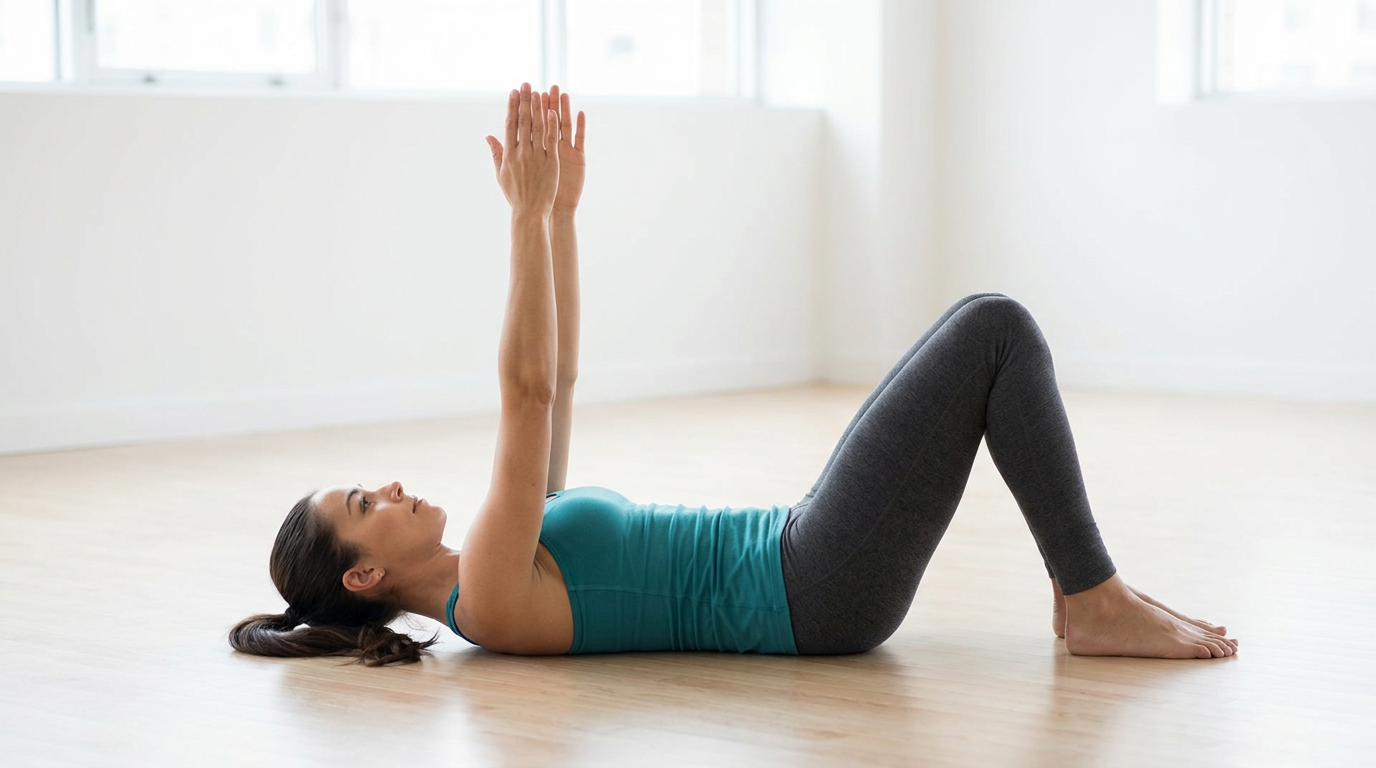
Step-by-step demonstration images showing proper form for dead bug exercise, with arrows indicating the posterior pelvic tilt position and lower back pressed to floor
Essential Stretches for Tight Hip Flexors
Stretching shortened hip flexors is absolutely critical for APT correction. Hold each stretch for 30-60 seconds and repeat 2-3 times per side, performing these daily for best results.
- Kneeling Hip Flexor Stretch: Kneel on one knee with the other foot forward in a lunge position. Tuck your pelvis under (posterior tilt) and lean forward slightly until you feel a stretch in the front of your back hip. Keep your core engaged to prevent arching your lower back. This targets the psoas and rectus femoris.
- Couch Stretch: Place one shin against a wall or couch with your knee on a pad. Step your other foot forward into a deep lunge. Maintain an upright torso and posterior pelvic tilt. This intensely stretches the hip flexors and quadriceps.
- Low Lunge with Reach: From a low lunge position, reach the same-side arm as your back leg up and over toward the opposite side. This adds a lateral component that stretches the psoas more effectively.
- 90/90 Hip Stretch: Sit with one leg bent in front at 90 degrees and the other bent behind at 90 degrees. Lean forward over your front leg. This stretches both hip flexors and external rotators.
Lower Back Release Techniques
Your lower back muscles often become tight and overactive with APT. These movements help release tension:
- Child's Pose: Kneel and sit back on your heels, extending your arms forward and lowering your forehead to the ground. This gently stretches the erector spinae. Hold for 60-90 seconds.
- Cat-Cow Stretch: On hands and knees, alternate between arching your back (cow) and rounding it (cat). Focus on the cat position, which promotes posterior pelvic tilt. Perform 10-15 slow repetitions.
- Foam Rolling: Use a foam roller on your lower back, quadriceps, and hip flexors to release muscle tension. Spend 30-60 seconds on each area, rolling slowly.
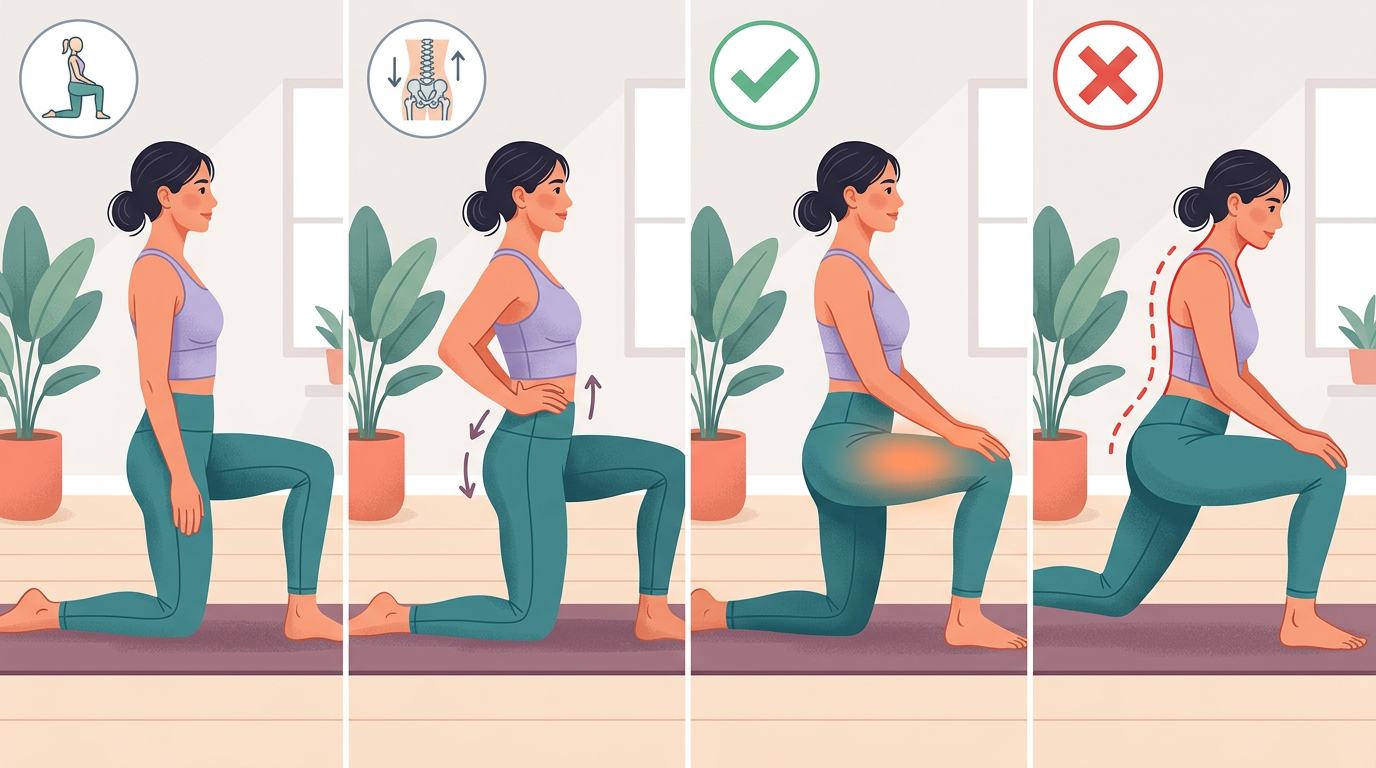
Illustrated guide showing the kneeling hip flexor stretch with proper posterior pelvic tilt positioning, including common mistakes to avoid like excessive lower back arching
Creating Your APT Correction Workout Routine
Knowing which exercises work is only half the battle - you need a structured plan to see real results. A comprehensive anterior pelvic tilt exercises routine should include both strengthening and stretching performed 4-5 times per week for 6-8 weeks to achieve noticeable correction.
Sample Weekly Schedule
Here's an effective weekly structure that balances exercise with recovery:
Monday, Wednesday, Friday: Full APT correction workout (30-40 minutes)
- 5-minute dynamic warm-up with cat-cow and pelvic tilts
- Glute strengthening: Glute bridges (3x15), single-leg bridges (3x10 each), clamshells (3x15 each)
- Core work: Dead bugs (3x8 each side), planks with posterior tilt (3x30-45 seconds)
- Hip flexor stretches: Kneeling stretch (3x45 seconds each side), couch stretch (2x60 seconds each)
- Lower back release: Child's pose (2 minutes total)
Tuesday, Thursday: Active recovery with stretching focus (15-20 minutes)
- Light yoga or mobility work
- Extended hip flexor stretching routine
- Foam rolling for lower body
- Gentle walking or swimming
Saturday: Optional longer strength session incorporating progressive overload principles for glute development
Sunday: Complete rest or gentle stretching only
Progressive Overload for Continued Improvement
As your body adapts, you must increase the challenge to continue making progress. For strengthening exercises, progress by:
- Increasing repetitions (work up to 20+ reps before adding resistance)
- Adding resistance bands around your knees for glute exercises
- Holding contractions longer at the top of movements
- Progressing to single-leg variations
- Adding weight with dumbbells or barbells for hip thrusts and bridges
For stretches, progress by holding positions longer (up to 2 minutes) or moving into deeper ranges of motion as flexibility improves.
Integrating APT Exercises with Your Regular Training
If you're already following a strength training program, you don't need to abandon it. Instead, incorporate these corrective exercises strategically. Perform hip flexor stretches and posterior pelvic tilts as part of your warm-up before lower body workouts. Add glute bridges and dead bugs to your cool-down routine. This ensures you're addressing the imbalance without overwhelming your schedule.
Be mindful of exercises that might worsen APT. Movements like back extensions, overhead presses with excessive arching, and sit-ups with poor form can reinforce the anterior tilt pattern. Focus on maintaining a neutral or slightly posterior pelvic position during all exercises, especially compound movements like squats and deadlifts.
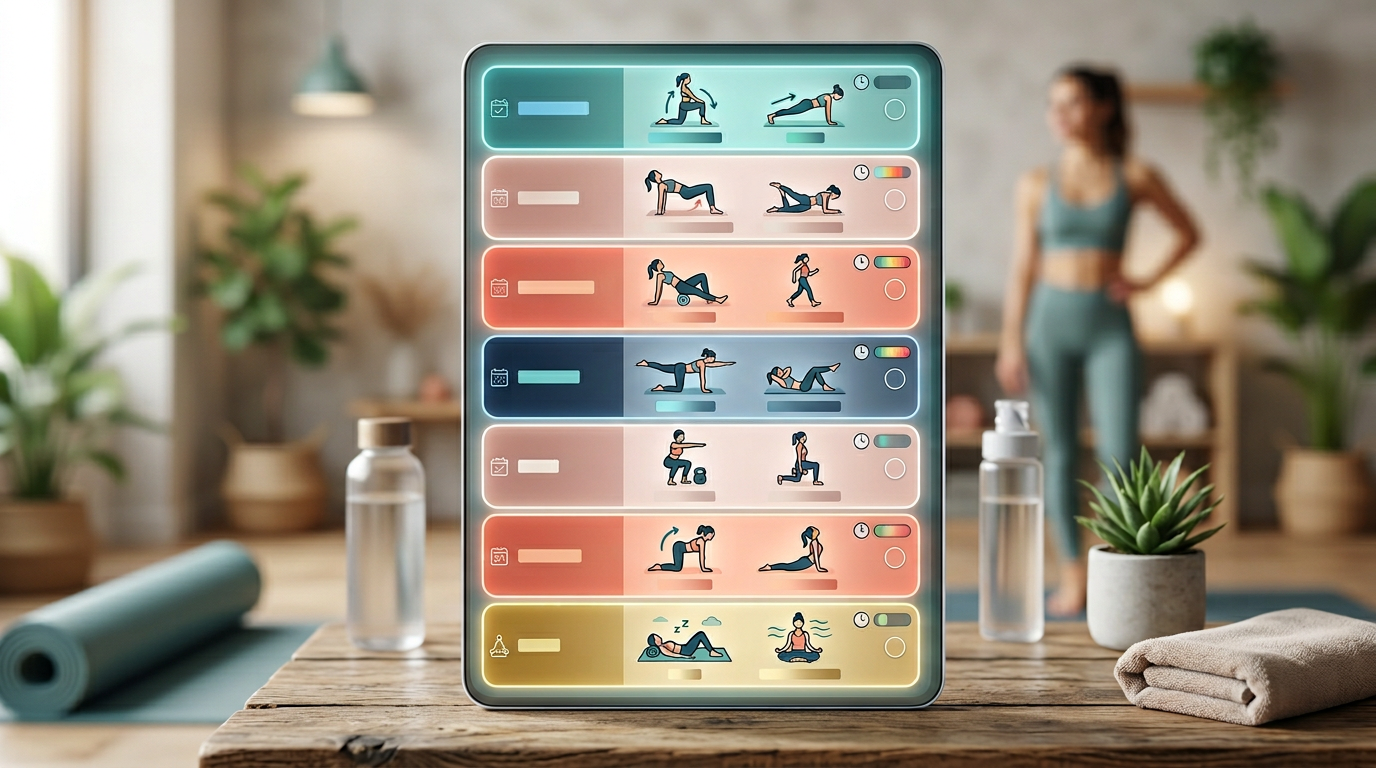
Weekly calendar infographic showing the sample APT correction workout schedule with icons representing different exercise types for each day
Lifestyle Modifications to Support Your Progress
Exercise alone won't fix anterior pelvic tilt if your daily habits constantly pull your pelvis out of alignment. These lifestyle changes accelerate your progress and prevent regression.
Optimizing Your Sitting Posture
How you sit for hours each day has a massive impact on pelvic positioning. Many women unknowingly sit in ways that exacerbate APT. Here's how to sit properly to fix anterior pelvic tilt:
- Position your pelvis: Sit on your sit bones (ischial tuberosities), not your tailbone. Rock your pelvis forward and backward to find neutral, then maintain that position.
- Support your lower back: Use a small lumbar roll or rolled towel to support the natural curve of your spine without excessive arching. The support should maintain neutral, not push you into anterior tilt.
- Keep feet flat: Place both feet flat on the floor with knees at 90 degrees. Avoid crossing your legs or tucking one foot under you.
- Adjust chair height: Your hips should be level with or slightly higher than your knees to reduce hip flexor tension.
- Take regular breaks: Stand and move every 30-45 minutes. Set a timer if needed. Perform a few pelvic tilts and hip flexor stretches during these breaks.
Movement Throughout Your Day
In our experience with women who successfully correct APT, those who incorporate frequent movement breaks see faster results than those who only exercise formally. Simple strategies include:
- Walking for 5-10 minutes after each hour of sitting
- Performing standing hip flexor stretches while brushing your teeth
- Doing glute squeezes during mundane tasks like washing dishes
- Taking phone calls while standing or walking
- Using a standing desk for part of your workday
Sleep Position Considerations
Your sleeping position affects your posture over the 7-9 hours you're in bed. If you sleep on your stomach, you're forcing your spine into extension all night, reinforcing APT. Back sleeping with a pillow under your knees or side sleeping with a pillow between your knees maintains better spinal alignment.
Footwear Choices
High heels shift your center of gravity forward, forcing your pelvis into anterior tilt to maintain balance. While you don't need to eliminate heels entirely, minimize wearing them daily. When you do wear heels, perform extra hip flexor stretches that day. Choose shoes with lower heels (under 2 inches) for regular wear and ensure they provide adequate arch support.

Comparison diagram showing correct versus incorrect sitting posture, with annotations highlighting pelvic position, lumbar support, and foot placement
Common Mistakes That Slow Your Progress
Even with the right exercises, certain errors can sabotage your results. Avoid these common pitfalls to maximize your APT correction efforts.
Focusing Only on Stretching or Only on Strengthening
The biggest mistake women make is addressing only half of the problem. Stretching tight hip flexors feels good and provides temporary relief, but without strengthening your glutes and core, your pelvis will return to its tilted position. Conversely, building strong glutes won't help if chronically tight hip flexors constantly pull your pelvis forward. You absolutely must do both.
Rushing Through Exercises Without Mind-Muscle Connection
Quality trumps quantity with corrective exercises. Performing 50 sloppy glute bridges won't help as much as 15 perfectly executed ones where you actively squeeze your glutes and maintain posterior pelvic tilt. Slow down, focus on the working muscles, and ensure you're moving through the correct pattern.
Expecting Overnight Results
Postural changes take time—typically 6-8 weeks of consistent work before you notice significant improvement. Your body has held this position for months or years, and the neuromuscular patterns are deeply ingrained. Trust the process and track your progress with photos and measurements rather than expecting dramatic daily changes.
Ignoring Pain Signals
While some muscle soreness is normal when starting new exercises, sharp pain or discomfort that worsens is a red flag. APT correction exercises should gradually reduce lower back pain, not increase it. If certain movements cause pain, reduce the range of motion, decrease intensity, or consult a physical therapist to ensure you're performing them correctly.
Maintaining Poor Form During Regular Workouts
You can't spend 20 minutes doing corrective exercises then perform an hour of squats and lunges with excessive arching. Every exercise in your routine should reinforce proper pelvic positioning. This requires conscious awareness initially, but eventually becomes automatic. Learn to brace your core and maintain neutral spine during all movements, particularly when training your lower body and glutes.
Tracking Your Progress and Adjusting Your Approach
Measuring improvement helps you stay motivated and identify what's working. Use these methods to track your anterior pelvic tilt correction journey.
Visual Documentation
Take side-view photos in fitted clothing every two weeks. Stand naturally without consciously correcting your posture. Compare photos over time to see the gradual reduction in your lumbar curve. Many women don't notice the change day-to-day but are amazed when comparing photos from week one to week eight.
Functional Measurements
Lie on your back and measure the gap between your lower back and the floor. As your APT improves, this gap should decrease. You can also track how easily you can press your lower back flat during this test—it should require less effort over time.
Symptom Tracking
Keep a simple journal noting your lower back pain levels, hip discomfort, and overall posture awareness. Rate these on a 1-10 scale weekly. Most women report noticeable symptom improvement within 3-4 weeks even before seeing dramatic postural changes.
Performance Indicators
Track your exercise performance. Can you hold a plank with proper posterior tilt longer than before? Are your glute bridges stronger? Can you complete more dead bugs with perfect form? These functional improvements indicate that the muscle imbalances are correcting.
When to Adjust Your Routine
If you're not seeing any progress after 4 weeks of consistent work, reassess your approach. You might need to:
- Increase exercise frequency (moving from 3 to 5 sessions weekly)
- Spend more time on stretching if your hip flexors remain very tight
- Add more glute strengthening volume if those muscles are particularly weak
- Examine your daily habits more closely for factors reinforcing APT
- Consider working with a physical therapist to identify specific limitations
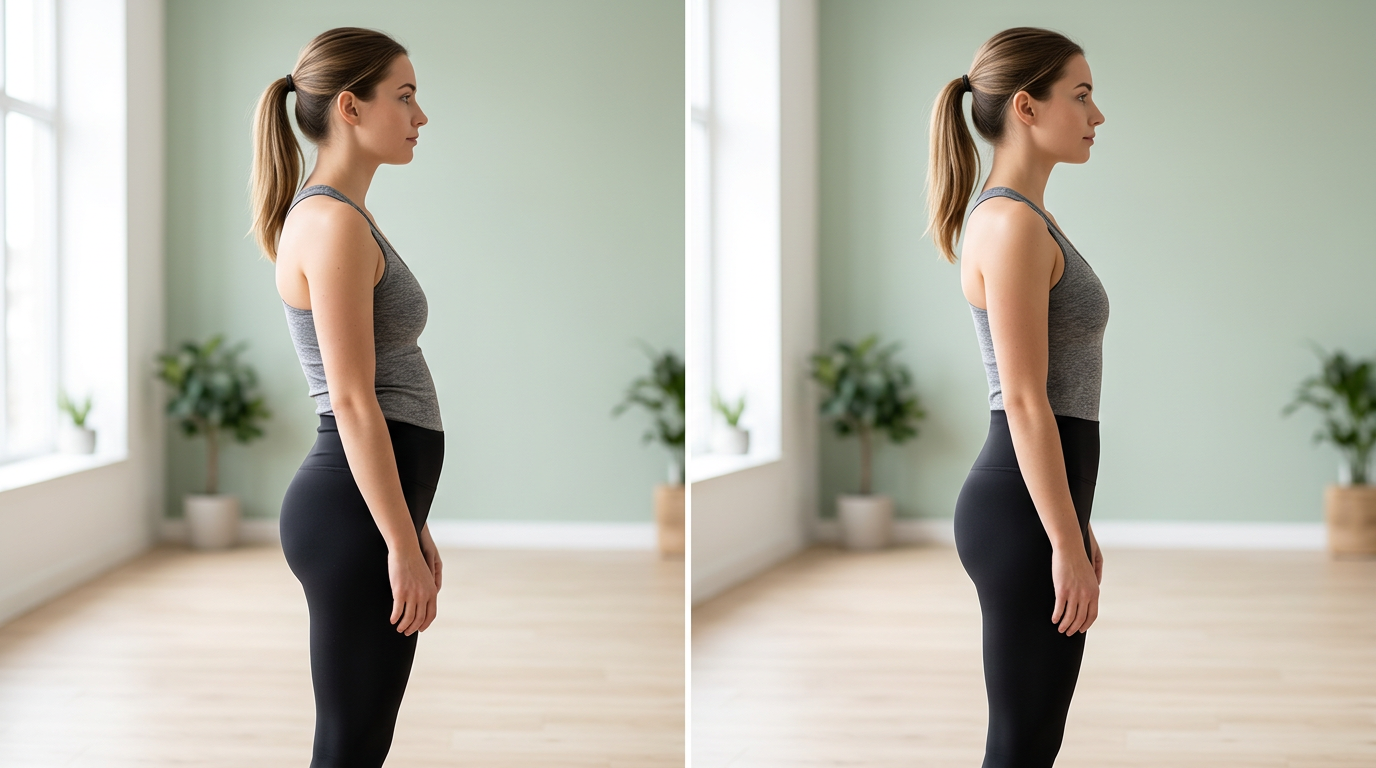
Before and after side-view comparison photos showing visible improvement in pelvic alignment and reduced lumbar curve after 8 weeks of consistent APT exercises
Special Considerations for Different Life Stages
Women's bodies change throughout life, and these transitions affect how you should approach APT correction.
Postpartum Recovery
Pregnancy often causes or worsens anterior pelvic tilt due to the growing belly shifting your center of gravity forward. After delivery, your abdominal muscles are stretched and weakened, making it difficult to stabilize your pelvis. Start with gentle pelvic tilts and breathing exercises in the first weeks postpartum. Progress gradually to bridges and modified planks only after receiving clearance from your healthcare provider (typically 6 weeks postpartum, longer if you had a cesarean section).
Focus heavily on reconnecting with your deep core muscles through exercises like diaphragmatic breathing and gentle transverse abdominis activation before progressing to more intense movements. Patience is crucial - your body needs time to heal and rebuild strength.
Women 35+ Training Considerations
If you're a woman in your late 30s or 40s, you've probably been told the changes in your body are about hormones. That's the cultural narrative right now - and it's incomplete. The mechanical truth is more useful: muscle mass naturally declines as we age (a process called sarcopenia, around 3–8% per decade after 30), and decades of desk-bound days, pregnancies, hip-carrying kids, and accumulated posture habits compound. Anterior pelvic tilt is one of the patterns that shows up. It's not a hormone problem you can supplement your way out of. It's a strength deficit you can train your way out of.
The good news for women over 35: resistance training works just as well for you as it does for anyone, and the older you get, the more it earns you - preserved muscle, preserved bone density, joint stability, and the postural correction this guide is built around. Loaded compound work - hip thrusts, Romanian deadlifts, goblet squats - is the lever. The exercises in this guide aren't different for women in their 40s than for anyone else; the priority just becomes clearer with age. Build the muscle, hold the posture, keep moving.
A note on perimenopause specifically: Strong Curves doesn't position itself as a perimenopause specialist. If you have hormonal symptoms that are genuinely disruptive, see a doctor who specialises in midlife women's health - Dr Vonda Wright, Dr Gabrielle Lyon, and Dr Mary Claire Haver are reliable starting points. But for APT correction and general strength: train the muscles, fix the posture, do the loaded work consistently. That's the lane this app is built for.
Active Athletes and Advanced Trainees
If you're already training intensely, you might need to temporarily reduce training volume in other areas while focusing on APT correction. Heavy squats, deadlifts, and overhead presses can reinforce poor pelvic positioning if performed with excessive arching. Consider working with a coach to refine your form on these lifts, ensuring you maintain proper pelvic alignment throughout each movement.
Advanced trainees often benefit from more challenging variations like single-leg hip thrusts, weighted dead bugs, and Copenhagen planks to continue progressing their corrective work.
Frequently Asked Questions
Can you actually fix anterior pelvic tilt?
Yes, anterior pelvic tilt can be corrected through consistent strengthening and stretching exercises targeting the muscle imbalances causing it. Most women see significant improvement within 6-8 weeks of performing glute bridges, hip flexor stretches, and core stabilization exercises 4-5 times weekly. The key is addressing both tight hip flexors and weak glutes simultaneously while maintaining proper posture throughout the day.
How do I know if I have APT?
Stand sideways in front of a mirror and check if your lower back has an exaggerated arch with your belly protruding forward. Place your hands on your hip bones and pubic bone - if your hip bones sit noticeably forward, you likely have APT. You can also lie on your back with knees bent and check if there's a large gap under your lower back that you struggle to flatten.
Does Simone Biles have anterior pelvic tilt?
While some photos suggest Simone Biles may have slight anterior pelvic tilt, this is common among gymnasts due to extreme lumbar flexibility required for their sport. Elite gymnasts intentionally train hyperextension for performance, which differs from problematic APT causing pain or dysfunction. What appears as APT in athletes may actually be controlled mobility rather than a postural problem requiring correction.
How to sit properly to fix anterior pelvic tilt?
Sit on your sit bones with feet flat on the floor and knees at 90 degrees. Use a small lumbar support to maintain neutral spine without excessive arching. Keep your pelvis in neutral position - not tilted forward or tucked under. Take standing breaks every 30-45 minutes to perform hip flexor stretches and prevent your hip flexors from tightening during prolonged sitting.
How long does it take to correct anterior pelvic tilt?
Most women notice improvement in 6-8 weeks with consistent exercise 4-5 times weekly. Initial symptom relief like reduced lower back pain often occurs within 2-3 weeks, while visible postural changes take longer. Severe cases or long-standing APT may require 12-16 weeks of dedicated work. Consistency matters more than intensity - regular practice of targeted exercises yields better results than sporadic intense sessions.
Should I stop squatting if I have anterior pelvic tilt?
You don't need to stop squatting, but focus on maintaining neutral pelvis throughout the movement. Reduce weight and practice proper form with core bracing and posterior pelvic tilt at the top of each rep. Avoid excessive arching in your lower back during the squat. Prioritize corrective exercises like glute bridges and dead bugs while refining your squat technique to prevent reinforcing poor pelvic positioning.
What muscles are weak with anterior pelvic tilt?
The primary weak muscles in APT are your gluteus maximus, gluteus medius, hamstrings, and deep core muscles including the transverse abdominis and internal obliques. These muscles fail to counterbalance the forward pull of tight hip flexors and overactive lower back muscles. Strengthening these through targeted exercises like glute bridges, clamshells, and dead bugs is essential for correcting the imbalance and restoring proper pelvic alignment.
Conclusion: Your Path to Better Posture and Pain-Free Movement
Correcting anterior pelvic tilt isn't about achieving perfect posture for aesthetics - it's about building a strong, functional body that moves efficiently and feels good. The anterior pelvic tilt exercises outlined in this guide address the root cause of your postural imbalance: muscle weaknesses and tightness that pull your pelvis out of alignment.
Your action plan starts today:
- Assess your current pelvic alignment using the mirror and floor tests described above
- Begin with the foundational exercises - glute bridges, dead bugs, and kneeling hip flexor stretches - performed 4-5 times weekly
- Implement sitting posture improvements and movement breaks throughout your day
- Track your progress with photos and symptom journaling every two weeks
- Be patient and consistent - visible changes typically appear within 6-8 weeks
Remember that this journey is about building strength and resilience in your body. Every glute bridge strengthens the muscles that support your spine. Every hip flexor stretch releases tension that's been pulling you out of alignment. Every moment of postural awareness reinforces healthier movement patterns.
Ready to take your training to the next level with a comprehensive program designed specifically for women? The Strong Curves app provides structured workouts, form guidance, and progressive programming that addresses postural issues while building the strong, sculpted physique you're working toward. Join thousands of women who've transformed their bodies through science-backed training that actually works.
Start implementing these anterior pelvic tilt exercises today, and share your progress in the comments below. What symptoms are you most looking forward to resolving? Which exercises feel most challenging for you right now? Your journey to better posture and pain-free movement begins with that first glute bridge.