Ab Exercises on a Mat: Strengthen Your Core at Home
Ab exercises on a mat are bodyweight core movements performed on a padded surface to build abdominal strength, stability, and definition. The most effective include planks, dead bugs, bicycle crunches, and bird dogs, requiring minimal equipment while targeting all core muscle groups for improved posture, balance, and functional fitness.
If you've ever felt frustrated by complicated gym equipment or intimidated by crowded fitness spaces, you're not alone. The truth is, you don't need fancy machines or expensive memberships to build a strong, functional core. Ab exercises on a mat offer one of the most accessible and effective ways to strengthen your midsection from the comfort of your own home.
Your core is the foundation of nearly every movement you make—from lifting groceries to playing with your kids to maintaining good posture during long work days. A strong core doesn't just look good; it protects your spine, reduces back pain, and enhances your overall athletic performance. Whether you're a fitness beginner or an experienced athlete, mat-based ab exercises provide the versatility and scalability you need to progress at your own pace.
In this comprehensive guide to ab exercises on a mat, you'll discover the best movements to target every area of your core, learn proper form to maximize results while preventing injury, and understand how to structure effective workouts that fit your schedule. Let's build that strong, confident foundation together.
Key Takeaways
- Mat-based ab exercises require minimal equipment and can be performed anywhere, making core training accessible for all fitness levels
- Effective core training targets all muscle groups including rectus abdominis, obliques, transverse abdominis, and deep stabilizers
- Proper form and breathing technique are more important than rep count for building functional core strength
- Progressive overload through tempo, range of motion, and exercise variations prevents plateaus and continues building strength
- Consistency with 2-4 core sessions weekly delivers better results than sporadic intense workouts
Understanding Your Core Muscles
Before diving into specific ab exercises on a mat, it's essential to understand what you're actually working. Your core is far more than just the six-pack muscles you see in fitness magazines.
The Main Core Muscle Groups
Your core consists of multiple muscle layers that work together to stabilize your spine, transfer force between your upper and lower body, and protect your internal organs. The rectus abdominis runs vertically along the front of your abdomen and is responsible for flexing your spine forward. Your internal and external obliques wrap around your sides, controlling rotation and lateral flexion.
The transverse abdominis is the deepest abdominal muscle, acting like a natural weight belt to stabilize your entire midsection. Don't forget about the erector spinae along your back, the multifidus muscles supporting your spine, and your pelvic floor muscles—all integral parts of your core system.
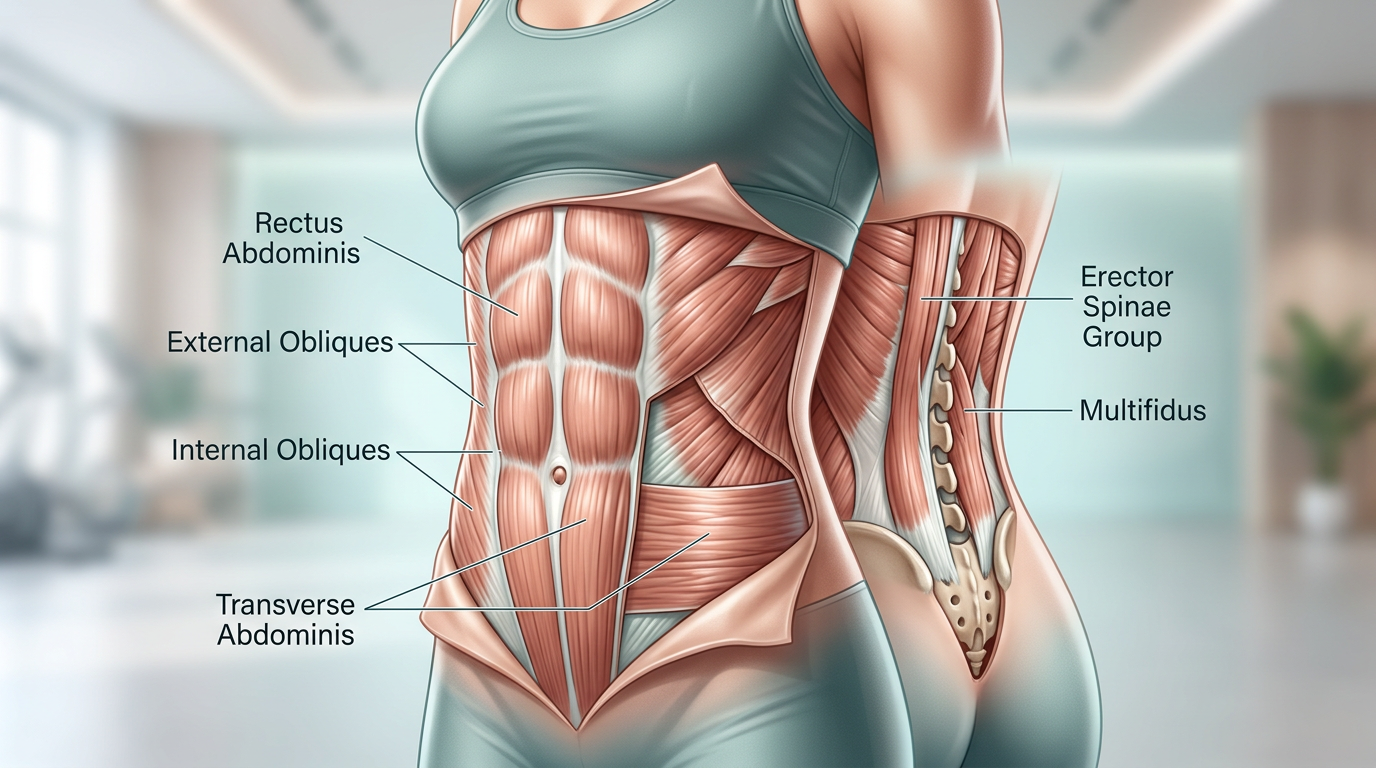
Anatomical diagram showing the layers of core muscles including rectus abdominis, obliques, transverse abdominis, and back muscles with clear labels
Why Mat Exercises Are Effective
Mat-based movements eliminate momentum and force you to rely purely on muscular control. Without machines to guide your movement patterns, your stabilizer muscles must work harder to maintain proper form. This creates functional strength that translates directly to real-world activities.
The padded surface of a mat also protects your spine and tailbone during floor exercises while providing enough instability to challenge your balance and coordination. This combination makes mat work both safe and highly effective for core development.
Best Ab Exercises on a Mat for Beginners
If you're new to core training or returning after a break, these foundational movements will help you build strength safely and effectively.
Dead Bug
The dead bug is one of the most underrated core exercises, teaching you to maintain spinal stability while moving your limbs independently. Lie on your back with arms extended toward the ceiling and knees bent at 90 degrees. Press your lower back firmly into the mat, then slowly lower your right arm overhead while extending your left leg, hovering just above the floor.
Return to start and repeat on the opposite side. The key is maintaining that lower back connection to the mat throughout the entire movement—this is what activates your deep core muscles. Start with 8-10 reps per side for 3 sets.
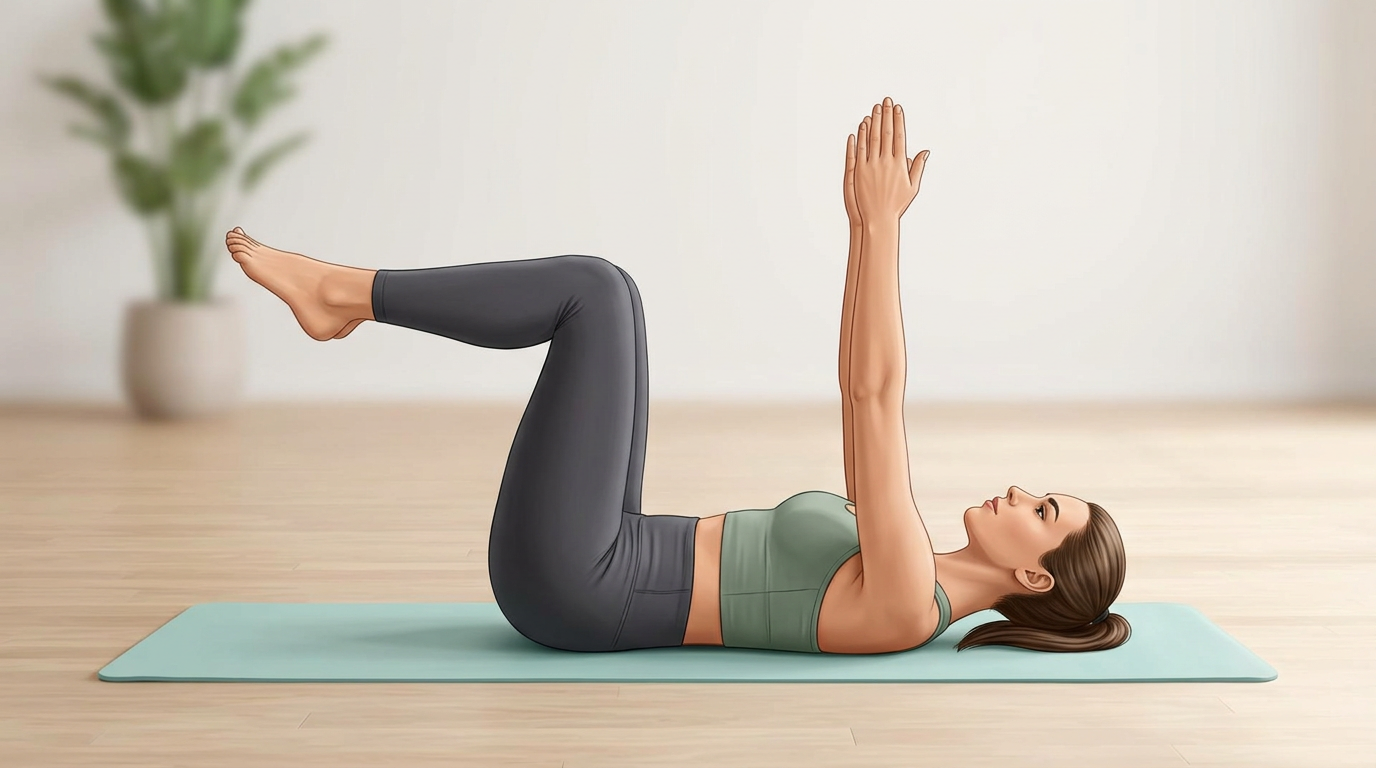
Step-by-step demonstration of dead bug exercise showing starting position and alternating arm and leg extensions with arrows indicating movement direction
Modified Plank
Planks build incredible anti-extension strength, training your core to resist arching under load. Begin on your hands and knees, then step back into a straight line from head to heels, keeping your hands directly under your shoulders. If a full plank is too challenging, drop to your knees while maintaining a straight line from knees to head.
Engage your abs by imagining you're pulling your belly button toward your spine. Squeeze your glutes and breathe steadily—never hold your breath. Hold for 20-30 seconds to start, gradually building to 60 seconds as you get stronger.
Glute Bridge with Core Engagement
While primarily a glute exercise, the bridge also teaches proper pelvic positioning and core bracing. Lie on your back with knees bent and feet flat on the mat, hip-width apart. Press through your heels to lift your hips until your body forms a straight line from shoulders to knees.
At the top, squeeze your glutes and brace your core as if preparing for someone to push on your stomach. Hold for 2-3 seconds before lowering with control. Perform 12-15 reps for 3 sets.
Intermediate Ab Exercises on a Mat
Once you've mastered the basics, these intermediate movements will challenge your core in new ways and continue building strength.
Bicycle Crunches
Bicycle crunches effectively target both your rectus abdominis and obliques while incorporating a rotational component that mimics functional movement patterns. Lie on your back with hands behind your head (not pulling on your neck) and legs in a tabletop position. Bring your right elbow toward your left knee while extending your right leg straight.
Alternate sides in a smooth, controlled pedaling motion. Focus on rotating from your torso, not just moving your elbows. Quality trumps speed—aim for 12-15 reps per side for 3 sets.
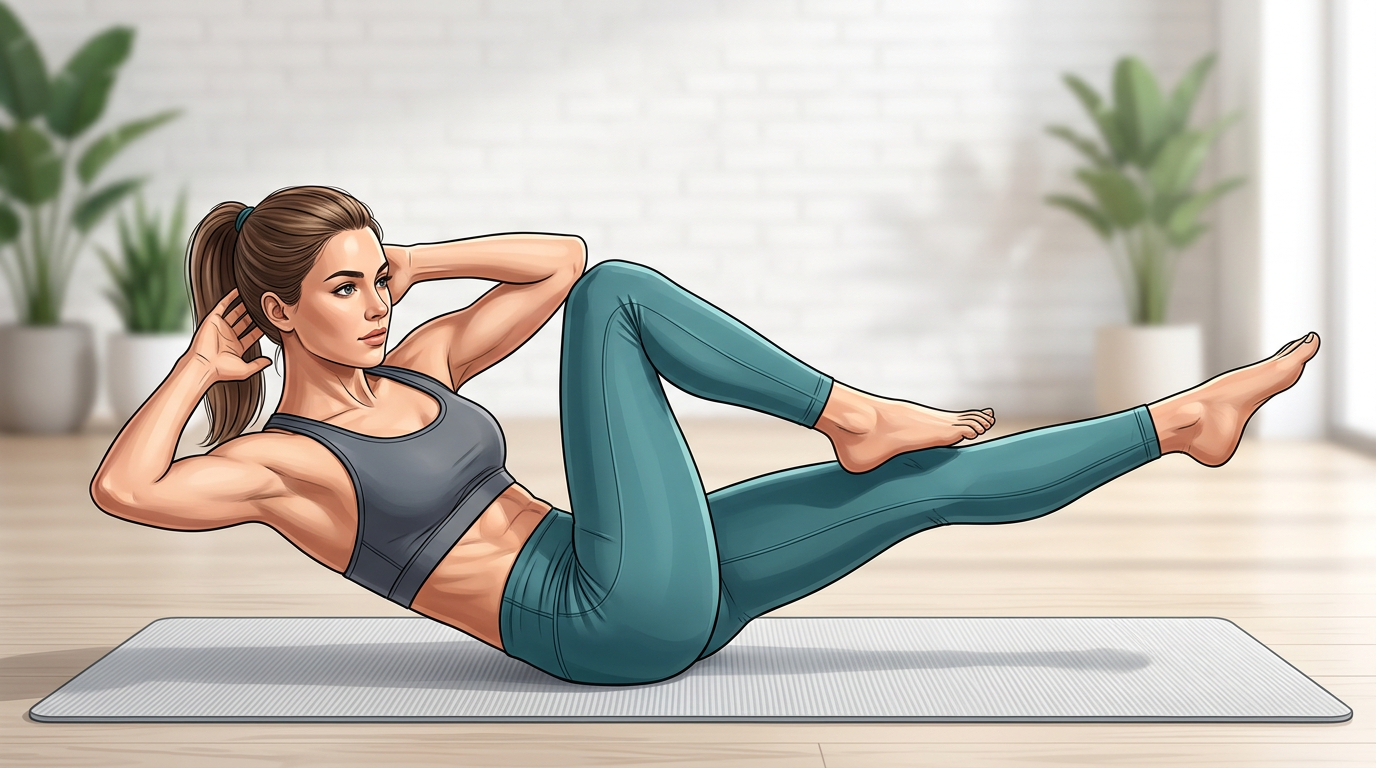
Woman performing bicycle crunches on a mat showing the rotation and leg extension with proper form and hand placement behind head
Bird Dog
The bird dog challenges your balance and coordination while building anti-rotation strength. Start on hands and knees with a neutral spine. Simultaneously extend your right arm forward and left leg back, creating a straight line from fingertips to toes.
Hold for 3-5 seconds while resisting any twisting or tilting of your hips. Return to start and repeat on the opposite side. The goal is perfect stillness in your torso—imagine balancing a glass of water on your lower back. Complete 10-12 reps per side for 3 sets.
Russian Twists
Russian twists build rotational power and oblique strength. Sit on your mat with knees bent and feet flat. Lean back slightly to engage your core, then lift your feet a few inches off the ground. Hold your hands together at chest level and rotate your torso to tap the floor beside your hip.
Alternate sides with control, keeping your chest lifted and spine long. For added challenge, hold a light weight or water bottle. Perform 20 total twists (10 per side) for 3 sets.
Mountain Climbers
This dynamic exercise combines core stability with cardiovascular conditioning. Start in a high plank position with hands under shoulders. Drive your right knee toward your chest, then quickly switch legs as if running in place.
Keep your hips level and core tight throughout the movement. Start with 20-30 seconds of work, building to 45-60 seconds as your endurance improves. Complete 3-4 sets with 30 seconds rest between.
Advanced Ab Exercises on a Mat
These challenging movements require significant core strength and control. Master the intermediate exercises before progressing to these variations.
V-Ups
V-ups demand explosive core power and full-body coordination, making them one of the most challenging mat-based ab exercises. Lie flat on your back with arms extended overhead. In one fluid motion, lift your legs and torso simultaneously, reaching your hands toward your toes to form a V-shape at the top.
Lower back down with control—never let momentum do the work. If full V-ups are too difficult, try tucked V-ups where you bring your knees toward your chest instead of keeping legs straight. Aim for 8-10 reps for 3 sets.
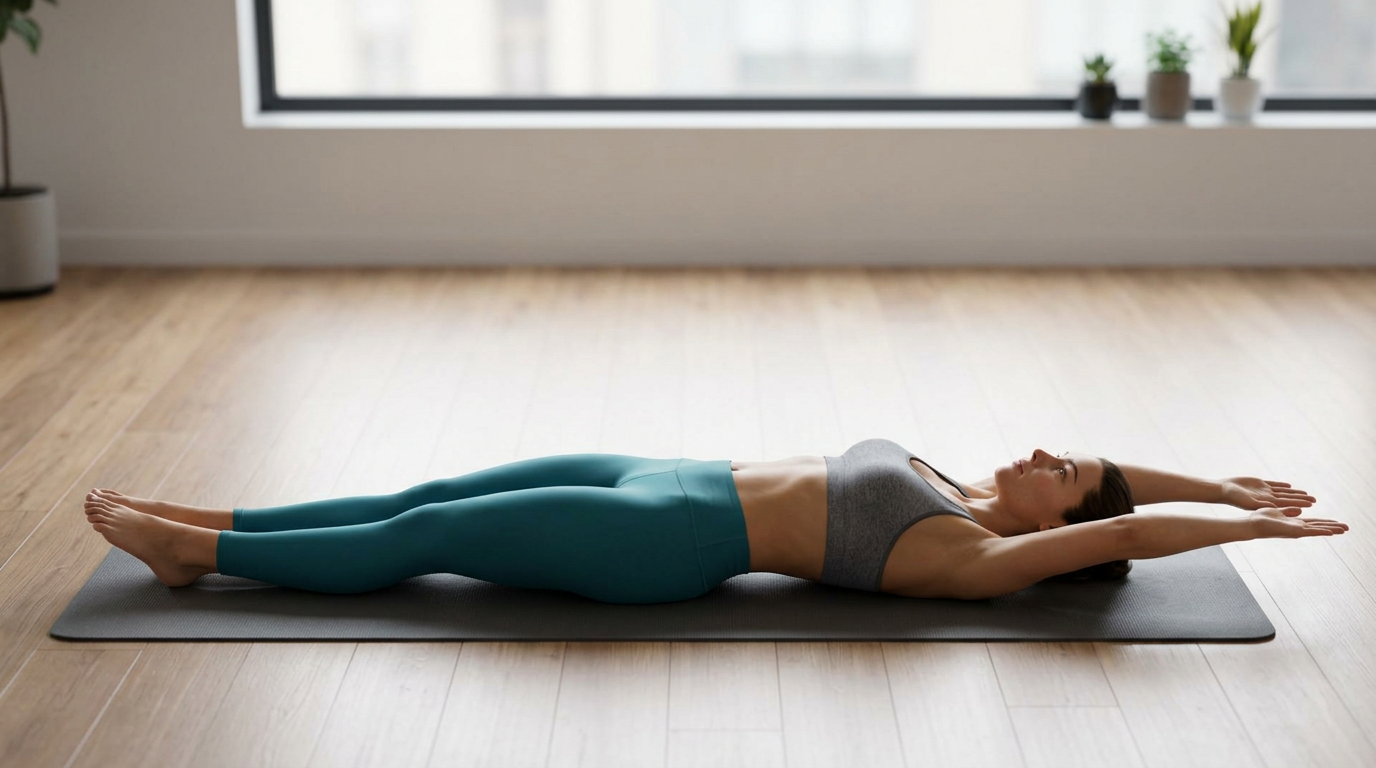
Progression sequence showing V-up exercise from lying position to V-shape peak position with proper form alignment
Plank with Alternating Leg Lifts
This plank variation adds an anti-rotation challenge. Hold a standard high plank position, then lift your right foot 6-8 inches off the mat while maintaining perfectly level hips. Hold for 2-3 seconds before switching sides.
The instability forces your core to work overtime preventing rotation and maintaining alignment. Complete 8-10 lifts per side for 3 sets.
Hollow Body Hold
Borrowed from gymnastics training, the hollow hold builds incredible anti-extension strength. Lie on your back and press your lower back firmly into the mat. Lift your shoulders and legs off the ground, arms extended by your ears, creating a gentle curved shape like a banana.
The lower your legs, the harder the exercise becomes. Start with legs at a 45-degree angle and progress lower as you build strength. Hold for 20-30 seconds for 3-4 sets.
Side Plank with Hip Dips
This advanced oblique exercise combines isometric holds with dynamic movement. Start in a side plank on your forearm with feet stacked and body in a straight line. Lower your hip toward the mat, then lift back to neutral and even slightly higher if possible.
Control is everything—no momentum or jerky movements. Perform 10-12 dips per side for 3 sets. If too challenging, drop your bottom knee to the mat for support.
How to Structure Your Mat-Based Ab Workout
Having a collection of exercises is just the beginning. Structure matters for maximizing results and preventing overtraining.
Workout Frequency and Duration
Your abs are muscles like any other and require adequate recovery between training sessions to grow stronger. Aim for 2-4 dedicated core sessions per week, spacing them at least one day apart. Each workout should last 15-25 minutes when performed with proper form and adequate rest.
Quality always beats quantity. A focused 15-minute session with perfect technique delivers better results than a sloppy 45-minute marathon that reinforces poor movement patterns.
Sample Beginner Workout
Here's a complete beginner-friendly routine you can start today:
- Dead Bug: 3 sets of 8-10 reps per side, 45 seconds rest
- Modified Plank: 3 sets of 20-30 second holds, 45 seconds rest
- Glute Bridge: 3 sets of 12-15 reps, 45 seconds rest
- Bird Dog: 3 sets of 8-10 reps per side, 45 seconds rest
Complete this circuit 2-3 times per week. As exercises become easier, increase hold times or reps rather than rushing to advanced variations.
Sample Intermediate Workout
Once you've built a solid foundation, progress to this intermediate routine:
- Bicycle Crunches: 3 sets of 12-15 reps per side, 30 seconds rest
- Mountain Climbers: 3 sets of 30-45 seconds, 30 seconds rest
- Russian Twists: 3 sets of 20 total reps, 30 seconds rest
- Plank: 3 sets of 45-60 seconds, 30 seconds rest
- Bird Dog: 3 sets of 10-12 reps per side, 30 seconds rest
Perform this workout 3-4 times weekly with at least one rest day between sessions.
Progressive Overload Principles
To continue building strength, you must progressively challenge your muscles. For mat-based ab work, this means manipulating tempo, range of motion, hold times, and exercise variations rather than just adding weight.
Try slowing down the eccentric (lowering) phase of each movement to 3-4 seconds. Increase hold times by 5-10 seconds each week. Add pauses at the most challenging point of each exercise. These subtle changes create significant strength gains over time.
Common Mistakes and How to Fix Them
Even experienced exercisers make these errors that limit results and increase injury risk. Learn to recognize and correct them.
Pulling on Your Neck
Neck strain during crunches and sit-ups is one of the most common complaints, usually caused by pulling your head forward with your hands instead of using your abs. Your hands should support the weight of your head, not yank it forward. Keep your elbows wide and imagine holding a tennis ball between your chin and chest to maintain proper spacing.
If you still feel neck strain, place your tongue on the roof of your mouth—this activates the deep neck flexors and stabilizes your cervical spine. Alternatively, perform exercises with arms crossed over your chest until you build sufficient core strength.
Holding Your Breath
Many people unconsciously hold their breath during challenging exercises, spiking blood pressure and reducing performance. Proper breathing actually enhances core activation. Exhale during the exertion phase (when you're contracting your abs) and inhale during the release.
For isometric holds like planks, breathe steadily throughout—aim for a 4-count inhale and 4-count exhale. This rhythmic breathing prevents dizziness and helps you maintain tension longer.
Arching Your Lower Back
Excessive lower back arching during exercises like leg lowers or planks indicates your core isn't strong enough to maintain spinal stability at that difficulty level. This compensation pattern can lead to back pain and reduces the effectiveness of the exercise.
The fix is simple: regress to an easier variation. For leg lowers, bend your knees or don't lower as far. For planks, elevate your hands on a bench or drop to your knees. Maintain perfect form at an easier level rather than struggling through poor form at a harder level.
Neglecting the Eccentric Phase
The lowering portion of each exercise is just as important as the lifting phase, yet many people rush through it. Eccentric contractions (when the muscle lengthens under tension) create significant strength and muscle development.
Take 2-3 seconds to lower yourself during crunches, leg raises, and other dynamic movements. This controlled tempo maximizes time under tension and builds greater core strength than explosive, momentum-driven reps.
Addressing Common Concerns with Core Training
Women often have specific questions and concerns about ab training. Let's address the most common ones with evidence-based answers.
Can Core Workouts Help with Back Pain?
Research consistently shows that strengthening your core muscles can significantly reduce chronic lower back pain by improving spinal stability and reducing stress on vertebral discs. Your core acts as a natural brace supporting your spine during daily activities. When these muscles are weak, your spine bears excessive load, leading to pain and dysfunction.
Focus on exercises that emphasize stability over movement, such as planks, dead bugs, and bird dogs. These anti-movement patterns teach your core to resist unwanted motion—exactly what it needs to do to protect your back during real-world activities. Avoid exercises that cause pain, and consider working with a physical therapist if you have chronic back issues.
Why Do My Hip Flexors Hurt When I Do Abs?
Hip flexor discomfort during ab exercises usually indicates one of two issues: your hip flexors are doing the work your abs should be doing, or you're performing exercises that excessively load the hip flexors before your core is strong enough to stabilize properly.
Exercises like straight-leg sit-ups and leg raises heavily recruit the hip flexors. If your core isn't strong enough to maintain spinal stability, your hip flexors compensate by pulling on your lumbar spine, creating that uncomfortable pulling sensation or cramping.
The solution is choosing exercises that minimize hip flexor involvement while you build core strength. Dead bugs, planks, and bird dogs are excellent options. As your core gets stronger, you can gradually reintroduce hip-flexor-intensive movements. Also ensure you're properly warming up and stretching your hip flexors between sets.
Training Through Different Life Stages
Your core training needs and capabilities change throughout life. During and after pregnancy, focus on reconnecting with your transverse abdominis and pelvic floor before progressing to traditional ab exercises. Many women benefit from working with a pelvic floor physical therapist postpartum.
During perimenopause and menopause, maintaining core strength becomes even more important as changing hormones affect muscle mass and bone density. Consistent core training helps maintain posture, balance, and functional independence as you age.
Can a 60 Year Old Woman Get a Six Pack?
Visible ab definition at any age is primarily determined by body fat percentage, not the strength of your abdominal muscles. Women naturally carry more essential body fat than men, and this increases with age due to hormonal changes. While building strong abs through mat exercises is absolutely achievable and beneficial at 60 and beyond, visible six-pack definition requires maintaining a body fat percentage that may not be healthy or sustainable for many women.
The better goal is building functional core strength that improves your quality of life—better posture, reduced back pain, improved balance, and greater confidence in daily activities. These benefits are achievable at any age through consistent training, regardless of whether your abs are visible. Focus on what your core can do, not just how it looks.
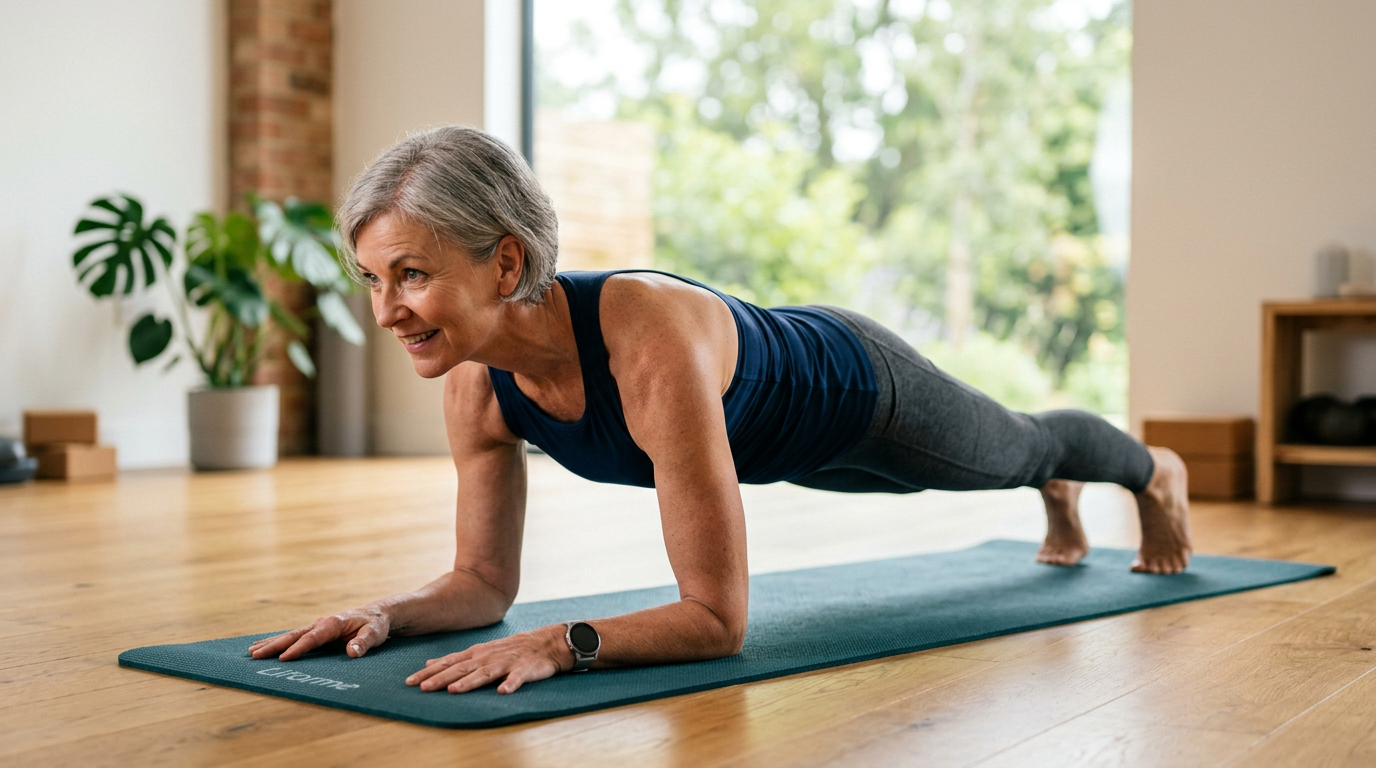
Inspirational image of a mature woman in her 50s or 60s performing a plank exercise on a mat with proper form, showing strength and confidence
Nutrition and Recovery for Core Development
You can't out-train a poor diet, and you can't build strength without proper recovery. These factors are just as important as your workout routine.
Protein Requirements for Muscle Development
Adequate protein intake is essential for building and maintaining muscle tissue, including your core muscles. Women should aim for approximately 0.7-1.0 grams of protein per pound of body weight daily when actively training. This might look like 100-140 grams daily for a 140-pound woman.
Distribute protein throughout the day rather than consuming it all in one meal. Include a protein source at each meal and snack to optimize muscle protein synthesis. Good options include lean meats, fish, eggs, Greek yogurt, cottage cheese, legumes, and protein supplements if needed.
The Role of Overall Body Composition
Core exercises build muscle and strength, but they don't specifically burn belly fat. Fat loss occurs systematically across your entire body based on genetics, hormones, and overall caloric balance. You cannot spot-reduce fat from specific areas.
To reveal the muscle definition you're building through ab exercises on a mat, you need to reduce overall body fat through a combination of nutrition, resistance training, cardiovascular exercise, and lifestyle factors like sleep and stress management. Focus on building strength now while maintaining realistic expectations about how long visible changes take.
Recovery and Rest Days
Your muscles grow stronger during recovery, not during workouts. Training breaks down muscle tissue; rest allows it to rebuild stronger. Ensure you're getting 7-9 hours of quality sleep nightly, as this is when most muscle recovery and growth hormone release occurs.
Active recovery like walking, yoga, or gentle stretching on rest days promotes blood flow and reduces soreness without overtaxing your system. Listen to your body—persistent fatigue, decreased performance, or increased soreness are signs you need more recovery time.
Tips for Staying Consistent with Your Mat Workouts
Knowledge means nothing without consistent action. These strategies help you maintain a regular core training practice.
Creating Your Workout Space
Designate a specific area in your home for mat workouts. You don't need much space—just enough to lie down and extend your arms and legs. Keep your mat rolled out or easily accessible so you're not creating unnecessary barriers to starting your workout.
Eliminate distractions by putting your phone on do-not-disturb mode and letting household members know you need 20 uninterrupted minutes. Creating this dedicated space and time signals to your brain that this is a priority.
Tracking Your Progress
What gets measured gets improved. Keep a simple workout log noting which exercises you performed, how many reps or how long you held each position, and how you felt. Every few weeks, review your progress—you'll be amazed at how quickly you improve.
Take progress photos and measurements if aesthetics are part of your goals, but also track performance metrics like how long you can hold a plank or how many bicycle crunches you can perform with perfect form. These objective measures provide motivation when visual changes seem slow.
Workout Variations to Prevent Boredom
Variety prevents both mental boredom and physical plateaus. Once you've mastered the basic exercises, experiment with different workout structures:
- Circuit training: Perform one set of each exercise back-to-back with minimal rest, then repeat the entire circuit
- EMOM (Every Minute on the Minute): Perform a set number of reps at the start of each minute, resting for the remainder
- Tabata intervals: 20 seconds of work followed by 10 seconds of rest for 8 rounds
- Pyramid sets: Gradually increase then decrease reps or hold times across sets
These formats keep your workouts fresh while continuing to challenge your muscles in new ways.
Flat lay of home workout essentials including a yoga mat, water bottle, towel, and workout journal on wooden floor creating an inviting exercise space
Frequently Asked Questions
How to do abs on mat?
Start with foundational exercises like dead bugs, planks, and glute bridges on a padded mat. Lie on your back, press your lower back into the mat, and perform controlled movements focusing on core engagement rather than speed. Begin with 2-3 exercises for 3 sets each, 2-3 times weekly, gradually progressing to more challenging variations as strength improves.
Can core workouts help with back pain?
Core workouts can significantly reduce chronic lower back pain by improving spinal stability and reducing stress on vertebral discs. Focus on stability exercises like planks, dead bugs, and bird dogs that teach your core to resist unwanted motion. Avoid exercises that cause pain and consider consulting a physical therapist for chronic issues.
Why do my hip flexors hurt when I do abs?
Hip flexor discomfort during ab exercises indicates your hip flexors are compensating for weak core muscles or you're performing exercises that excessively load them. Choose exercises that minimize hip flexor involvement like dead bugs, planks, and bird dogs while building core strength. Warm up properly and stretch hip flexors between sets.
Can a 60 year old woman get a six pack?
Visible ab definition at any age depends primarily on body fat percentage, not core strength. While building strong abs is achievable at 60 and beyond, visible six-pack definition requires maintaining body fat levels that may not be sustainable for many women. Focus instead on functional core strength that improves posture, balance, and daily activities.
How often should I do ab exercises on a mat?
Train your abs 2-4 times per week with at least one rest day between sessions for optimal recovery and strength gains. Each workout should last 15-25 minutes with proper form and adequate rest. Your core muscles require recovery time like any other muscle group to rebuild stronger after training.
Do I need equipment for mat-based ab workouts?
You only need a quality exercise mat for effective ab training at home. Bodyweight exercises provide sufficient resistance for building core strength, especially for beginners and intermediate exercisers. As you progress, you can add light dumbbells or resistance bands for variety, but they're not necessary for excellent results.
How long before I see results from mat ab exercises?
You'll feel strength improvements within 2-3 weeks of consistent training, including better posture and reduced back discomfort. Visible muscle definition depends on your starting body composition and typically takes 8-12 weeks of combined strength training and nutrition management. Performance gains appear before aesthetic changes, so track both metrics.
Conclusion
Building a strong, functional core doesn't require expensive equipment or gym memberships. Ab exercises on a mat provide everything you need to develop the stability, strength, and confidence that comes from a powerful midsection. By mastering fundamental movements like dead bugs and planks, progressing to intermediate exercises like bicycle crunches and mountain climbers, and eventually challenging yourself with advanced variations, you'll build core strength that enhances every aspect of your life.
Remember that consistency beats intensity every time. A focused 15-minute session three times per week will deliver better results than sporadic hour-long workouts. Focus on perfect form, progressive overload, and adequate recovery. Track your performance improvements, celebrate small wins, and trust the process.
Your core is the foundation of functional movement, injury prevention, and physical confidence. By committing to regular mat-based ab exercises, you're investing in a stronger, more capable version of yourself. Roll out your mat, choose a workout from this guide, and take the first step toward building the core strength you deserve.